On This Page
Description
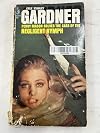
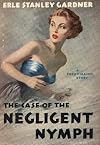
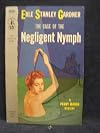
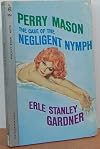
She pulled herself out of the water and into a canoe and gasped, 'I don't know who you are ... but you'd better paddle like hell!' Flashlights appeared on the shore. Someone shouted 'There she is!' but Perry Mason was doing as he was told for a change, paddling into the night, with a strange girl, towards the hottest water he had ever been in. By morning, Mason was in all the papers - wanted for robbery. By afternoon, he had a second client - in jail. Then murder arrived and he was show more precipitated into the tensest battle of his career. show lessTags
Recommendations

























Member Reviews
I must have read twenty-five or thirty of Erle Stanley Gardner’s eighty Perry Mason novels during my teen years in the mid-1960s. I don’t remember specific titles anymore, but I do remember being fascinated by the Perry Mason, Della Street, and Paul Drake characters and what a great team they made. The legendary courtroom battles that Perry Mason always won were the icing on the cake that introduced me to the legal thriller genre, a genre I’ve enjoyed off-and-on to this day.
So I thought I knew what to expect when I decided to read Gardner’s 1950 Perry Mason novel The Case of the Negligent Nymph. But I was only partially correct, and now I wonder if this one is truly representative of my reading experience all those years ago. In show more this one, Mason inadvertently becomes a participant in the crime of a woman he will shortly find himself defending in court – all the while trying to cover up the fact that he is the unknown “accomplice” who plucked the woman burglar from the water as she tried to make her escape. (I’m no lawyer, but is that even ethical?)
But before long, Mason has more to worry about than his accidental participation in a home burglary. The bodies start falling and his client, despite all the good counsel she receives from Mason, follows none of it. Instead, she seems determined to drag her lawyer deeper and deeper into a complicated plot that could very easily see both of them ending up in prison. Perry Mason deeply regrets his instinct to help the woman escape the vicious guard-dog that was rapidly gaining on her in the deep water. But, really, what else could he have done?
Gardner managed to pack a rather complicated plot into what is a relatively short novel (the 1968-vintage paperback I read has 215 pages), but the lack of space for character development sometimes makes it difficult to remember which is which and how they tie into the plot. I would, in fact, recommend that readers take a moment to jot down the names of each new character as they encounter them, along with a brief description of who they are and how they fit in. I wish I had done that because it would have helped.
That brings me to my main quarrel with Gardner’s approach to The Case of the Negligent Nymph (other than the dangling participle or two that jumped out at me). The novel ends rather abruptly, after a farce of a courtroom section that was borderline silly, with the reader still not in possession of all the pertinent facts. Gardner then rather clumsily has Perry Mason expose some of the missing pieces by reading a long newspaper article aloud to Della Street. That is followed by a conversation between Mason, Della, and Paul Drake during which the gloating Mason provides the rest of the missing information. Frankly, I felt a bit cheated as a reader that I had to learn some of the key elements of the story at the same time Mason was explaining it to the novel’s other two recurring characters. Please, crime writers, show me, don’t tell me.
Bottom Line: The Case of the Negligent Nymph was a disappointment to me, but I do wonder if I would have actually enjoyed this one as a fifteen-year-old. Maybe it’s just that I’m a more mature reader now than I was when I read all those other Perry Mason novels. I do have on hand another Perry Mason novel, this one called The Case of the Haunted Husband, that I plan to read soon. I’m hoping for a better reaction to that one. show less
So I thought I knew what to expect when I decided to read Gardner’s 1950 Perry Mason novel The Case of the Negligent Nymph. But I was only partially correct, and now I wonder if this one is truly representative of my reading experience all those years ago. In show more this one, Mason inadvertently becomes a participant in the crime of a woman he will shortly find himself defending in court – all the while trying to cover up the fact that he is the unknown “accomplice” who plucked the woman burglar from the water as she tried to make her escape. (I’m no lawyer, but is that even ethical?)
But before long, Mason has more to worry about than his accidental participation in a home burglary. The bodies start falling and his client, despite all the good counsel she receives from Mason, follows none of it. Instead, she seems determined to drag her lawyer deeper and deeper into a complicated plot that could very easily see both of them ending up in prison. Perry Mason deeply regrets his instinct to help the woman escape the vicious guard-dog that was rapidly gaining on her in the deep water. But, really, what else could he have done?
Gardner managed to pack a rather complicated plot into what is a relatively short novel (the 1968-vintage paperback I read has 215 pages), but the lack of space for character development sometimes makes it difficult to remember which is which and how they tie into the plot. I would, in fact, recommend that readers take a moment to jot down the names of each new character as they encounter them, along with a brief description of who they are and how they fit in. I wish I had done that because it would have helped.
That brings me to my main quarrel with Gardner’s approach to The Case of the Negligent Nymph (other than the dangling participle or two that jumped out at me). The novel ends rather abruptly, after a farce of a courtroom section that was borderline silly, with the reader still not in possession of all the pertinent facts. Gardner then rather clumsily has Perry Mason expose some of the missing pieces by reading a long newspaper article aloud to Della Street. That is followed by a conversation between Mason, Della, and Paul Drake during which the gloating Mason provides the rest of the missing information. Frankly, I felt a bit cheated as a reader that I had to learn some of the key elements of the story at the same time Mason was explaining it to the novel’s other two recurring characters. Please, crime writers, show me, don’t tell me.
Bottom Line: The Case of the Negligent Nymph was a disappointment to me, but I do wonder if I would have actually enjoyed this one as a fifteen-year-old. Maybe it’s just that I’m a more mature reader now than I was when I read all those other Perry Mason novels. I do have on hand another Perry Mason novel, this one called The Case of the Haunted Husband, that I plan to read soon. I’m hoping for a better reaction to that one. show less
I really enjoyed the story. It has well-developed characters, plenty of plausible twists and turns, and a plot that kept you engaged all the way through. Once you got started, it was difficult to put down.
I also enjoyed noting the differences between this book and the Perry Mason characters and episodes from the TV series in the 50s and 60s.
I also enjoyed noting the differences between this book and the Perry Mason characters and episodes from the TV series in the 50s and 60s.
Perry Mason in a canoe picks up a scantily clad young woman who had been swimming. She is later charged with murder and he is charged as an accomplice. This is one of several Mason stories e.g. the Sunbather's Diary and the Hesitant Hostess, which involve Perry's encounters with scantily clad sexy women. My observation is that the Los Angeles of Gardner's fiction is by no means the staid 1950s America people imagine nowadays.
Perry Mason is fishing and a young girl swims out to his boat. He rescues her, but she is involved in theft and perhaps murder.
I really liked how Perry untangled himself from the mess he was in at the end of the book. Great fun!
Original price: $0.35
"You are nice," she half whispered.
"Thank you," Mason said, and slipped out into the corridor.
"Thank you," Mason said, and slipped out into the corridor.
Members
- Recently Added By
Lists

#JustTheFacts2022Gold
48 works; 1 member
Author Information

863+ Works 30,659 Members
Mystery writer Erle Gardner was born on July 17, 1889 in Malden, Massachusetts. In 1902, he had moved to Oroville, CA. His parents could not afford to send a second son to college, so he worked in a legal office as a clerk reading law. He spent a short time at Valparaiso University in Indiana but had to drop out because of an illegal boxing show more exhibition. He continued to travel throughout California and read law at several law offices and finally passed the bar in 1911, at the age of 21. He married Natalie Francis Beatrice Talbert on April 9, 1912. In 1916, he formed the Law Firm of Orr and Gardner in Venture, CA. Gardner used many pseudonyms such as Charles Green, Kyle Corning and Grant Holiday. While working as an attorney, he began writing fiction. In 1921, "Nellie's Naughty Nighty" was published in the pulp magazine Breezy Stories. He had a goal of writing 100,000 words a month and would sometimes write two or more stories a day. In 1923, "The Shrieking Skeleton" was sold to the Black Mask Magazine. In the 1930's, Gardner had two manuscripts that were rejected and than "rediscovered" by Thayer Hobson, the president of the William Morrow Publishing Company, and rewritten as courtroom mysteries. During this process, the character Perry Mason was born. In 1933, the first Perry Mason book was written, "The Case of the Velvet Claws." The next one was entitled "The Case of the Sulky Girl" and they were followed by more than eighty additional Mason mysteries. Gardner died on March 11, 1970. (Bowker Author Biography) show less
Awards and Honors
Distinctions
Series

Work Relationships
Is contained in
Has the adaptation
Common Knowledge
- Original title
- The Case of the Negligent Nymph
- Original publication date
- 1950
- People/Characters
- Perry Mason; Della Street
- First words
- From his rented canoe Perry Mason sized up the Alder estate as a general sizes up a prospective battlefield.
- Last words
- (Click to show. Warning: May contain spoilers.)Della Street got up and touched her glass to Drake's. They solemnly drank the toast.
Classifications
Statistics
- Members
- 205
- Popularity
- 158,883
- Reviews
- 7
- Rating
- (3.63)
- Languages
- 5 — Czech, Dutch, English, French, German
- Media
- Paper, Ebook
- ISBNs
- 11
- ASINs
- 25