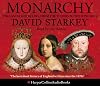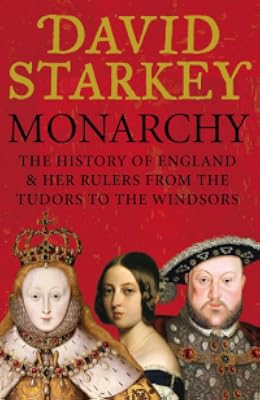
Monarchy: From the Middle Ages to Modernity
by David Starkey
On This Page
Description
The crown of England is the oldest surviving political institution in Europe. Throughout this book Dr David Starkey emphasises the Crown's endless capacity to adapt to circumstances and reshape national policy, whilst he unmasks the personalities and achievements, the defeats and victories, which lie behind the kings and queens of British history. Each of these monarchs has contributed to the religion, geography, laws, language and government which we live with today. Monarchy demonstrates show more exactly how these states were arrived at, how these monarchs subtly influenced each other, which battles were won and why, whose whim or failure caused religious tradition to wither or flourish, and which monarchs, through their acumen, strength and single minded determination, came to enforce the laws of England. show lessTags
Recommendations





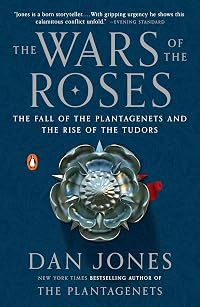

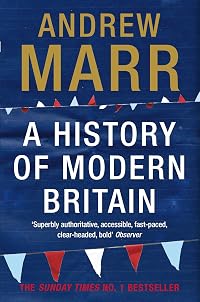
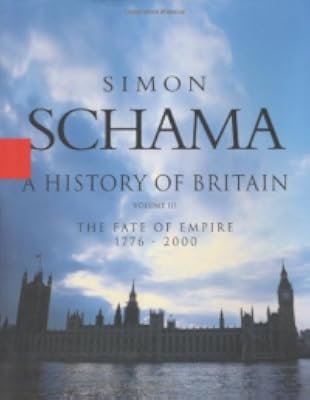

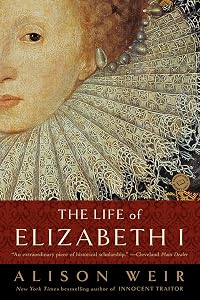
Member Recommendations
Member Reviews
David Starkey is the David Attenborough of English history; there's that same breathless, excited, delivery. Since history is just "little more than the register of the crimes, follies, and misfortunes of mankind" listening to Starkey can never be as enjoyable as listening to Attenborough. The book ends with an epilogue contrasting Edward VIII with Princess Diana. Both placed their own happiness first, but the British people sided with Diana, apparently, and the royal family's popularity went into a tailspin. What will happen next, he wonders.
I, unlike Starkey, take no interest in the modern British monarchy --- those people are mere celebrities now, although it wasn't always so.
What did I get out of listening to this book? A more show more detailed understanding of the House of Hanover, and a realization that Prince Albert was more politically powerful than I had previously understood. All this must be useful for something, if just for better understanding of novels written or set during these periods.
What is the narrative? That the power of the monarchy showed a general tendency to diminish from the reign of Henry VIII as successive new monarchs were forced to make compromises with those who were willing to support them. But it is hard to understand why they needed a monarch in the first place. There is something of the supreme executive, analogous to a United States President, except hereditary, in the English king. Through William III, an English king could be the actual commander-in-chief, and in the reigns of the George's the monarch's son might be a generals. There are analogies to the role of the kings of Ancient Sparta in that. Of course, in the reign of Queen Anne, the monarch was in no state to lead armies, hence the importance of the, also very talented, Duke of Marlborough. Are documents like Charles II's Declarations of Indulgence equivalent to a United States President's Executive Orders? It is impossible for me to tell.
Reading the book in reverse order of the chapters makes it somewhat more interesting. But it seems to me that all the theorizing and compact signing was just window dressing and what really mattered was chance and money.
The Plantagenet family tree demonstrates how the Wars of the Roses were not properly civil wars, just cousin wars that were waged until most of the cousins were eliminated. Richard II was murdered, Henry VI was murdered, Edward V was murdered, Richard III was killed in battle. That's plenty. show less
I, unlike Starkey, take no interest in the modern British monarchy --- those people are mere celebrities now, although it wasn't always so.
What did I get out of listening to this book? A more show more detailed understanding of the House of Hanover, and a realization that Prince Albert was more politically powerful than I had previously understood. All this must be useful for something, if just for better understanding of novels written or set during these periods.
What is the narrative? That the power of the monarchy showed a general tendency to diminish from the reign of Henry VIII as successive new monarchs were forced to make compromises with those who were willing to support them. But it is hard to understand why they needed a monarch in the first place. There is something of the supreme executive, analogous to a United States President, except hereditary, in the English king. Through William III, an English king could be the actual commander-in-chief, and in the reigns of the George's the monarch's son might be a generals. There are analogies to the role of the kings of Ancient Sparta in that. Of course, in the reign of Queen Anne, the monarch was in no state to lead armies, hence the importance of the, also very talented, Duke of Marlborough. Are documents like Charles II's Declarations of Indulgence equivalent to a United States President's Executive Orders? It is impossible for me to tell.
Reading the book in reverse order of the chapters makes it somewhat more interesting. But it seems to me that all the theorizing and compact signing was just window dressing and what really mattered was chance and money.
The Plantagenet family tree demonstrates how the Wars of the Roses were not properly civil wars, just cousin wars that were waged until most of the cousins were eliminated. Richard II was murdered, Henry VI was murdered, Edward V was murdered, Richard III was killed in battle. That's plenty. show less
This is quite a fascinating book giving you a sanpshot of the Kings and Queens of England since Richard III and how Monarchy has adapted to meet the needs of the times and to ensure monarchy survived. Most focus is up to the time of Victoria, with a small section of 20th and 21st Century Monarchy. I would have liked more detail on the 20th and 21st Century but I learnt quite a lot about some Kings and Queens I knew little about. This is a companion to a TV series (which I haven't watched) and was listened to on audio, the narrator being the author! This somehow made it more poignant. It also helps you to see that Monarchy is going to need to adapt if it is to survive the 21st Century. Perhaps King William V will be the author of this show more change, just as his namesake William IV whilst only being King for 7 years was responsible for some of the major changes In the past. If you are interested in Monarchy I would recommend the book, but be aware there is only an hour at most (sometimes less) covering a monarch's reign because it is more about the monarchy than the monarch. At the end of the audiobook was an interview with the author which I also found very interesting. show less
A good overview of the English/British monarchy and their relationship to power and government. An easy and short read, but still making some interesting points and links (e.g. to economics, or events in Europe) that might not be that obvious.
David Starkey gives a brief run down of all the rulers of England starting with King Henry VII and finishing with Queen Victoria. He concentrates more on the political manouvering that went on before each King, Queen and Lord Protector was in a position to rule. having a parent who was ruler was no guarantee that you would be next in line - marriages and religion also played an important part.
David Starkey is an eminent historian, and there is a BBC documentary that brings this book to the small screen. Although there are lots of facts to get through - do not think for one minute you are going to get bored reading the book. Far from it, Starkey makes it easy to understand and does not resort to footnotes or end notes - I hate shuffling show more off to the back of books for further information.
if you are interested in British history - read this book. show less
David Starkey is an eminent historian, and there is a BBC documentary that brings this book to the small screen. Although there are lots of facts to get through - do not think for one minute you are going to get bored reading the book. Far from it, Starkey makes it easy to understand and does not resort to footnotes or end notes - I hate shuffling show more off to the back of books for further information.
if you are interested in British history - read this book. show less
Ratings
Members
- Recently Added By
Author Information

26+ Works 4,923 Members
David Starkey is the Bye Fellow of Fitzwilliam College, Cambridge.
Work Relationships
Is contained in
Common Knowledge
- Related movies
- Monarchy with David Starkey (2004 | IMDb)
- Canonical DDC/MDS
- 941.0099
Classifications
- Genres
- History, Nonfiction, General Nonfiction, Biography & Memoir
- DDC/MDS
- 941.0099 — History & geography History of Europe British Isles Historical periods of British Isles Geographic treatment, biography Collected persons
- LCC
- DA28.1 .S83 — History of Europe, Asia, Africa and Oceania Great Britain History of Great Britain England History General
- BISAC
Statistics
- Members
- 278
- Popularity
- 116,259
- Reviews
- 5
- Rating
- (3.67)
- Languages
- English
- Media
- Paper, Audiobook, Ebook
- ISBNs
- 11
- UPCs
- 1
- ASINs
- 3