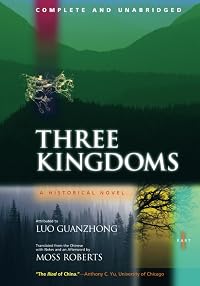
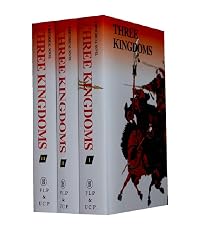
Three Kingdoms: A Historical Novel, Part 1
by Guanzhong Luo
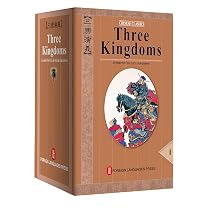
Three Kingdoms (University of California Press) (1)
On This Page
Description
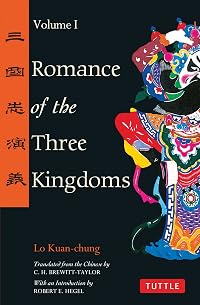
In 220 EC, the 400-year-old rule of the mighty Han dynasty came to an end and three kingdoms contested for control of China. Liu Pei, legitimate heir to the Han throne, elects to fight for his birthright and enlists the aid of his sworn brothers, the impulsive giant Chang Fei and the invincible knight Kuan Yu. The brave band faces a formidable array of enemies, foremost among them the treacherous and bloodthirsty Ts'ao Ts'ao. The bold struggle of the three heroes seems doomed until the show more reclusive wizard Chuko Liang offers his counsel, and the tide begins to turn. Romance of the Three Kingdoms is China's oldest novel and the first of a great tradition of historical fiction. An Introduction to this reprint by Robert E. Hegel, Professor of Chinese and Comparative Literature at Washington University, provides an insightful commentary on the historical background to the novel, its literary origins and its main characters. This epic saga of brotherhood and rivalry, of loyalty and treachery, of victory and death, and the deeds of its heroes and villains during one of the most tumultuous periods in Chinese history, forms part of the indelible core of classical Chinese culture and continues to fascinate modern-day readers. show lessTags
Recommendations

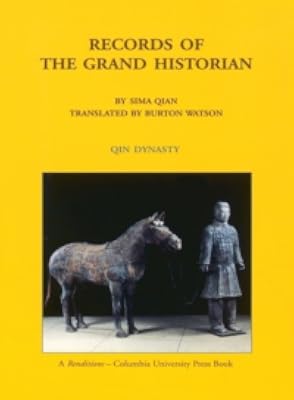
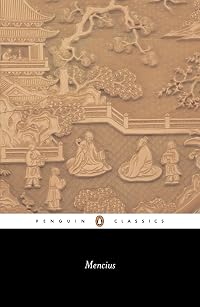
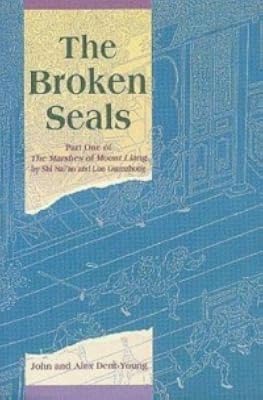
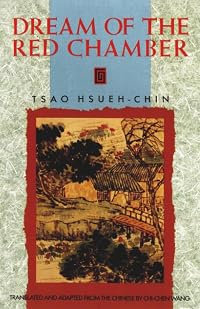
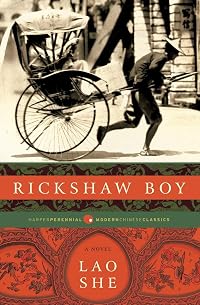
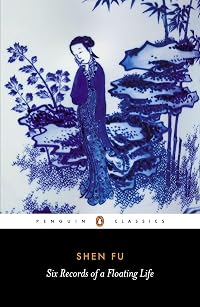
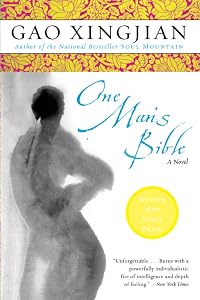
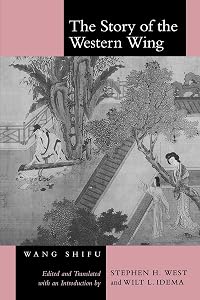



Member Reviews
So the cut finger and the blood written decree are all forgotten, eh?
Gentle Reader, I implore you -- if you desire to read the Romance of the Three Kingdoms to please avoid the budget edition offered by Amazon. Printed on demand, the edition is clumsily formatted and the type-setting is clunky. The paper is cheap. There are but a handful of notes on a text detailing events which occurred in China some 1800 years ago. How could anyone expect the text to be self-understood? Well, Amazon simply doesn't care. They lead you to a wikipedia page and thank you for your purchase.
My two stars refer to the edition not the work per se.
The opening volume of the volume is rather repetitive with forces from similar sounding names routinely routing one show more another. The periphery of the text harbors the monstrous. It is the instability of the Yellow Turbans which upends the tranquility of the time. What are these riotous forces? Well, such were a series of peasant rebellions. You won't know that from the text and I'm not referring to the author Luo Guanzhong. Famine is also lurking in every chapter. I am fairly livid by this cheap product and I have about 1800 pages to go. show less
Gentle Reader, I implore you -- if you desire to read the Romance of the Three Kingdoms to please avoid the budget edition offered by Amazon. Printed on demand, the edition is clumsily formatted and the type-setting is clunky. The paper is cheap. There are but a handful of notes on a text detailing events which occurred in China some 1800 years ago. How could anyone expect the text to be self-understood? Well, Amazon simply doesn't care. They lead you to a wikipedia page and thank you for your purchase.
My two stars refer to the edition not the work per se.
The opening volume of the volume is rather repetitive with forces from similar sounding names routinely routing one show more another. The periphery of the text harbors the monstrous. It is the instability of the Yellow Turbans which upends the tranquility of the time. What are these riotous forces? Well, such were a series of peasant rebellions. You won't know that from the text and I'm not referring to the author Luo Guanzhong. Famine is also lurking in every chapter. I am fairly livid by this cheap product and I have about 1800 pages to go. show less
Ratings
Members
- Recently Added By
Lists

Classic Fiction I Want to Read Before I Die
6 works; 1 member

KayStJ's to-read list
1,616 works; 11 members
Author Information

137+ Works 4,089 Members
Very little is known about Lo the man, and even the extent of his participation in the works bearing his name is in some doubt. All we can say for certain is that he lived during the transition from Yuan to Ming dynasties, hailed from T'ai-yuan (in Shansi Province), and spent at least part of his adult life in Hangchow. There, he authored three show more dramas, one of which survives, and worked on two historical narratives that eventually became the famous fiction masterpieces "Outlaws of the Marsh" and "Romance of the Three Kingdoms". Traditionally, Lo is given as the first author of the "Romance of the Three Kingdoms", whereas he is listed as secondary author after Shih Nai-an for "Outlaws of the Marsh". However, it seems probable that he was actually the primary writer of both. He based the first on the historical work "Account of the Three Kingdoms", about events following the breakup of the Han empire (168--265), and based the second on storyteller's material compiled by Shih about a legendary band of outlaws active during the reign of Hui-tsung in the Northern Sung (1101-1125). Nevertheless, in deference to tradition, "Outlaws of the Marsh" will be discussed under the entry for Shih Nai-an. Lo's main contribution to Chinese literature in the Three Kingdoms epic is in taking incidents recorded in history and long borrowed by the storytelling tradition, and molding them into a coherent chronological narrative. In the process, he attempts to sift out the patently false or exaggerated elements while maintaining liveliness and artistic interest. His goal seems to have been to reach a wide reading audience with his lessons, while not pandering to vulgar cravings for Taoist magicians' stunts or Buddhist popular proofs of retribution in the workings of history. Instead, he invites his readers to reflect on how ambition affects different human characters at a time when the stakes are very high---a dynastic title is the prize. Lo's is a complex vision of reality; his heroes are not rigidly black or white, and virtue is not necessarily rewarded. But his universe is not without laws, and his portrayal of events illustrates the Confucian belief that one's actions determine the outcome of events. According to a younger contemporary, Lo was a shy and retiring man. Perhaps his personal modesty is mirrored by the style of his great narrative, which is generally lacking in rhetorical flourish, but yet not highly colloquial---a kind of simplified classical Chinese. With his plain style and sober attention to historical fact, the result could have been a dry chronicle; but such was Lo's passion for his subject, and his ability to achieve character that generations of Chinese readers have seen the Three Kingdoms period through his eyes and even today admire his heroes and hate his villains. (Bowker Author Biography) show less
Some Editions
Awards and Honors
Series

Common Knowledge
- Important places
- China
- Important events
- Three Kingdoms Era; 3rd century
Classifications
- Genres
- Fiction and Literature, General Fiction, Historical Fiction
- DDC/MDS
- 895.1346 — Literature & rhetoric Literatures of other languages Literatures of East and Southeast Asia Chinese Chinese fiction Song, Yuan, Ming, Qing dynasties 960–1912 Ming dynasty 1368–1644
- LCC
- PL2690 .S3 .E53 — Language and Literature Languages and literatures of Eastern Asia, Africa, Oceania Languages of Eastern Asia, Africa, Oceania Chinese language and literature Chinese literature Individual authors and works
- BISAC
Statistics
- Members
- 235
- Popularity
- 138,857
- Reviews
- 2
- Rating
- (4.29)
- Languages
- Chinese, English, French, Indonesian
- Media
- Paper, Ebook
- ISBNs
- 8
- UPCs
- 1
- ASINs
- 5