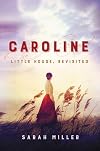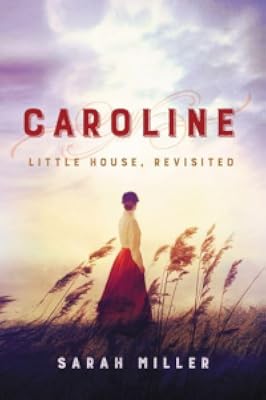
Caroline: Little House, Revisited
by Sarah Miller 
On This Page
Description
In this novel authorized by the Little House estate, Sarah Miller vividly recreates the beauty, hardship, and joys of the frontier in a dazzling work of historical fiction, a captivating story that illuminates one courageous, resilient, and loving pioneer woman as never before—Caroline Ingalls, "Ma" in Laura Ingalls Wilder's beloved Little House books.In the frigid days of February, 1870, Caroline Ingalls and her family leave the familiar comforts of the Big Woods of Wisconsin and the show more warm bosom of her family, for a new life in Kansas Indian Territory. Packing what they can carry in their wagon, Caroline, her husband Charles, and their little girls, Mary and Laura, head west to settle in a beautiful, unpredictable land full of promise and peril.
The pioneer life is a hard one, especially for a pregnant woman with no friends or kin to turn to for comfort or help. The burden of work must be shouldered alone, sickness tended without the aid of doctors, and babies birthed without the accustomed hands of mothers or sisters. But Caroline's new world is also full of tender joys. In adapting to this strange new place and transforming a rough log house built by Charles' hands into a home, Caroline must draw on untapped wells of strength she does not know she possesses.
For more than eighty years, generations of readers have been enchanted by the adventures of the American frontier's most famous child, Laura Ingalls Wilder, in the Little House books. Now, that familiar story is retold in this captivating tale of family, fidelity, hardship, love, and survival that vividly reimagines our
. show less
Tags
Recommendations



Member Recommendations
Member Reviews
I have been a big fan of the Little House Books and the TV series, when this came out I was very interested in Ma's (Caroline's) point of view. Sarah Miller did an excellent job blending Laura Wilder's series and historical research. It didn't feel totally new, but actually made things more clear and I found myself enjoying Mas's internal dialogue immensely, I think because I didn't have to wonder what was going to happen next, I already knew.
Ma always seemed so perfect in Wilder's version, strict and somewhat boring. Laura was a daddy's girl, and it came off in her books, as well as this version. This book shows Ma's internal thought process and struggles to be a good wife and excellent mother, her thoughts stay true to her time show more period. For example, feeling jealous that Charles got to leave and "explore" or hunt the surrounding area, getting some alone time, while she had to stay back with a three and five year old for the day.
The romance described between her and Charles even had me blushing at parts! The pioneer love story that weaves through this book is wonderful and again, true to the time period.
I truly loved this book, it might even be my most favorite book I've read this year. show less
Ma always seemed so perfect in Wilder's version, strict and somewhat boring. Laura was a daddy's girl, and it came off in her books, as well as this version. This book shows Ma's internal thought process and struggles to be a good wife and excellent mother, her thoughts stay true to her time show more period. For example, feeling jealous that Charles got to leave and "explore" or hunt the surrounding area, getting some alone time, while she had to stay back with a three and five year old for the day.
The romance described between her and Charles even had me blushing at parts! The pioneer love story that weaves through this book is wonderful and again, true to the time period.
I truly loved this book, it might even be my most favorite book I've read this year. show less
I loved the Little House on the Prairie books when I was a child and when I received Caroline by Sarah Miller as a Christmas gift a few years ago, I was intrigued by the thought of reading about the Ingalls family again but from an adult’s perspective. Unfortunately, I placed the book on my shelf and promptly forgot about it. I finally pulled it down the other day and I thoroughly enjoyed this reworking of a beloved story.
The book opens as the Ingalls family is packing up and leaving Wisconsin for the Kansas prairie. Caroline supports her husband but feels some uncertainties and is saddened by leaving family and friends behind. The author describes the difficulty in choosing what to take and what to leave, the long journey west, at show more times tedious and others, difficult and dangerous. Pioneer life is hard, especially as Caroline is pregnant but she grows to love her new home. She and Charles work hard to transform this new land into a place where her family can grow and flourish.
Although the author made some changes to the story, sticking closer to the actual historical record, I was totally captivated by Caroline. This is a story of love, survival and family that vividly recaptures the past and shows Caroline Ingalls as the complex wife, mother and woman that she most certainly was. show less
The book opens as the Ingalls family is packing up and leaving Wisconsin for the Kansas prairie. Caroline supports her husband but feels some uncertainties and is saddened by leaving family and friends behind. The author describes the difficulty in choosing what to take and what to leave, the long journey west, at show more times tedious and others, difficult and dangerous. Pioneer life is hard, especially as Caroline is pregnant but she grows to love her new home. She and Charles work hard to transform this new land into a place where her family can grow and flourish.
Although the author made some changes to the story, sticking closer to the actual historical record, I was totally captivated by Caroline. This is a story of love, survival and family that vividly recaptures the past and shows Caroline Ingalls as the complex wife, mother and woman that she most certainly was. show less
Caroline, her husband Charles, and her daughters Mary and Laura travel from Pepin, Wisconsin, to Indian Territory in Kansas. Caroline is pregnant during the journey, and gives birth to baby Carrie in their snug little cabin on the Kansas prairie.
This story stays close to the events of Little House on the Prairie, with a few notable digressions to accommodate the historical record of the Ingalls family's travels, which Wilder had streamlined a bit for her stories. This book is as firmly rooted in Caroline's perspective as the Little House books are in Laura's. There's a lot about the mystical power of womanhood (not couched in those terms, of course, but Caroline does wax eloquent about it in the privacy of her own mind) -- pregnancy, show more giving birth, nursing -- and, of course, a lot about all of the hard work a woman's life typically comprised in that period, particularly when traveling by wagon or setting up a homestead. There's relatively little about the girls, which is disconcerting. And, in an attempt to stay close to the source material (I think), Laura does not make a very convincing 3-year-old (because Wilder fudged the timeline, Laura seems slightly older in the Little House books, so it's less surprising for her to be as articulate and self-aware as she is). I had some trouble relating to Caroline, who comes across as rigid and stoic, seeing tears as shameful (I see no shame in crying when you are leaving all of your relations behind, possibly never to see them again -- or, for that matter, in crying when you've just dropped a log on your ankle). But this book does give readers a window into her internal life. I think readers who loved the Little House books are most likely to enjoy this one, though it will also appeal to readers who enjoy historical fiction from a female perspective. Notably, the problematic attitudes towards Native Americans that exist in the original book are present here, as well, though softened and mitigated a bit. The author's note admits that the Ingalls' opinions and attitudes were unjustified, based on their own prejudices -- but if that's an aspect of the original that bothered you, you may want to be aware that it exists here, as well. show less
This story stays close to the events of Little House on the Prairie, with a few notable digressions to accommodate the historical record of the Ingalls family's travels, which Wilder had streamlined a bit for her stories. This book is as firmly rooted in Caroline's perspective as the Little House books are in Laura's. There's a lot about the mystical power of womanhood (not couched in those terms, of course, but Caroline does wax eloquent about it in the privacy of her own mind) -- pregnancy, show more giving birth, nursing -- and, of course, a lot about all of the hard work a woman's life typically comprised in that period, particularly when traveling by wagon or setting up a homestead. There's relatively little about the girls, which is disconcerting. And, in an attempt to stay close to the source material (I think), Laura does not make a very convincing 3-year-old (because Wilder fudged the timeline, Laura seems slightly older in the Little House books, so it's less surprising for her to be as articulate and self-aware as she is). I had some trouble relating to Caroline, who comes across as rigid and stoic, seeing tears as shameful (I see no shame in crying when you are leaving all of your relations behind, possibly never to see them again -- or, for that matter, in crying when you've just dropped a log on your ankle). But this book does give readers a window into her internal life. I think readers who loved the Little House books are most likely to enjoy this one, though it will also appeal to readers who enjoy historical fiction from a female perspective. Notably, the problematic attitudes towards Native Americans that exist in the original book are present here, as well, though softened and mitigated a bit. The author's note admits that the Ingalls' opinions and attitudes were unjustified, based on their own prejudices -- but if that's an aspect of the original that bothered you, you may want to be aware that it exists here, as well. show less
 This review was written for LibraryThing Early Reviewers.
Ever wondered what Little House on the Prairie might read like if written in an adult voice? Sarah Miller has reimagined just that in this retelling of Laura Ingalls Wilder's classic pioneer novel. As someone who read through the Little House series multiple times as a child, I found this book to be a bit like a warm, welcome visit with old friends. I found the scenes with direct tie-ins to the original books (e.g., fording the river, well rescue) charming and I feared the author might go overboard with them, but she seemed to straddle that line reasonably well. It was refreshing to see the tale unfolding from a completely different perspective from that of a child, particularly when Caroline can come across as somewhat one-dimensional show more in the original books. At the same time, though, it was disheartening to experience Caroline's suppressing of her own desires, thoughts and opinions due to the cultural expectations placed upon women of the time. There is a great deal of focus on her internal conflicts as she struggles with burgeoning inclinations of independence and yearnings to be a whole person who could actually realize her dreams and aspirations. She always reins herself back in with a reminder that her role is simply to be a dutiful wife and mother, which is heartbreaking. In addition, perhaps I'm not remembering the severity of behavior expectations in the original series, but in this book it absolutely drove me bonkers that no one — adult or child — is permitted to express any negative emotions. Overall, I enjoyed it, and I also appreciated the attention to and correction of some inaccuracies in the original. show less
I don't remember reading Little House on the Prairie as a child, which is probably pretty strange for a little girl reader of a certain age. I do remember reading other books from around the time I would have been the perfect age and reading level for it so if I'd read it, I can only assume I would have remembered it. I only remember coming across it much later, in college when I took a Children's Literature class. And this is going to be blasphemy for many, I didn't love it then. In fact, I'm not even sure I offered it to my daughter when she was of an age and ability to read it (but I must have, right?). So why on earth would a novel from Caroline Ingalls' perspective of those events interest me? I really can't say other than to say show more that the human brain, and mine in particular, works in mysterious ways. Because from the minute I head about Sarah Miller's novel Caroline: Little House, Revisited, I have wanted to read it. What can I say?
As the novel opens, the Ingalls family, Caroline (Ma), Charles (Pa), Mary, and Laura, is packing up their covered wagon to make the long trek from Wisconsin to Kansas, leaving behind their extended family, furniture, and everything that is usual for them. Charles is excited about the journey, eager to leave the known and to make a claim on the wide open prairie in Kansas. Caroline is more reticent about going, knowing that she is early in a pregnancy with their third child, fearful of moving to Indian territory, and reluctant to leave her loved ones, perhaps forever, but she is willing to follow her beloved Charles wherever he thinks they'll find the most opportunity. The months of travel in the tiny wagon, facing the reality of the hardships, both imagined and surprising, mothering two young and impressionable children, and suppressing her own thoughts and feelings to spare Charles or the girls takes a toll but Caroline rarely, if ever, complains aloud. While raising a house on a distant claim and turning it into a home, bringing a child into the world with only a stranger to assist her, and attending to her daily domestic sphere, Caroline's life is full of both overwhelming difficulty and ethereally beautiful moments.
Caroline is very much the main character of the novel. There are glimpses of Mary and Laura as portrayed in the Little House series, but they are not the main focus at all. Although written in the third person, the novel is very much internal to Caroline. As she goes about her daily chores, the reader is privy to her thoughts and feelings about parenting, the prairie, being a wife, and the Indians who sometimes come uninvited into her very cabin. Her fears and sadness, as well as joys and delights, are pretty equally balanced in the portrayal and she is definitely a woman of her time. The plot flows placidly most of the time through the long journey and the domestic chores but it is occasionally interrupted by peaks of action as when they cross the swollen creek, the Indians arrive in the cabin, baby Carrie is born, or the fire sweeps towards them. With each of these incidents, it is clear that Miller has done extensive research, not just reconciling her story to the original Little House tale but also to what is historically accurate. Miller has drawn Caroline's feelings beautifully. Her love and frustration towards her children will resonate with any parent. The reality of love and marriage with children always within sight and hearing is carefully handled, much of it no more than musings and wishing on Caroline's part although there are a few more visceral moments as well. Readers who know Little House on the Prairie will know the entire story told here but it is interesting and different to see all the events through an adult's eyes instead of a child's. Miller has captured the sturdy loneliness of women settlers of the time in a nuanced and lovely way and those who are fans of Laura Ingalls Wilder's books as well as those interested in the women who helped their husbands push against the frontier will find this chronicle of life on the prairie to be a worthwhile and thoughtful read. show less
As the novel opens, the Ingalls family, Caroline (Ma), Charles (Pa), Mary, and Laura, is packing up their covered wagon to make the long trek from Wisconsin to Kansas, leaving behind their extended family, furniture, and everything that is usual for them. Charles is excited about the journey, eager to leave the known and to make a claim on the wide open prairie in Kansas. Caroline is more reticent about going, knowing that she is early in a pregnancy with their third child, fearful of moving to Indian territory, and reluctant to leave her loved ones, perhaps forever, but she is willing to follow her beloved Charles wherever he thinks they'll find the most opportunity. The months of travel in the tiny wagon, facing the reality of the hardships, both imagined and surprising, mothering two young and impressionable children, and suppressing her own thoughts and feelings to spare Charles or the girls takes a toll but Caroline rarely, if ever, complains aloud. While raising a house on a distant claim and turning it into a home, bringing a child into the world with only a stranger to assist her, and attending to her daily domestic sphere, Caroline's life is full of both overwhelming difficulty and ethereally beautiful moments.
Caroline is very much the main character of the novel. There are glimpses of Mary and Laura as portrayed in the Little House series, but they are not the main focus at all. Although written in the third person, the novel is very much internal to Caroline. As she goes about her daily chores, the reader is privy to her thoughts and feelings about parenting, the prairie, being a wife, and the Indians who sometimes come uninvited into her very cabin. Her fears and sadness, as well as joys and delights, are pretty equally balanced in the portrayal and she is definitely a woman of her time. The plot flows placidly most of the time through the long journey and the domestic chores but it is occasionally interrupted by peaks of action as when they cross the swollen creek, the Indians arrive in the cabin, baby Carrie is born, or the fire sweeps towards them. With each of these incidents, it is clear that Miller has done extensive research, not just reconciling her story to the original Little House tale but also to what is historically accurate. Miller has drawn Caroline's feelings beautifully. Her love and frustration towards her children will resonate with any parent. The reality of love and marriage with children always within sight and hearing is carefully handled, much of it no more than musings and wishing on Caroline's part although there are a few more visceral moments as well. Readers who know Little House on the Prairie will know the entire story told here but it is interesting and different to see all the events through an adult's eyes instead of a child's. Miller has captured the sturdy loneliness of women settlers of the time in a nuanced and lovely way and those who are fans of Laura Ingalls Wilder's books as well as those interested in the women who helped their husbands push against the frontier will find this chronicle of life on the prairie to be a worthwhile and thoughtful read. show less
I really enjoyed this book. I loved reading the Little House books as a little girl; it was fun and comforting to read the story from the perspective of an adult and mom now that I am an adult and a mom. Nothing truly exciting or fast-paced here, just a nice story retold. The Indian scenes were very interesting; I thought the author handled well the balance between how we as future generations see the disposal of the Indians from their lands and how it might feel to the white settlers at the time.
I've just turned the last page of Caroline by Sarah Miller - and I'm truly sad that it's ended, as I find myself wanting more. I had hesitated when I was offered the opportunity to read Caroline, as The Little House books are childhood favourites of mine. I imagined myself as Laura in many a book (and the television series as well) and didn't want to sully my perception of 'Ma.'
Well, I needn't have worried - Sarah Miller's portrayal of Ma has only added to my love of this series and given it more depth. The Little House books are of course told through Laura Ingalls Wilder's eyes. Caroline is told through Ma's eyes, thoughts, heart and actions. It's the perfect accompaniment for adult readers who grew up reading the Wilder books.
Miller show more does a wonderful job of portraying Caroline - the love between her and Charles, both intellectual and physical. And of course the love for her children and her desire to raise them 'right'. Her inner dialogue is often in turmoil, but she presents a calm, measured countenance to the world.
Just as well depicted are the details of the physical and mental strength needed, moving, settling in a raw land, raising children in this time and the details of daily life. But, along with those hardships are the moments of joy. Simple things - good weather, a kind neighbour, music, family and many more 'small' things. We all need to take a step back from our consumerism and enjoy the simple pleasures that life has to offer.
As adults, we can view the prejudice and disturbing historical actions of moving the First Nations peoples to reserves with the contrition it deserves.
Miller's author notes at the end explained a few departures from Wilder's memoirs. Miller had the permission of the Little House Heritage Trust. Caroline has found a place beside the Little House books on my bookshelf. show less
Well, I needn't have worried - Sarah Miller's portrayal of Ma has only added to my love of this series and given it more depth. The Little House books are of course told through Laura Ingalls Wilder's eyes. Caroline is told through Ma's eyes, thoughts, heart and actions. It's the perfect accompaniment for adult readers who grew up reading the Wilder books.
Miller show more does a wonderful job of portraying Caroline - the love between her and Charles, both intellectual and physical. And of course the love for her children and her desire to raise them 'right'. Her inner dialogue is often in turmoil, but she presents a calm, measured countenance to the world.
Just as well depicted are the details of the physical and mental strength needed, moving, settling in a raw land, raising children in this time and the details of daily life. But, along with those hardships are the moments of joy. Simple things - good weather, a kind neighbour, music, family and many more 'small' things. We all need to take a step back from our consumerism and enjoy the simple pleasures that life has to offer.
As adults, we can view the prejudice and disturbing historical actions of moving the First Nations peoples to reserves with the contrition it deserves.
Miller's author notes at the end explained a few departures from Wilder's memoirs. Miller had the permission of the Little House Heritage Trust. Caroline has found a place beside the Little House books on my bookshelf. show less
Members
- Recently Added By
Lists

19th Century
190 works; 16 members

Midwestern Books
17 works; 4 members

The American Experience
173 works; 18 members

Five star books
1,767 works; 110 members

Read-alike - One Thousand White Women by Jim Fergus
17 works; 1 member

Books Read in 2017
4,249 works; 130 members

Deena's Favorites--How Many have you read?
102 works; 3 members

Books Set in Kansas
19 works; 7 members

Books I have Recommended
207 works; 1 member
Books about Frontier Life and Pioneers
55 works; 7 members

Books Read in 2019
4,052 works; 110 members
Fictional Biographies
17 works; 3 members
Author Information

8 Works 2,637 Members
Sarah Miller writes historical fiction novels for children. Her novels include Miss Spitfire: Reaching Helen Keller, The Lost Crown, and The Borden Murders: Lizzie Borden and the Trial of the Century. (Bowker Author Biography)
Sarah Miller is a LibraryThing Author, an author who lists their personal library on LibraryThing.
Some Editions
Awards and Honors
Common Knowledge
- Original publication date
- 2017
- People/Characters
- Caroline Quiner Ingalls; Charles Ingalls; Mary Ingalls; Laura Ingalls Wilder; Mr. Edwards; Mrs. Scott (show all 7); Carrie Ingalls
- Important places
- Pepin, Wisconsin, USA; Independence, Kansas, USA; Kansas, USA
- Epigraph
- None knew thee but to love thee,
Thou dear one of my heart,
Oh, thy memory is fresh and green.
"Daisy Deane" - First words
- Caroline's wrist turned and flicked as the steel tongue of her crochet hook dipped in and out, mirroring the movement of the fiddle's bow.
- Last words
- (Click to show. Warning: May contain spoilers.)Home, she thought. Home.
Classifications
Statistics
- Members
- 660
- Popularity
- 43,711
- Reviews
- 45
- Rating
- (3.82)
- Languages
- English
- Media
- Paper, Audiobook, Ebook
- ISBNs
- 15
- ASINs
- 2