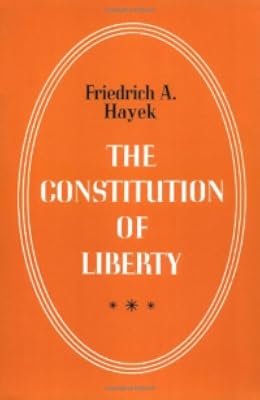
The Constitution of Liberty
by F. A. Hayek
On This Page
Description
From the $700 billion bailout of the banking industry to president Barack Obama's $787 billion stimulus package to the highly controversial passage of federal health-care reform, conservatives and concerned citizens alike have grown increasingly fearful of big government. Enter economist and political theorist F.A. Hayek. This book is a statement on the ideals of freedom and liberty, ideals that he believes have guided -- and must continue to guide -- the growth of Western civilization. Here show more Hayek defends the principles of a free society, casting a skeptical eye on the growth of the welfare state and examining the challenges to freedom posed by an ever expanding government -- as well as its corrosive effect on the creation, preservation, and utilization of knowledge. In opposition to those who call for the state to play a greater role in society, Hayek puts forward an argument for prudence. Guided by this quality, he demonstrates that a free market system in a democratic polity -- under the rule of law and with strong constitutional protections of individual rights -- represents the best chance for the continuing existence of liberty. show lessTags
Recommendations













Member Reviews
A detailed and scholarly argument for putting limits on the power of the state and government machinery, in order to preserve liberty. Tends to be a little one-sided sometimes, exaggerating the negative effects of state policies to reduce inequalities in society. However, his warning that putting ends before principles (enacting laws tailored to specific sections of the population, for instance, instead of one law for all) often leads to totalitarianism, is well taken and is very relevant in the present political context the world over.
This is not the strongest of Hayek's works. While he retains his characteristically accessible style (especially in the two chapters dealing with the history of constitutionalism and the Rechtsstaat), the arguments put forth in The Constitution of Liberty are dependent upon weak, and I would contend easily disputed, empirical claims. This is due in large part to the utilitarian nature of his arguments, which make his conclusions contingent rather than principled. Ultimately, what he ends up with is a poor argument for a liberty which is too weakly grounded to serve the purposes he desires it for in the first place.
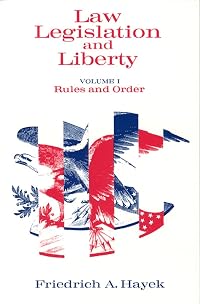
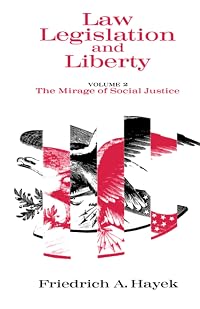
Strangers to Hayek would do better to begin with The Road to Serfdom or his Law, Legislation, and Liberty series.
Strangers to Hayek would do better to begin with The Road to Serfdom or his Law, Legislation, and Liberty series.
Friedrich Hayek's work is split into 3 parts value of Freedom, Freedom and Law and perils of a welfare state ; it essentially can be distilled to striking a fine but crucial balance between entrepreneurial capitalism and progressive socialism . Hayek approaches each chapter with meticulous analysis in an attempt to traverse the treacherous territory trying to bridge egalitarian philosophical principles with economic theory; at times reading through these parts was painstaking slow and laborious.
Some aspects are dated when seen in the backdrop the threat automation presents ; but nevertheless this is truly great body of work .
Some aspects are dated when seen in the backdrop the threat automation presents ; but nevertheless this is truly great body of work .
The first part is terrific and mostly explains the important principles of freedom.
The second part has some great insights but can be very dry.
In the third part he has some good points but some terrible ideas. Sometimes it was hard to tell if he was actually proposing his ideas or just giving a bad example of something that would have a lot of negative drawbacks. Many times it just seemed to be the latter, but not all the time.
The second part has some great insights but can be very dry.
In the third part he has some good points but some terrible ideas. Sometimes it was hard to tell if he was actually proposing his ideas or just giving a bad example of something that would have a lot of negative drawbacks. Many times it just seemed to be the latter, but not all the time.
The fullest and most consistent exposition of the pure laissez-faire doctrine. A testament of 19th century liberalism. Quotes The Economist describes it as a theoretical "Tower of Pisa, skewed at its foundations and pointing a long way out of true." (1963)
Liberty for the rich.
"...It’s about why democracy is not just about elections. The meaning of freedom, Hayek says, is negative: his is a negative concept of freedom, not a positive one. It’s not about what government or others should do, it is about freedom from coercion. And that gets complicated when more than one individual, when a multiplicity of individuals, share a society. Who should lead? Who is to govern? What are the criteria? And obviously in Western society there are different ideas about who is to govern and in what way – but the basic themes are liberty, the rule of law, a government that is elected by the people and is for the people..." (reviewed by Ayaan Hirsi Ali in FiveBooks).
The full interview is available here: show more target="_top">http://fivebooks.com/interviews/ayaan-hirsi-ali-on-women-and-islam show less
The full interview is available here: show more target="_top">http://fivebooks.com/interviews/ayaan-hirsi-ali-on-women-and-islam show less
Members
- Recently Added By
Lists

Libertarian Books
102 works; 19 members

Economics
60 works; 5 members

Ancap Part 6 - Refutations
17 works; 1 member

KIB Non-Fiction Book Cloud
41 works; 1 member

2024-2025 Ezra Klein Guest Recommendations
213 works; 6 members
Author Information

169+ Works 10,091 Members
F. A. Hayek (1899-1992), recipient of the Medal of Freedom in 1991 and co-winner of the Nobel Memorial Prize in Economic Sciences in 1974, was a pioneer in monetary theory and one of the principal proponents of classical liberal thought in the twentieth century. He taught at the University of London, the University of Chicago, and the University show more of Freiburg. show less
Awards and Honors
Series
Belongs to Publisher Series
Common Knowledge
- Canonical title
- The Constitution of Liberty
- Original publication date
- 1960
Classifications
- Genres
- Economics, Politics and Government, Nonfiction, Philosophy, General Nonfiction
- DDC/MDS
- 320.1 — Society, government, & culture Political science Types of Government The State
- LCC
- JC585 .H29 — Political Science Political theory Political theory. The state. Theories of the state Purpose, functions, and relations of the state
- BISAC
Statistics
- Members
- 1,091
- Popularity
- 23,494
- Reviews
- 10
- Rating
- (4.25)
- Languages
- 10 — English, French, German, Greek, Polish, Portuguese, Slovenian, Spanish, Swedish, Turkish
- Media
- Paper, Audiobook, Ebook
- ISBNs
- 39
- ASINs
- 14