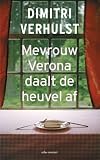
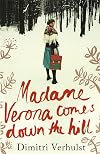
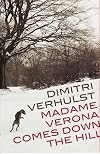
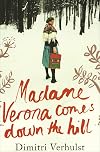
Madame Verona Comes Down the Hill
by Dimitri Verhulst
On This Page
Description
"A timeless novel about love, loss and village life" from the award-winning Dutch author of The Misfortunates and Problemski Hotel (aesthetica). Years ago, Madame Verona and her husband built a home for themselves on a hill in a forest above a small village. There they lived in isolation, practicing their music, and chopping wood to see them through the cold winters. When Mr. Verona died, the locals might have expected that the legendary beauty would return to the village, but Madame Verona show more had enough wood to keep her warm during the years it would take to make a cello'the instrument her husband loved'and in the meantime she had her dogs for company. And then one cold February morning, when the last log has burned, Madame Verona sets off down the village path, with her cello and her memories, knowing that she will have no strength to climb the hill again. Poignant, precise and perfectly structured, this is a story of one woman's tender and enduring love'as a wife, and as a widow. "An intimate, unsentimental portrayal of European rural life ... In Verhulst's landscape, nature is ruthless, amoral and never benign, and human memory a cruel mirage ... His best sentences are gorgeously resonant."'The Herald "Aging, bereavement and death are somber themes, yet this novel's treatment of them is agreeably entertaining ... this tale of enduring love is often preposterous, sometimes poignant and, above all, consistently charming."'The Independent. show lessTags
Recommendations











Member Recommendations


Member Reviews
I bought this so long ago that can’t remember why I wanted it… but I think I read it through a different prism to those who interpreted it as a poignant story about an old woman’s grief. This is a book that will resonate differently, depending on the age of the reader.
think this novella is more of a cautionary tale, and I think that the author’s flippant and discursive tone is intended to alert the read to more than the story’s diverting context.
Madame Verona and her husband deliberately chose an isolated hideaway for a home. In widowhood, Madame Verona has stayed in this secluded place until one day, when she is 82 and has used up the supply of chopped firewood her husband had left for her, she goes down the hill, knowing show more that she lacks the strength to climb back up the hill. That’s it. We know what’s going to happen. It’s a choice to die on her own terms. Someone will find her eventually, frozen to death.
Before long #SpoilerAlert we learn that her husband’s thoughtful act of provisioning with the wood takes place after Monsieur Potter is diagnosed with cancer. He chops up 20 years’ worth of wood and then hangs himself. This is framed by some readers as a thoughtful act too, deciding to spare Madame Verona the burden of looking after him. But that is not actually what the text says. He visits Dr Lunette (this isolated village has to make do with a vet) and makes up his mind very quickly. It seems to me that he wants to spare himself. That’s not unreasonable, but let’s not romanticise it:
Surely the reader who imagines the next step i.e. his wife — alone —finding his body swinging from the tree, and then having to deal with it (remember, their house is remote, a long way from the village) would conclude that this was not an act of love designed to spare her anything. Even if there is a poem in chapter V that tells her not to wait for his time to come. Even if he did chop down a forest of wood to keep her warm afterwards. These are not decisions made jointly by a loving couple. This is him, making decisions for her.
To read the rest of my review please visit https://anzlitlovers.com/2026/06/24/madame-verona-comes-down-the-hill-2009-by-di... show less
think this novella is more of a cautionary tale, and I think that the author’s flippant and discursive tone is intended to alert the read to more than the story’s diverting context.
Madame Verona and her husband deliberately chose an isolated hideaway for a home. In widowhood, Madame Verona has stayed in this secluded place until one day, when she is 82 and has used up the supply of chopped firewood her husband had left for her, she goes down the hill, knowing show more that she lacks the strength to climb back up the hill. That’s it. We know what’s going to happen. It’s a choice to die on her own terms. Someone will find her eventually, frozen to death.
Before long #SpoilerAlert we learn that her husband’s thoughtful act of provisioning with the wood takes place after Monsieur Potter is diagnosed with cancer. He chops up 20 years’ worth of wood and then hangs himself. This is framed by some readers as a thoughtful act too, deciding to spare Madame Verona the burden of looking after him. But that is not actually what the text says. He visits Dr Lunette (this isolated village has to make do with a vet) and makes up his mind very quickly. It seems to me that he wants to spare himself. That’s not unreasonable, but let’s not romanticise it:
The only thing Monsieur Potter had really considered while sitting between the skeletons in her waiting room was his hypochondriac tendency. But the pain that had floated between kidney and lung for weeks on end and whose location he, to Dr Lunette’s immense displeasure, was unable to specify to the exact millimetre was, in combination with his nocturnal coughing fits and the threads of blood he found in his saliva every morning, difficult to brush off as a symbol. And since he was, after all, a smoker, she gave her diagnosis without any trace of pity — only yourself to blame — and he accepted it immediately. He had no desire to wait for the immaculate white of a hospital room where he would rot away until the ECG plateaued and a beeping machine called the hospital corpse washers to attention and got them sopping their sponges. (p.44)
Surely the reader who imagines the next step i.e. his wife — alone —finding his body swinging from the tree, and then having to deal with it (remember, their house is remote, a long way from the village) would conclude that this was not an act of love designed to spare her anything. Even if there is a poem in chapter V that tells her not to wait for his time to come. Even if he did chop down a forest of wood to keep her warm afterwards. These are not decisions made jointly by a loving couple. This is him, making decisions for her.
To read the rest of my review please visit https://anzlitlovers.com/2026/06/24/madame-verona-comes-down-the-hill-2009-by-di... show less
If the love of your life were to die while you were still young, how would you choose to live the remainder of your life?
Madame Verona, as she is known to the villagers, is not a native of the hamlet at the foot of the mountain. She and her husband have bought a remote house and surrounding woods because "'this is a house you could die in and it's a house you could be unhappy in. We'd be mad not to take it'". Deeply in love, the couple didn't realize how soon their off-hand remark would come to be.
When the abandoned were still lovers, they had sworn that they didn't want to live without each other, they had given each other power of attorney over the meaning of their existence and the disappearance of one would have cried out for the show more disappearance of the other. With the elderly that is often a natural process: if one drops dead, the other hurries to the grave without any extra effort on their part. But young adults are not yet capable of dying like swans; their hearts are able to bear grief...
For Madame Verona, who always has a stray dog at her heals, it is the dog's needs that keep her moving forward, step by step, "and so, before she knew it, Madame Verona had been drawn into living on for her allotted span."
The majority of the story is told from the perspective of members of the village. Vignettes of life in the little community are wonderfully pastoral and funny, and their interactions with and opinions of Madame Verona are simple and askew. The story moves between the villagers' perspective and Madame Verona's memories and present thoughts to create a pastiche that is charming but not cloying. Without melodrama, the author writes of love and grief and life in a way that encompasses the noble and the mundane.
Being from a small town myself, I couldn't help but chuckle at the oddities and tall tales of the villagers, and I loved the simple and sonorous language of the book. Often, I would read passages aloud and savor the sounds and images. In less than 150 pages, I was entertained and touched by the lives and loves of the characters. Warm and gentle, this novel was a wonderful holiday read. show less
Madame Verona, as she is known to the villagers, is not a native of the hamlet at the foot of the mountain. She and her husband have bought a remote house and surrounding woods because "'this is a house you could die in and it's a house you could be unhappy in. We'd be mad not to take it'". Deeply in love, the couple didn't realize how soon their off-hand remark would come to be.
When the abandoned were still lovers, they had sworn that they didn't want to live without each other, they had given each other power of attorney over the meaning of their existence and the disappearance of one would have cried out for the show more disappearance of the other. With the elderly that is often a natural process: if one drops dead, the other hurries to the grave without any extra effort on their part. But young adults are not yet capable of dying like swans; their hearts are able to bear grief...
For Madame Verona, who always has a stray dog at her heals, it is the dog's needs that keep her moving forward, step by step, "and so, before she knew it, Madame Verona had been drawn into living on for her allotted span."
The majority of the story is told from the perspective of members of the village. Vignettes of life in the little community are wonderfully pastoral and funny, and their interactions with and opinions of Madame Verona are simple and askew. The story moves between the villagers' perspective and Madame Verona's memories and present thoughts to create a pastiche that is charming but not cloying. Without melodrama, the author writes of love and grief and life in a way that encompasses the noble and the mundane.
Being from a small town myself, I couldn't help but chuckle at the oddities and tall tales of the villagers, and I loved the simple and sonorous language of the book. Often, I would read passages aloud and savor the sounds and images. In less than 150 pages, I was entertained and touched by the lives and loves of the characters. Warm and gentle, this novel was a wonderful holiday read. show less
This is the story of Madame Verona, octogenarian, cellist and piano teacher. For decades, she has lived alone at the top of a steep hill outside a tiny, almost forgotten village. Her husband, Monsieur Potter, who died long ago, was the great passion of her life, a passion that—despite the confident predictions of the village men who hope to share a widow's bed—has not faded with the passing of the years. She is alone, except for the stray dogs that keep adopting her, but never lonely. One freezing cold February day, after placing the last log from the lifetime's supply of firewood her husband cut for her onto the fire, she walks down that steep hill, knowing that she will never make it back up, and sits down on a park bench to show more reflect.
Through the chronicler's voice, she tells us stories of her youth, the beautiful young music student and the dashing composer. She tells us stories of the tiny town, that once installed a cow…not just any cow, mind you, but a Blonde d'Aquitaine…as mayor, and where a shopkeeper retires when one of her deadbeat patrons unexpectedly pays his account. She shares her thoughts on heaven and the nature of forests.
This was recommended to me based upon my great delight in Chingiz Aïtmatov's Jamilia. There is a certain aspect to each that reminds me of traditional tales but the former book seemed more a folktale while this had a tiny something of the parable to it. The language in Verhulst's book certainly requires closer attention; it is beautifully poetic but not always as simple as it seems. And that's the charm of this book in which very little happens: it's a satisfying blend of thoughtfulness, humor, poignancy and love story. show less
Through the chronicler's voice, she tells us stories of her youth, the beautiful young music student and the dashing composer. She tells us stories of the tiny town, that once installed a cow…not just any cow, mind you, but a Blonde d'Aquitaine…as mayor, and where a shopkeeper retires when one of her deadbeat patrons unexpectedly pays his account. She shares her thoughts on heaven and the nature of forests.
This was recommended to me based upon my great delight in Chingiz Aïtmatov's Jamilia. There is a certain aspect to each that reminds me of traditional tales but the former book seemed more a folktale while this had a tiny something of the parable to it. The language in Verhulst's book certainly requires closer attention; it is beautifully poetic but not always as simple as it seems. And that's the charm of this book in which very little happens: it's a satisfying blend of thoughtfulness, humor, poignancy and love story. show less
Madame Verona lives at the top of a hill on the outskirts of an isolated village. A musician, she has lived alone since the death of her composer husband, with just stray dogs for company. While she has a stock of wood to burn she feels no need to rejoin the small but dwindling community in the village while she waits for the luthier to make her a cello - it will take twenty years for the wood to season. The men of the village rather wish she'd chosen a different course, for there are few women in these parts. Eventually the cello is finished, she plays it for her dead husband, and then, when the last log is gone, she comes down the hill knowing she'll never climb back up.
This little novel is a real gem. Written by a Belgian and show more superbly translated, in between the melancholy tale of Madame Verona's life are rich and humorous episodes of village life. A village where prowess in Table Football is taken really seriously, and where a cow can be elected Mayor. It is a story crying out to be made into an arty film - a great little love story with a superb backdrop - I loved it. (Book supplied by the Amazon Vine programme; 9/10) show less
This little novel is a real gem. Written by a Belgian and show more superbly translated, in between the melancholy tale of Madame Verona's life are rich and humorous episodes of village life. A village where prowess in Table Football is taken really seriously, and where a cow can be elected Mayor. It is a story crying out to be made into an arty film - a great little love story with a superb backdrop - I loved it. (Book supplied by the Amazon Vine programme; 9/10) show less
A lovely short novel, told in beautiful language and with a folklorish feel, about the enduring love of Madame Verona, a pianist and legendary beauty, and her husband, Monsieur Potter, a composer. They live in a remote cottage in the woods high above a little village. As our narrator tells us the story—kind of a legend—of our couple, he also tells us some wonderful tales about the quirky village below, populated by people who seem to work and play hard - whether that be table football or making a cow an honorary mayor of the town.
The book requires attentiveness because of the language, but the rewards will be many. It reminded me a little of Aitmatov's Jamilia.
The book requires attentiveness because of the language, but the rewards will be many. It reminded me a little of Aitmatov's Jamilia.
The book is set in the tiny and remote village of Oucwegne, a place that is slowly dying due to the lack of girls being born in recent generations. Madame Verona and her musician husband Monsieur Potter live in an isolated house at the top of a steep hill overlooking the village. As they get older, it becomes more and more difficult to walk up and down the hill. When Monsieur Potter hangs himself from a tree after being diagnosed with cancer, he leaves his wife enough firewood to last another twenty years. During those twenty years, Madame Verona lives alone with only an assortment of stray dogs for company, waiting for a luthier (cello-maker) to build her a cello using the wood of the tree from which her husband hanged himself. show more Eventually she places the last log on the fire and, as the title suggests, comes down the hill, knowing she won’t have the strength to go back up ever again.
The problem I had with the book is that there's very little action, there's no suspense as we know what's going to happen right from the beginning, and there’s almost no dialogue. However, this is more to do with my own personal reading preferences rather than a criticism of the book itself – it’s not supposed to be a thriller after all. Most of the 145 pages are devoted to a string of humorous anecdotes describing life in an isolated village where only six people attend church, the men are obsessed with playing games of table football and a cow was once elected mayor. Most of the characters Verhulst describes are portrayed as eccentric and not particularly likeable. It’s easy to see why Madame Verona was in no hurry to rejoin the community, preferring to stay on the hill with her memories of her husband. The final few chapters, though, were poignant and moving and will be understood by anyone who has lost someone they love.
This book has been translated from the original Dutch, but even in translation Dimitri Verhulst's writing is poetic and thought-provoking. If you can appreciate the beautiful writing for its own sake and are happy to read a book where nothing really happens, then you would probably enjoy Madame Verona. I would be prepared to try more of Verhulst's books because he does have a very nice style, but this one just didn’t appeal to me. show less
The problem I had with the book is that there's very little action, there's no suspense as we know what's going to happen right from the beginning, and there’s almost no dialogue. However, this is more to do with my own personal reading preferences rather than a criticism of the book itself – it’s not supposed to be a thriller after all. Most of the 145 pages are devoted to a string of humorous anecdotes describing life in an isolated village where only six people attend church, the men are obsessed with playing games of table football and a cow was once elected mayor. Most of the characters Verhulst describes are portrayed as eccentric and not particularly likeable. It’s easy to see why Madame Verona was in no hurry to rejoin the community, preferring to stay on the hill with her memories of her husband. The final few chapters, though, were poignant and moving and will be understood by anyone who has lost someone they love.
This book has been translated from the original Dutch, but even in translation Dimitri Verhulst's writing is poetic and thought-provoking. If you can appreciate the beautiful writing for its own sake and are happy to read a book where nothing really happens, then you would probably enjoy Madame Verona. I would be prepared to try more of Verhulst's books because he does have a very nice style, but this one just didn’t appeal to me. show less
This is the tale of Madame Verona who lived with her beloved husband and collection of dogs in a remote cottage, beyond the forest, high above the village. Now, in this village, there is a distinct shortage of women. And when Madame Verona’s husband dies at a young age, the men start dreaming of the beautiful Madame coming down the hill. Only thing is, her husband foresaw his death and stocked up the wood for her fires, for years and years to come. So she has no need to come down the hill just yet.
This is a charming fable of enduring love told mostly from the perspective of an interesting motley of villagers sure to provide a series of chuckles. There is nothing profound about it. It is simple, and crafted with the lightest, most show more delightful touch. It is the perfect summer holiday read. show less
This is a charming fable of enduring love told mostly from the perspective of an interesting motley of villagers sure to provide a series of chuckles. There is nothing profound about it. It is simple, and crafted with the lightest, most show more delightful touch. It is the perfect summer holiday read. show less
Members
- Recently Added By
Lists

Five star books
1,755 works; 108 members
Author Information

39+ Works 3,871 Members
Some Editions
Awards and Honors
Awards
Common Knowledge
- Canonical title
- Madame Verona Comes Down the Hill
- Original title
- Mevrouw Verona daalt de heuvel af
- Original publication date
- 2006; 2009 (English) (English)
- People/Characters
- Madame Verona; Monsieur Potter
- Important places
- Oucwegne
- Epigraph
- My dog is old. When he is in pain, an imploring look comes into his eyes. I am his God. He doesn't know that behind the God that will save him, the one he beseeches, there is another God he cannot see. Is there another be... (show all)hind ours as well? The dog grovels at my feet. At whose feet must we grovel? --Jean Ray
- Dedication
- For Nathalie, at last
- First words
- Somewhere, in one of the many narrative repositories that have been set up here and there for us to draw on when the world needs a story, it must be possible find the fable that tells us that people, on their arrival in the r... (show all)ealm of the dead, must lay claim to a trait, one only, that characterizes the life they have just led.
- Last words*
- (Click to show. Warning: May contain spoilers.)Het gezicht van iemand die een portier begroet en zich begeeft naar een balie en daar op de belangrijkste vraag antwoordt dat ze haar hele leven lang de volgzaamheid van honden heeft genoten.
- Original language
- Dutch
*Some information comes from Common Knowledge in other languages. Click "Edit" for more information.
Classifications
- Genres
- General Fiction, Fiction and Literature
- DDC/MDS
- 839.3137 — Literature & rhetoric German & related literatures Other Germanic literatures Netherlandish literatures Dutch Dutch fiction 21st Century
- LCC
- PT6466.32 .E5624 .M47 — Language and Literature German, Dutch and Scandinavian literatures Flemish literature since 1830 Individual authors or works
- BISAC
Statistics
- Members
- 431
- Popularity
- 71,356
- Reviews
- 20
- Rating
- (3.80)
- Languages
- Dutch, English, German
- Media
- Paper, Audiobook, Ebook
- ISBNs
- 10
- ASINs
- 2