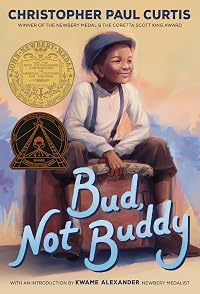
Bud, Not Buddy
by Christopher Paul Curtis
On This Page
Description
Ten-year-old Bud, a motherless boy living in Flint, Michigan, during the Great Depression, escapes a bad foster home and sets out in search of the man he believes to be his father--the renowned bandleader, H.E. Calloway of Grand Rapids.Tags
Recommendations











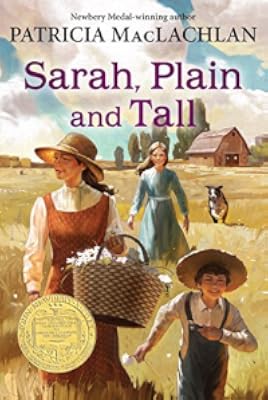
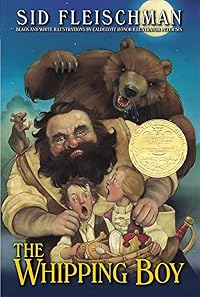
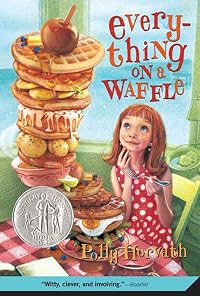
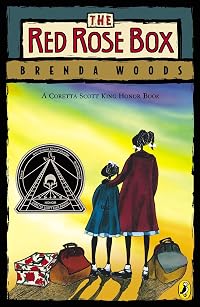


Member Recommendations


Member Reviews
First of all, I didn't even realize that this was the same author as The Watson's Go to Birmingham until I did a bit of background research on Christopher Paul Curtis. Yet another phenomenal book from Curtis, but one where being defined by the color of your skin isn't a driving factor. On the other hand, though, racism is addressed, but by assuming the mantle of a young orphaned black boy named "Bud, not Buddy," Curtis has us realize that racism isn't as high on the list of this character's priorities as his next meal. The story takes us through Bud's quest to find a home during the Great Depression after running away from an abusive foster family. Along the way, he meets a few interesting characters that shed light on what life was show more like for Blacks living in the 1930s. This is a great book for introducing children to the issues of racism, homelessness, poverty, and familial issues. Although it might been seen as a book for younger audiences due to its length and straightforward narrative style, I think in the hands of the right teacher more could be extracted from its pages. show less
If you want a story that keeps you close to a character's heart throughout and wrenches all the emotions out of it then look no further then this amazing novel. Author Christopher Paul Curtis tells such an amazingly alive and strong powerful story about courage, survival, and the bond of what family means to so many people. It tells the story of Bud Caldwell, (please don't call him Buddy) and his journey from an orphanage in Flint, Michigan to the small town of Grand Rapids as he searches for his father, Herman Calloway. Bud, survived by his late mother who has passed at an early age, gives credence to the fact that our hearts are stronger than our stomach, and Bud says, his eyes are tired of crying. He is reminded by his late mother, show more through etched stones with dates that his father is a musician, well known in fact who he has been searching for. We are carried from orphanage, to shantytown, and from there on a walking journey in the dead of night as Bud escapes the horrible conditions he is in to search for his family. What he finds in Grand Rapids is Herman and his bustling band, who are local stars of their own. They adopt him and in the end we find out something truly heart wrenching .
What you cannot fathom during this time during the Great Depression is the level of loss, guilt, and despair many of the young children felt as they were abandoned and estranged and given no bound or limits of hope. How Bud reacted and the strength he pursued was such a model for hero in my book. I especially loved Bud Caldwell's Rules and Things to Have a Funny Life and Make a Better Liar Out of Yourself because it gives you a really intimate look at Bud's inner turmoil, reflectiveness, and the world that has shaped him. I have never cried this hard after closing this book. This was a winner. show less
What you cannot fathom during this time during the Great Depression is the level of loss, guilt, and despair many of the young children felt as they were abandoned and estranged and given no bound or limits of hope. How Bud reacted and the strength he pursued was such a model for hero in my book. I especially loved Bud Caldwell's Rules and Things to Have a Funny Life and Make a Better Liar Out of Yourself because it gives you a really intimate look at Bud's inner turmoil, reflectiveness, and the world that has shaped him. I have never cried this hard after closing this book. This was a winner. show less
“...that was Bud Caldwell's Rules and Things to Have a Funner LIfe and Make a Better Liar Out of Yourself Number 83...If a Adult Tells You Not to Worry, and You Weren't Worried Before, You Better Hurry Up and Start 'Cause You're Already Running Late.”
“No sir, I don't know why, but my eyes don't cry no more.”
“Rules and Things Number 63: Never, Ever Say Something Bad About Someone You Don't Know--Especially When You're Around a Bunch of Strangers. You Never Can Tell Who Might Be Kin to That Person or Who Might Be a Lip-Flapping, Big-Mouth Spy.”
An engaging, well done young adult/middle grader book, Bud, Not Buddy features the 10-year-old title character, an orphan, running away from his latest abusive foster home after being show more locked in a shed for the night. He's in Michigan during the Depression, and wants to find the man he believes is his father, a band leader featured on flyers Bud's mother left him. Bud's a polite, thoughtful boy, and attracts some good luck while roughing it. He eventually connects up with the band - sympathetic singer Miss Thomas, Steady Eddie, Mr. Jimmy, Doug the Thug, and others -who welcome him and begin to teach him music. There is plenty of light shown on the time's difficult conditions, but there's also humor and happy optimism. The characters, most especially Bud, are all interesting and well-drawn, and the book is a page-turner well-deserving of its Newbery award. show less
“No sir, I don't know why, but my eyes don't cry no more.”
“Rules and Things Number 63: Never, Ever Say Something Bad About Someone You Don't Know--Especially When You're Around a Bunch of Strangers. You Never Can Tell Who Might Be Kin to That Person or Who Might Be a Lip-Flapping, Big-Mouth Spy.”
An engaging, well done young adult/middle grader book, Bud, Not Buddy features the 10-year-old title character, an orphan, running away from his latest abusive foster home after being show more locked in a shed for the night. He's in Michigan during the Depression, and wants to find the man he believes is his father, a band leader featured on flyers Bud's mother left him. Bud's a polite, thoughtful boy, and attracts some good luck while roughing it. He eventually connects up with the band - sympathetic singer Miss Thomas, Steady Eddie, Mr. Jimmy, Doug the Thug, and others -who welcome him and begin to teach him music. There is plenty of light shown on the time's difficult conditions, but there's also humor and happy optimism. The characters, most especially Bud, are all interesting and well-drawn, and the book is a page-turner well-deserving of its Newbery award. show less
Audio book performed by James Avery.
5***** and a ❤
In Depression-era Flint, Michigan, 10-year-old Bud Caldwell (BUD, not Buddy) is plucked from the “home” to go to a foster family. This will be the third foster home he’s been in, and he’s not impressed. But he takes his worn, cardboard suitcase with his few but treasured possessions and tries to make the best of it. Before he knows it, he’s on the lam, determined to find his own way and sure that the things his Momma left him are clues to his father’s identity and whereabouts.
I love Bud. He’s imaginative, intelligent, resourceful, well-mannered, curious, and ever-hopeful. Once he’s decided to find the man he is sure is his father, nothing will stop him. He endures show more hunger and fear, but also comes across kind-hearted men and women who help him (though he isn’t always forthcoming about his goal, and outright lies about his situation more than once). He’s also quite the philosopher – having compiled a list of Bud Caldwell’s Rules and Thing for Having a Funner Life and Making a Better Liar Out of Yourself. Among my favorites: Rule # 83 - If a Adult Tells You Not to Worry, and You Weren’t Worried Before, You Better Hurry Up and Start, ‘Cause You’re Already Running Late.
Curtis doesn’t gloss over the difficulties faced by many during the Great Depression, giving the reader a history lesson on the conditions in Hoovervilles across America. But he also shows that with determination, hard work, and compassion people survived the hardships and formed lasting bonds. As an adult, I really appreciated the afterword wherein Curtis explains some of his own family history and suggests, no orders, the reader to “Go talk to Grandma and Grandpa, Mom and Dad, and other relatives and friends.”
James Avery is marvelous performing the audio book. Heck, I was scared when Bud was in the shed with the “vampires” and fish-guards! And at the end, my eyes started that same “stingy-eyed blinking” right along Miss Thomas. show less
5***** and a ❤
In Depression-era Flint, Michigan, 10-year-old Bud Caldwell (BUD, not Buddy) is plucked from the “home” to go to a foster family. This will be the third foster home he’s been in, and he’s not impressed. But he takes his worn, cardboard suitcase with his few but treasured possessions and tries to make the best of it. Before he knows it, he’s on the lam, determined to find his own way and sure that the things his Momma left him are clues to his father’s identity and whereabouts.
I love Bud. He’s imaginative, intelligent, resourceful, well-mannered, curious, and ever-hopeful. Once he’s decided to find the man he is sure is his father, nothing will stop him. He endures show more hunger and fear, but also comes across kind-hearted men and women who help him (though he isn’t always forthcoming about his goal, and outright lies about his situation more than once). He’s also quite the philosopher – having compiled a list of Bud Caldwell’s Rules and Thing for Having a Funner Life and Making a Better Liar Out of Yourself. Among my favorites: Rule # 83 - If a Adult Tells You Not to Worry, and You Weren’t Worried Before, You Better Hurry Up and Start, ‘Cause You’re Already Running Late.
Curtis doesn’t gloss over the difficulties faced by many during the Great Depression, giving the reader a history lesson on the conditions in Hoovervilles across America. But he also shows that with determination, hard work, and compassion people survived the hardships and formed lasting bonds. As an adult, I really appreciated the afterword wherein Curtis explains some of his own family history and suggests, no orders, the reader to “Go talk to Grandma and Grandpa, Mom and Dad, and other relatives and friends.”
James Avery is marvelous performing the audio book. Heck, I was scared when Bud was in the shed with the “vampires” and fish-guards! And at the end, my eyes started that same “stingy-eyed blinking” right along Miss Thomas. show less
Surprisingly upbeat and funny for a story about an orphaned black boy during the Great Depression. The book felt historically accurate without hitting young readers over the head with unfamiliar information constantly. It has the structure of a journey/quest book where the main character meets a variety of fun characters.
This wonderful story really gets across the desperation and hardship that defined life during the Great Depression. We follow an astute, young orphaned boy, Bud, from the orphanage to a foster family, to Grand Rapids to find who he believes to be his father, the jazz musician on the flyer his late mother carried around but never mentioned. When Bud finds this man he gets a surprise he didn't expect.
Bud's life is profoundly sad and Curtis' writing makes you feel the unfairness of it deeply as he keeps us intimately in tune with Bud's thoughts and feelings. However, through Bud's "Rules And Things To Have A Funny Life And Make A Better Liar Out Of Yourself" Curtis shows us that from great tribulation great wisdom is born. Overall, a show more fantastic, heart wrenching and at times funny book. show less
Bud's life is profoundly sad and Curtis' writing makes you feel the unfairness of it deeply as he keeps us intimately in tune with Bud's thoughts and feelings. However, through Bud's "Rules And Things To Have A Funny Life And Make A Better Liar Out Of Yourself" Curtis shows us that from great tribulation great wisdom is born. Overall, a show more fantastic, heart wrenching and at times funny book. show less
“Bud Not Buddy” is simultaneously heartbreaking and heartwarming. It is told in the first person and is fiction but set against a historically accurate background. For example, the Hoovervilles, the ‘sun-down towns’, and the union busters. In the Afterword, the author confesses that two of the characters in the story were based on his grandfathers, which I loved. One is the Pullman porter and the other is Herman E Calloway.
We know it is set during the great depression. Also, Bud has been orphaned since the age of 6 and he is now 10. The author chose to write the story in the vernacular of the time and even spelled some of the words like ‘human bean’ just as Bud would pronounce them. This helps the reader get into Bud’s show more head and is also an endearing characteristic.
At the beginning of the story when he is still in the orphanage, he is affectionate toward Jerry who is younger than him so we know that he still possesses some empathy, although the reader can tell he has suffered more than his fair share and has a wall built around his heart and his dreams.
He is still young enough to imagine bloodsucking vampire bats and monsters in the closet but old enough to know he cannot rely on anyone else for his survival so he has created these ‘guides for a successful life’ and has them numbered, although I am suspicious that he makes these numbers up as he tells his story to the reader.
We see Bud’s transformation from the beginning of the story where he has not been shown an ounce of kindness since his mother’s passing. Throughout Bud’s tale, he comes across a growing number of people that want to help him. There were complete strangers in a food line who pretended he was their son so he could eat, later he meets adults and children in the Hooverville who were as down on their luck as Bud, nevertheless, they showed him every kindness. One of my favorite parts was the man in the Hooverville who explained why they were called Hooverville’s: “That’s right, Mr. Hoover worked so hard at making sure every city has got one . . . it would be criminal to call them anything else.” I laughed out loud!
Then we find Bud in the hands of the Pullman porter who brings him home and gives him the first good night’s sleep he’s had since his mother was alive. He gradually loosens up and lets his guard down. When he finally finds his ‘father’ he is ready for war to get what he wants; to be part of a family. From Bud, we learn that there is no such thing as too poor, too vulnerable, or too unlucky because he does not let any of those things slow him down. Bud takes the reader on a ride that is difficult to read at times but well worth the journey. show less
We know it is set during the great depression. Also, Bud has been orphaned since the age of 6 and he is now 10. The author chose to write the story in the vernacular of the time and even spelled some of the words like ‘human bean’ just as Bud would pronounce them. This helps the reader get into Bud’s show more head and is also an endearing characteristic.
At the beginning of the story when he is still in the orphanage, he is affectionate toward Jerry who is younger than him so we know that he still possesses some empathy, although the reader can tell he has suffered more than his fair share and has a wall built around his heart and his dreams.
He is still young enough to imagine bloodsucking vampire bats and monsters in the closet but old enough to know he cannot rely on anyone else for his survival so he has created these ‘guides for a successful life’ and has them numbered, although I am suspicious that he makes these numbers up as he tells his story to the reader.
We see Bud’s transformation from the beginning of the story where he has not been shown an ounce of kindness since his mother’s passing. Throughout Bud’s tale, he comes across a growing number of people that want to help him. There were complete strangers in a food line who pretended he was their son so he could eat, later he meets adults and children in the Hooverville who were as down on their luck as Bud, nevertheless, they showed him every kindness. One of my favorite parts was the man in the Hooverville who explained why they were called Hooverville’s: “That’s right, Mr. Hoover worked so hard at making sure every city has got one . . . it would be criminal to call them anything else.” I laughed out loud!
Then we find Bud in the hands of the Pullman porter who brings him home and gives him the first good night’s sleep he’s had since his mother was alive. He gradually loosens up and lets his guard down. When he finally finds his ‘father’ he is ready for war to get what he wants; to be part of a family. From Bud, we learn that there is no such thing as too poor, too vulnerable, or too unlucky because he does not let any of those things slow him down. Bud takes the reader on a ride that is difficult to read at times but well worth the journey. show less
Members
- Recently Added By
Lists

Best Newbery Medal Winners
94 works; 52 members

1001 Children's Books You Must Read Before You Grow Up
774 works; 101 members

School Library Journal - 2012 Top 100 Children's Novels
68 works; 8 members

Kids' Tour of the US in Books
50 works; 5 members

Sonlight Books
1,487 works; 25 members
Honey For a Child's Heart
1,152 works; 25 members

Newbery Medal Winners - By Year
105 works; 7 members

Satori Smiles Children's Book List
262 works; 7 members

Geek Dad Read to Your Kids Additions List
66 works; 4 members

children's/y.a. reclist
43 works; 2 members

Books Read in 2017
4,249 works; 129 members

Books Read in 2021
5,361 works; 114 members

Books Read in 2023
5,547 works; 145 members

The Story of the World: Activity Book Four: The Modern Age
333 works; 2 members
Author Information

18+ Works 29,444 Members
Newbery Medal-winning children's book author Christopher Paul Curtis was born in Flint, Michigan on May 10, 1953 and graduated from The University of Michigan. While there he won the Avery and Jules Hopwood Prizes for poetry and a draft of one of his early books. Curtis spent thirteen years on an assembly line hanging car doors. His story The show more Watsons Go to Birmingham-1963 received a Newbery Honor and a Coretta Scott King Honor, and Bud, Not Buddy became the first novel to win both of these awards. Elijah of Buxton received the 2008 Scott O'Dell Historical Fiction Award, the Coretta Scott King Award, and a Newbery Honor. Curtis also won the 2009 Anne V. Zarrow Award for Young Readers' Literature. (Bowker Author Biography) show less
Awards and Honors
Awards
Distinctions
Notable Lists
Work Relationships
Is contained in
Has as a student's study guide
Has as a teacher's guide
Common Knowledge
- Canonical title*
- Mijn naam is Bud
- Original title
- Bud, not Buddy
- Original publication date
- 1999
- People/Characters
- Bud; Lefty; Herman E. Calloway; Miss Thomas
- Important places
- Flint, Michigan, USA; Grand Rapids, Michigan, USA; Michigan, USA
- Important events
- Great Depression
- Dedication
- I dedicate this book to the following people:
Leslie and Herman Curtis Jr.
Sarah and Earl Lewis
Hazel and Herman E. Curtis Sr.
Joan and George Taylor, Nina and Sterling Sleet
Gloria and Frederick "Bud" Curt... (show all)is
Virginia and F. D. Johnson, Paul Lewis
Donna and Eugene Miller
Johnnie and Don Ricks, Rosemary and Willie Swan
Carol and Lawrence Anderson
Laverne and James Cross Sr.
Carolyn and Dan Evans
Willie and Frances and Robert James
Dorothy and Theodore Johnson
Tommie and robert Epps Sr
Mr. and Mrs. Small of Liberty Street, James Wesley Sr.
Harrison Edward Patrick
James Cross Jr.
LaRon Williams, Douglas Tennant
Margaret Davidson, Roland Alums, John Nash
Suzanne Henry Jakeway
And Alvin Stockard-
all of whom led and lead by example, all of whom have been models of compassion, strength and love, all of whom I'll remember forever. - First words
- Here we go again.
- Quotations
- "A bud is a flower-to-be. A flower-in-waiting. Waiting for just the right warmth and care to open up. It's a little fist of love waiting to unfold and be seen by the world. And that's you." Chapter 5, pg. 42
She handed me the pencil and paper and the cities book, then said, "And when you're done with the book bring it back and I have something special for you!" She had a huge smile on her face.
I said "Thank you, ma'am," b... (show all)ut I didn't get too excited 'cause I know the kind of things librarians think are special. - Last words
- (Click to show. Warning: May contain spoilers.)Shucks, as good as things were going for me now I'd bet you dollars to doughnuts that Steady Eddie was going to get here early.
- Original language
- English
*Some information comes from Common Knowledge in other languages. Click "Edit" for more information.
Classifications
- Genres
- Children's Books, Kids, Fiction and Literature
- DDC/MDS
- 813.54 — Literature & rhetoric American literature in English American fiction in English 1900-1999 1945-1999
- LCC
- PZ7 .C94137 .B — Language and Literature Fiction and juvenile belles lettres Fiction and juvenile belles lettres Juvenile belles lettres
- BISAC
Statistics
- Members
- 12,186
- Popularity
- 701
- Reviews
- 526
- Rating
- (4.08)
- Languages
- 7 — Chinese, Dutch, English, German, Hungarian, Italian, Spanish
- Media
- Paper, Audiobook, Ebook
- ISBNs
- 64
- UPCs
- 1
- ASINs
- 45