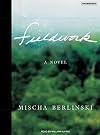
Fieldwork
by Mischa Berlinski
On This Page
Description
When his girlfriend takes a job as a schoolteacher in northern Thailand, Mischa Berlinski goes along for the ride, working as little as possible for one of Thailand's English-language newspapers. One evening a fellow expatriate tips him off to a story. A charismatic American anthropologist, Martiya van der Leun, has been found dead-a suicide-in the Thai prison where she was serving a fifty-year sentence for murder.Motivated first by simple curiosity, then by deeper and more mysterious show more feelings, Mischa searches relentlessly to discover the details of Martiya's crime. His search leads him to the origins of modern anthropology-and into the family history of Martiya's victim, a brilliant young missionary whose grandparents left Oklahoma to preach the Word in the 1920s and never went back. Finally, Mischa's obssession takes him into the world of the Thai hill tribes, whose way of life becomes a battleground for two competing, and utterly American, ways of looking at the world.Vivid, passionate, funny, deeply researched, and exquisitely plotted, Fieldwork is a novel about fascination and taboo-scientific, religious, and sexual. It announces an assured and captivating new voice in American fiction. show lessTags
Recommendations



































Member Recommendations

Member Reviews
Much better than I expected. I was so dubious when i saw the Chess Club Pres author picture and it was billed as an exotic thriller set in Thailand but it was really quite different and quite enjoyable. I did not expect the twists it took or the long diversions into the Walker missionary family but it was all well-written and very interesting. To the detriment of work at times, I really could not put it down and powered through to the end in one night. The end did tend to fall off a bit but I liked the murkiness of the ending.
If this is Mischa Berlinski's debut novel, I'm going to need to stand in line for his oncoming novels. This one just blew me away!
Fieldwork opens with an American journalist, oddly of the same name and religion (Jewish) as the author, who meets friend Josh O'Connor in Thailand, a country in which both are living and working at the time. Josh's request is that Mischa investigate the circumstances leading to the suicidal death of American anthropologist Martiya van der Leun. What was known was that she was a grad student working on a thesis about the Dyalo, a hill-tribe located in a rural area of northern Thailand. It was also known that, prior to her death, she had been incarcerated for ten years on a murder charge.
Through meetings and show more interviews with people who knew Martiya, Mischa slowly uncovers the truth about her situation. What, at first to me as a reader, seemed a divergent track and one that involved learning about several generations of the Walkers, a missionary family also living among the Dyalo, turned out to be very important to understand how missionary work affects isolated groups of people.
I was mesmerized by this tale. I'm not sure if it was because it involved cutural anthropology which, to me, is such a fascinating field or whether I was simply wondering how a Jewish man became involved investigating animism versus Christianity. In addition, the story reveals the fervor of an individual who engages in fieldwork or the "living with the tribe" experience of cultural anthropological study.
For anyone interested in other cultures, this is an amazing story. It's really up to the reader to decide if the Dyalo were, in fact, an invented people or based upon true hill-tribe inhabitants of northern Thailand. In order to decide, though, you must first read this book! show less
Fieldwork opens with an American journalist, oddly of the same name and religion (Jewish) as the author, who meets friend Josh O'Connor in Thailand, a country in which both are living and working at the time. Josh's request is that Mischa investigate the circumstances leading to the suicidal death of American anthropologist Martiya van der Leun. What was known was that she was a grad student working on a thesis about the Dyalo, a hill-tribe located in a rural area of northern Thailand. It was also known that, prior to her death, she had been incarcerated for ten years on a murder charge.
Through meetings and show more interviews with people who knew Martiya, Mischa slowly uncovers the truth about her situation. What, at first to me as a reader, seemed a divergent track and one that involved learning about several generations of the Walkers, a missionary family also living among the Dyalo, turned out to be very important to understand how missionary work affects isolated groups of people.
I was mesmerized by this tale. I'm not sure if it was because it involved cutural anthropology which, to me, is such a fascinating field or whether I was simply wondering how a Jewish man became involved investigating animism versus Christianity. In addition, the story reveals the fervor of an individual who engages in fieldwork or the "living with the tribe" experience of cultural anthropological study.
For anyone interested in other cultures, this is an amazing story. It's really up to the reader to decide if the Dyalo were, in fact, an invented people or based upon true hill-tribe inhabitants of northern Thailand. In order to decide, though, you must first read this book! show less
Although quite different in terms of subject matter from what I usually read, this book was, to my mind, highly original, opening up worlds to me that I never dreamt would be deeply engrossing. This is the story of a young man researching the disappearance of an anthropology doctoral student in the middle of writing her dissertation. She has gone to study and live with one of the indigenous tribes of Thailand for that dissertation, along the way encountering a family of American Christian missionaries that have lived in the mountains of Thailand for generations. Christian missionaries are not my ideal characters for pleasure reading, but here they are wrought with such respect and psychological deftness by the author that one is show more painlessly pulled into their world.
In another feat of authorial pyrotechnics, the Diyalo tribe, whose customs, language and very existence the author credibly invents, provides a classroom in which the world of anthropological academe is subtly critiqued. The best praise I can give this book is to say that the plot is organic, arising from the original elements of character and plot that the author has chosen. But nothing is ever showy. Aside from that fact that the book has oblique autobiographical elements from the author, nothing in it feels labored. One of the best books I read last year. Highly recommended.
Coincidentally I received this book from the early reviewers program a few months before I went to Thailand for the first time. I visited Chiang Mai and the environs where this is set and I must say this book gave me an "anthropological eye" which added a deeper level of appreciation to the tribal people that I met. show less
In another feat of authorial pyrotechnics, the Diyalo tribe, whose customs, language and very existence the author credibly invents, provides a classroom in which the world of anthropological academe is subtly critiqued. The best praise I can give this book is to say that the plot is organic, arising from the original elements of character and plot that the author has chosen. But nothing is ever showy. Aside from that fact that the book has oblique autobiographical elements from the author, nothing in it feels labored. One of the best books I read last year. Highly recommended.
Coincidentally I received this book from the early reviewers program a few months before I went to Thailand for the first time. I visited Chiang Mai and the environs where this is set and I must say this book gave me an "anthropological eye" which added a deeper level of appreciation to the tribal people that I met. show less
 This review was written for LibraryThing Early Reviewers.
Mischa is on the path of a murderer. Martiya, a cultural anthropologist who lived with and tried to understand the Dyalo tribe in northern Burma/Thailand, murdered a missionary named David Walker. [Fieldwork] is the story of Mischa's pursuit of answers: why? and how did their paths cross? how did a promising but tortured anthropologist become a murderer and end up in a Thai prison?
Berlinski tells a great story and effectively moves among the stories within the story. His narrator is always present, but he gracefully yields the first-person narrative stage to other, more central characters. This novel is part ethnohistory, part murder mystery, and part exploration of the impact of culture on who each of us is --- and how invisible our show more own culture is to us! Berlinski explores the visceral and unquestioning attachment humans have to their most fundamental cultural beliefs, those things that are "obvious" and absolute to each of us. He amusingly tells of Martiya's attempts to draw explanations for rituals and mores out of the Dyalo people --- and their circular answers that boil down to "we do it that way because it is our custom." And while exploring and appreciating another culture is articulated as a valuable and worthwhile endeavor, Berlinski suggests that true immersion --- becoming a member of another culture comes with potentially devastating (lethal!) risks. Thought-provoking, entertaining, and compassionate, this is a book worth reading. show less
Berlinski tells a great story and effectively moves among the stories within the story. His narrator is always present, but he gracefully yields the first-person narrative stage to other, more central characters. This novel is part ethnohistory, part murder mystery, and part exploration of the impact of culture on who each of us is --- and how invisible our show more own culture is to us! Berlinski explores the visceral and unquestioning attachment humans have to their most fundamental cultural beliefs, those things that are "obvious" and absolute to each of us. He amusingly tells of Martiya's attempts to draw explanations for rituals and mores out of the Dyalo people --- and their circular answers that boil down to "we do it that way because it is our custom." And while exploring and appreciating another culture is articulated as a valuable and worthwhile endeavor, Berlinski suggests that true immersion --- becoming a member of another culture comes with potentially devastating (lethal!) risks. Thought-provoking, entertaining, and compassionate, this is a book worth reading. show less
Thailand is the setting for Mischa Berlinski's Fieldwork. But modern Thailand plays the most minor and unimportant role of the three scenarios Berlinski depicts. Of the three, the fictional Dyalo, a remote hilltribe in Thailand's far north is the most interesting. Taking the perspective of an anthropologist who has situated herself among them, the novel is fascinating not only for the rituals it examines and the utterly exotic ways it explains but also for its incorporation of mostly unheard of academic theories of social anthropology. At times, the book even seems a condensed history of the discipline. There aren't too many works of fiction, after all, that are capable of working James Frazer's The Golden Bough into the plot in a show more meaningful and interesting way.
Otherwise, the form of the novel is almost a literary version of Citizen Kane, revolving around a mysterious death and a murder. This in turn leads to the exploring of the second group due anthropological uncovering--fundamentalist American missionaries devoted to converting the heathen Dyalo to Christianity. What the narrator and sometimes protagonist in the story reveals is that both the Dyalo and the missionaries operate from a similar perspective on the world. Both peoples are encased in a worldview where demons and spirits populate the world and determine human fate. It's to Berlinski's credit, by the way, that he represents the missionaries as deserving of sympathetic observation as much as would normally be the case for the Dyalo alone. The exotic and unknown and sometimes unknowable worlds of both peoples are rendered with some subtlety as well as nuance.
Mischa Berlinski, finally, is not only the author of this mystery, the name is also that given to the lead narrator/protagonist. And it is his story that is used for the side trips into modern Thailand. This is also the weakest part of the novel. Berlinski's observations about expats in Thailand mostly do little beyond presenting cliched images. It sometimes seems as if he has made a checklist of foreigners' faults and oddities from sources such as Thai Visa Forum--available online, for anyone interested. He also gets a few things wrong. But he also gets one thing very right, the world of Thailand right before the smartphone revolution brought global immediacy to the remotest of Thai villages. Berlinski's Thailand, barely 12 years in the past, is now long gone. In its place is something that may be much more harsh and violent, with fading traditions replaced with a megamall in every provincial Thai capital or major city. show less
Otherwise, the form of the novel is almost a literary version of Citizen Kane, revolving around a mysterious death and a murder. This in turn leads to the exploring of the second group due anthropological uncovering--fundamentalist American missionaries devoted to converting the heathen Dyalo to Christianity. What the narrator and sometimes protagonist in the story reveals is that both the Dyalo and the missionaries operate from a similar perspective on the world. Both peoples are encased in a worldview where demons and spirits populate the world and determine human fate. It's to Berlinski's credit, by the way, that he represents the missionaries as deserving of sympathetic observation as much as would normally be the case for the Dyalo alone. The exotic and unknown and sometimes unknowable worlds of both peoples are rendered with some subtlety as well as nuance.
Mischa Berlinski, finally, is not only the author of this mystery, the name is also that given to the lead narrator/protagonist. And it is his story that is used for the side trips into modern Thailand. This is also the weakest part of the novel. Berlinski's observations about expats in Thailand mostly do little beyond presenting cliched images. It sometimes seems as if he has made a checklist of foreigners' faults and oddities from sources such as Thai Visa Forum--available online, for anyone interested. He also gets a few things wrong. But he also gets one thing very right, the world of Thailand right before the smartphone revolution brought global immediacy to the remotest of Thai villages. Berlinski's Thailand, barely 12 years in the past, is now long gone. In its place is something that may be much more harsh and violent, with fading traditions replaced with a megamall in every provincial Thai capital or major city. show less
I found this book very intriguing – right up until the ending. The story is narrated by a character named Mischa Berlinski, which adds an almost off-putting note of odd realism to the story which involves the imprisonment of the anthropologist Martiya van der Leun for the murder of missionary David Walker, and Martiya’s eventual suicide. That sounds all very somber but the story is wildly inventive, roaming from Sulawesi to Chang Mai to traipsing around America with a band of Deadheads. The story is contemplative and humorous, mysterious and enlightening. The narrator comes upon the story of Martiya and the van der Leun family by chance, as he’s wiling away his time in northern Thailand while his wife teaches elementary school show more there. But as he researches their twisted histories he becomes so immersed in their lives, beliefs, and fates that their story soon consumes him. The settings are exotic and beautifully rendered and the daily life of the missionaries living for several generations among the natives is told with overlaying tones that are jaded, passionate, quirky, and very human. I was only disappointed in the final outcome – Martiya’s ultimate motivation, which, after all the realism and depth of the story seemed false and shallow to me. show less
Now here’s a thing. When my mate Candi recommends a book, it’s worth listening to. Fieldwork by Mischa Berlininski is a great example of this, so please read her fabulous review of it:
https://www.goodreads.com/review/show/5757449943
Fieldwork interweaves 3 narratives: A journalist and his girlfriend living as expats in Northern Thailand, a Christian family committed to converting people, and an anthropologist living with the Dyalo people. The Dyalo are fictitious but it's based on the Lisu people from Northern Thailand. Their conversion to Christianity is central to the novel.
The narrator moves to Thailand with his girlfriend, who is employed as an English teacher at an international school in Chaing Mai. He is approached by an old show more friend to investigate the story of Martiya van der Leun, an anthropologist imprisoned in Chaing Mai prison for the murder of a young Christian missionary. Martiya had spent a number of years living with and studying the Dyalo people.
Berlinski develops a fascinating narrative that questions the ethics of both modern anthropology and Christianity.
It’s an enthralling tale of anthropology, spirituality, linguistics, religion, witchcraft, sexual taboos and ethnography. Throw in a murder, a love story and the curiosity of a journalist who becomes obsessed by the story.
The writing is clever and ambitious, the conclusion is somewhat unexpected. A brilliantly researched page turner, as a debut novel it’s an utter triumph. Will I read a better book this year? I’m not sure about that. Thanks again, Candi. show less
https://www.goodreads.com/review/show/5757449943
Fieldwork interweaves 3 narratives: A journalist and his girlfriend living as expats in Northern Thailand, a Christian family committed to converting people, and an anthropologist living with the Dyalo people. The Dyalo are fictitious but it's based on the Lisu people from Northern Thailand. Their conversion to Christianity is central to the novel.
The narrator moves to Thailand with his girlfriend, who is employed as an English teacher at an international school in Chaing Mai. He is approached by an old show more friend to investigate the story of Martiya van der Leun, an anthropologist imprisoned in Chaing Mai prison for the murder of a young Christian missionary. Martiya had spent a number of years living with and studying the Dyalo people.
Berlinski develops a fascinating narrative that questions the ethics of both modern anthropology and Christianity.
It’s an enthralling tale of anthropology, spirituality, linguistics, religion, witchcraft, sexual taboos and ethnography. Throw in a murder, a love story and the curiosity of a journalist who becomes obsessed by the story.
The writing is clever and ambitious, the conclusion is somewhat unexpected. A brilliantly researched page turner, as a debut novel it’s an utter triumph. Will I read a better book this year? I’m not sure about that. Thanks again, Candi. show less
Members
- Recently Added By
Published Reviews
ThingScore 75
Fieldwork is a clever book, chock-full of David Foster Wallace–esque footnotes and moments of direct address. The arc of the story is interrupted by a variety of informants: Martiya’s roommate from Berkeley; Martiya’s advisor/lover (who once arrived at his cultural anthropology class “wearing nothing but a handsome, three-foot-long embroidered penis sheath”); Martiya herself, in show more letters. There is pleasure in piecing these bits together, but we occasionally lose sight of Mischa, despite his self-referential devices. show less
added by paradoxosalpha
Lists

Fiction about missionaries
34 works; 5 members

Biggest Disappointments
606 works; 163 members

National Book Award Finalists - Fiction
377 works; 12 members
Author Information

4+ Works 914 Members
Awards and Honors
Common Knowledge
- Canonical title
- Fieldwork
- Original publication date
- 2007
- People/Characters
- Martiya van der Leun; Mischa Berlinski; David Walker
- Important places
- Thailand; Dan Loi (Dyalo Village); Chiang Mai, Thailand
- Dedication
- For my mother and father
- Blurbers
- King, Stephen; Mantel, Hilary; Wray, John
Classifications
Statistics
- Members
- 795
- Popularity
- 35,058
- Reviews
- 59
- Rating
- (3.68)
- Languages
- English, French
- Media
- Paper, Audiobook, Ebook
- ISBNs
- 17
- ASINs
- 4