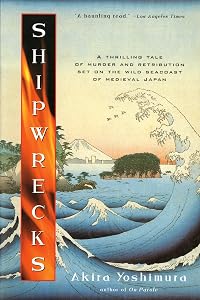
Shipwrecks
by Akira Yoshimura
On This Page
Description
Isaku is a nine-year-old boy living in a remote, desperately poor fishing village on the coast of Japan. His people catch barely enough fish to live on, and so must distill salt to sell to neighboring villages. But this industry serves another, more sinister purpose: the fires of the salt cauldrons lure passing ships toward the shore and onto rocky shoals. When a ship runs aground, the villagers slaughter the crew and loot the cargo for rice, wine, and rich delicacies. One day a ship show more founders on the rocks. But Isaku learns that its cargo is far deadlier than could ever be imagined. Shipwrecks, the first novel by the great Japanese writer Yoshimura to be translated into English, is a stunningly powerful, Gothic tale of fate and retribution. show lessTags
Recommendations


























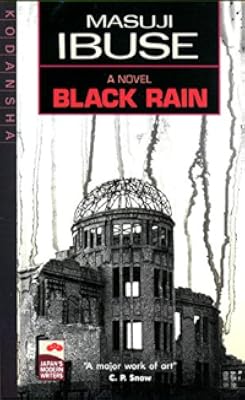





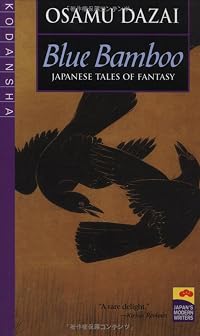
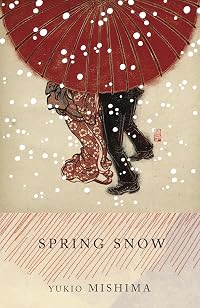

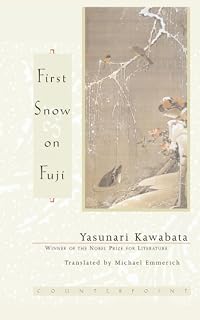




Member Recommendations


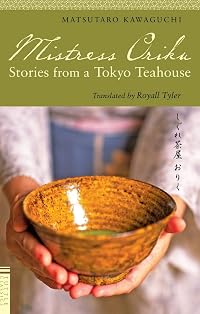
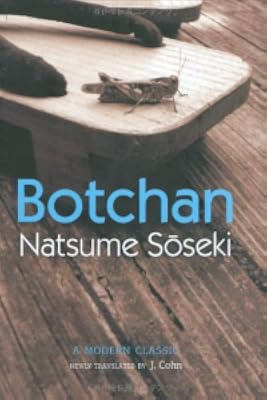
meggyweg Both of these books involve young boys eking out a living in very poor and difficult circumstances in different parts of Asia. One of them is much bleaker than the other.

Member Reviews
For such a short novel this one is very atmospheric and poignant. It covers three years in the life in an isolated coastal village in medieval Japan as Isaku, the young narrator, takes on the role of provider for his family. The father having sold himself for three years in order to provide grain for his family - a tradition of the village during the lean years. As Isaku learns more about the traditions of the village and what his vague memories of the previous O-fune-same mean to the survival of the villagers we learn with him. There is a certain repetition to the story - the appearance of the blossom on the nearby mountain in the spring; the short fishing seasons as various species make their appearance and the rituals that the show more village holds in order to attract the O-fune-same. But Isaku's reactions to these seasonal happenings develop as the story unfolds.
Sad and powerful, even in translation, the day to day life of such a marginal community as seen through young Isaku's eyes is wonderful. This was my first Yoshimura novel it probably won't be my last. show less
Sad and powerful, even in translation, the day to day life of such a marginal community as seen through young Isaku's eyes is wonderful. This was my first Yoshimura novel it probably won't be my last. show less
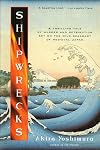
The publisher blurb on the front cover of my copy says it is 'a thrilling tale of murder and retribution set on the wild seacoast of medieval Japan' - which gives a quite false impression of what this book actually is. The LA Times quote, also on the front cover, calls it 'a haunting read', which is much closer to the mark.
This is a stark, Gothic morality tale, where the passing of the seasons is observed by ritual and humility, and the isolated village and its inhabitants live on the bounty or frugality of Nature. It's not a 'thrilling' tale, in that it's not a fast-paced whodunnit or anything like that. The prose is austere, but masterful, and the slow inevitability of the book's conclusion is equally beautiful and devastating.
If you show more want happy, then look away. But if you want to be immersed in a small masterpiece of Japanese literature, you must read this. Stunning and powerful. show less
This is a stark, Gothic morality tale, where the passing of the seasons is observed by ritual and humility, and the isolated village and its inhabitants live on the bounty or frugality of Nature. It's not a 'thrilling' tale, in that it's not a fast-paced whodunnit or anything like that. The prose is austere, but masterful, and the slow inevitability of the book's conclusion is equally beautiful and devastating.
If you show more want happy, then look away. But if you want to be immersed in a small masterpiece of Japanese literature, you must read this. Stunning and powerful. show less
Shipwrecks is a story of a poor coastal village in medieval Japan as a young boy, Isaku, is coming of age. Isaku's father has sold himself into debt-bondage, so though only nine years old he has to learn the skills of an adult to help his mother support the family on the brink of starvation. The story develops slowly as Isaku learns and develops the skills needed to survive the harsh realities of this isolated village. All the while he and his fellow villagers hope and pray for the rare O-fune-sama, the shipwrecks which mean the difference between bare subsistence and temporary security; which they actively lure to their doom during heavy storms. O-fune-sama is considered a gift of prosperity from the sea until one fateful ship ravages show more the village with a catastrophe that seems like a timely retribution for their sins.
The story unfolds slowly setting up a routine and seasonality to lives of the villagers that is in way serene and peaceful. The fish caught in the bay and along the reef come and go with the changing of the seasons, what little food that can be gathered or traded for is collected, villagers wed, children are born, the elderly die, the villagers practice the Shinto and Buddhist rituals to ensure good tidings are performed; life as hard as it is goes on as it has always gone on. Even when disaster befalls the village the Yoshimura never alters to clam and sometimes passive tone that is prevasive throughout the novel, instilling a sense that even this too shall pass. Shipwrecks does not culminate in dramatic flourish of life altering revelations or major life changes. The surviving villagers pick up the their lives where they left off; accepting the good and the bad as apart of what life has to offer. There is a sense that they will simply rebuild and hope that when the sea offers up its bounty it will once again bring prosperity and security to the village.
A very dark but worthwhile and powerful read. Shipwrecks is almost lyrical in its presentation, my reservations of Yoshimura as a writer can now be totally dismissed. show less
The story unfolds slowly setting up a routine and seasonality to lives of the villagers that is in way serene and peaceful. The fish caught in the bay and along the reef come and go with the changing of the seasons, what little food that can be gathered or traded for is collected, villagers wed, children are born, the elderly die, the villagers practice the Shinto and Buddhist rituals to ensure good tidings are performed; life as hard as it is goes on as it has always gone on. Even when disaster befalls the village the Yoshimura never alters to clam and sometimes passive tone that is prevasive throughout the novel, instilling a sense that even this too shall pass. Shipwrecks does not culminate in dramatic flourish of life altering revelations or major life changes. The surviving villagers pick up the their lives where they left off; accepting the good and the bad as apart of what life has to offer. There is a sense that they will simply rebuild and hope that when the sea offers up its bounty it will once again bring prosperity and security to the village.
A very dark but worthwhile and powerful read. Shipwrecks is almost lyrical in its presentation, my reservations of Yoshimura as a writer can now be totally dismissed. show less
Death is very much a part of life in the story of this Japanese village. Rituals that make the journey to an acceptable afterlife are performed, and grief is not something that is lingered on. It is a hard life for villagers, and starvation is a very real possibility.
Young Isaku is on the brink of manhood, perfecting his fishing and taking on the responsibilities of his absent father. His mother is hard and practical, there is little room for affection. The seasons come and go while the village pray for O-fune-sama, a shipwreck, to grace their shores with supplies to last them the coming lean months and to supplement their typically low rations. A ship does wreck nearby that provides the village with a wealth of goods which are greedily show more collected and distributed. Then it starts to come to light what the ships hold really held.
This book is short, powerful and not a word is wasted. There isn't a word or aspect of it that I would change. show less
Young Isaku is on the brink of manhood, perfecting his fishing and taking on the responsibilities of his absent father. His mother is hard and practical, there is little room for affection. The seasons come and go while the village pray for O-fune-sama, a shipwreck, to grace their shores with supplies to last them the coming lean months and to supplement their typically low rations. A ship does wreck nearby that provides the village with a wealth of goods which are greedily show more collected and distributed. Then it starts to come to light what the ships hold really held.
This book is short, powerful and not a word is wasted. There isn't a word or aspect of it that I would change. show less
“Shipwrecks” introduced me to the work of the Japanese grand master Akira Yoshimura (1927 - 2006) and I really enjoyed his short novel which has all the characteristics of a parable or a moral fable.
“Shipwrecks” tells the story of the villagers of a tiny fishing community. Their village consists of a handful wooden, thatch-roofed, houses, clinging to the rocks between sea cliffs and a mountain. The isolated hamlet can only be reached by a steep and windy path, three walking days away from the nearest neighbouring village. Details and descriptions hint that the setting is the northern Japanese coast, somewhere in medieval times.
Not only are the villagers living at the edge of the known world, they are also literally living on the show more edge. Actually, they are more surviving than living. Hunger is their daily worry. It is not that food is scarce, on the contrary there is enough food available in the nearby shoals and reefs and the people are skilled fishers and indefatigable reapers of seafood. It is just that the number of people has grown to a level which is matching the available food supply. It is some kind of terrible equilibrium. When there is more food, there is room for a few more mouths to feed and the number of people grows. If the available food diminishes, the elders and children die. While the people are free, in the sense that there are no wicked rulers or invasive colonials, they still remain slaves, slaves of their human condition, slaves of hunger and poverty.
Starvation, Yoshimura seems to underline, is our true heritage.
Can the condition of the fishermen be improved? Not really. While the villagers would not waste food on dying older or sick family members, they do not kill their new-borns as they know is done in other villages.
There are two ways how the villagers can break their vicious existential circle and improve their condition, but both come at a cost. A first one is to sell themselves into servitude for a number of years to work as servants or labourers in a far away town. The money paid to the families is used to buy grain, which adds to the daily staple but we understand that the real benefit is that there is one less mouth to feed. It comes at a cost for families are ripped apart, younger girls, we imagine, are likely to be abused, couples separated. Few of the ones who leave come back to their village and the ones who do are stigmatized by their years of absence and shame.
A second way to improve their daily lives is to collect and use what they find on the beach, the reef and the shoals: the flotsam, the driftwood and sometimes a wreck with its load. When a wreck gets stuck on the reefs in front of the village the positive effects of this are such that the village greatly improves its daily life for a couple of years: wood for construction, textile for clothing, ropes and even abundant food. This bonus is such that the villagers have come to help chance a bit. They have turned into wreckers. With fires they lighten on the beach, they lure ships to the coast in the hope to get them stranded. Survivors are killed and the hulk plundered.
The point of view, Yoshimura uses in his book, is that of Isaku, a nine year old boy, in his transition years from boy to man. He is the oldest of four and has been left behind with his mother. His father, a strong fisherman, has sold himself into indenture service at the birth of his youngest daughter. He hopes in this way to keep his family together. Isaku should have been sold in stead of the father, but he is still too young and too weak to catch any money. It is a risky gamble for the father to be away for three years and his son Isaku has to grow up very fast to become the “man” in house.
Yoshimura takes pains to build up his story carefully. Using the point of view of an innocent child and immersing his readers in the harsh daily life of the village, Yoshimura tries to instil in us empathy for this small community. The novel is deliciously slow paced and through repetitive use of descriptive details, it gains a soothing seasonal pacing. Life is regulated by the cyclical repetition of seasons; death is accepted through the cyclical logic of reincarnation and their religion highlights only a few days: New Year, a ceremony which demands for bountiful fishing and the mysterious ceremony of “O-fune-sama”, or ‘the blessing of a boat’. The villagers actually pray for an accident to happen, they pray for a ship to run into the reef.
By now, the reader is so immersed in the life of this fishing community that we refrain from judging this vilest crime. When a ship indeed gets stuck on the reef, we witness the scene from afar. Isaku has been send away to the top of the cliff as a lookout and he sees the happenings only from a distance. The reader however can easily fill in the blanks of the narration: the villagers heading towards the derelict, like scavengers surrounding an ailing animal, the killing of survivors begging and praying for help, the disposing of the bodies. For Isaku and his people, killing the castaways is as evident as spearing an octopus.
Yoshimura illustrates here a situation of what you could name “contextual” morality. The existential conditions of the villagers justify actions that would otherwise be condemned. An accident and the ensuing criminal acts are lived as a blessing. For the villagers, the stranding of a boat, this “O-fune-sama”, this ‘blessing of a boat’, is some kind of gift of the gods.
But the blessing of the “O-fune-sama”, can and does turn into a damnation. Not everything that washes up on the shore is a blessing. Rather than giving his story a moral end, a retribution for a community who has committed crimes, I think Yoshimura wants to say that traditions and proven usages are inadequate when unforeseen or hitherto unknown things happen.
In the end, it will be the failing of the collective memory of the elders and deeds dictated by their religious beliefs that will ultimately proof to be the greatest danger for this vulnerable community. show less
“Shipwrecks” tells the story of the villagers of a tiny fishing community. Their village consists of a handful wooden, thatch-roofed, houses, clinging to the rocks between sea cliffs and a mountain. The isolated hamlet can only be reached by a steep and windy path, three walking days away from the nearest neighbouring village. Details and descriptions hint that the setting is the northern Japanese coast, somewhere in medieval times.
Not only are the villagers living at the edge of the known world, they are also literally living on the show more edge. Actually, they are more surviving than living. Hunger is their daily worry. It is not that food is scarce, on the contrary there is enough food available in the nearby shoals and reefs and the people are skilled fishers and indefatigable reapers of seafood. It is just that the number of people has grown to a level which is matching the available food supply. It is some kind of terrible equilibrium. When there is more food, there is room for a few more mouths to feed and the number of people grows. If the available food diminishes, the elders and children die. While the people are free, in the sense that there are no wicked rulers or invasive colonials, they still remain slaves, slaves of their human condition, slaves of hunger and poverty.
Starvation, Yoshimura seems to underline, is our true heritage.
Can the condition of the fishermen be improved? Not really. While the villagers would not waste food on dying older or sick family members, they do not kill their new-borns as they know is done in other villages.
There are two ways how the villagers can break their vicious existential circle and improve their condition, but both come at a cost. A first one is to sell themselves into servitude for a number of years to work as servants or labourers in a far away town. The money paid to the families is used to buy grain, which adds to the daily staple but we understand that the real benefit is that there is one less mouth to feed. It comes at a cost for families are ripped apart, younger girls, we imagine, are likely to be abused, couples separated. Few of the ones who leave come back to their village and the ones who do are stigmatized by their years of absence and shame.
A second way to improve their daily lives is to collect and use what they find on the beach, the reef and the shoals: the flotsam, the driftwood and sometimes a wreck with its load. When a wreck gets stuck on the reefs in front of the village the positive effects of this are such that the village greatly improves its daily life for a couple of years: wood for construction, textile for clothing, ropes and even abundant food. This bonus is such that the villagers have come to help chance a bit. They have turned into wreckers. With fires they lighten on the beach, they lure ships to the coast in the hope to get them stranded. Survivors are killed and the hulk plundered.
The point of view, Yoshimura uses in his book, is that of Isaku, a nine year old boy, in his transition years from boy to man. He is the oldest of four and has been left behind with his mother. His father, a strong fisherman, has sold himself into indenture service at the birth of his youngest daughter. He hopes in this way to keep his family together. Isaku should have been sold in stead of the father, but he is still too young and too weak to catch any money. It is a risky gamble for the father to be away for three years and his son Isaku has to grow up very fast to become the “man” in house.
Yoshimura takes pains to build up his story carefully. Using the point of view of an innocent child and immersing his readers in the harsh daily life of the village, Yoshimura tries to instil in us empathy for this small community. The novel is deliciously slow paced and through repetitive use of descriptive details, it gains a soothing seasonal pacing. Life is regulated by the cyclical repetition of seasons; death is accepted through the cyclical logic of reincarnation and their religion highlights only a few days: New Year, a ceremony which demands for bountiful fishing and the mysterious ceremony of “O-fune-sama”, or ‘the blessing of a boat’. The villagers actually pray for an accident to happen, they pray for a ship to run into the reef.
By now, the reader is so immersed in the life of this fishing community that we refrain from judging this vilest crime. When a ship indeed gets stuck on the reef, we witness the scene from afar. Isaku has been send away to the top of the cliff as a lookout and he sees the happenings only from a distance. The reader however can easily fill in the blanks of the narration: the villagers heading towards the derelict, like scavengers surrounding an ailing animal, the killing of survivors begging and praying for help, the disposing of the bodies. For Isaku and his people, killing the castaways is as evident as spearing an octopus.
Yoshimura illustrates here a situation of what you could name “contextual” morality. The existential conditions of the villagers justify actions that would otherwise be condemned. An accident and the ensuing criminal acts are lived as a blessing. For the villagers, the stranding of a boat, this “O-fune-sama”, this ‘blessing of a boat’, is some kind of gift of the gods.
But the blessing of the “O-fune-sama”, can and does turn into a damnation. Not everything that washes up on the shore is a blessing. Rather than giving his story a moral end, a retribution for a community who has committed crimes, I think Yoshimura wants to say that traditions and proven usages are inadequate when unforeseen or hitherto unknown things happen.
In the end, it will be the failing of the collective memory of the elders and deeds dictated by their religious beliefs that will ultimately proof to be the greatest danger for this vulnerable community. show less
I want to do more justice with my review of the following book but I'm a bit tired and this is all I can muster at this point.
After non-stop recommendations, I stuffed the book into my purse for the plane ride to Paris. I ended up feasting over the text, not caring about the fact that my overhead light was probably bothering my neighbors' sleep. The book was just too good to put down.
The power of the book is its imagery. It's a visual feast to read with the first half running through the seasons. The main character, Isaku, goes through the coming and going of the squid, the octopus, and the various other types of fish at the coming of spring, winter, fall and summer. Tempting the octopus with a red piece of cloth at the end of a show more spear, and lying down flat on a boat on a serene sunny day waiting for a flash of silver to appear before hand catching the gathered fish. It feels like watching a National Geographic documentary; one doesn't even need to close one's eyes to see the images; the images float about the page.
Isaku is learning to become the man of the house as his father sold himself for manual labor on a boat and won't return for three years. A fisherman's catch is pivotal to keep the family afloat, allowing them enough to eat and trade. He hopes that he will become a fine enough fisherman so that his father doesn't need to sell himself again for more money. In the meantime, Isaku goes through his daily duties taking care of his siblings and his mother.
While fishing he learns about ofune-sama, a mysterious entity that allows his people to thrive instead of struggle to survive. But while the ofune-sama can bear a great gift, with it can also come great peril to the unfortunate discovery of the village.
Such a powerful book that I will be recommending to anyone as it was recommended to me. It is too beautiful not to be passed along. show less
After non-stop recommendations, I stuffed the book into my purse for the plane ride to Paris. I ended up feasting over the text, not caring about the fact that my overhead light was probably bothering my neighbors' sleep. The book was just too good to put down.
The power of the book is its imagery. It's a visual feast to read with the first half running through the seasons. The main character, Isaku, goes through the coming and going of the squid, the octopus, and the various other types of fish at the coming of spring, winter, fall and summer. Tempting the octopus with a red piece of cloth at the end of a show more spear, and lying down flat on a boat on a serene sunny day waiting for a flash of silver to appear before hand catching the gathered fish. It feels like watching a National Geographic documentary; one doesn't even need to close one's eyes to see the images; the images float about the page.
Isaku is learning to become the man of the house as his father sold himself for manual labor on a boat and won't return for three years. A fisherman's catch is pivotal to keep the family afloat, allowing them enough to eat and trade. He hopes that he will become a fine enough fisherman so that his father doesn't need to sell himself again for more money. In the meantime, Isaku goes through his daily duties taking care of his siblings and his mother.
While fishing he learns about ofune-sama, a mysterious entity that allows his people to thrive instead of struggle to survive. But while the ofune-sama can bear a great gift, with it can also come great peril to the unfortunate discovery of the village.
Such a powerful book that I will be recommending to anyone as it was recommended to me. It is too beautiful not to be passed along. show less
En español, «Naufragios».
En esta novela se narran los eventos ocurridos en el transcurso de más o menos tres años en la vida de Isaku, un niño que vive en una aldea pesquera japonesa. La atmósfera en general es de una miseria extrema, en la que se persigue más la supervivencia que la subsistencia; la clase de miseria que hace que no se distinga si es un relato del año 100 o de fines del siglo XIX (aunque por la mención de daimyos o señores feudales japoneses podemos reducir un poco el rango entre el siglo XIV y el XVIII).
Los aldeanos se dedican, como mencioné anteriormente, a la pesca, aunque también obtienen algunos recursos de los bosques aledaños. No obstante, estos elementos son insuficientes. Muchas bocas para show more alimentar, demasiadas para el sustento disponible. Hombres y mujeres suelen venderse como esclavos por cierta cantidad de años a cambio de un poco de dinero para sus familias. Sin embargo, la aldea aún se mantiene en pie gracias a un secreto que comparten sus habitantes: o-fune-sama. Se trata de barcos que durante la tormenta, quedan encallados en los arrecifes cercanos, y son tomados por los habitantes como una forma de regalo divino, mana caído del cielo. Por lo que han establecido como tradición diversos rituales (y tretas) para acrecentar el número de estas "bendiciones". Actos que, en cualquier otro lado, serían considerados piratería y asesinato.
Una novela con una atmósfera extraordinaria. Las descripciones de la aldea y de sus usos y costumbres son magníficos; ni siquiera el cíclico pasar de los años las tornan repetitivas en lo más mínimo. El final, si bien es hasta cierto punto esperado, no deja de ser una buena conclusión sobre los límites de lo moralmente correcto y la retribución divina. show less
Members
- Recently Added By
Lists

Japanese Literature
230 works; 40 members

Childhood: Books for or about children in different cultures around the wor
345 works; 18 members
Author Information

33 Works 1,303 Members
Japan's leading non-fiction writer on military and naval subjects, Akira Yoshimura was born in Tokyo in 1927. His published works in Japanese include a best-selling account of the construction and wartime role of the Zero fighter.
Some Editions
Common Knowledge
- Canonical title
- Shipwrecks
- Original publication date
- 1982 (original Japanese) (original Japanese); 1996 (English: Ealey) (English: Ealey)
- People/Characters
- Isaku
- Important places
- Japan
- First words
- Old conical hats made of sedge moved in the line of surf.
- Last words
- (Click to show. Warning: May contain spoilers.)He grasped the oar and turned his boat back to shore.
Classifications
- Genres
- Fiction and Literature, General Fiction, Historical Fiction
- DDC/MDS
- 895.635 — Literature & rhetoric Literatures of other languages Literatures of East and Southeast Asia Japanese Japanese fiction 1945–2000
- LCC
- PL865 .O72 .H3313 — Language and Literature Languages and literatures of Eastern Asia, Africa, Oceania Languages of Eastern Asia, Africa, Oceania Japanese language and literature Japanese literature Individual authors and works
- BISAC
Statistics
- Members
- 638
- Popularity
- 45,619
- Reviews
- 34
- Rating
- (4.00)
- Languages
- 9 — Dutch, English, French, German, Hebrew, Japanese, Portuguese, Romanian, Spanish
- Media
- Paper, Ebook
- ISBNs
- 19
- ASINs
- 3