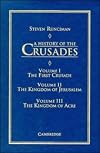
A History of the Crusades [3-volume set]
by Steven Runciman
History of the Crusades (Collections and Selections — Omnibus 1-3)
On This Page
Description
Sir Steven Runciman's three volume A History of the Crusades, one of the great classics of English historical writing, is now being reissued. Volume I deals completely with the First Crusade and the foundation of the kingdom of Jerusalem. Volume II describes the Frankish states of Outremer from the accession of King Baldwin I to the re-conquest of Jerusalem by Saladin, and in the final volume, Runciman examines the revival of the Frankish kingdom from the time of the Third Crusade until its show more collapse a century later. The interwoven themes of the book include: Christiandom, the replacement of the cultured Ayubites by the less sympathetic Mameluks as leader of the Moslem world, and the coming of the Mongols. Runciman includes a chapter on architecture and the arts, and an epilogue on the last manifestations of the Crusading spirit. show lessTags
Recommendations



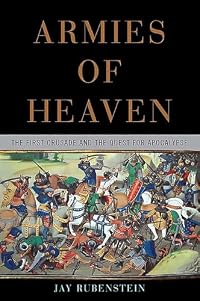
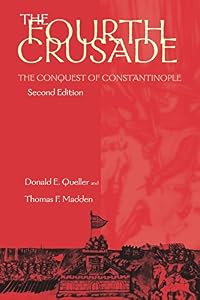

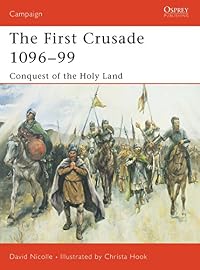
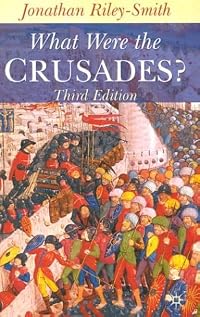




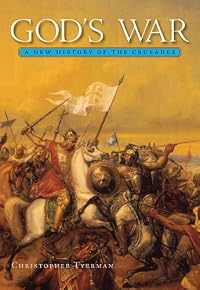
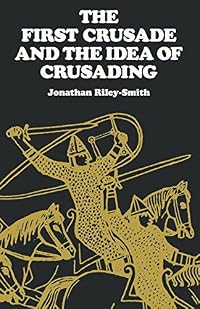







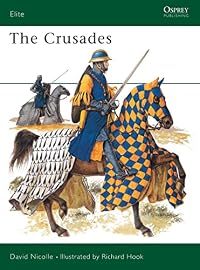
Member Recommendations
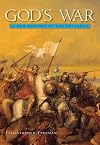
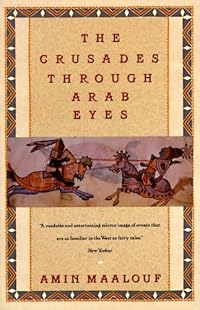
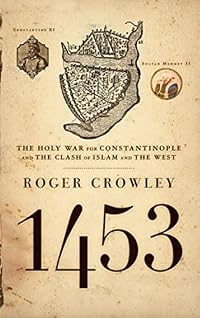
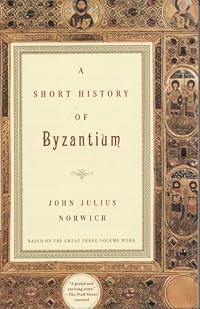
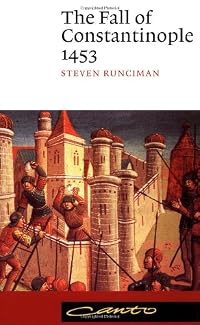
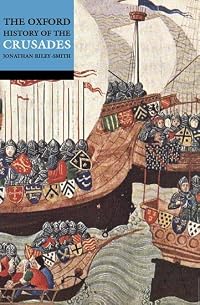
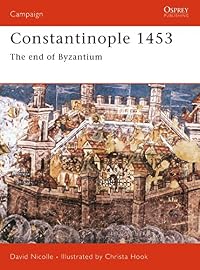
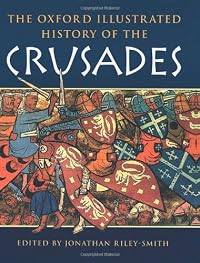
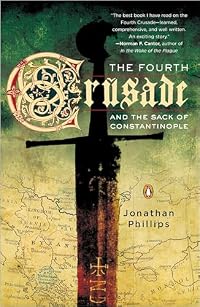
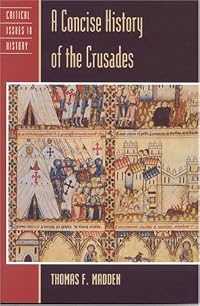
MartinLake This is a more recent book than Runciman's classic and an excellent addition to it. The author covers a wider area than the Holy Land. His approach is more detailed which fleshes out Runciman, although it lacks, and perhaps never aspired to, the story-telling style of the earlier classic.
Member Reviews
The style is there. What about the substance?
Let there be no mistake: Steven Runciman's work on the crusades is brilliantly written. Stylistically, it is one of the great works of the historian's art. If you want a good general history of the Crusades, you can hardly hope for better.
But... is it reliable?
This seems a horrid question to ask about a work that is a genuine tour de force. But Runciman's footnotes are, to be honest, rather thin on the ground. And one of the sad facts about the Crusades is that just about everyone who wrote at the time had an axe to grind -- usually to blame Somebody Else (Christians, Moslems, That Other King) for everything that had gone wrong. To avoid an endless list of "He said... She said..." show more controversies, Runciman often takes what seems to him most reasonable, and runs with it. His assumptions are (probably) usually right, and always reasonable -- he really was a brilliant scholar who knew the era well. But they aren't certain.
This really doesn't matter much to the casual reader. And there is no question: I enjoy reading Runciman, far more than any other history of the Crusades, short or long. It is a work of art. But it is now badly out of date, and it is full of hypotheses that can too easily be confused with fact. Read it, love it, treasure it -- but verify it. show less
Let there be no mistake: Steven Runciman's work on the crusades is brilliantly written. Stylistically, it is one of the great works of the historian's art. If you want a good general history of the Crusades, you can hardly hope for better.
But... is it reliable?
This seems a horrid question to ask about a work that is a genuine tour de force. But Runciman's footnotes are, to be honest, rather thin on the ground. And one of the sad facts about the Crusades is that just about everyone who wrote at the time had an axe to grind -- usually to blame Somebody Else (Christians, Moslems, That Other King) for everything that had gone wrong. To avoid an endless list of "He said... She said..." show more controversies, Runciman often takes what seems to him most reasonable, and runs with it. His assumptions are (probably) usually right, and always reasonable -- he really was a brilliant scholar who knew the era well. But they aren't certain.
This really doesn't matter much to the casual reader. And there is no question: I enjoy reading Runciman, far more than any other history of the Crusades, short or long. It is a work of art. But it is now badly out of date, and it is full of hypotheses that can too easily be confused with fact. Read it, love it, treasure it -- but verify it. show less
This three-volume set is an exemplary history, full of the incident and hundreds (thousands) of persons (all carefully indexed) who comprise the events of two and half centuries. Sir Steven is not a "thesis" historian, although he does not hesitate to make final conclusions of great insight and soundness. His strength lies in his meticulous detail and objectivity, recounting the errors and virtues of all the players, on all sides, with great wisdom and impartiality. He shows that the Crusades were, to use his word, an epic fiasco, that set out to secure the safety of Eastern Christendom, and ended up destroying it; yet he also shows how the Crusades were an initiator of the Italian Renaissance, by driving out the humanists and scholars show more who could not thrive in an Islamic world whose rigid intolerance was amplified by the Crusading movement. Without ever being vitriolic, he spares no one: While the Crusaders were stubborn bigots who refused to learn from past strategic errors, the Moslems were riven by internecine power-contests that nearly sunk them, and the Mongols efficiently, ruthlessely built an empire based on Genghis Khan's organizational brilliance and policy of implacable massacre. Stylistically, the books are a remarkable crossroads of popular appeal, engaging writing and mind-bogglingly comprehensive scholarship, detailed research and narrative account. show less
It is difficult to talk about Runciman or his History of the Crusades without using superlatives. Published between 1951 and 1954 this three volume set is a timeless masterpiece. His history of this original 'Clash of Civilizations' is at once tragic, grand, and sobering. There is an extraordinary immediacy about Runciman's history, as if you were reading newspaper reports day by day. Runciman's genius was not only to be able to make history come alive, but to dissect and lay out before anyone who cared to find them, the themes and principles governing Middle Eastern politics that resonate down to today. Comparison’s are difficult, but if you imagine the best of Barbara Tuchman, and Shelby Foote’s history of the Civil War show more (subsequently televised), you begin to get the picture. Anyone who claims to know anything or wants to know more about the Middle East should read this book. show less
A classic which tells the story of the Crusades in the Middle East with verve and style. It was written in the 1950's and other books are, naturally, more up to date in research. Runciman remains an excellent introduction to this tangled, tempestous time. His characters are larger than life and rendered with humanity, even if not always with sympathy.
Grand history in the great Oxbridge tradition, where historians pay as much attention to their style as they do to their sources.
Incomparable. A work of history so fine it sets a standard for other to be measured against.
Members
- Recently Added By
Lists

Folio Society
831 works; 50 members

The Telegraph's 110 Best Books: The Perfect Library
101 works; 18 members
Author Information

Sir Steven Runciman was one of the most acclaimed historians of the Byzantine ear and the author of many influential works, including the three-volume History of the Crusades.
Some Editions
Awards and Honors
Series

History of the Crusades (Collections and Selections — Omnibus 1-3)
Belongs to Publisher Series
Work Relationships
Contains
A History of the Crusades, Volume I: The First Crusade and the Foundation of the Kingdom of Jerusalem by Steven Runciman
A History of the Crusades. Volume II. The Kingdom of Jerusalem and the Frankish East, 1100-1187 by Steven Runciman
Common Knowledge
- Canonical title
- A History of the Crusades [3-volume set]
- Original title
- A History of the Crusades. 3 Volumes [I : The First Crusade and the foundation of the Kingdom of Jerusalem - II : The Kingdom of Jerusalem, and the Frankish East, 1100-1187 - III : The Kingdom of Acre and the later Crusades]
- Original publication date
- 1951-1952-1954 (1st UK original publishing, Cambridge university press) (1st UK original publishing, Cambridge university press); 1957 (New 3 volumes édition, Cambridge university press) (New 3 volumes édition, Cambridge university press); 1989 (New 3 volumes édition, Cambridge university press) (New 3 volumes édition, Cambridge university press); 2000-10-16 (1e traduction et édition française des 3 tomes en 1 volume, Editions Dagorno) (1e traduction et édition française des 3 tomes en 1 volume, Editions Dagorno); 2006-02-16 (Nouvelle édition française des 3 tomes en 1 volume, Tallandier) (Nouvelle édition française des 3 tomes en 1 volume, Tallandier)
- Important places
- Jerusalem; Acre; Kingdom of Jerusalem; Kingdom of Acre
- Important events
- Crusades
- Dedication
- Vol 1: To My Mother
Vol 2: To Ruth Bovill (his sister)
Vol 3: To Katharine Farrer (his sister) - First words
- On a February day in the year A.D. 638 the Caliph Omar entered Jerusalem riding upon a white camel. He was dressed in worn, filthy robes, and the army that followed him was rough and unkempt; but its discipline was perfect.
- Last words
- (Click to show. Warning: May contain spoilers.)The historian as he gazes back across the centuries at their gallant story must find his admiration overcast by sorrow at the witness that it bears to the limitations of human nature. There was so much courage and so little honor, so much devotion and so little understanding. High ideals were besmirched by cruelty and greed, enterprise and endurance by a blind and narrow self-righteousness; and the Holy War itself was nothing more than a long act of intolerance in the name of God, which is a sin against the Holy Ghost.
- Original language*
- English (UK) (UK)
- Disambiguation notice
- This is a collection of all three volumes of "A history of the crusades"
*Some information comes from Common Knowledge in other languages. Click "Edit" for more information.
Classifications
Statistics
- Members
- 811
- Popularity
- 33,867
- Reviews
- 9
- Rating
- (4.36)
- Languages
- 8 — English, French, German, Hungarian, Italian, Polish, Spanish, Turkish
- Media
- Paper, Audiobook, Ebook
- ISBNs
- 26
- ASINs
- 48