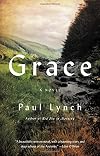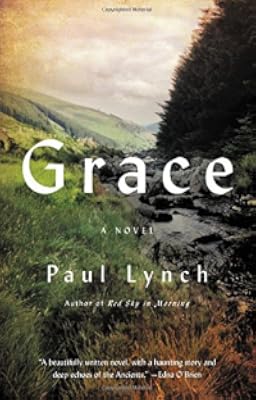
Grace
by Paul Lynch
On This Page
Description
Cast out of her home by her mother, Grace, disguised as a boy and accompanied by her younger brother, embarks on a life-changing odyssey in the looming shadow of Ireland's Great Famine.Tags
Recommendations









Member Reviews
This dark yet lyrically beautiful novel begins during the Great Famine in Ireland, a period of mass starvation and disease between 1845 and 1849. The London government was unwilling to provide relief for the Irish, in spite of the great stores of food being produced in Ireland by Protestant landowners and designated for export only. During the famine, approximately one million people died and a million more emigrated from Ireland, causing the island's population to fall by between 20% and 25%.
Grace Coyle is 14 when we first meet her. Her mother cuts off her hair, fits her in men’s clothing, and banishes her from the house: “You must find work and work like a man.” And so she becomes “Tim Coyle” for as long as her body will show more allow her to get away with it. Her 12-year-old brother Colly runs after her, and remains a constant presence throughout the story. Grace, subjected to extreme hunger; mugging; the ever-present threat of rape; and the Scylla and Charybdis of superstition and faith, somehow manages to carry on, but just barely. She occasionally picks up other companions besides Colly, and they work together to do what it takes to survive.
Grace thinks often about the meaning of life, and wonders if what she is doing amounts to living or whether it is even worth it. When alone she thinks:
“So this is what freedom is. Freedom is when you are free to disappear off the earth without anybody knowing. Freedom is your soul in the emptiness of night. . . . Daylight tricks you into thinking what you see is the truth, lets you go through life thinking you know everything. But the truth is we are sleepwalkers. We walk through night that is chaos and dark and forever keeps its truth to itself.”
Later she allows:
" . . . . you think you make your own choices in life but we are nothing but blind wanderers, moving from moment to moment, our blindness forever new to us.”
On her journey, she has seen too much that she can’t understand or doesn’t want to understand. Indeed, it is difficult to tell at times if some of the characters she encounters are alive or dead.
She eventually concludes that “the truths that men hold solemn, their beliefs and their doctrines and their certitudes” are “but smoke on the wind.” She doesn’t need to know if what she sees is what really is, if things “come from me or they belong to the sky and hills . . .” There is only the here and now.
Discussion: There isn’t much to the story besides the horrific portrait of a nation suffering oppression, impoverishment, and degradation, personified in Grace. Even understanding the historical background of what has happened is mostly up to the reader. Only at one point does one of the characters lecture Grace:
"Don't you see what is going on around you? The have-it-alls and well-to-doers who don't give a fuck what happens to the ordinary people . . . The people are living off hope. Hope is the lie they want you to believe in. It is hope that carries you along. Keeps you in your place. Keeps you down. Let me tell you something. I do not hope. I do not hope for anything in the least because to hope is to depend on others. And so I will make my own luck. . . .The gods have abandoned us, that's how I figure it. It is time to be your own god."
But as bleak as this story is, it is also both a poem and a paean to the people of Ireland, who persevered under the worst circumstances. The language is sometimes dream-like, sometimes Joycean, and often quite beautifully crafted.
In the cities, Grace walks “with a wanty hand held out.” In the country she observes “a sky of old cloth and the sun stained upon it.” In the winter they go “silently onto the street, their breaths bold before them and feathered in the moon-blue cold where the river sends up sound of itself.” Later, “the mountains greet them with mist. It seeps and clings, hangs mystery over everything.”
There are two epigraphs the author might have used for this book.
Ecclesiastes 44:9: "And some there be, which have no memorial; who are perished, as though they had never been; and are become as though they had never been born; and their children after them."
And the ending of “The Dead” in Dubliners by James Joyce:
“…he heard the snow falling faintly through the universe and faintly falling, like the descent of their last end, upon all the living and the dead.”
Evaluation: This narrative involving the horrible trials of Ireland during the famine adds emotional heft through the “eye-witness” account of a young girl and all she encounters, creating a powerful impact. As the late author, musician, and University of Massachusetts Amherst professor Julius Lester wrote:
"History is not just facts and events. History is also a pain in the heart and we repeat history until we are able to make another’s pain in the heart our own."
Lynch helps mitigate the pain a bit with his sometimes glorious language that is in startling juxtaposition to, and helps soften the focus of, the monstrousness of what happened to the Irish. In addition, the snarky humor of Grace and the offbeat discussions of the characters provide balance to the heaviness of the weight of events that threatened to beat the people down with despair and destroy their will to live. show less
Grace Coyle is 14 when we first meet her. Her mother cuts off her hair, fits her in men’s clothing, and banishes her from the house: “You must find work and work like a man.” And so she becomes “Tim Coyle” for as long as her body will show more allow her to get away with it. Her 12-year-old brother Colly runs after her, and remains a constant presence throughout the story. Grace, subjected to extreme hunger; mugging; the ever-present threat of rape; and the Scylla and Charybdis of superstition and faith, somehow manages to carry on, but just barely. She occasionally picks up other companions besides Colly, and they work together to do what it takes to survive.
Grace thinks often about the meaning of life, and wonders if what she is doing amounts to living or whether it is even worth it. When alone she thinks:
“So this is what freedom is. Freedom is when you are free to disappear off the earth without anybody knowing. Freedom is your soul in the emptiness of night. . . . Daylight tricks you into thinking what you see is the truth, lets you go through life thinking you know everything. But the truth is we are sleepwalkers. We walk through night that is chaos and dark and forever keeps its truth to itself.”
Later she allows:
" . . . . you think you make your own choices in life but we are nothing but blind wanderers, moving from moment to moment, our blindness forever new to us.”
On her journey, she has seen too much that she can’t understand or doesn’t want to understand. Indeed, it is difficult to tell at times if some of the characters she encounters are alive or dead.
She eventually concludes that “the truths that men hold solemn, their beliefs and their doctrines and their certitudes” are “but smoke on the wind.” She doesn’t need to know if what she sees is what really is, if things “come from me or they belong to the sky and hills . . .” There is only the here and now.
Discussion: There isn’t much to the story besides the horrific portrait of a nation suffering oppression, impoverishment, and degradation, personified in Grace. Even understanding the historical background of what has happened is mostly up to the reader. Only at one point does one of the characters lecture Grace:
"Don't you see what is going on around you? The have-it-alls and well-to-doers who don't give a fuck what happens to the ordinary people . . . The people are living off hope. Hope is the lie they want you to believe in. It is hope that carries you along. Keeps you in your place. Keeps you down. Let me tell you something. I do not hope. I do not hope for anything in the least because to hope is to depend on others. And so I will make my own luck. . . .The gods have abandoned us, that's how I figure it. It is time to be your own god."
But as bleak as this story is, it is also both a poem and a paean to the people of Ireland, who persevered under the worst circumstances. The language is sometimes dream-like, sometimes Joycean, and often quite beautifully crafted.
In the cities, Grace walks “with a wanty hand held out.” In the country she observes “a sky of old cloth and the sun stained upon it.” In the winter they go “silently onto the street, their breaths bold before them and feathered in the moon-blue cold where the river sends up sound of itself.” Later, “the mountains greet them with mist. It seeps and clings, hangs mystery over everything.”
There are two epigraphs the author might have used for this book.
Ecclesiastes 44:9: "And some there be, which have no memorial; who are perished, as though they had never been; and are become as though they had never been born; and their children after them."
And the ending of “The Dead” in Dubliners by James Joyce:
“…he heard the snow falling faintly through the universe and faintly falling, like the descent of their last end, upon all the living and the dead.”
Evaluation: This narrative involving the horrible trials of Ireland during the famine adds emotional heft through the “eye-witness” account of a young girl and all she encounters, creating a powerful impact. As the late author, musician, and University of Massachusetts Amherst professor Julius Lester wrote:
"History is not just facts and events. History is also a pain in the heart and we repeat history until we are able to make another’s pain in the heart our own."
Lynch helps mitigate the pain a bit with his sometimes glorious language that is in startling juxtaposition to, and helps soften the focus of, the monstrousness of what happened to the Irish. In addition, the snarky humor of Grace and the offbeat discussions of the characters provide balance to the heaviness of the weight of events that threatened to beat the people down with despair and destroy their will to live. show less
2 million people died in The Irish Potato Famine when blight destroyed three years of potato crops between 1845 to 1851.
In his novel Grace, Paul Lynch recreates Ireland during the famine. The writing is gorgeous, the protagonist, Grace, memorable, the descriptions of what she experiences while on the road crushing.
Think of a journey story set in a Dystopian world, such as The Road by Cormac McCarthy. Consider that the story is history, that the starvation, despair, disease, and the ever-present threat of death are historical.
Realize that government and the wealthy could have alleviated the suffering. It is a disturbing realization of how those of means and comfort justify their selfish self-interest. Then consider the great need in the show more world today, in America, in your own hometown, and know that nothing has really changed. We still turn a blind eye and hold to 'truths' about self-reliance and just deserts.
Grace's mother provides a cottage for her children through an arrangement with Boggs, who visits her as payment for his largess. But as Grace nears puberty, Boggs notices the girl. One night Grace is roused and her mother shears off Grace's hair and orders her to dress in men's clothing. The next day her mother insists she eats a rare meal of meat and orders her out of the house to find work as a man, hopefully to return with full pockets.
Confused and unwilling, Grace hangs around and is joined by her younger brother Colly. Colly instructs Grace on manliness, how to smoke a pipe to damp the hunger, and his chatter fills the void. They seek out empty huts or animal sheds for shelter, shivering in the cold. After an accident takes Colly, his voice and comments are still heard by Grace, become a part of her, and she answers back in whispers.
Grace journeys from town to town, picking up work where she can. She mimics men's behavior while noticing the swelling of her breasts. She passes through villages where the starving hawk their shreds of clothing and emaciated children stand listless. She finds herself with rough company, thieves, men who have detected her sex and follow her, and finally Bart, who becomes her protector.
"This is no way to live."
Bart and Grace travel across the country, to people and places from his past, hoping to find work, to learn there is nothing left of the Ireland he had known.
"Don't you see what is going on around you? The have-it-alls and well-to-doers who don't give a fuck what happens to the ordinary people," Bart tells Grace. "The people are living off hope. Hope is the lie they want you to believe in. It is hope that carries you along. Keeps you in your place. Keeps you down. Let me tell you something. I do not hope. I do not hope for anything in the least because to hope is to depend on others. And so I will make my own luck. I believe there are not rules anymore. We are truly on our own in all this." And at the last, "The gods have abandoned us, that's how I figure it. It is time to be your own god."
Grace is nearly dead when she is rescued by a disturbed religious cult leader, then must find the strength to escape her rescuer. She returns to find her family home deserted. The book ends with Grace, age nineteen, the famine over, pregnant and living with a man she trusts, with hope for the future.
Lynch has accomplished something remarkable in this historical novel, for he not only has created a memorable protagonist and a story of growing up, not only a vivid picture of Ireland during The Great Hunger, but he has given readers a book that raises our awareness of suffering and how, in the past and in the present, every one of means who turns away is responsible.
I found this one of the most memorable novels I have read this year.
I received a free ebook from the publisher in exchange for a fair and unbiased review. show less
In his novel Grace, Paul Lynch recreates Ireland during the famine. The writing is gorgeous, the protagonist, Grace, memorable, the descriptions of what she experiences while on the road crushing.
Think of a journey story set in a Dystopian world, such as The Road by Cormac McCarthy. Consider that the story is history, that the starvation, despair, disease, and the ever-present threat of death are historical.
Realize that government and the wealthy could have alleviated the suffering. It is a disturbing realization of how those of means and comfort justify their selfish self-interest. Then consider the great need in the show more world today, in America, in your own hometown, and know that nothing has really changed. We still turn a blind eye and hold to 'truths' about self-reliance and just deserts.
Grace's mother provides a cottage for her children through an arrangement with Boggs, who visits her as payment for his largess. But as Grace nears puberty, Boggs notices the girl. One night Grace is roused and her mother shears off Grace's hair and orders her to dress in men's clothing. The next day her mother insists she eats a rare meal of meat and orders her out of the house to find work as a man, hopefully to return with full pockets.
Confused and unwilling, Grace hangs around and is joined by her younger brother Colly. Colly instructs Grace on manliness, how to smoke a pipe to damp the hunger, and his chatter fills the void. They seek out empty huts or animal sheds for shelter, shivering in the cold. After an accident takes Colly, his voice and comments are still heard by Grace, become a part of her, and she answers back in whispers.
Grace journeys from town to town, picking up work where she can. She mimics men's behavior while noticing the swelling of her breasts. She passes through villages where the starving hawk their shreds of clothing and emaciated children stand listless. She finds herself with rough company, thieves, men who have detected her sex and follow her, and finally Bart, who becomes her protector.
"This is no way to live."
Bart and Grace travel across the country, to people and places from his past, hoping to find work, to learn there is nothing left of the Ireland he had known.
"Don't you see what is going on around you? The have-it-alls and well-to-doers who don't give a fuck what happens to the ordinary people," Bart tells Grace. "The people are living off hope. Hope is the lie they want you to believe in. It is hope that carries you along. Keeps you in your place. Keeps you down. Let me tell you something. I do not hope. I do not hope for anything in the least because to hope is to depend on others. And so I will make my own luck. I believe there are not rules anymore. We are truly on our own in all this." And at the last, "The gods have abandoned us, that's how I figure it. It is time to be your own god."
Grace is nearly dead when she is rescued by a disturbed religious cult leader, then must find the strength to escape her rescuer. She returns to find her family home deserted. The book ends with Grace, age nineteen, the famine over, pregnant and living with a man she trusts, with hope for the future.
Lynch has accomplished something remarkable in this historical novel, for he not only has created a memorable protagonist and a story of growing up, not only a vivid picture of Ireland during The Great Hunger, but he has given readers a book that raises our awareness of suffering and how, in the past and in the present, every one of means who turns away is responsible.
I found this one of the most memorable novels I have read this year.
I received a free ebook from the publisher in exchange for a fair and unbiased review. show less
The great Potato Famine has begun in Ireland. A young girl's mother drags her out of bed in the middle of the night, hacks off her hair with a knife, gives her a pair of trousers and some binding cloth and shoved her onto the road with the word, "You be the strong one now." Grace is supposed to find work dressed as a boy and send her wages home. Her younger brother, Colley, sneaks after her, bound for adventure. Instead, tragedy after tragedy ensues as the entire nation falls into starvation and despair.
So, is this a bleak novel? Yes, most certainly. But it's saved by moments of humor, by Grace's perseverance, and by Lynch's lyrical descriptions of a land both beautiful and horrific and a people determined to survive. The image that show more sticks with me most is the long line of people, often shoeless and in rags, placing one foot in front of the other, believing that to keep moving is to keep alive and that something better might be just down the icy road. The things Graces sees and the things she must do--well, we should consider ourselves lucky that they aren't the components of our daily lives. And it never seems to stop: even when she finds herself tossed onto a cart collecting the dead, Grace isn't allowed to die. She is 'resurrected' by the leader of a questionable sect comprised only of penitent women. And soon she is on the road again, trying to make her way back home to Donegal.
I've left out the horrific details of Grace's journey--too many spoilers for anyone choosing to read this book. And I won't reveal the ending, except to say that after two years, the crops come back, so, you can imagine, things start to get a little better. (That's just historical fact: if everyone had starved to death, there'd be no Ireland as we know it today.) Despite it's bleakness, there is much to admire here, both in the characters and the writing. show less
So, is this a bleak novel? Yes, most certainly. But it's saved by moments of humor, by Grace's perseverance, and by Lynch's lyrical descriptions of a land both beautiful and horrific and a people determined to survive. The image that show more sticks with me most is the long line of people, often shoeless and in rags, placing one foot in front of the other, believing that to keep moving is to keep alive and that something better might be just down the icy road. The things Graces sees and the things she must do--well, we should consider ourselves lucky that they aren't the components of our daily lives. And it never seems to stop: even when she finds herself tossed onto a cart collecting the dead, Grace isn't allowed to die. She is 'resurrected' by the leader of a questionable sect comprised only of penitent women. And soon she is on the road again, trying to make her way back home to Donegal.
I've left out the horrific details of Grace's journey--too many spoilers for anyone choosing to read this book. And I won't reveal the ending, except to say that after two years, the crops come back, so, you can imagine, things start to get a little better. (That's just historical fact: if everyone had starved to death, there'd be no Ireland as we know it today.) Despite it's bleakness, there is much to admire here, both in the characters and the writing. show less
Set in Ireland in the 1840s, during the Great Famine, Grace Coyle must leave her home and fend for herself. Dressed as a boy, she wanders the countryside, trying to avoid the many dangers. It is a time of belief in pookas, witches, ghosts, and curses.
People are starving, Many wander the roads, thieving for coins or food. It is a journey, where the goal is to survive. At various times Grace becomes a herder and a bridge-builder. She meets a man with a withered arm who helps her, and another that gets her into trouble. She is accompanied by the ghost of her brother and, later, by the ghost of a murdered woman.
This book is grim. There is little opportunity to lighten the tone. It is a mix of beautiful writing and horrific subject matter. show more If you dislike profanity, you will want to stay away. The ghost of the brother is constantly chattering with a stream of invective, mostly calling Grace misogynistic names. This got old after a short while, and it goes on for three-fourths of the book. It evokes a miserable time in Irish history in vivid terms. For me, the expressive writing is the best part and the reason I would read another book by this author.
“You think you make your own choices in life but we are nothing but blind wanderers, moving from moment to moment, our blindness forever new to us.” show less
People are starving, Many wander the roads, thieving for coins or food. It is a journey, where the goal is to survive. At various times Grace becomes a herder and a bridge-builder. She meets a man with a withered arm who helps her, and another that gets her into trouble. She is accompanied by the ghost of her brother and, later, by the ghost of a murdered woman.
This book is grim. There is little opportunity to lighten the tone. It is a mix of beautiful writing and horrific subject matter. show more If you dislike profanity, you will want to stay away. The ghost of the brother is constantly chattering with a stream of invective, mostly calling Grace misogynistic names. This got old after a short while, and it goes on for three-fourths of the book. It evokes a miserable time in Irish history in vivid terms. For me, the expressive writing is the best part and the reason I would read another book by this author.
“You think you make your own choices in life but we are nothing but blind wanderers, moving from moment to moment, our blindness forever new to us.” show less
Set during the potato famine in Ireland during the years between 1845 and 1852, this novel tells the story of a young girl named Grace and her experiences trying to survive during desperate times. Her mother shaves her head in order for her to pass as a boy and sends her off to protect her from a man named Boggs and in hopes she can find work and avoid starvation.
Grace’s younger brother Colley decides to go along with her against his mother’s wishes. Colley doesn’t survive long after leaving home, but he stays with Grace in a ghostly way throughout her journey.
This was an intense and disheartening story, but one that is riveting. Paul Lynch managed to bring the suffering of the Irish to life in a profound way. His writing is show more haunting, but at times I found it was too much.
As Grace travels the Irish countryside in search of better conditions, her starvation brings her to the point of death. Reading the story, it felt as if Grace was in a continual dream-state, with much of it feeling more like a nightmare. Luckily for Grace, her story ended with a hopeful and happy future. Such was not the case for so many others in Ireland during that time.
The book does have some crude language and some violence, but for the most part it is a somber look at a very sad time in the history of Ireland.
Thank you to NetGalley & Little, Brown & Company for the opportunity to read an advanced copy and give my honest review. show less
Grace’s younger brother Colley decides to go along with her against his mother’s wishes. Colley doesn’t survive long after leaving home, but he stays with Grace in a ghostly way throughout her journey.
This was an intense and disheartening story, but one that is riveting. Paul Lynch managed to bring the suffering of the Irish to life in a profound way. His writing is show more haunting, but at times I found it was too much.
As Grace travels the Irish countryside in search of better conditions, her starvation brings her to the point of death. Reading the story, it felt as if Grace was in a continual dream-state, with much of it feeling more like a nightmare. Luckily for Grace, her story ended with a hopeful and happy future. Such was not the case for so many others in Ireland during that time.
The book does have some crude language and some violence, but for the most part it is a somber look at a very sad time in the history of Ireland.
Thank you to NetGalley & Little, Brown & Company for the opportunity to read an advanced copy and give my honest review. show less
Set during the Irish Potato Famine, this book has a dark outlook, as it follows Grace as she is forced to leave home, pretend to be a boy, and find work. Grace encounters numerous dangers on her journey and her deceased brother haunts her steps. I can see why some appreciated this book, but I felt adrift as I was reading and I struggled to get to the end of this book.
This is the story of Grace and her younger brother as they trek aimlessly through Ireland during the potato famine years merely trying to survive. Of course they meet numerous characters along the way -some good, some unsavory. The book is difficult to read using words and expressions in archaic language and Irish/English brogues. This is a melancholy story as Grace really has no ultimate goal. Three hundred plus pages of wandering the countryside with frankly not much happening. Others have reviewed the novel favorably but I just was not feeling it.
Members
- Recently Added By
Lists

Kirkus Starred Fiction Reviews of Books Published in 2017
412 works; 7 members

Walter Scott Prize Winners and Shortlist
66 works; 6 members

Books Read in 2024
4,623 works; 126 members

Books Read in 2025
4,091 works; 97 members
Author Information

5 Works 2,551 Members
Awards and Honors
Common Knowledge
- Canonical title
- Grace
- Original publication date
- 2017
- Important places
- Ireland
- Important events
- Irish Potato Famine
Classifications
Statistics
- Members
- 233
- Popularity
- 139,826
- Reviews
- 13
- Rating
- (3.63)
- Languages
- 5 — Dutch, English, French, German, Italian
- Media
- Paper, Ebook
- ISBNs
- 15
- ASINs
- 3