
On This Page
Description
In this collection of stories about small-town life, Dale takes a step toward manhood and Darlene sets off for Minneapolis to begin a new life.Tags
Recommendations






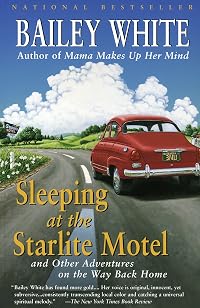
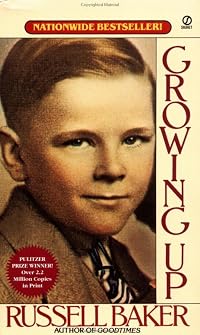






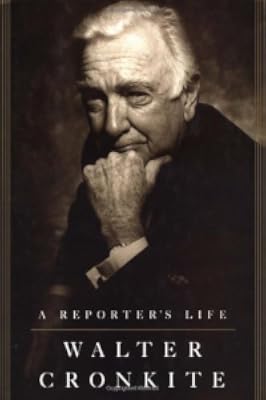































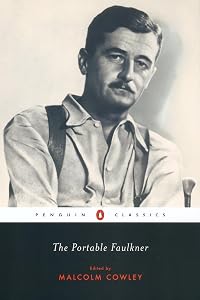



Member Recommendations
Member Reviews
I must have read this before. I remembered parts of the introduction, with the lovely observations on living in Denmark when practically the only word you know is "tak" (= thank you) and his family's love of sweet corn: "We were prepared to resist atheistic Communism, immoral Hollywood, hard liquor, gambling and dancing, smoking, fornication, but if Satan had come around with sweet corn, we at least would have listened to what he had to sell. We might not have bought it but we would've had him in and given him a cup of coffee."
Happily, I don't remember the stories, so they've come to me fresh and lovely. Of all Keillor's books that I've read over the year, this is one of the very best. I slipped effortlessly into Lake Wobegon, cocooned show more in a feeling that I know this place, these people, these sorrows and these joys, and have always known them, in the very heart of my being. Garrison Keillor can't be as wise, as funny, as kind, as sympathetic and as perceptive as his authorial voice -- he's a human being, after all -- but it still makes me dream of a world where people really are like that.
Don't expect a plot. Don't expect non-stop slapstick humour. Don't expect people to be unfailingly good, never falling prey to meanness or spite. Just expect a series of insightful, philosophical, funny, sad, moving, real (in a kind of fairytale way, if that makes sense) visits in a quiet town where, so Mr Keillor says, nothing much happens. If that sounds good to you, I'm sure you'd enjoy passing some time in Lake Wobegon.
Some of my favourite passages include a young man contemplating failing one of his final high-school exams and realising it doesn't really matter: "Life is so wonderful that it is all we can do simply to experience it, and all the things people think are important--none of it matters if it makes us less able to live."
A man going through the effects of his late father, who had walked out on his young family for another woman: "Pictures of his father and the woman ... Agnes. Val couldn't look at them more than two seconds, they were so ordinary, like any other married couple standing by a car, sitting on steps. And a poem David had written her--his father had never written him a poem but here was a poem. Val read it and felt weak. He had to go sit upstairs and turn on the radio. It was like a cave-in down deep in the earth under your house, an event so far in the past he never thought about it, now moving, and his own life shifted and sagged, and he felt afraid."
Swedish flu: "A lot of people have been sick in Lake Wobegon, and it could be due to the weather. Norway is a seafaring country and if you have Norwegian blood you're happier and you operate best when you're cold, wet, and sick to your stomach. Misery is what keeps a Norwegian going, and in warm sunny weather such as we've had, they get sick and go to pieces and get a case of Swedish flu caused by weakness on account of a lack of suffering. (Swedish flu is like Asian flu but in addition you feel like it's your fault.)"
Oh, how I wish I could write like that! show less
Happily, I don't remember the stories, so they've come to me fresh and lovely. Of all Keillor's books that I've read over the year, this is one of the very best. I slipped effortlessly into Lake Wobegon, cocooned show more in a feeling that I know this place, these people, these sorrows and these joys, and have always known them, in the very heart of my being. Garrison Keillor can't be as wise, as funny, as kind, as sympathetic and as perceptive as his authorial voice -- he's a human being, after all -- but it still makes me dream of a world where people really are like that.
Don't expect a plot. Don't expect non-stop slapstick humour. Don't expect people to be unfailingly good, never falling prey to meanness or spite. Just expect a series of insightful, philosophical, funny, sad, moving, real (in a kind of fairytale way, if that makes sense) visits in a quiet town where, so Mr Keillor says, nothing much happens. If that sounds good to you, I'm sure you'd enjoy passing some time in Lake Wobegon.
Some of my favourite passages include a young man contemplating failing one of his final high-school exams and realising it doesn't really matter: "Life is so wonderful that it is all we can do simply to experience it, and all the things people think are important--none of it matters if it makes us less able to live."
A man going through the effects of his late father, who had walked out on his young family for another woman: "Pictures of his father and the woman ... Agnes. Val couldn't look at them more than two seconds, they were so ordinary, like any other married couple standing by a car, sitting on steps. And a poem David had written her--his father had never written him a poem but here was a poem. Val read it and felt weak. He had to go sit upstairs and turn on the radio. It was like a cave-in down deep in the earth under your house, an event so far in the past he never thought about it, now moving, and his own life shifted and sagged, and he felt afraid."
Swedish flu: "A lot of people have been sick in Lake Wobegon, and it could be due to the weather. Norway is a seafaring country and if you have Norwegian blood you're happier and you operate best when you're cold, wet, and sick to your stomach. Misery is what keeps a Norwegian going, and in warm sunny weather such as we've had, they get sick and go to pieces and get a case of Swedish flu caused by weakness on account of a lack of suffering. (Swedish flu is like Asian flu but in addition you feel like it's your fault.)"
Oh, how I wish I could write like that! show less
2.5 stars because he does have a way with words. Surprisingly dark. I didn't feel anything heartwarming about these judgemental & incompetent busybodies. I came from this kind of upbringing and in my innocence I have been grateful for what I thought was an idyllic childhood... but lately, after reading things like this, I've been less sure that heartland values actually are my values.
More of Keillor which reads - if you have had the privilege - just as it was spoken. If you haven't heard Keillor's radio broadcasts do yourself a favour of listening to a few - or to many - and you'll be able to appreciate the power of these slow, distracted and sometimes seemingly meaningless stories to reveal the fundamental truths of humanity and existence. If Conrad or Checkov had grown up in Minnesota these would have been the tales they would have told. Of course it's recommended for fans of Keillor. But for those not already acquainted with that extraordinary voice, get thee hence first to a recording, and take your cue from that.
Lake Wobegon is the place she the women are all strong, the men are good looking and the children are all above average. And in this small volume of short stories Kellior takes us back to this small town and the people who live there.
There are some entertaining stories in here, and other that are less good. But it is nicely written with some razor sharp wit.
There are some entertaining stories in here, and other that are less good. But it is nicely written with some razor sharp wit.
A collection of Lake Wobegon monologues from "A Prairie Home Companion". Droll, funny, companionable and as told by an old friend. Sometimes Keillor tries too hard to be clever or witty, but he is at his best in this genre.
Like most of Keillor's radio show, this is pleasant, entertaining, and occasionally hilarious. Overall, it's like nice hot soup, but not a gourmet meal.
Useful, but not necessary to have listened to a Lake Wobegon monologue, as the stories contained in this book are in the same vein, and could well do with being read aloud[return][return]Slow and sweet to read
Members
- Recently Added By
Lists

Novels Published in 1987
81 works; 19 members
Author Information

187+ Works 23,070 Members
Humorist Garrison Keillor was born Gary Edward Keillor in Anoka, Minnesota on August 7, 1942. He began using the pen name Garrison at the age of thirteen. He received a B.A. from the University of Minnesota in 1966 and paid for his tuition by working at the campus radio station. In 1974, he wrote an essay for the New Yorker about the Grand Ole show more Opry, which led to his live radio program, A Prairie Home Companion. Stories from Prairie Home were collected and published, but his debut as a novelist was in 1985 with Lake Wobegon Days. His other novels include WLT: A Radio Romance, The Book of Guys, Wobegon Boy, Me by Jimmy (Big Boy) Valente, and Good Poems, American Places. He has also written the children's books Cat, You Better Come Home, The Old Man Who Loved Cheese, and The Sandy Bottom Orchestra. He won a Grammy Award for his recording of Lake Wobegon Days and was inducted into the National Radio Hall of Fame in 1994. Keillor received a National Humanities Medal from the National Endowment for the Humanities in 1999. In September 2007, Keillor was awarded the John Steinbeck Award. (Bowker Author Biography) show less
Awards and Honors
Awards
Distinctions
Series

Belongs to Publisher Series
Work Relationships
Is contained in
Common Knowledge
- Original publication date
- 1987
- Important places
- Lake Wobegon, Minnesota, USA
- Dedication
- To my mother and father, John and Grace
- First words
- Here in a little room at the back of a flat in Copenhagen, full of boxes full of wreckage from the collapse of an American career, I imagine a girl slept who came from Jutland a century ago to work as a maid to the tea mercha... (show all)nt and his wife whose apartment this was.
- Last words
- (Click to show. Warning: May contain spoilers.)And the river may rise so that you and I can push our lovely rafts from shore and be lifted up over the rocks and at last see what is down there around the big bend where the cottonwood trees on shore are slowly falling, bowing to the river, the drops glistening on the dark green leaves.
Classifications
Statistics
- Members
- 1,921
- Popularity
- 11,089
- Reviews
- 15
- Rating
- (3.58)
- Languages
- 5 — Dutch, English, German, Norwegian (Bokmål), Swedish
- Media
- Paper, Audiobook, Ebook
- ISBNs
- 26
- ASINs
- 13