
Lost Illusions
by Honoré de Balzac
The Human Comedy (Études de Moeurs - Scènes de la vie de province IV | 35)
On This Page
Description
Honoré de Balzac's renowned Lost Illusions consists of two volumes, both contained in this edition. The first, from 1837, contains the stories The Two Poets and A Distinguished Provincial at Paris, Part 1. The second, from 1839, contains A Distinguished Provincial at Paris, Part 2 and Eve and David. Both form part of Balzac's ambitious Human Comedy..
Tags
Recommendations
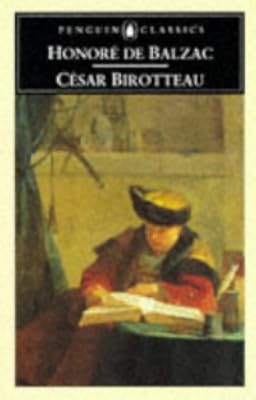









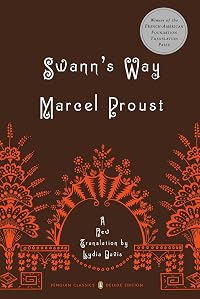
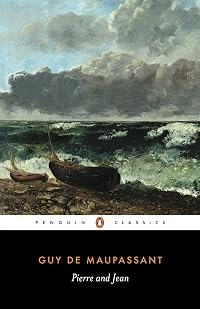

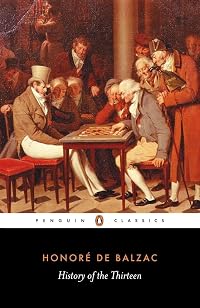


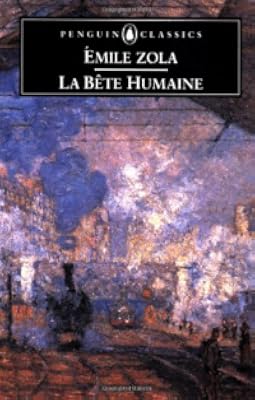






Member Recommendations

Member Reviews
Illusions perdues, written intermittently over a period of nearly ten years in the late thirties and early forties, draws mostly on Balzac's time as a struggling writer in the Paris of 1821-22 (unlike other novelists of the time, he never seems to be shy of pinning himself to the calendar), but also brings in material from his legal training and his time as a printer, papermaker and publisher (clearly, nothing was ever wasted!).
It's pretty clear from the title where Balzac wants the plot to go: provincial poet Lucien dreams of literary glory and his friend David dreams of making his family's fortune by a radical improvement to the paper-making process that will slash the cost of printing. We know from the start that the author is going show more to dangle the prospect of success in front of both of them, only to whip it savagely away at the last minute. But he takes his time about it, and obviously changed his mind a few times along the way about just how he is going to get there. Lucien is slapped down and humiliated multiple times, both in his native Angoulême and in Paris, but keeps bouncing up to try again in a new direction, without ever reflecting that his enemies will remember him from last time. Meanwhile (the stories are concurrent and interlinked, even though Balzac obviously wrote them several years apart) David is caught in a ludicrously complex plot involving multiple competing parties all trying to steal his invention and/or force him to sign it over for a fraction of what it's worth.
There's a huge amount going on, and it never gets even remotely dull, even if it is occasionally difficult to remember who is supposed to be on which side. And a wealth of fascinating, cynical comment on the literary and commercial world and the people who make their money out of it in more or less (usually less) legal and ethical ways. Glorious moments like the incident of the publisher who comes to see Lucien in his Paris lodgings to buy his novel - the advance he's intending to offer starts off at a thousand francs, but the sight of the squalid street Lucien lives in already makes him knock a couple of hundred off, and by the time he's got to the fourth floor he's under two hundred. And insights into the way the press uses its power to blackmail producers, publishers and public figures - if the editors aren't paid off, the papers will attack with negative reviews or - much worse - ignore the items concerned altogether. There are a couple of lovely scenes where an experienced journalist explains to Lucien how to write a lethal review of a good novel (simply attack it for not being something other than what it is) or a favourable review of a terrible play. Very often you get the feeling that Balzac would have been right at home in the era of social media and "fake" news. Plus ça change,...
There's a great bit of Balzac chutzpah in the magnificent but quite irrelevant scene towards the end of the book, where he spends twenty pages introducing a major character we've been vaguely expecting to turn up, but have forgotten all about by the time we've read 600 pages. Wasted space as far as the plot is concerned, but it does somehow give you an irresistible urge to find out what happens by reading the next book in the sequence! show less
It's pretty clear from the title where Balzac wants the plot to go: provincial poet Lucien dreams of literary glory and his friend David dreams of making his family's fortune by a radical improvement to the paper-making process that will slash the cost of printing. We know from the start that the author is going show more to dangle the prospect of success in front of both of them, only to whip it savagely away at the last minute. But he takes his time about it, and obviously changed his mind a few times along the way about just how he is going to get there. Lucien is slapped down and humiliated multiple times, both in his native Angoulême and in Paris, but keeps bouncing up to try again in a new direction, without ever reflecting that his enemies will remember him from last time. Meanwhile (the stories are concurrent and interlinked, even though Balzac obviously wrote them several years apart) David is caught in a ludicrously complex plot involving multiple competing parties all trying to steal his invention and/or force him to sign it over for a fraction of what it's worth.
There's a huge amount going on, and it never gets even remotely dull, even if it is occasionally difficult to remember who is supposed to be on which side. And a wealth of fascinating, cynical comment on the literary and commercial world and the people who make their money out of it in more or less (usually less) legal and ethical ways. Glorious moments like the incident of the publisher who comes to see Lucien in his Paris lodgings to buy his novel - the advance he's intending to offer starts off at a thousand francs, but the sight of the squalid street Lucien lives in already makes him knock a couple of hundred off, and by the time he's got to the fourth floor he's under two hundred. And insights into the way the press uses its power to blackmail producers, publishers and public figures - if the editors aren't paid off, the papers will attack with negative reviews or - much worse - ignore the items concerned altogether. There are a couple of lovely scenes where an experienced journalist explains to Lucien how to write a lethal review of a good novel (simply attack it for not being something other than what it is) or a favourable review of a terrible play. Very often you get the feeling that Balzac would have been right at home in the era of social media and "fake" news. Plus ça change,...
There's a great bit of Balzac chutzpah in the magnificent but quite irrelevant scene towards the end of the book, where he spends twenty pages introducing a major character we've been vaguely expecting to turn up, but have forgotten all about by the time we've read 600 pages. Wasted space as far as the plot is concerned, but it does somehow give you an irresistible urge to find out what happens by reading the next book in the sequence! show less
Por volta de 1830, aos trinta e poucos anos de idade, Honoré de Balzac elegeu seu projeto de vida: escrever uma série de romances, novelas e contos que retratasse a sociedade de sua época em todos os seus aspectos, um retrato abrangente da vida francesa que, segundo o autor, realizaria pela pena o que “Napoleão não conseguiu concluir pela espada”. E, caso esse ambicioso panorama tenha um centro, este necessariamente deve ser Ilusões perdidas, o mais extenso dos romances escritos por Balzac. Publicado em três partes entre 1837 e 1843, Ilusões perdidas explora com maestria três aspectos fundamentais para compreender a sociedade francesa do século XIX: os jogos de poder e intriga das classes aristocráticas, o contraste entre show more a vida na capital e na província e o lado sujo - cínico e politiqueiro - da atividade jornalística. Tudo isso através da história do poeta Lucien de Rubempré, que sai da pequena cidade de Angoulême para buscar fortuna e consagração literária em Paris apenas para ver, um a um, seus sonhos caírem por terra. show less
At the risk of sounding self-aggrandizing, I read this while holidaying in Paris, and that was a great choice. It's only my second Balzac, and already I'm pretty sure what I'm going to get: straight plot, semi-mythical characters, and not a whole lot of style. This isn't really my kind of thing, but Balzac is just so all-in that it's hard not to get pulled along in his wake. And anyway, he's so explicitly writing about great abstractions (here: Art, Media, Capitalism, Class, Love) that I'll always enjoy his work.
And 'Lost Illusions' is perfect for me--the satire of the press still functions perfectly (even if the technical details about typesetting are rather out of date) and the characters' debates about selling out will appeal to show more anyone who has a little punk in them. But what you really need from the book is that plot: a young man from the provinces,* a bit pretentious**, goes to the capital, but fails to hold on to his dream because he's an idiot and the system is set up in such a way that he's bound to fail.*** He returns to the provinces, where his fecklessness has more or less damned his family and friends; he tries to be noble, but appears to be getting swindled yet again. It's didactic, it's moralizing, it's sentimental. And yet you really have to read it.
* over-identifying here
** really over-identifying
*** hoping to avoid this one show less
And 'Lost Illusions' is perfect for me--the satire of the press still functions perfectly (even if the technical details about typesetting are rather out of date) and the characters' debates about selling out will appeal to show more anyone who has a little punk in them. But what you really need from the book is that plot: a young man from the provinces,* a bit pretentious**, goes to the capital, but fails to hold on to his dream because he's an idiot and the system is set up in such a way that he's bound to fail.*** He returns to the provinces, where his fecklessness has more or less damned his family and friends; he tries to be noble, but appears to be getting swindled yet again. It's didactic, it's moralizing, it's sentimental. And yet you really have to read it.
* over-identifying here
** really over-identifying
*** hoping to avoid this one show less
Tu seras journaliste, lui criait sa conscience, comme la sorcière criait à Macbeth : Tu seras roi. Être journaliste, c'est devenir proconsul dans la République des lettres. avoir tous les pouvoirs. L'ambition dévoiera Lucien Chardon. Ses poèmes ont séduit la noblesse de province. Il monte à Paris, prend le nom de sa mère, de Rubempré, et s'introduit avec succès dans la presse et les milieux littéraires. Enivré de gloire, c'est un dandy avec tilbury et canne à pommeau d'argent. Qu'importe s'il a ruiné sa sœur et David, l'imprimeur d’Angoulême, s'il a perdu son âme pour réussir.
Cette fresque tirée des Scènes de la vie de province est prodigieuse. La caricature des journalistes et des libraires-éditeurs est féroce. show more Chaque personnage de cette Comédie humaine déborde d'énergie, celle dont Balzac était plein. Mais, semblent nous dire les Illusions perdues, consacrer cette énergie à se pousser dans la société c'est rater la vie et ses vraies richesses. show less
Cette fresque tirée des Scènes de la vie de province est prodigieuse. La caricature des journalistes et des libraires-éditeurs est féroce. show more Chaque personnage de cette Comédie humaine déborde d'énergie, celle dont Balzac était plein. Mais, semblent nous dire les Illusions perdues, consacrer cette énergie à se pousser dans la société c'est rater la vie et ses vraies richesses. show less
This is a beautifully written book, but OMG, some readers are going to hate main character Lucien Chardon! I kind of hate him. He is a whiney, immature, ungrateful, gullible, vain, thoughtless, two-timing, petty, egotistical, superficial, unrepentant, spoiled little brat. Yeah, I think I do hate him. Yet… through much of the novel, I was routing for him to succeed! The problem is, I hate him because I see in him all the unforgivable failings I had at his age. Despite all his faults, he isn’t evil, he’s just a self-centered youth- as we’ve all been at one time- trying to gain a foothold in a hostile and corrupt world. That doesn’t excuse him (or myself), but I think some of these character traits must be hardwired into the show more human personality, programmed to emerge when it is time to leave the nest and establish one‘s independence. As an upstart poet, Lucien dreams of fame and fortune in the literary circles of Paris of the 1820’s. His path is littered with conniving agents, exploitative publishers, jealous colleagues prone to plagiary, corrupt editors, backstabbing critics, fickle bookshop owners, and social climbers who see him as a threat. As I read this, I kept hearing Samuel L. Jackson’s Pulp Fiction pre-execution sermon from Ezekiel 25:17 in the back of my mind- as Balzac no doubt intended me to.
Okay…show of hands: how many people reading this were at the top of their class in high school, but got a rude awakening in college, when they discovered how many other bright and talented people are out there? Yeah, me too. Just because Mom puts your drawings up on the refrigerator doesn’t mean the Metropolitan Museum of Art will come knocking on your door. That‘s a hard lesson for some. The first casualty in this book is Lucien’s idealism, when he realizes that lofty ideas don’t pay the bills. His initial Parisian friends are a group of starving artist writers, and for a while, they all seem very romantic to him… the idea of being monastically dedicated to one’s craft. He rooms with Daniel d’Arthez- a truly magnificent talent, who spends each waking moment and every precious penny perfecting his sublime prose. In comparison, Lucien can see how inferior his own stories are, but he lacks the dedication or patience to develop his writing. He soon tires of living in squalor, being socially shunned by the beautiful actresses who work in the theater district not far from his apartment (chicks want guys with skills). When the opportunity arises, Lucian sells out and takes a job writing snarky celebrity gossip and trash novels. In short, he goes all Stephenie Meyers on us, except Stephenie at least got paid. Lucien isn’t even smart enough to be a successful sell-out. He becomes part of the machine without hardly knowing there is a machine. You see, at this point, he just thinks Paris is a big city with no compassion. That’s only the half of it. Actually, the place is filled with sharks single-mindedly hunting starry-eyed newbies like himself. Balzac details how fresh talent routinely gets ensnared in contracts with grotesquely unfair terms of employment. Publishers then encourage a lavish lifestyle in their writers, advancing them pay at exorbitant interest. All the while, the new guy gets assignments on the gossip columns, spreading malicious rumors designed to achieve the publisher’s various social and political aims. Once the writer accumulates enough ill will, the publisher steps in and preserves his own reputation by publicly renouncing the columnist and firing him- leaving him deep in debt and with a demolished reputation, so he can’t establish a competing publication. A rare talent might be spared this fate, but Lucien isn’t that good. This is a very routine business model for scoundrels like Leusteau, whom Lucian initially takes as a friend. Naturally, Lucien’s got no idea any of this is going on, so it is painful to watch the scheme unfold.
Oh… I see I am sinking into a blow-by-blow summary of the book. That’s no good. It’s just that there are so many twists and turns I want to tell you about. Some funny, some tragic. Lucien’s first love: the snobby and capricious Louise d‘Bargeton… what a disaster! I’m sure everybody has an embarrassing first love story, but Lucien will have you grinding your molars on just about every page. He tries to compete with the much wealthier and more sophisticated Sixte du Châtelet for Louise’s affections…it isn’t pretty. There’s a dual with pistols… oh, make that two duals with pistols, sneaking around in the middle of the night, riding carriages under assumed identities, checking into hotels under aliases, syrupy sappy love letters, sugary embarrassing poems about “all the angels sing her praises, and the flowers bloom for but a chance to see her face!” ROTFLMAO! Yeah, we’ve all been there. There are lots of illusion to be lost here, and Louise performs the task ably. She feeds his tender heart into the wood chipper -not once, but twice!
Then there are all the lost illusions with society: Lucien joins the company of gentlemen he looks up to, only to find they are not gentlemanly at all. He works earnestly for a political newspaper, only to discover the cynical motivations for their politics. He holds men of title and position in high regard, only to discover the titles are empty, and their positions ill-gained. These are such timeless themes. There are echoes of this in probably a thousand novels, The Citadel, The Jungle, House of God and The Idiot, just off the top of my head. I’m sure you can think of more. This novel isn’t special because the themes are original. It is special because Balzac tells the tale so well. He managed to make me feel sorry for Lucien, little twerp that he is. He made me feel outrage at devious bastards like Cointet brothers. He made me feel like I really have a sense of what Paris in 1820 might have been like (in fact, he goes into a lot of fun details about the legal and financial institutions extant in France of 1820. There’s a whole subplot about what amounts to an illegal wire transfer- before the age of wire transfers! ) The story is an old one, but it still stirs a sense of tragedy. This is a wicked world we live in. I’d rather be in a kinder place, where idealistic fools like Lucien aren‘t slaughtered like sheep to make rich men richer, but alas, that happens all the time. I don’t have children, but I can only imagine what it must be like to send them out into the world, knowing what a hostile place it is, and knowing that however much they might have already guessed at its corruption, there’s still so much more for them to learn. Author Honoré de Balzac’s bio at the front suggests that some of this story is autobiographical. I can believe it; it’s written with such heart.
Lest you walk away from this review thinking Lost Illusions is just an endless parade of defeatist doom and gloom, I can tell you that it definitely is not. The end makes up for everything. For one thing, Lucien comes to realize the value of friends whom you can trust and family who will stick by you through rough times. Lucien returns to Angoulême, and sees the unsophisticated townspeople with new eyes. He appreciates his hard working mother and doting sister, as he never had before. Is this starting to sound like a “Hallmark theater” ending? That's what I thought, but suddenly everything takes an unexpected turn. Lucien tries to save his brother-in-law's business and botches it badly. He goes off into the sunset to commit suicide, and that's when things get crazy. You know how sometimes when you're at the last 50 pages or so of a 700+ page book, and you kind of feel like things are winding down, and you can start writing your review? Well, I was starting to feel like that and then BLAMMO!In comes this insane Spanish diplomat character, who may or may not also be one of Satan's agents, sent directly from hell to negotiate for Lucien's soul. He floors everybody with a convoluted and compelely non-sequitur story about some assistant undersecretary at the Spanish Ministry of Foreign Affairs, who has a paper-eating fetish, and who starts a war because he can't help himself from eating a secret peace negotiation his king had signed... but he actually did quite well for himself later in life, after marrying a wealthy woman.
Wait! So is France at war now? Oh, no... all this happened ages ago! I was shaking, with tears rolling down my face, wondering WTF is this???!?!?!?! It was wonderful. THEN THE DIPLOMAT KEEPS GOING, with a rant for the ages about how France [of 1820] has lost its morality, and how the justice system is really just a means for the rich to maintain the status quo; how the social caste system will excuse any moral offense, if only the perpetrator is wealthy, famous, or beautiful; and how the church and king put on airs of morality and civility, but by their actions anybody can see that material success is the supreme justification of any action whatsoever; and how there is no significant difference between Napolean, the Medici Family and common criminals- they all just prey on the middle class, who deserve everything they get, if they put up with it. It's just so... so, delicious. Maybe I will develop a paper eating fetish, just so I can eat this book, and feel its papery awesomeness flowing through my veins. When the story finally wraps up, some of the bad guys win, some of the good guys lose, but Lucien's sister Eve, and her husband David- the only genuinely respectable people in the entire novel- are at least happy. This has got to be one of the best novel endings I have ever read. Seriously, this is going on my "desert island picks" shelf. And WTF haven’t heard of this novel before? There are "classics" out there which aren't half as good as this. The bright side, I suppose, is that its obscurity means that the vast universe of books still contains some surprises.
Listen to me read this review HERE.
It's all part of my My Big Audio Project. show less
"The path of the righteous man is beset on all sides by the inequities of the selfish and the tyranny of evil men. Blessed is he who, in the name of charity and good will, shepherds the weak through the valley of darkness, for he is truly his brother's keeper and the finder of lost children. And I will strike down upon thee with great vengeance and furious anger those who attempt to poison and destroy my brothers. And you will know my name is the Lord when I lay my vengeance upon you.Unfortunately, my Bible doesn’t say it as cool as that, and Lucien isn’t as badass as Samuel L. Jackson. Still, this book was a pleasure to read, and should be especially fun for anybody interested in the inner workings of the publishing world-1820 or present day. I have no experience with that industry, but it seems like everything Balzac describes could be true today. More importantly to the general reader, Lost Illusions is a compassionately told coming-of-age story. Lucien begins, still quite naïve at twenty-one, working in a printshop in the countryside town of Angoulême. In his spare time, he dreams up beautiful poetry and writes novels, which everybody in his little cow town tells him are fantastic… but what do they know? His stuff isn’t actually all that great, but as a big fish in a tiny pond, he starts to believe he could take the Parisian literary world by storm.
Okay…show of hands: how many people reading this were at the top of their class in high school, but got a rude awakening in college, when they discovered how many other bright and talented people are out there? Yeah, me too. Just because Mom puts your drawings up on the refrigerator doesn’t mean the Metropolitan Museum of Art will come knocking on your door. That‘s a hard lesson for some. The first casualty in this book is Lucien’s idealism, when he realizes that lofty ideas don’t pay the bills. His initial Parisian friends are a group of starving artist writers, and for a while, they all seem very romantic to him… the idea of being monastically dedicated to one’s craft. He rooms with Daniel d’Arthez- a truly magnificent talent, who spends each waking moment and every precious penny perfecting his sublime prose. In comparison, Lucien can see how inferior his own stories are, but he lacks the dedication or patience to develop his writing. He soon tires of living in squalor, being socially shunned by the beautiful actresses who work in the theater district not far from his apartment (chicks want guys with skills). When the opportunity arises, Lucian sells out and takes a job writing snarky celebrity gossip and trash novels. In short, he goes all Stephenie Meyers on us, except Stephenie at least got paid. Lucien isn’t even smart enough to be a successful sell-out. He becomes part of the machine without hardly knowing there is a machine. You see, at this point, he just thinks Paris is a big city with no compassion. That’s only the half of it. Actually, the place is filled with sharks single-mindedly hunting starry-eyed newbies like himself. Balzac details how fresh talent routinely gets ensnared in contracts with grotesquely unfair terms of employment. Publishers then encourage a lavish lifestyle in their writers, advancing them pay at exorbitant interest. All the while, the new guy gets assignments on the gossip columns, spreading malicious rumors designed to achieve the publisher’s various social and political aims. Once the writer accumulates enough ill will, the publisher steps in and preserves his own reputation by publicly renouncing the columnist and firing him- leaving him deep in debt and with a demolished reputation, so he can’t establish a competing publication. A rare talent might be spared this fate, but Lucien isn’t that good. This is a very routine business model for scoundrels like Leusteau, whom Lucian initially takes as a friend. Naturally, Lucien’s got no idea any of this is going on, so it is painful to watch the scheme unfold.
Oh… I see I am sinking into a blow-by-blow summary of the book. That’s no good. It’s just that there are so many twists and turns I want to tell you about. Some funny, some tragic. Lucien’s first love: the snobby and capricious Louise d‘Bargeton… what a disaster! I’m sure everybody has an embarrassing first love story, but Lucien will have you grinding your molars on just about every page. He tries to compete with the much wealthier and more sophisticated Sixte du Châtelet for Louise’s affections…it isn’t pretty. There’s a dual with pistols… oh, make that two duals with pistols, sneaking around in the middle of the night, riding carriages under assumed identities, checking into hotels under aliases, syrupy sappy love letters, sugary embarrassing poems about “all the angels sing her praises, and the flowers bloom for but a chance to see her face!” ROTFLMAO! Yeah, we’ve all been there. There are lots of illusion to be lost here, and Louise performs the task ably. She feeds his tender heart into the wood chipper -not once, but twice!
Then there are all the lost illusions with society: Lucien joins the company of gentlemen he looks up to, only to find they are not gentlemanly at all. He works earnestly for a political newspaper, only to discover the cynical motivations for their politics. He holds men of title and position in high regard, only to discover the titles are empty, and their positions ill-gained. These are such timeless themes. There are echoes of this in probably a thousand novels, The Citadel, The Jungle, House of God and The Idiot, just off the top of my head. I’m sure you can think of more. This novel isn’t special because the themes are original. It is special because Balzac tells the tale so well. He managed to make me feel sorry for Lucien, little twerp that he is. He made me feel outrage at devious bastards like Cointet brothers. He made me feel like I really have a sense of what Paris in 1820 might have been like (in fact, he goes into a lot of fun details about the legal and financial institutions extant in France of 1820. There’s a whole subplot about what amounts to an illegal wire transfer- before the age of wire transfers! ) The story is an old one, but it still stirs a sense of tragedy. This is a wicked world we live in. I’d rather be in a kinder place, where idealistic fools like Lucien aren‘t slaughtered like sheep to make rich men richer, but alas, that happens all the time. I don’t have children, but I can only imagine what it must be like to send them out into the world, knowing what a hostile place it is, and knowing that however much they might have already guessed at its corruption, there’s still so much more for them to learn. Author Honoré de Balzac’s bio at the front suggests that some of this story is autobiographical. I can believe it; it’s written with such heart.
Lest you walk away from this review thinking Lost Illusions is just an endless parade of defeatist doom and gloom, I can tell you that it definitely is not. The end makes up for everything. For one thing, Lucien comes to realize the value of friends whom you can trust and family who will stick by you through rough times. Lucien returns to Angoulême, and sees the unsophisticated townspeople with new eyes. He appreciates his hard working mother and doting sister, as he never had before. Is this starting to sound like a “Hallmark theater” ending? That's what I thought, but suddenly everything takes an unexpected turn. Lucien tries to save his brother-in-law's business and botches it badly. He goes off into the sunset to commit suicide, and that's when things get crazy. You know how sometimes when you're at the last 50 pages or so of a 700+ page book, and you kind of feel like things are winding down, and you can start writing your review? Well, I was starting to feel like that and then BLAMMO!
Wait! So is France at war now? Oh, no... all this happened ages ago! I was shaking, with tears rolling down my face, wondering WTF is this???!?!?!?! It was wonderful. THEN THE DIPLOMAT KEEPS GOING, with a rant for the ages about how France [of 1820] has lost its morality, and how the justice system is really just a means for the rich to maintain the status quo; how the social caste system will excuse any moral offense, if only the perpetrator is wealthy, famous, or beautiful; and how the church and king put on airs of morality and civility, but by their actions anybody can see that material success is the supreme justification of any action whatsoever; and how there is no significant difference between Napolean, the Medici Family and common criminals- they all just prey on the middle class, who deserve everything they get, if they put up with it.
Listen to me read this review HERE.
It's all part of my My Big Audio Project. show less
The evil Vautrin--his name sounds just like vautour--is out to destroy the young hero of this book, Lucien Chardon aka Rubempré. Lucien is a good young hero for this book because he gets sucked into just about every mistake it is possible for him to make. He falls in love with one woman and does not treat her right. Then he loses her and falls in love with another woman and does not treat her right either. He has really good friends, but he does nasty things to them. He is desperate for fame and will do anything to get it. He screws over his best friend and brother-in-law David Séchard. You can just see the vultures-vautours-Vautrin circling around him ready to do him in, and sure enough ...
I will let you read the book. But I do not show more think it is much of a spoiler to tell you this much about the book, because it is obvious from fairly early in the book that Lucien is going to get his comeuppance sooner or later. It is just a matter of who and when and how many times.
I think part of the greatness of the book lies in the verisimilitude of overweening ambition that Lucien feels. I for one have felt ambition that is totally out of proportion to my true gifts. Really I am a little bit more on the mediocre side than on the side of greatness. I can work hard and consistently every day--that is all that David does--and I will make real progress, albeit slow. But when I want to take ludicrous shortcuts and am not willing to put in the time to slowly build up my career, that is when I am asking for it. This is exactly what Lucien does--he is so full of himself--he cannot see how minor his greatness is, and how average and normal his range of talent is. When he tries to jump into the big leagues, without a foundation on which to base it, he has trouble coming to him.
Stay tuned for the sequel Splendeurs et misères des courtisanes. show less
I will let you read the book. But I do not show more think it is much of a spoiler to tell you this much about the book, because it is obvious from fairly early in the book that Lucien is going to get his comeuppance sooner or later. It is just a matter of who and when and how many times.
I think part of the greatness of the book lies in the verisimilitude of overweening ambition that Lucien feels. I for one have felt ambition that is totally out of proportion to my true gifts. Really I am a little bit more on the mediocre side than on the side of greatness. I can work hard and consistently every day--that is all that David does--and I will make real progress, albeit slow. But when I want to take ludicrous shortcuts and am not willing to put in the time to slowly build up my career, that is when I am asking for it. This is exactly what Lucien does--he is so full of himself--he cannot see how minor his greatness is, and how average and normal his range of talent is. When he tries to jump into the big leagues, without a foundation on which to base it, he has trouble coming to him.
Stay tuned for the sequel Splendeurs et misères des courtisanes. show less
I’d never read Balzac before seeing this recommended, after reading it I wondered why it took me so long to get around to him. The prose style might seem overly didactic at times (in the translation I read anyway) but otherwise it charts the decline and fall of a talented poet who tries his hand at making it in the big city. The title alone should tell you that it’s not going to be the most uplifting of reads, Balzac refusing to graft a happy ending on and instead pursuing his story with relentless logic. Balzac is also uncompromising in his criticism of the society of the times and its institutions – he’s particularly harsh on journalism and the banking and legal systems and their power against individuals. There is something show more of a deus ex machina ending, which ameliorates the fate of a few of the main characters and provides space for a sequel, but that’s a minor blemish. show less
Members
- Recently Added By
Lists

1001 Books You Must Read Before You Die
1,448 works; 1,136 members

Best of French Literature
138 works; 27 members

Favorite Long Books
330 works; 42 members

Favourite 19th century fiction
257 works; 62 members

19th Century
190 works; 16 members

Western World's Greatest Books - Project Gutenberg
295 works; 15 members

1,001 BYMRBYD Concensus
723 works; 27 members

Publishing Triangle 100 Best Lesbian and Gay Novels
97 works; 6 members

Favorite Novels of All Time
4 works; 1 member

Books Set in Small Towns and Villages
278 works; 16 members

Paris, City of Lights
103 works; 17 members

Books Read in 2022
5,226 works; 115 members

sotiris' favourites circa january 2023
43 works; 2 members
.
396 works; 1 member

DigitalDreamDoor top 300
300 works; 4 members

Bibliografia essenziale
86 works; 2 members

la comédie humaine
47 works; 1 member

Mustich's 1000 Books to Read Before You Die: A Life Changing List
1,001 works; 20 members

My TBR
371 works; 3 members

French Fiction of the 18th and 19th Centuries in English Translation
169 works; 3 members

Favorite French Fiction
222 works; 105 members
Talk Discussions
Past Discussions
Balzac: Lost Illusions in Author Theme Reads (March 2013)
Author Information

Born on May 20, 1799, Honore de Balzac is considered one of the greatest French writers of all time. Balzac studied in Paris and worked as a law clerk while pursuing an unsuccessful career as an author. He soon accumulated enormous debts that haunted him most of his life. A prolific writer, Balzac would often write for 14 to-16 hours at a time. show more His writing is marked by realistic portrayals of ordinary, but exaggerated characters and intricate detail. In 1834, Balzac began organizing his works into a collection called The Human Comedy, an attempt to group his novels to present a complete social history of France. Characters in this project reappeared throughout various volumes, which ultimately consisted of approximately 90 works. Some of his works include Cesar Birotteau, Le Cousin Pons, Seraphita, and Le Cousine Bette. Balzac wed his lifelong love, Eveline Hanska in March 1850 although he was gravely ill at the time. Balzac died in August of that year. (Bowker Author Biography) show less
Some Editions
Awards and Honors
Notable Lists
Series

Belongs to Publisher Series
Clube de Literatura Clássica (CLC) (41 [September 2023])
Franse Bibliotheek (Klassiek)
Gallimard, Folio Classique (5545)
Perpetua reeks (70)
A tot vent (503)
Everyman's Library (656)
Gallimard, Folio (62)
Work Relationships
Is contained in
Contains
Has the adaptation
Common Knowledge
- Canonical title
- Lost Illusions
- Original title
- Illusions perdues
- Original publication date
- 1837 (part 1) (part 1); 1839 (part 2) (part 2); 1843 (part 3 | first complete edition) (part 3 | first complete edition)
- People/Characters
- David Séchard; Lucien Chardon; Mme de Bargeton; Eve Chardon; M. du Châtelet; Mme d'Espard
- Important places
- Paris, France; Angoulême, Nouvelle-Aquitaine, France
- First words
- A l'époque ou commence cette histoire, la presse de Stanhope et les rouleaux à distribuer l'encre ne fonctionnaient pas encore dans les petites imprimeries de provinces.
At the period when this history begins, Stanhope's press and cylinders for the distribution of ink were unknown to provincial printing-houses. - Quotations*
- "Les romantiques se composent de jeunes gens, et les classiques sont des perruques".
"C'est comme si tu ne disais rien, on dit cela de tous les livres".
"Si vous avez l'esprit de le deviner, vous aurez celui de ... (show all)vous taire". - Last words
- (Click to show. Warning: May contain spoilers.)Quant à Lucien son retour à Paris est du domaine des "Scènes de la vie parisienne".
- Publisher's editor*
- Tóth, J. Bertalanné
- Original language
- French
*Some information comes from Common Knowledge in other languages. Click "Edit" for more information.
Classifications
Statistics
- Members
- 2,831
- Popularity
- 6,448
- Reviews
- 35
- Rating
- (4.13)
- Languages
- 19 — Catalan, Czech, Danish, Dutch, English, Finnish, French, German, Greek, Hungarian, Italian, Norwegian (Bokmål), Polish, Romanian, Russian, Slovenian, Spanish, Swedish, Portuguese (Brazil)
- Media
- Paper, Audiobook, Ebook
- ISBNs
- 166
- ASINs
- 87