
Graham Robb
Author of The Discovery of France: A Historical Geography
About the Author
Graham Robb's two previous books, "Victor Hugo" & "Balzac," were "New York Times" Notable Books. He lives in Oxford, England. (Bowker Author Biography)
Image credit: Graham Robb en 2023
Works by Graham Robb
Associated Works
Tagged
Common Knowledge
- Legal name
- Robb, Graham Macdonald
- Birthdate
- 1958-06-02
- Gender
- male
- Education
- Royal Grammar School, Worcester
University of Oxford (Exeter College)
Vanderbilt University (Ph.D.) - Occupations
- author
- Organizations
- Université d'Oxford, Exeter College (College, 19 87 | 19 90)
Royal Society of Literature (Membre, 19 98) - Awards and honors
- Chevalier de l'ordre des Arts et des Lettres (2009)
- Nationality
- UK
- Birthplace
- Manchester, England, UK
- Places of residence
- Manchester, England, UK
- Associated Place (for map)
- Manchester, England, UK
Members
Reviews
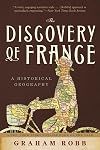
Francophile that I am, I will never see France quite the same way after having read Robb's fascinating historical geography (or geographical history)of France up to WWI. Almost every page, in fact, almost every paragraph proves chock-full of interesting "facts" and authorial observations. There are chapters on languages (French having been a minority, i.e., "foreign" language a mere hundred years ago); animals (the "60 million Others" who also inhabited the Hexagon); maps, roads, travel in show more all its dimensions, "colonization" of the nation, tourism and more. I am already rereading this book with a map of France spread out on the dining room table in front of me as I do so (bearing in mind that to "find" all the locales Robb references really requires a palimpsest of old and new, large and small scale, linguistic, ethnographic & topographic maps, some of which may not even exist.
A few anecdotal gems:
"But if all the nicknames had been adopted, the map of France would now be covered with obscenities and incomprehensible jokes." (36)
"Human hibernation was a physical and economic necessity. Lowering the metabolic rate prevented hunger from exhausting supplies . . . Slowness was not an attempt to savour the moment." (76)
"The Virgin Mary was always more important than God . . . . He was no more important than a bishop." (130)
"The century's greatest expert on gossip and pre-industrial telecommunications, Honore de Balzac, suggested that rumour could travel at about 9 mph." (141)
"Any commemoration of European unity should remember the smugglers and pedlars who helped to keep the borders open." (152)
"Three years later the dogs of Paris had their own ambulance." (179)
"The shepherds of the Landes spent whole days on stilts, using a stick to form a tripod when they wanted to rest. Perched ten feet in the air, they knitted woollen garments and scanned the horizon for stray sheep. People who saw them in the distance compared them to tiny steeples and giant spiders." (243)
"France was repeatedly reconquered by French forces." (256)
"it is quite possible to travel from one end of the country to the other without . . . realizing that many of the landscapes that seem typically and eternally French are younger than the Eiffel Tower." (268) show less
A few anecdotal gems:
"But if all the nicknames had been adopted, the map of France would now be covered with obscenities and incomprehensible jokes." (36)
"Human hibernation was a physical and economic necessity. Lowering the metabolic rate prevented hunger from exhausting supplies . . . Slowness was not an attempt to savour the moment." (76)
"The Virgin Mary was always more important than God . . . . He was no more important than a bishop." (130)
"The century's greatest expert on gossip and pre-industrial telecommunications, Honore de Balzac, suggested that rumour could travel at about 9 mph." (141)
"Any commemoration of European unity should remember the smugglers and pedlars who helped to keep the borders open." (152)
"Three years later the dogs of Paris had their own ambulance." (179)
"The shepherds of the Landes spent whole days on stilts, using a stick to form a tripod when they wanted to rest. Perched ten feet in the air, they knitted woollen garments and scanned the horizon for stray sheep. People who saw them in the distance compared them to tiny steeples and giant spiders." (243)
"France was repeatedly reconquered by French forces." (256)
"it is quite possible to travel from one end of the country to the other without . . . realizing that many of the landscapes that seem typically and eternally French are younger than the Eiffel Tower." (268) show less

Balzac is an absolute gift to biographers, with a satisfyingly outrageous life, a complicated financial and sexual history, and politics so ambiguous that everyone from Marx and Engels to hard-line legitimists has been able to claim him as an ally. And a not-inconsiderable gift for sensationalising his own public image. The only downside is that you have to read about forty novels, plus dozens of short stories, novellas, plays, unfinished works, newspaper articles, essays, letters, etc. And show more - since Balzac probably featured in more anecdotes than all his contemporaries put together - endless memoirs of the time by other writers.
Robb seems to have been up for the challenge, and he tries to give us a biography that presents a fair balance between the literary genius and the walking disaster area lurching from one financial crisis or love affair to the next (the two were usually connected: Balzac's various lovers seem to have contributed more to paying off his debts than his literary earnings ever did). The path is strewn with rabbit holes for biographers to disappear into: it must be very tempting to get drawn into working out exactly where all that money disappeared to, or developing theories about the identities of lovers known only by first names, or deciding exactly how many illegitimate children Balzac had. But Robb is very self-disciplined, and generally carries on straight ahead along the path, with only a short digression to tell us what sort of thing there is down that particular hole, and which of his predecessors we will encounter should we choose to descend in quest of white rabbits.
What emerges is a picture of a writer driven along in life as in his work by a fountain of bubbling creative energy. Ideas come out unstoppably, most of them swept aside because something else more interesting has come up, but every now and then something makes him stop and focus and a completed (or almost completed) novel is dashed down on paper in record time, usually in a coffee-fuelled all-night session. In this context Balzac's otherwise rather ludicrous career as a venture capitalist starts to make more sense - Robb classifies the business schemes in two categories: "practical ideas he never seriously thought of putting into practice, and impractical ones, which he did." Robb finds that things like the dairy farm and pineapple plantation at Sèvres could have been made into financial successes with hard work and thorough planning, and so could the silver mines in Sardinia, but that would have been no fun - when he had been through the excitement of getting to Sardinia and it turned out that there were no actual lumps of silver lying around on the ground, Balzac lost interest and moved onto something else. That also helps to explain why the financial advice Balzac gives in his novels is so much sounder than that which he followed in real life...
The most interesting and rewarding part of this biography for me was the part about Balzac's Lucien-like early attempts to make a living as a writer, and Robb goes into some detail about the pseudonymous novels he wrote in those days and the circumstances of their production and promotion.
Robb seems to have been won over by most of the women in Balzac's life, especially Eveline Hanska, whom he defends energetically against the Balzac fans disappointed by her posthumous "unfaithfulness". Even the housekeeper, "Mme de Brugnol", who was accused by Balzac of trying to blackmail him, gets a few good words from Robb (he suspects the blackmail story of being a smokescreen put up to distract Eveline). From the safe perspective of a reader of biographies, it isn't hard to imagine that anyone involved in a relationship with Balzac would come across as a calm island of common-sense in the middle of an ocean of impetuous craziness, though.
Apart from his many and mostly quite well-known affairs with (wealthy) women, there's an obvious and only slightly prurient question to ask about Balzac's sex-life: did the creator of Vautrin, who has a claim to be the first major gay character in mainstream fiction, also have sexual relationships with men? Not surprisingly, there's no conclusive proof, but Robb does find at least circumstantial evidence that might point that way. No-one who has read the description of the two poets in Illusions perdues can doubt that Balzac was aware of the sexual attractiveness of men. Starting with the critic and amateur wallpaper-hanger Latouche, who shared an apartment with Balzac for a while, there was quite a succession of young "secretaries" or "assistants" who played a part in Balzac's life briefly and then parted from him in a huff - it does sound like a familiar pattern... show less
Robb seems to have been up for the challenge, and he tries to give us a biography that presents a fair balance between the literary genius and the walking disaster area lurching from one financial crisis or love affair to the next (the two were usually connected: Balzac's various lovers seem to have contributed more to paying off his debts than his literary earnings ever did). The path is strewn with rabbit holes for biographers to disappear into: it must be very tempting to get drawn into working out exactly where all that money disappeared to, or developing theories about the identities of lovers known only by first names, or deciding exactly how many illegitimate children Balzac had. But Robb is very self-disciplined, and generally carries on straight ahead along the path, with only a short digression to tell us what sort of thing there is down that particular hole, and which of his predecessors we will encounter should we choose to descend in quest of white rabbits.
What emerges is a picture of a writer driven along in life as in his work by a fountain of bubbling creative energy. Ideas come out unstoppably, most of them swept aside because something else more interesting has come up, but every now and then something makes him stop and focus and a completed (or almost completed) novel is dashed down on paper in record time, usually in a coffee-fuelled all-night session. In this context Balzac's otherwise rather ludicrous career as a venture capitalist starts to make more sense - Robb classifies the business schemes in two categories: "practical ideas he never seriously thought of putting into practice, and impractical ones, which he did." Robb finds that things like the dairy farm and pineapple plantation at Sèvres could have been made into financial successes with hard work and thorough planning, and so could the silver mines in Sardinia, but that would have been no fun - when he had been through the excitement of getting to Sardinia and it turned out that there were no actual lumps of silver lying around on the ground, Balzac lost interest and moved onto something else. That also helps to explain why the financial advice Balzac gives in his novels is so much sounder than that which he followed in real life...
The most interesting and rewarding part of this biography for me was the part about Balzac's Lucien-like early attempts to make a living as a writer, and Robb goes into some detail about the pseudonymous novels he wrote in those days and the circumstances of their production and promotion.
Robb seems to have been won over by most of the women in Balzac's life, especially Eveline Hanska, whom he defends energetically against the Balzac fans disappointed by her posthumous "unfaithfulness". Even the housekeeper, "Mme de Brugnol", who was accused by Balzac of trying to blackmail him, gets a few good words from Robb (he suspects the blackmail story of being a smokescreen put up to distract Eveline). From the safe perspective of a reader of biographies, it isn't hard to imagine that anyone involved in a relationship with Balzac would come across as a calm island of common-sense in the middle of an ocean of impetuous craziness, though.
Apart from his many and mostly quite well-known affairs with (wealthy) women, there's an obvious and only slightly prurient question to ask about Balzac's sex-life: did the creator of Vautrin, who has a claim to be the first major gay character in mainstream fiction, also have sexual relationships with men? Not surprisingly, there's no conclusive proof, but Robb does find at least circumstantial evidence that might point that way. No-one who has read the description of the two poets in Illusions perdues can doubt that Balzac was aware of the sexual attractiveness of men. Starting with the critic and amateur wallpaper-hanger Latouche, who shared an apartment with Balzac for a while, there was quite a succession of young "secretaries" or "assistants" who played a part in Balzac's life briefly and then parted from him in a huff - it does sound like a familiar pattern... show less
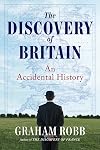
Graham Robb is one of my favorite nonfiction authors. In this book, in speaks frankly about British history across the centuries, often within the context of his own places and places where he was lived. As he has in all his his books, he works in quirky, fascinating details most people have likely never heard of, and weaves them into a complex picture.
For my research needs, I approached the book with greater into in the much older history, but he fully held my attention through the end. show more His chapters on more contemporary Britain, with insights on the ongoing legacy of colonialism and deep racism, deeply shocked and horrified me. I learned a lot through this book, and I'm grateful for that. show less
For my research needs, I approached the book with greater into in the much older history, but he fully held my attention through the end. show more His chapters on more contemporary Britain, with insights on the ongoing legacy of colonialism and deep racism, deeply shocked and horrified me. I learned a lot through this book, and I'm grateful for that. show less
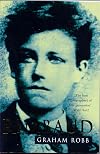
Arthur Rimbaud is one of those writers whose life of mythic proportion influences more people than his writing. The demonic youth who mastered poetic styles like a virtuoso and then invented his own before the age of 21, only to disappear into the searing heat of Africa to seek his fortune as a merchant, seems to have led two disjointed lifetimes. A challenge to any prospective biographer; there have been many. Was there a need for one more when this appeared in 2000?
As Graham Robb writes: show more “Many biographers of Rimbaud obviously preferred the sentimental, schoolboy adventure stories of Rimbaud’s early memorialists to the poet’s own savage cynicism. . . . I have tried at least to allow Rimbaud to grow up” (xvi). To me, he succeeded.
Robb is an excellent writer. Among his strengths are the amount of research he conducts and his skill at creating the overall arc of his account. This is the second of his books that I’ve read. In the first, The Discovery of France, his strength was mitigated by a curious feature of his writing: the logic of the structure of some of his paragraphs is difficult to scan; I had to re-read them to get the sense. While this bothers me less than its opposite, verbosity, this trait slows me down.
There were fewer instances of this quirk in this book than in Discovery, but here’s an example: When Robb writes in the middle of a paragraph “This may not be entirely misleading . . . ” (6), I had to read the paragraph twice to see that “this” was not an explication of what came before, but was the introduction of what was to follow. I grow impatient when my grammar software busts me for what it calls an “unclear antecedent,” now I see what that means.
Here’s a slightly different example, from the introduction (xiv): “Unlike so many privately respectable anti-heroes, Rimbaud led an exemplary life.” When I read it the second time, I realized Robb had subverted the ordinary usage of “exemplary life.” To me, it indicates that Robb is not a sloppy writer; he has a lot to say, and he’s meticulous about what he writes. It sometimes feels, though, as if too many contrasting thoughts are packed into one paragraph.
Robb’s love of antithesis often pays off, however. Here’s an example, describing the school Arthur and his brother began to attend: “If the environment had reflected its pedagogical aims, the Institute Rossat would have been preparing its pupils for a life in prison. It was Arthur’s first taste of freedom . . .” (17). This thought returns hauntingly during Rimbaud’s final years in Abyssinia, where the slave-trade was still rampant in the late nineteenth century, but it is Rimbaud who complains incessantly of being enslaved.
The twin poles of freedom and captivity formed the core of Rimbaud’s personality, so Robb, with his love of paradox and antithesis, in addition to his profound knowledge of French literature, is his ideal biographer. He traces the conflict and compulsion in Rimbaud's nature to his family constellation: the absent father, the demanding mother who withheld love. Some readers may feel this makes the book an exercise in psycho-biography, yet Robb cites contemporaries who observed that, if one knew the mother, it was understandable that Arthur took to the road. Harder to comprehend, perhaps, is how regularly he returned, including in his final illness, after more than a decade in East Africa.
Robb researches his books thoroughly. In this one, he has digested a wealth of primary and secondary literature about an author whose output, in comparison, was minuscule. Robb interacts particularly with Enid Starkie, who wrote eight decades ago what was long the standard biography in English. In some cases, based on evidence, he differs from Starkie; in at least one other case, again based on assiduous research, he defends Starkie on a point on which others have sharply disagreed with her.
The broad outlines of Rimbaud’s bi-polar life—path-breaking poet in his youth, African gun-runner in his maturity—are familiar to any of the millions, such as I, for whom the poet was an intensely private adolescent discovery. Robb convincingly revises the tale of the second half. The conventional view, rooted in Rimbaud’s letters home, written in his chronically discontented and self-condemning manner, is that his time in Abyssinia brought paltry returns. Robb investigates and finds that Rimbaud reaped enormous profits.
Enormous profit of a different kind is what I reaped in reading this masterpiece of biography. show less
As Graham Robb writes: show more “Many biographers of Rimbaud obviously preferred the sentimental, schoolboy adventure stories of Rimbaud’s early memorialists to the poet’s own savage cynicism. . . . I have tried at least to allow Rimbaud to grow up” (xvi). To me, he succeeded.
Robb is an excellent writer. Among his strengths are the amount of research he conducts and his skill at creating the overall arc of his account. This is the second of his books that I’ve read. In the first, The Discovery of France, his strength was mitigated by a curious feature of his writing: the logic of the structure of some of his paragraphs is difficult to scan; I had to re-read them to get the sense. While this bothers me less than its opposite, verbosity, this trait slows me down.
There were fewer instances of this quirk in this book than in Discovery, but here’s an example: When Robb writes in the middle of a paragraph “This may not be entirely misleading . . . ” (6), I had to read the paragraph twice to see that “this” was not an explication of what came before, but was the introduction of what was to follow. I grow impatient when my grammar software busts me for what it calls an “unclear antecedent,” now I see what that means.
Here’s a slightly different example, from the introduction (xiv): “Unlike so many privately respectable anti-heroes, Rimbaud led an exemplary life.” When I read it the second time, I realized Robb had subverted the ordinary usage of “exemplary life.” To me, it indicates that Robb is not a sloppy writer; he has a lot to say, and he’s meticulous about what he writes. It sometimes feels, though, as if too many contrasting thoughts are packed into one paragraph.
Robb’s love of antithesis often pays off, however. Here’s an example, describing the school Arthur and his brother began to attend: “If the environment had reflected its pedagogical aims, the Institute Rossat would have been preparing its pupils for a life in prison. It was Arthur’s first taste of freedom . . .” (17). This thought returns hauntingly during Rimbaud’s final years in Abyssinia, where the slave-trade was still rampant in the late nineteenth century, but it is Rimbaud who complains incessantly of being enslaved.
The twin poles of freedom and captivity formed the core of Rimbaud’s personality, so Robb, with his love of paradox and antithesis, in addition to his profound knowledge of French literature, is his ideal biographer. He traces the conflict and compulsion in Rimbaud's nature to his family constellation: the absent father, the demanding mother who withheld love. Some readers may feel this makes the book an exercise in psycho-biography, yet Robb cites contemporaries who observed that, if one knew the mother, it was understandable that Arthur took to the road. Harder to comprehend, perhaps, is how regularly he returned, including in his final illness, after more than a decade in East Africa.
Robb researches his books thoroughly. In this one, he has digested a wealth of primary and secondary literature about an author whose output, in comparison, was minuscule. Robb interacts particularly with Enid Starkie, who wrote eight decades ago what was long the standard biography in English. In some cases, based on evidence, he differs from Starkie; in at least one other case, again based on assiduous research, he defends Starkie on a point on which others have sharply disagreed with her.
The broad outlines of Rimbaud’s bi-polar life—path-breaking poet in his youth, African gun-runner in his maturity—are familiar to any of the millions, such as I, for whom the poet was an intensely private adolescent discovery. Robb convincingly revises the tale of the second half. The conventional view, rooted in Rimbaud’s letters home, written in his chronically discontented and self-condemning manner, is that his time in Abyssinia brought paltry returns. Robb investigates and finds that Rimbaud reaped enormous profits.
Enormous profit of a different kind is what I reaped in reading this masterpiece of biography. show less
Lists
Awards


You May Also Like


Associated Authors
Statistics
- Works
- 17
- Also by
- 4
- Members
- 4,760
- Popularity
- #5,271
- Rating
- 3.9
- Reviews
- 94
- ISBNs
- 115
- Languages
- 11
- Favorited
- 3
