
Andrew Hussey
Author of Paris: The Secret History
About the Author
Andrew Hussey is a contributing editor to the Observer Sports Magazine and Head of French and Comparative Literature at the University of London in Paris.
Works by Andrew Hussey
Tagged
Common Knowledge
- Birthdate
- 1963
- Gender
- male
- Short biography
- Professor Andrew Hussey is a native of Liverpool and studied at the universities of Manchester and Lyon III.
He started his career as a journalist writing for Julie Burchill's Modern Review and since has written for every major British newspaper as well as the TLS the LRB and the Literary Review. These days he writes mainly for the New Statesman and the Guardian/Observer.
Professor Hussey began his academic career with an MPhil on Louis Ferdinand Céline and then a PhD on Georges Bataille. He has written on Guy Debord the Lettristes, William Burroughs and North African writing. Professor Hussey's biography of Guy Debord was chosen by Julian Barnes as 'International Book of the Year' in the Times Literary Supplement 2001. His book on Paris was described by Peter Ackroyd as 'masterly' and as 'a magnificent achievement' by the New York Times. In France, this book was shortlisted for the Prix Grandgousier and has been praised in the pages of Le Monde des Livres, Le Nouvel Observateur and L'Humanité as well as being chosen as a book of the week by Jacques Munier on France-Culture.
Professor Hussey is currently writing a book called 'The French Intifada: The Long War Between France and its Arabs' to be published in 2013 by Granta UK, Faber USA and La Martinière France.
He also makes documentaries for television and radio including the widely acclaimed 'France on a Plate' first shown on BBC4 in 2011. He was awarded an OBE in 2011 for services to Anglo-French cultural relations.
http://ulip.london.ac.uk/node/215
Members
Reviews
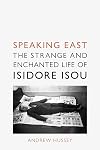
Speaking East is a detailed enough and more than captivating account, albeit biased, of the whereabouts of Isidore Isou, his life in Romania, his arrival in France and the swift rise and fall of his otherwise long-standing Lettrist movement (which outlived its offshoots long after losing its public notoriety). And when I say biased, I mean the author obviously finds Isou a lot more fascinating than the likes of Debord and Jorn, who split from Lettrism partly on account of Isou's unabashed show more mysticism and egocentrism. However, Hussey does make a compelling case for Isou's conceptions bringing to a new peak the relationship of the avant-garde with Jewish mystical thought - and, of course, for the real origins of Mai 68. And, as a bonus, there are few - only a few though... - illustrations, which prompts the reader to further go exploring online, since offline there are scarce resources - especially in Romania, where some people still don't seem to acknowledge that it was here where Tzara, Isou, Celan and so many other essential figures of the past century were born. show less
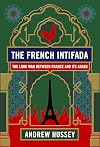
I wish I'd read this book whilst I was living in France. It's a most informative book, looking at the inhabitants of France who come from the former French territories of Algeria, Morocco, and Tunisia. Much of the book is devoted to France's possession of these nations, and to the troubles leading to their final independence. It's a horrifying and illuminating story, and one that does much to explain the disaffection of the Maghrebin population in France. In fact, if I have a criticism, it show more is that Hussey has done little but touch upon the history of those North Africans who chose to emigrate to France, though he examines the very recent past, looking at recent riots and at Muslims in the French prison system
Despite the seriousness of the subject matter, this well-written book is easy to read and complex issues are dealt with clearly. Hussey has handled the mass of material well and engagingly. A compelling and disturbing read. show less
Despite the seriousness of the subject matter, this well-written book is easy to read and complex issues are dealt with clearly. Hussey has handled the mass of material well and engagingly. A compelling and disturbing read. show less
An enlightening look at French involvement in the Maghreb region of North Africa. Although the book touches on colonial times, most of it discusses the post-WWII time period. Of particular interest is its coverage of the Islamist movements in each country and the spillover to France itself. For those who want to believe that the US is the only western power to meddle in the affairs of Arab North Africa, this is the story of France having been there and done that.
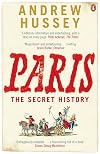
I was disappointed by this one. There are a lot of entertaining historical anecdotes in here, but somehow as a whole it doesn't quite hang together.
Part of the problem is that it wants to be more than just a factual history. Hussey says in the prologue that he is modelling the project on Peter Ackroyd's wonderful London: The Biography, but that sets the bar pretty high. He is decent when he sticks to the facts, but when he starts trying to be metaphysical, he just doesn't have Ackroyd's show more control, and ends up drawing rather silly and pseudo-profound conclusions like, "The death of [Princess] Diana [...] could only have happened here [...] she is only the latest and most famous example of those who have been fatally seduced here." And so on.
Part of the reason Ackroyd was so good at moving beyond facts into "psychogeography" (or whatever you want to call it) is that he took a catholic, thematic approach to his history. Hussey just starts with the Celts and works his way methodically forwards in time. Of course there's nothing wrong with that as a methodology, but it does mean he has to work hard to keep each chapter coherent, and occasionally it slips away from him.
The book's focus is neither one thing or the other. It claims to be a "secret" history which examines the city's underclasses, its back-alleys and criminals and occultists. Yet there is a strong relience on fairly un-secret narratives about kings and presidents and other "great men" or important dates. The result is that neither strand seems wholly satisfying.
Having one eye on the downtrodden was a good idea, and it provides the book with most of its best stories. It's great to hear details about things like the "bread of Madame Montpensier" (which used flour from ground-up human bones, during food shortages), or about the semi-mythical King of Thieves holding court over the city's beggars. But too often, his remit manifests itself only in a vague fascination with what he calls "whores", and a predilection for details which, while often interesting, can sometimes seem juvenile.
Finally, the quality of the writing itself irritated me. He does not know the difference between "flout" and "flaunt". He uses the seismological term "epicentre" as a lazy synonym for "centre". The net result of all this is a feeling that Hussey has a wealth of information about Paris, but not a very good idea about how to organise it or talk about it.
You'll get some interesting stuff out of this book, but it's more of an effort than it should be. show less
Part of the problem is that it wants to be more than just a factual history. Hussey says in the prologue that he is modelling the project on Peter Ackroyd's wonderful London: The Biography, but that sets the bar pretty high. He is decent when he sticks to the facts, but when he starts trying to be metaphysical, he just doesn't have Ackroyd's show more control, and ends up drawing rather silly and pseudo-profound conclusions like, "The death of [Princess] Diana [...] could only have happened here [...] she is only the latest and most famous example of those who have been fatally seduced here." And so on.
Part of the reason Ackroyd was so good at moving beyond facts into "psychogeography" (or whatever you want to call it) is that he took a catholic, thematic approach to his history. Hussey just starts with the Celts and works his way methodically forwards in time. Of course there's nothing wrong with that as a methodology, but it does mean he has to work hard to keep each chapter coherent, and occasionally it slips away from him.
The book's focus is neither one thing or the other. It claims to be a "secret" history which examines the city's underclasses, its back-alleys and criminals and occultists. Yet there is a strong relience on fairly un-secret narratives about kings and presidents and other "great men" or important dates. The result is that neither strand seems wholly satisfying.
Having one eye on the downtrodden was a good idea, and it provides the book with most of its best stories. It's great to hear details about things like the "bread of Madame Montpensier" (which used flour from ground-up human bones, during food shortages), or about the semi-mythical King of Thieves holding court over the city's beggars. But too often, his remit manifests itself only in a vague fascination with what he calls "whores", and a predilection for details which, while often interesting, can sometimes seem juvenile.
Finally, the quality of the writing itself irritated me. He does not know the difference between "flout" and "flaunt". He uses the seismological term "epicentre" as a lazy synonym for "centre". The net result of all this is a feeling that Hussey has a wealth of information about Paris, but not a very good idea about how to organise it or talk about it.
You'll get some interesting stuff out of this book, but it's more of an effort than it should be. show less
You May Also Like


Statistics
- Works
- 12
- Members
- 795
- Popularity
- #32,057
- Rating
- 3.7
- Reviews
- 16
- ISBNs
- 32
- Languages
- 4


