
Enid Starkie (1897–1970)
Author of Arthur Rimbaud
About the Author
Image credit: Enid Mary Starkie by Norman Parkinson bromide print on card mount, 1951
Series
Works by Enid Starkie
A lady's child 5 copies
Flaubert and Madame Bovary 1 copy
Associated Works
Selected Poems Of Charles Baudelaire — Introduction — 2 copies
Tagged
Common Knowledge
- Legal name
- Starkie, Enid Mary
- Birthdate
- 1897-08-18
- Date of death
- 1970-04-21
- Gender
- female
- Education
- Sorbonne University
University of Oxford (Somerville College) - Occupations
- biographer
literary critic
professor - Organizations
- Université d'Oxford, Somerville college (Chargée de cours, Français, Littérature française, 19 28, Maître de conférences, 19 34, Lectrice, 19 46, Professeur, 19 55 | 19 65)
University College of the South-West, Exeter (Maître de conférences, Langues modernes, 19 25 | 19 28)
Hollins college, Virginie, Etats-Unis (Légataire de sa fortune)
Académie irlandaise des lettres (Membre)
Royal Society of Literature, Royaume-Uni (Membre)
Bodleian Library, Oxford (Dépositaire des archives) - Awards and honors
- Officier de la Légion d'Honneur (1958)
Commander of the Order of the British Empire (1967) - Relationships
- Starkie, Walter (brother)
Rackham, Arthur (uncle by marriage) - Short biography
- Enid Starkie was the eldest daughter of Rt. Hon. W.J.M. Starkie and his wife May Caroline Walsh. Her father served as Resident Commissioner of Education for Ireland. The academic Walter Starkie was her brother. She and her siblings learned French and music from a French governess. Enid later wrote, "My French governess never stopped talking of France, and she talked with all the nostalgia of the exile." She was a talented pianist, and won medals at Feis Ceoil, the annual music festival in Dublin. She attended Alexandra College in Dublin, and went on the University of Oxford and the Sorbonne in Paris. She taught modern languages at Exeter and at Oxford. She produced critical studies of the works of Charles Baudelaire (1933), Arthur Rimbaud (1938 and 1947), Andre Gide (1954), and Gustave Flaubert (1967-71). She was instrumental in establishing the poetic reputation of Rimbaud, receiving the first doctorate in the Department of Modern Languages at Oxford for her 1937 book Rimbaud in Abyssinia. She was awarded the Legion d'honneur in 1958, and received the CBE in 1967.
- Nationality
- Ireland
UK - Birthplace
- Killiney, County Dublin, Ireland
- Places of residence
- Killiney, County Dublin, Ireland (birth)
Oxford, England, UK - Place of death
- Walton St., Oxford, Angleterre, Riyaume-Uni
- Associated Place (for map)
- Killiney, County Dublin, Ireland
Members
Reviews

Read this kick ass literary biography back in college soon after I'd "discovered" the poetry of Arthur Rimbaud. Rimbaud was a huge influence on Jim Morrison and, being such a faux-poet-Jim-Morrison-wannabe at the time, I was curious to find out why Morrison was so driven to emulate Rimbaud, both artistically and self-destructively. Once I'd read and re-read and unintentionally memorized passages galore of Illuminations, I moved on to A Season in Hell and The Drunken Boat, the New Directions show more edition, and completely forgot about Jim Morrison.
Lines from A Season in Hell like "Misfortune was my God" or "I played sly tricks on madness," knocked my impressionable nineteen year-old self out! And I don't think I've ever completely come to since. Thank you, Arthur Rimbaud, for mesmerizing me (and millions others of your French Symbolist adherents) with your radically original visions, and for letting us glimpse inside your divine "notebook from one of the damned".
Enid Starkie, Rimbaud academician extraordinaire, must be paid homage as well for having crafted Arthur Rimbaud, a masterfully written, researched, and scholarly (though never snooty) examination of one of World Literature's most tortured enigmas. Rimbaud's life makes Sylvia Plath's seem a happy and serene one by comparison. How could such a precociously gifted prose poet (and at times, wildly acerbic and satiric personal correspondent to boot) have completely rejected his literary genius barely turned twenty-one, and ultimately end up as an alleged slave trader dead from the untreated effects of syphilis less than twenty years later? Enid Starkie's comprehensive analysis offers all the known clues — and more. I didn't know, for instance, prior to reading Starkie's biography that without Rimbaud's poetry — and particularly the reality shifting ethereal poems in Illuminations — that what became the school of surrealism in art, soon to flourish in France and then the world, would have been denied perhaps its greatest influence.
Arthur Rimbaud is a fascinating read, and includes numerous passages involving Paul Verlaine, and their sordid, on-again-off-again affair. Rimbaud's affair with absinthe and opium is well chronicled too. Starkie pulled no punches while retaining obvious compassion for Rimbaud's sad plight. It's like she was urging him on sometimes, was the vague sense I got, as she brought him to vivid life in her fine writing. Arthur Rimbaud remains a lovely, unflinching, essential biography of Rimbaud the boy, the adolescent poet, the man. show less
Lines from A Season in Hell like "Misfortune was my God" or "I played sly tricks on madness," knocked my impressionable nineteen year-old self out! And I don't think I've ever completely come to since. Thank you, Arthur Rimbaud, for mesmerizing me (and millions others of your French Symbolist adherents) with your radically original visions, and for letting us glimpse inside your divine "notebook from one of the damned".
Enid Starkie, Rimbaud academician extraordinaire, must be paid homage as well for having crafted Arthur Rimbaud, a masterfully written, researched, and scholarly (though never snooty) examination of one of World Literature's most tortured enigmas. Rimbaud's life makes Sylvia Plath's seem a happy and serene one by comparison. How could such a precociously gifted prose poet (and at times, wildly acerbic and satiric personal correspondent to boot) have completely rejected his literary genius barely turned twenty-one, and ultimately end up as an alleged slave trader dead from the untreated effects of syphilis less than twenty years later? Enid Starkie's comprehensive analysis offers all the known clues — and more. I didn't know, for instance, prior to reading Starkie's biography that without Rimbaud's poetry — and particularly the reality shifting ethereal poems in Illuminations — that what became the school of surrealism in art, soon to flourish in France and then the world, would have been denied perhaps its greatest influence.
Arthur Rimbaud is a fascinating read, and includes numerous passages involving Paul Verlaine, and their sordid, on-again-off-again affair. Rimbaud's affair with absinthe and opium is well chronicled too. Starkie pulled no punches while retaining obvious compassion for Rimbaud's sad plight. It's like she was urging him on sometimes, was the vague sense I got, as she brought him to vivid life in her fine writing. Arthur Rimbaud remains a lovely, unflinching, essential biography of Rimbaud the boy, the adolescent poet, the man. show less

Petrus Borel is one of those writers like Count Stenbock, found only down a scarcely discernible track leading off a forgotten byroad. Indeed, by the time I bought this book I'd forgotten that Borel's heyday was in the early 1830's and not the 1890's; that, and Starkie's introduction warning that her book is at heart a digressive study of a short-lived blaze of bohemianism that influenced Baudelaire, made me fear that the book would seem rather dull.
It was anything but dull. It was in fact show more sometimes compelling and often charming, with a subtle quirkiness arising not only from the book's subject but from Starkie's style---reading her is like listening to an extraordinarily skilful raconteur. Or raconteuse, if you must. And digressive it is: Within the first 50 pages alone are sketches of those wonderfully outrageous bohemians, theatre claques, Hugo's humourlessness, the July Revolution, an unusual cult, the cholera plague, and writings of a necrophiliac bent.
As for Borel, after the glory days of his early 20's his life was a sad one. And flawed though he obviously was, there's something admirable about the determination that allowed him to endure the fall from man of influence to half-starved writer living and scribbling away in a garden shed. In the end he acquired a government position in Algeria, where he died at 50 after having lost that position through his own bolshiness.
Despite the array of subjects discussed in it, Petrus Borel is not a shallow treatment of them: Starkie was an academic writer who must have trodden many of those byroads herself in research for the book. And on the ridiculously remote chance that someone has come to this page upon thinking 'Hey--what I'd really like to do is read a biography of Petrus Borel', I should add that not all passages quoted are translated, though a reader with a basic knowledge of French should have no difficulty with them. show less
It was anything but dull. It was in fact show more sometimes compelling and often charming, with a subtle quirkiness arising not only from the book's subject but from Starkie's style---reading her is like listening to an extraordinarily skilful raconteur. Or raconteuse, if you must. And digressive it is: Within the first 50 pages alone are sketches of those wonderfully outrageous bohemians, theatre claques, Hugo's humourlessness, the July Revolution, an unusual cult, the cholera plague, and writings of a necrophiliac bent.
As for Borel, after the glory days of his early 20's his life was a sad one. And flawed though he obviously was, there's something admirable about the determination that allowed him to endure the fall from man of influence to half-starved writer living and scribbling away in a garden shed. In the end he acquired a government position in Algeria, where he died at 50 after having lost that position through his own bolshiness.
Despite the array of subjects discussed in it, Petrus Borel is not a shallow treatment of them: Starkie was an academic writer who must have trodden many of those byroads herself in research for the book. And on the ridiculously remote chance that someone has come to this page upon thinking 'Hey--what I'd really like to do is read a biography of Petrus Borel', I should add that not all passages quoted are translated, though a reader with a basic knowledge of French should have no difficulty with them. show less

This is a fascinating book. As a collector and a fan of the gothic and the weird, I've been chasing this title for a long time. It portrays a half-forgotten gothic writer in his context as part of a clique of romantic and gothic Parisian writers whose Satanic poses and drunken escapades would influence similar groups right into the twentieth century. Borel seems to have been a magnetic, charismatic character in the mould of Byron. Unfortunately, the vivid portrait Starkie draws is ultimately show more one of an extravagant poseur who played the role right up to the hilt, but couldn't really bring himself to sit down and do the hard work of getting it all down on paper. His gradual descent into dire poverty and a disastrous diplomatic career is unflinchingly documented. Starkie's critical dissection of his published work is ruthless, and her disappointment is palpable.
There are rumors of a very rare and expensive English translation of Borel's best book 'Champavert: Immoral Tales'; based on what I have read here, I will search for it no longer. If Borel was a lycanthrope, it seems he never managed a full transformation; still, his contemporaries and the Symbolists, Decadents and Surrealists that came after were inspired by his fruitless howling at the moon and we are all the richer for it.
The Dedalus Book of French Horror contains one Immoral Tale translated from 'Champavert': 'Monsieur de l'Argentiere, Public Prosecutor', probably the only accessible sample of Borel's work in English. The anthology is well worth picking up for an excellent collection of Borel's peers and those that followed in his wake.
Postscript: a new translation of Immoral Tales by Brian Stableford has now (June 2012) been announced by Black Coat Press. Oh, go on then!
Post-Postscript (Feb 2014) - actually published by Borgo Press, and well worth reading! show less
There are rumors of a very rare and expensive English translation of Borel's best book 'Champavert: Immoral Tales'; based on what I have read here, I will search for it no longer. If Borel was a lycanthrope, it seems he never managed a full transformation; still, his contemporaries and the Symbolists, Decadents and Surrealists that came after were inspired by his fruitless howling at the moon and we are all the richer for it.
The Dedalus Book of French Horror contains one Immoral Tale translated from 'Champavert': 'Monsieur de l'Argentiere, Public Prosecutor', probably the only accessible sample of Borel's work in English. The anthology is well worth picking up for an excellent collection of Borel's peers and those that followed in his wake.
Postscript: a new translation of Immoral Tales by Brian Stableford has now (June 2012) been announced by Black Coat Press. Oh, go on then!
Post-Postscript (Feb 2014) - actually published by Borgo Press, and well worth reading! show less
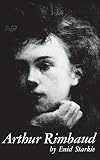
One of the best biographies I have ever read.
Rimbaud is by far one of my favourite poets. Before I was 17 I had read everything in print that he ever wrote (letters included). The next logical step was to read everything about him. Luckily around the time I was searching for information on him I visited a used bookstore in DC that had this book. I read it on the roadtrip home and again before I finally put it onto my shelf. Since then I have read dozens of biographies of his and none of them show more stack up as well as this one. Some of the more recent bios dispute some of the information here, but that is to be expected (after all my copy was printed in the 60's). This is one of the most well researched bios I have ever read, and one of only a handful I have been able to reread. The only problem I can see people having is that when Rimbaud's poems are quoted, they are quoted in the original french, which is no problem if you have studied the language. Unfortunately most people have not. I recommend carrying a copy of the late Wallace Fowlie's translations of Rimbaud's complete works if you wish to read along. show less
Rimbaud is by far one of my favourite poets. Before I was 17 I had read everything in print that he ever wrote (letters included). The next logical step was to read everything about him. Luckily around the time I was searching for information on him I visited a used bookstore in DC that had this book. I read it on the roadtrip home and again before I finally put it onto my shelf. Since then I have read dozens of biographies of his and none of them show more stack up as well as this one. Some of the more recent bios dispute some of the information here, but that is to be expected (after all my copy was printed in the 60's). This is one of the most well researched bios I have ever read, and one of only a handful I have been able to reread. The only problem I can see people having is that when Rimbaud's poems are quoted, they are quoted in the original french, which is no problem if you have studied the language. Unfortunately most people have not. I recommend carrying a copy of the late Wallace Fowlie's translations of Rimbaud's complete works if you wish to read along. show less
You May Also Like


Associated Authors
Statistics
- Works
- 12
- Also by
- 3
- Members
- 457
- Popularity
- #53,729
- Rating
- 4.0
- Reviews
- 7
- ISBNs
- 21
- Languages
- 5
- Favorited
- 2

