
Arthur Rackham (1867–1939)
Author of Greek Myths: A Wonder Book for Girls and Boys
About the Author
Arthur Rackham was born in London, England. At the age of 18, he worked as a clerk at the Westminster Fire Office and began studying part-time at the Lambeth School of Art. In 1892 he left his job and started working for The Westminster Budget as a reporter and illustrator. His first book show more illustrations were published in 1893 in To the Other Side by Thomas Rhodes, but his first serious commission was in 1894 for The Dolly Dialogues, the collected sketches of Anthony Hope, who later went on to write The Prisoner of Zenda. Book illustrating then became Rackham's career for the rest of his life. Rackham invented his own unique technique which resembled photographic reproduction; he would first sketch an outline of his drawing, then lightly block in shapes and details. Afterwards he would add lines in pen and India ink, removing the pencil traces after it had dried. With color pictures, he would then apply multiple washes of color until transparent tints were created. Arthur Rackham died in 1939 of cancer in his home in Limpsfield, Surrey. (Bowker Author Biography) show less
Image credit: Arthur Rackham (1867-1939). Self portrait.
Works by Arthur Rackham
Greek Myths: A Wonder Book for Girls and Boys (1851) — Illustrator, some editions; Illustrator — 2,166 copies, 16 reviews
Peter Pan in Kensington Gardens (1906) — Illustrator, some editions; Illustrator; Editor, some editions — 1,009 copies, 14 reviews
The Arthur Rackham Treasury: 86 Full-Color Illustrations (Dover Fine Art, History of Art) (2005) — Illustrator — 182 copies, 3 reviews
Peter Pan: The Complete Adventures 7 copies
Fairy Tales: 2 (A studio book) 3 copies
The Vintage Fairies Colouring Book: More than 40 Enchanting Images to Colour and Treasure (Arcturus Vintage Colouring, 4) (2021) 3 copies
Some British ballads, illustr. by A. Rackham — Illustrator — 2 copies
THE FAIRY TALES OF THE BROTHERS GRIMM ILLUSTRATED BY ARTHUR RACKHAM — Illustrator — 1 copy
Le Livre des Ballades — Illustrator — 1 copy
Le roi Arthur 1 copy
Fiabe popolari inglesi 1 copy
Land of Enchantment 1 copy
Das Sagenbuch 1 copy
St. Nicholas, An Illustrated Magazine for Young Folks, Vol XLI, Part I, May to October 1914 (1913) 1 copy, 1 review
The Peter Pan Portfolio #47 1 copy
The Land of Enchantment 1 copy
Associated Works
William Shakespeare: The Complete Works (1623) — Illustrator, some editions — 35,678 copies, 177 reviews
Alice's Adventures in Wonderland / Through the Looking-Glass (1865) — Illustrator, some editions — 29,505 copies, 315 reviews
The Complete Fairy Tales of the Brothers Grimm (1812) — Illustrator, some editions — 17,493 copies, 137 reviews
Complete Stories and Poems of Edgar Allan Poe (1938) — Illustrator, some editions — 13,579 copies, 83 reviews
The Legend of Sleepy Hollow [short story] (1819) — Illustrator, some editions — 5,051 copies, 144 reviews
Wagner : The Ring of the Nibelung [libretto] (1876) — Illustrator, some editions; Illustrator, some editions — 716 copies, 2 reviews
The Annotated Mother Goose: Nursery Rhymes Old and New, Arranged and Explained (1962) — Illustrator — 687 copies, 10 reviews
The Illustrated Treasury of Children's Literature, Volumes 1-2 (1955) — Contributor — 523 copies, 4 reviews
The Romance of King Arthur and His Knights of the Round Table (1917) — Illustrator, some editions — 420 copies, 1 review
The Great Fairy Tale Tradition: From Straparola and Basile to the Brothers Grimm [Norton Critical Edition] (2001) — Illustrator — 391 copies, 1 review
Grimm's Fairy Tales {Rackham illustrations} (1996) — Illustrator; Illustrator, some editions — 178 copies
Irish Fairy Tales (Gothic Fantasy) (2018) — Illustrator; Cover artist, some editions — 143 copies, 1 review
Once Upon a Time: The Fairy Tale World of Arthur Rackham (1972) — Illustrator — 136 copies, 5 reviews
Wagner : Siegfried + Twilight of the gods [libretto] (1853) — Illustrator, some editions — 71 copies, 1 review
The Junior Classics Volume 05: Stories That Never Grow Old (1912) — Illustrator — 69 copies, 1 review
Rackham's Fairies, Elves and Goblins: More than 80 Full-Color Illustrations (Dover Fine Art, History of Art) (2007) — Illustrator — 51 copies, 2 reviews
Children's Classics: Cinderella & Other Classic Italian Fairy Tales (1993) — Illustrator — 36 copies
Goldilocks and the Three Bears and Other Classic English Fairy Tales (1994) — Illustrator — 33 copies
J. M. Barrie's Peter Pan in Kensington Gardens Retold for Little People (1951) — Illustrator, some editions — 27 copies
Shakespeare Illustrated: Art by Arthur Rackham, Edmund Dulac, Charles Robinson and Others (Dover Fine Art, History of Art) (2011) — Illustrator — 25 copies
Washington Irving: A Treasury: Rip Van Winkle, The Legend of Sleepy Hollow, Old Christmas (2012) — Illustrator, some editions — 23 copies
Alice Illustrated: 120 Images from the Classic Tales of Lewis Carroll (Dover Fine Art, History of Art) (2012) — Illustrator — 22 copies
The Illustrators: The British Art of Illustration 1800-2002 (2002) — Front cover illustrator — 13 copies
Bruin's Midnight Reader: Strange and Engaging Stories for the Curious (2022) — Illustrator, some editions — 3 copies
LITTLE BROTHER & LITTLE SISTER, AND OTHER FAIRY TALES. Illustrations by Arthur Rackham — Illustrator, some editions — 3 copies
Kazki dlja ditej ta vsijeji rodini: iljustraciji Artura Rekhema (2016) — Illustrator, some editions — 2 copies
De Walkure : eerste dag van de trilogie De Ring van den Neveling — Illustrator, some editions — 1 copy
Godenschemering : derde dag van de trilogie De ring van den Neveling — Illustrator, some editions — 1 copy
13 Dark Tales by Poe (Selected by J. Reder White) (Classics Collection) — Illustrator — 1 copy
Tagged
Common Knowledge
- Canonical name
- Rackham, Arthur
- Birthdate
- 1867-09-19
- Date of death
- 1939-09-06
- Gender
- male
- Education
- Lambeth School of Art
- Occupations
- office worker
artist
illustrator - Organizations
- Art Workers' Guild
- Awards and honors
- Royal Society of Painters in Water-Colours (1908)
Gold Medal, Milan International Exhibition (1906)
Gold Medal, Barcelona International Exposition (1912) - Relationships
- Starkie, Enid (niece by marriage)
Starkie, Edyth (wife) - Cause of death
- cancer
- Nationality
- UK
- Birthplace
- Lewisham, London, England, UK
- Places of residence
- Limpsfield, Surrey, England, UK
Houghton, West Sussex, England, UK
London, England, UK - Place of death
- Limpsfield, Surrey, England, UK
- Burial location
- Golders Green Crematorium, London, England, UK
- Map Location
- England, UK
Members
Reviews
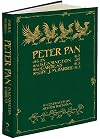
Under no circumstances will I ever read this "children's classic" to my grand children unless I want to drive them into deep despair. Children forever separated from their parents, some by early death, some by other circumstances, feature prominently in this story of Peter Pan's beginnings and sets a dark tone which overrides scenes of whimsy and imagination.
On the other hand, Calla Editions' pleasantly crafted volume of "Peter Pan In Kengsinton Gardens" is worth keeping for the beauty of show more its presentation, especially for the illustrations that are those of the original artist and king of Edwardian children's illustrations, Arthur Rackham. For Rackham fans, it is a must have. show less
On the other hand, Calla Editions' pleasantly crafted volume of "Peter Pan In Kengsinton Gardens" is worth keeping for the beauty of show more its presentation, especially for the illustrations that are those of the original artist and king of Edwardian children's illustrations, Arthur Rackham. For Rackham fans, it is a must have. show less
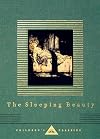
My copy of Arthur Rackham’s illustrated Sleeping Beauty (retold by C.S. Evans) is not a very fancy edition, being one of the cheap Dover reproductions, but since the artistic style that Rackham is employing are his signature silhouettes, so the simple style of the book does not hinder the illustrative content. Rackham’s silhouette style is put to the test to showcase this story, having to illustrate the intricate details of the spinning wheels (and the fires that destroy them), the show more tangle of briar roses that surround Sleeping Beauty’s castle, and the myriad of surrounding story details. With his usual aplomb, Rackham brings his characters to life throughout the story, as his simple linework expresses the anger of the slighted fairy, the grace of Sleeping Beauty, and the daring action of the prince who eventually rescues her. But where this story stands out for me, are in his more extensive scenes which depict the stage upon which his characters play. The bathing scene where the Queen meets the prophetic frog who promises her a child depicts her bathing chamber as a lush, vine encrusted grotto, which becomes reminiscent of antique Greek artwork and sculpture when paired with her nude outline. I was also impressed with the active feel of the scene where the pile of spinning wheels are set afire in the capital following the King’s decree. Rackham grounds the image with the castle and town in the background, with the flames overlapping the structures in careful white cut out sections, which I am sure were tricky to plan and execute. The final action scene of the Prince cutting through the massive briar patch was the standout moment, though, as Rackham must carefully depict the intricacies of the tangled rose branches without overwhelming his image with either dark or light spaces. He maybe went a little lighter than I would like, but the addition of the skeletal remains of the fallen princes who came before heightens the intensity of the image and clearly showcases the danger for our winning prince. I still very much want a copy of this book which matches my other Rackham fairytale publications, but for now at least I have the lovely silhouette illustrations - which are what really counts with books like these! show less
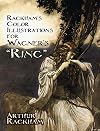
Most of Rackham's fairytale drawings have a quiet intensity, due to his somber palettes and twisting lines, but none so intense as his interpretations of Wagner's Ring trilogy. His style perfectly conveys the Nordic and Germanic themes of the story and gives the cast of characters a quite fitting loft heroic style that is reminiscent of the Operatic stage and the mythic sagas. Most wonderfully represented, in my opinion, are the mysterious Rhinemaidens, whose task it is to safeguard the show more Rhinegold. They have an eerily etheric quality that really only Rackham could produce, as few could have balanced the lightness of water sprites so carefully with the harsher (and thematically darker) tones of the Rhine. Also quite stunning - though admittedly grotesque - are the Nibelung. The gnarled little men are truely frightening to behold, and I am sure that they were one of the inspirations behind Tolkien's (and Peter Jackson's/Alan Lee's interpretation of) Smeagol/Gollum - albeit without the mass of bristling hair. It is no wonder that contemporary collectors lauded this group of paintings as superb, since they break the self-imposed boundaries of youthful subject matter that have been Rackham's forté previously as well as being obvious examples of his true artistic merit. show less

We've managed in the space of three volumes to run the available gamut of titles for books of tales of Irish fairies and come full circle, as it were. These aren't even the sort of fairy tales I was looking for, being mostly about Finn and the Fianna, but actually, there's a good deal of fairy stuff in here, so I think it was worthwhile from that point of view.
So it opens with the story of a man here since the first people came to Ireland after the flood and follows on down through mythical show more settlements and invasions, with the man transforming into a beast at each juncture and enjoying a long exuberant life as king of that species, until finally he becomes king of the salmon, gets caught by a fisherman of the King of Ulster, is eaten by the queen and born to her as a son. There's a lovely giddy logic to it.
Next comes the Boyhood of Fionn, a justly praised literary masterpiece, gorgeously lyrical, and I began to question why this wasn't part of a work with the stature of something like The Once And Future King. It's a work for grown-ups, maybe, more so at least than The Sword In The Stone, but it has flashes of rare wit here and there and is extremely readable. The Irish, however, have a complicated relationship with our mythical heroes. Like leprechauns they're to be pitied for the way in which they have become embarrassing cliches and caricatures, and of course the inevitable association of a glorious warriors past doesn't help, but neither does the humiliation of hundreds of years of defeat and foreign rule. There's that speech in Trainspotting about what is there to be proud of in being Scottish. Most Irish people internalised that lesson long ago.
Nonetheless, there is something here that surely transcends national ambivalence, something that surely should be part of the canon of fantasy literature. Except this is not a novel, despite containing the start to a great novel within it. Once Fionn becomes leader, his nature changes, the stories become episodic, Fionn is sidelined or barely present, and often powerless and even humiliated. The final story doesn't mention him at all, and one assumes it isn't a Fionn story until a line at the end which is the sort of cheat no 20th century audience would put up with for a moment.
No doubt someone has written a novel about Fionn - I remember Rosemary Sutcliffe's book fondly - but it's an awful pity James Stephens didn't because it would have been definitive and influential. Though it should be noted that there appear to be issues with women that are hard to parse. Most of the major female roles are negative, and it's hard to say whether it's because of the source material or the author, or even at times the author poking fun at the misogyny of the source material, though by the end he seems to embrace it fully. On the other hand, the relationship between Fionn and Goll mor mac Morna is an amazing one, uniquely Irish I would have thought.
A rich book, product of the great Anglo Irish Celtic Revival, it's just a pity he decided to let the fragmentary nature of the ancient oral tradition dictate the form, leaving us with yet another book of tales, rather than a brilliant novel. show less
So it opens with the story of a man here since the first people came to Ireland after the flood and follows on down through mythical show more settlements and invasions, with the man transforming into a beast at each juncture and enjoying a long exuberant life as king of that species, until finally he becomes king of the salmon, gets caught by a fisherman of the King of Ulster, is eaten by the queen and born to her as a son. There's a lovely giddy logic to it.
Next comes the Boyhood of Fionn, a justly praised literary masterpiece, gorgeously lyrical, and I began to question why this wasn't part of a work with the stature of something like The Once And Future King. It's a work for grown-ups, maybe, more so at least than The Sword In The Stone, but it has flashes of rare wit here and there and is extremely readable. The Irish, however, have a complicated relationship with our mythical heroes. Like leprechauns they're to be pitied for the way in which they have become embarrassing cliches and caricatures, and of course the inevitable association of a glorious warriors past doesn't help, but neither does the humiliation of hundreds of years of defeat and foreign rule. There's that speech in Trainspotting about what is there to be proud of in being Scottish. Most Irish people internalised that lesson long ago.
Nonetheless, there is something here that surely transcends national ambivalence, something that surely should be part of the canon of fantasy literature. Except this is not a novel, despite containing the start to a great novel within it. Once Fionn becomes leader, his nature changes, the stories become episodic, Fionn is sidelined or barely present, and often powerless and even humiliated. The final story doesn't mention him at all, and one assumes it isn't a Fionn story until a line at the end which is the sort of cheat no 20th century audience would put up with for a moment.
No doubt someone has written a novel about Fionn - I remember Rosemary Sutcliffe's book fondly - but it's an awful pity James Stephens didn't because it would have been definitive and influential. Though it should be noted that there appear to be issues with women that are hard to parse. Most of the major female roles are negative, and it's hard to say whether it's because of the source material or the author, or even at times the author poking fun at the misogyny of the source material, though by the end he seems to embrace it fully. On the other hand, the relationship between Fionn and Goll mor mac Morna is an amazing one, uniquely Irish I would have thought.
A rich book, product of the great Anglo Irish Celtic Revival, it's just a pity he decided to let the fragmentary nature of the ancient oral tradition dictate the form, leaving us with yet another book of tales, rather than a brilliant novel. show less
Lists
Folio Society (1)
Awards


You May Also Like


Associated Authors
Statistics
- Works
- 77
- Also by
- 90
- Members
- 6,133
- Popularity
- #4,015
- Rating
- 4.1
- Reviews
- 90
- ISBNs
- 435
- Languages
- 13
- Favorited
- 12