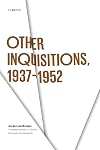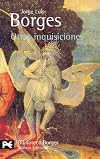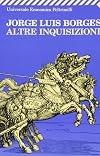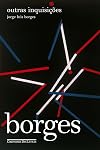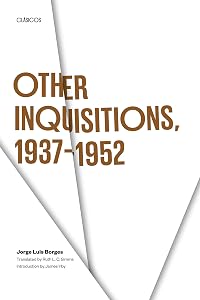
Other Inquisitions: 1937-1952
by Jorge Luis Borges
On This Page
Description
This remarkable book by one of the great writers of our time includes essays on a proposed universal language, a justification of suicide, a refutation of time, the nature of dreams, and the intricacies of linguistic forms. Borges comments on such literary figures as Pascal, Coleridge, Cervantes, Hawthorne, Whitman, Valéry, Wilde, Shaw, and Kafka. With extraordinary grace and erudition, he ranges in time, place, and subject from Omar Khayyam to Joseph Conrad, from ancient China to modern show more England, from world revolution to contemporary slang. show lessTags
Recommendations

















Member Reviews
ALTRE INQUISIZIONI (****)
La musica, gli stati di felicità, la mitologia, i volti scolpiti dal tempo, certi crepuscoli e certi luoghi, vogliono dirci qualcosa, o qualcosa dissero che non avremmo dovuto perdere, o stanno per dire qualcosa; quest’imminenza di una rilevazione, che non si produce, è, forse, il fatto estetico. (14)
Forse la storia universale è la storia della diversa intonazione di alcune metafore. (18)
Perché ci inquieta il fatto che la mappa sia compresa nella mappa e le mille e una notte nel libro delle Mille e una notte? Perché ci inquieta che don Chisciotte sia lettore del Don Chisciotte, e Amleto spettatore dell’Amleto? Credo di aver trovato la causa: tali inversioni suggeriscono che se i personaggi di una show more finzione possono essere lettori e spettatori, noi, loro lettori e spettatori, possiamo essere fittizi. Nel 1833, Carlyle osservò che la storia universale è un infinito libro sacro che tutti gli uomini scrivono e leggono e cercano di capire, e nel quale sono scritti anch’essi. (59)
Queste ambiguità, ridondanze e deficienze ricordano quelle che il dottor Franz Kuhn attribuisce a un’enciclopedia cinese che si intitola Emporio celeste di conoscimenti benevoli. Nelle sue remote pagine è scritto che gli animali si dividono in a) appartenenti all’Imperatore, b) imbalsamati, c) ammaestrati, d) lattonzoli, e) sirene, f) favolosi, g) cani randagi, h) inclusi in questa classificazione, i) che si agitano come pazzi, j) innumerevoli, k) disegnati con un pennello finissimo di pelo di cammello, l) eccetera, m) che hanno appena rotto il vaso, n) che da lontano sembrano mosche. (112-3)
Un libro, qualunque libro, è per noi un oggetto sacro; già Cervantes, che forse non ascoltava tutto quel che diceva la gente, leggeva perfino “le carte strappate nelle strade”. (119)
Che cos’é un’intelligenza infinita?, domanderà forse il lettore. Non c’é teologo che non la definisca; io preferisco un esempio. I passi che muove un uomo, dal giorno della sua nascita a quello della sua morte, disegnano nel tempo un’inconcepibile figura. L’Intelligenza Divina intuisce tale figura immediatamente, come quella degli uomini un triangolo. Quella figura (forse) ha la sua determinata funzione nell’economia dell’universo. (132)
Buber (Was ist der Mensch?, 1938) scrive che vivere è penetrare in una strana abitazione dello spirito, il cui pavimento è la scacchiera sulla quale giochiamo un gioco inevitabile e sconosciuto contro un avversario mutevole e a volte spaventoso. (173)
Anticipo fin d’ora questa conclusione: la vita è troppo misera per non essere anche immortale. Ma non abbiamo neppure la certezza della nostra miseria, giacché il tempo, facilmente confutabile sul piano sensitivo, non lo è altrettanto su quello intellettuale, dalla cui essenza pare inseparabile il concetto di successione. (191)
Il tempo è la sostanza di cui sono fatto. Il tempo è un fiume che mi trascina, ma io sono il fiume; è una tigre che mi sbrana, ma io sono la tigre; è un fuoco che mi divora, ma io sono il fuoco. Il mondo, disgraziatamente, è reale; io, disgraziatamente, sono Borges. (198) show less
La musica, gli stati di felicità, la mitologia, i volti scolpiti dal tempo, certi crepuscoli e certi luoghi, vogliono dirci qualcosa, o qualcosa dissero che non avremmo dovuto perdere, o stanno per dire qualcosa; quest’imminenza di una rilevazione, che non si produce, è, forse, il fatto estetico. (14)
Forse la storia universale è la storia della diversa intonazione di alcune metafore. (18)
Perché ci inquieta il fatto che la mappa sia compresa nella mappa e le mille e una notte nel libro delle Mille e una notte? Perché ci inquieta che don Chisciotte sia lettore del Don Chisciotte, e Amleto spettatore dell’Amleto? Credo di aver trovato la causa: tali inversioni suggeriscono che se i personaggi di una show more finzione possono essere lettori e spettatori, noi, loro lettori e spettatori, possiamo essere fittizi. Nel 1833, Carlyle osservò che la storia universale è un infinito libro sacro che tutti gli uomini scrivono e leggono e cercano di capire, e nel quale sono scritti anch’essi. (59)
Queste ambiguità, ridondanze e deficienze ricordano quelle che il dottor Franz Kuhn attribuisce a un’enciclopedia cinese che si intitola Emporio celeste di conoscimenti benevoli. Nelle sue remote pagine è scritto che gli animali si dividono in a) appartenenti all’Imperatore, b) imbalsamati, c) ammaestrati, d) lattonzoli, e) sirene, f) favolosi, g) cani randagi, h) inclusi in questa classificazione, i) che si agitano come pazzi, j) innumerevoli, k) disegnati con un pennello finissimo di pelo di cammello, l) eccetera, m) che hanno appena rotto il vaso, n) che da lontano sembrano mosche. (112-3)
Un libro, qualunque libro, è per noi un oggetto sacro; già Cervantes, che forse non ascoltava tutto quel che diceva la gente, leggeva perfino “le carte strappate nelle strade”. (119)
Che cos’é un’intelligenza infinita?, domanderà forse il lettore. Non c’é teologo che non la definisca; io preferisco un esempio. I passi che muove un uomo, dal giorno della sua nascita a quello della sua morte, disegnano nel tempo un’inconcepibile figura. L’Intelligenza Divina intuisce tale figura immediatamente, come quella degli uomini un triangolo. Quella figura (forse) ha la sua determinata funzione nell’economia dell’universo. (132)
Buber (Was ist der Mensch?, 1938) scrive che vivere è penetrare in una strana abitazione dello spirito, il cui pavimento è la scacchiera sulla quale giochiamo un gioco inevitabile e sconosciuto contro un avversario mutevole e a volte spaventoso. (173)
Anticipo fin d’ora questa conclusione: la vita è troppo misera per non essere anche immortale. Ma non abbiamo neppure la certezza della nostra miseria, giacché il tempo, facilmente confutabile sul piano sensitivo, non lo è altrettanto su quello intellettuale, dalla cui essenza pare inseparabile il concetto di successione. (191)
Il tempo è la sostanza di cui sono fatto. Il tempo è un fiume che mi trascina, ma io sono il fiume; è una tigre che mi sbrana, ma io sono la tigre; è un fuoco che mi divora, ma io sono il fuoco. Il mondo, disgraziatamente, è reale; io, disgraziatamente, sono Borges. (198) show less
Even when writing about an obscure writer or concept, Borges is always an agreeable companion. He spent his entire life absorbing books, both fiction and nonfiction, in every imaginable genre and several languages. His insights are usually clear, and certainly enough to make those of us who enjoy living in our own heads a bit jealous. These essays touch on many of the themes that lie behind his fiction--the nature of reality, the life of their own that books take on when separated from their authors, paradoxes, and ways of organizing things, to name just a few. Many times, he deals with the same subjects in more than on essay, or at least interposes a favorite idea or anecdote that will cause you to make sure you haven't lost your place show more in the book and are reading an essay you already finished.
The abstract ideas Borges is so fascinated with, however, are usually easier to understand in his fiction. The most interesting essays in this volume tend to be those about authors--Hawthorne, Whitman, Wilde--that you are at least somewhat familiar with. Certainly this is not the place to start an exploration of Borges. That would be his masterpiece FICCIONES. But if you already love his writing, you will find pleasure and a bit of enlightenment among the obscure erudition and repetition. show less
The abstract ideas Borges is so fascinated with, however, are usually easier to understand in his fiction. The most interesting essays in this volume tend to be those about authors--Hawthorne, Whitman, Wilde--that you are at least somewhat familiar with. Certainly this is not the place to start an exploration of Borges. That would be his masterpiece FICCIONES. But if you already love his writing, you will find pleasure and a bit of enlightenment among the obscure erudition and repetition. show less
First, my copy of this book is from 1966 and bought at a used bookstore for 45 cents. Once I started reading it, I thought I died and went to heaven. There are some unbelievably great stories in this book. I was thinking "If I could only have one book..", but I would also need access to Wikipedia to make sense of all the obscure references.
My favorites:
The Enigma of Edward FitzGerald-Tells the story of Renaissance Man Omar Khayam, and the man who pulled him out of a dusty corner of oblivion. Touched the theme of reincarnation of Omar into the person of Fitz Gerald.
Chesterton-Previously known to me only for witty one liners, JLB comments on the Father Brown stories and talks up his other fiction writing. Compares him favorably to show more Poe,saying that Chesterton successfully combined detective stories w elements of horror. There is also an interesting reference to "How I found a Superman." show less
My favorites:
The Enigma of Edward FitzGerald-Tells the story of Renaissance Man Omar Khayam, and the man who pulled him out of a dusty corner of oblivion. Touched the theme of reincarnation of Omar into the person of Fitz Gerald.
Chesterton-Previously known to me only for witty one liners, JLB comments on the Father Brown stories and talks up his other fiction writing. Compares him favorably to show more Poe,saying that Chesterton successfully combined detective stories w elements of horror. There is also an interesting reference to "How I found a Superman." show less
Una serie di brevi e brevissimi saggi sugli argomenti più svariati, oltre che di lezioni su vari scrittori contemporanei.
Il libro è di una erudizione smisurata, e a volta di difficile comprensione per la scelta dell'editore di non tradurre alcune parti (poesie, citazioni), nemmeno sotto forma di note, e questo, per chi non parla spagnolo, è limitante.
Alcuni dei saggi sono brucianti, al punto da strappare la risata a causa dell'ironia fustigante che mostrano, altri invece sono lenti e pesanti, come gli ultimi due che riguardano una "Nuova confutazione del tempo". A conti fatti uno di quei libri imprescindibili per una biblioteca colta, ma non una lettura da relax.
Il libro è di una erudizione smisurata, e a volta di difficile comprensione per la scelta dell'editore di non tradurre alcune parti (poesie, citazioni), nemmeno sotto forma di note, e questo, per chi non parla spagnolo, è limitante.
Alcuni dei saggi sono brucianti, al punto da strappare la risata a causa dell'ironia fustigante che mostrano, altri invece sono lenti e pesanti, come gli ultimi due che riguardano una "Nuova confutazione del tempo". A conti fatti uno di quei libri imprescindibili per una biblioteca colta, ma non una lettura da relax.
This was a very peculiar, yet interesting, series of essays by Borges. I was impressed with what they had to offer, but often the style seemed abrupt and so complex that it was hard to grasp the meanings of some of the pieces. Nonetheless, I feel they are worth reading for anyone who admires the writer.
3.25 stars.
3.25 stars.
Alguns dos ensaios em que Borges mais fala de suas preferências literárias e de suas obsessões.
Otras inquisiciones es un libro de ensayos del escritor argentino Jorge Luis Borges. Fue publicado por primera vez en 1952. Este libro es una pequeña antología de artículos de Borges en la que se dedica a pensar y debatir, según el artículo, mayormente sobre otros autores, clásicos en su mayoría, el tiempo y algunas leyendas.
Members
- Recently Added By
Author Information

1,015+ Works 59,159 Members
Born in Buenos Aires, Argentina, in 1899, Jorge Borges was educated by an English governess and later studied in Europe. He returned to Buenos Aires in 1921, where he helped to found several avant-garde literary periodicals. In 1955, after the fall of Juan Peron, whom he vigorously opposed, he was appointed director of the Argentine National show more Library. With Samuel Beckett he was awarded the $10,000 International Publishers Prize in 1961, which helped to establish him as one of the most prominent writers in the world. Borges regularly taught and lectured throughout the United States and Europe. His ideas have been a profound influence on writers throughout the Western world and on the most recent developments in literary and critical theory. A prolific writer of essays, short stories, and plays, Borges's concerns are perhaps clearest in his stories. He regarded people's endeavors to understand an incomprehensible world as fiction; hence, his fiction is metaphysical and based on what he called an esthetics of the intellect. Some critics have called him a mystic of the intellect. Dreamtigers (1960) is considered a masterpiece. A central image in Borges's work is the labyrinth, a mental and poetic construct, that he considered a universe in miniature, which human beings build and therefore believe they control but which nevertheless traps them. In spite of Borges's belief that people cannot understand the chaotic world, he continually attempted to do so in his writing. Much of his work deals with people's efforts to find the center of the labyrinth, symbolic of achieving understanding of their place in a mysterious universe. In such later works as The Gold of the Tigers, Borges wrote of his lifelong descent into blindness and how it affected his perceptions of the world and himself as a writer. Borges died in Geneva in 1986. (Bowker Author Biography) show less
Some Editions
Awards and Honors
Notable Lists
Series
Belongs to Publisher Series
Work Relationships
Is contained in
Common Knowledge
- Canonical title
- Other Inquisitions: 1937-1952
- Original title
- Otras inquisiciones
- Original publication date
- 1952 (first edition) (first edition); 1960 (Emecé) (Emecé)
- Dedication
- To Margot Guerrero
Classifications
- Genres
- Literature Studies and Criticism, Nonfiction, Fiction and Literature
- DDC/MDS
- 809 — Literature & rhetoric Literature, rhetoric & criticism History, description, critical appraisal of more than two literatures
- LCC
- PN518 .B643 — Language and Literature Literature (General) Literature (General) Literary history Collections
- BISAC
Statistics
- Members
- 794
- Popularity
- 35,212
- Reviews
- 12
- Rating
- (4.12)
- Languages
- 11 — Danish, Dutch, English, French, Italian, Japanese, Polish, Portuguese, Croatian, Spanish, Turkish
- Media
- Paper
- ISBNs
- 27
- ASINs
- 15