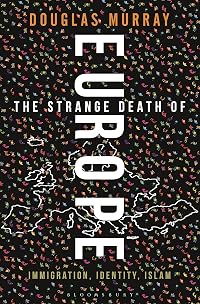
The strange death of Europe : Immigration, Identity, Islam
by Douglas Murray
On This Page
Description
This book is not only an analysis of demographic and political realities in Europe, but also an eyewitness account of a continent in self-destruct mode. It includes reporting from across the entire continent, from the places where migrants land to the places they end up, from the people who appear to welcome them in to the places which cannot accept them.Tags
Recommendations
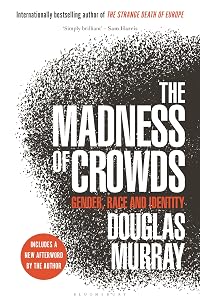
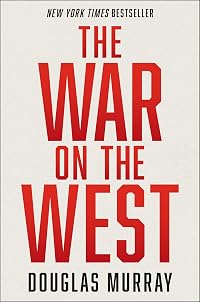
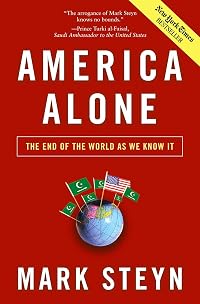
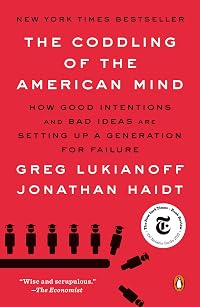






Member Recommendations
Member Reviews
One of the publishing successes of 2017 has been Douglas Murray’s examination of the changes we see occurring all around us. There are two reasons for this – Murray is a considered, thoughtful writer with a much greater degree of empathy than he is given credit for. The second is the terrible events at the Manchester Arena on the 22 May. Murray’s explanation of how we reached the stage where our children are being blown up at pop concerts, was surprisingly commissioned by and shown on the BBC. That eloquence, and dismay at the mistakes the political class has made, characterises this book.
It has several overlapping themes. Central is Europe’s contemporary lack of confidence in itself, its history, its beliefs and practice. This show more has conjoined with an era of large scale immigration, often of people with little or no intention of becoming anything like the citizens of the nations they have moved to. Murray roots his work in a sound statistical basis, and the position that historically governments have tended to both lie to their populations about immigration, usually by underestimating demographic change, and then subsequently to do little to address concerns. Instead curious games are played out. Examples vary from the serious – that so few illegal migrants are ever deported - to the surreal. Consider the Office for National Statistics listing Mohammed and Muhammad separately in their annual lists of children’s names until “this was immaterial because the name in all its variants had indeed become the most popular boy’s name in England and Wales. At which point the official line changed to ‘And so what?” (p.313)
Murray explains how academic sleight of hand has been necessary to provide an evidence base that immigration is inherently an economic good, despite the awkward reality that an insurance based welfare system open to all, is unlikely to prosper if significant numbers of people can take out who are yet to pay in. The chameleon like nature of political leaders emerges repeatedly – in one decade it is racist to expect migrants to speak the language of their host country, in another it becomes essential. Sometimes assimilation is promoted, at other times the retention of migrant cultures, with concessions to practices, like sharia law, which appear incompatible with existing structures and rights. Confused? Everybody is.
That immigration may undermine, not strengthen liberal values was something Britain had warning of first, via the Rushdie affair in 1989, an event Murray considers “a crash course in the rules of Islam” (p.131). If so, the response of successive British governments has become distinctly un-British – to play down freedom of speech and the rights of the individual, and to increasingly assert the group rights of multi-culturalism. Those worst affected by this are often minority communities themselves “ordinary Muslims suddenly had a branch of religious representation inserted between them and their political representatives” (p.132) often via groups like the Muslim Council of Britain, dominated by the British end of Pakistan’s main clerical party, the Jamaat-e-Islami. As Murray concludes “No one had prepared for the possibility that those arriving might only not become integrated but might bring many social and religious views with them” (p.152).
If this book were simply a critique of blunders made, it would risk polemic. Murray avoids this, in part through his considered style, in part through interviews with those coming to places like Lampedusa, a transit island between north Africa and Sicily, and Lesbos, one of the Greek Islands closest to Turkey. Most want to go to Germany, although Sweden and the UK are also popular destinations. In 2015 “around 400,000 migrants moved through Hungary’s territory alone. Fewer than twenty of them stopped to claim asylum in Hungary” (p. 81). Whilst empathetic about the conditions many are fleeing, Murray is never naïve. He reminds us that the father of three-year-old Aylan Kurdi, whose dead body washed up on the Turkish coast, dominating newspaper headlines in September 2015, took the regrettable decision to leave behind a paid job in a safe country, Turkey, to try to sail for a new life in Europe. Whilst his death provoked emotional political outpourings in Europe and North America, in Muslim majority countries there was little or no interest. Western guilt, absorbed from the top down in our societies, be it about colonialism, race or the holocaust, ensured entirely different responses.
What to do about all this? Even if we wanted to solve the problems of Eritrea, to take just one source of mass migration, where would we begin? The response of the EU was to give six billion Euros to Turkey to prevent its use as a transit point for migrants, thus ensuring Europe’s taxpayers (you and me) pay for the crisis. A chapter on terrorism, violence and sexual assaults by migrants is entitled ‘Learning to Live With It’, the view of terrorism forever associated with the Mayor of London, Sadiq Khan. A theme Murray returns to time after time is the deceit, we might at times say self-deceit, of our ruling elites. Mrs Merkel for example, was able to declare multi-culturalism a failure in Germany in 2010, then to decide it could work in 2015. Perhaps we need to hold these leaders to account a little more?
A deeper, philosophical question, is the issue of what replaces Christianity in our post-Christian societies? What provides us with a foundation and the moorings needed in times of stormy weather? Here Murray suggests the countries of eastern Europe may have a better basis from which to survive, than those in the west. They at least, seem set to avoid the wave of jihadist attacks that has so shaken France, Belgium, Germany and Britain. As for here, even our architecture seems to be in decline “In London the great building to commemorate the turn of the millennium wasn’t even a structure built to last, but a vast empty tent” (p.263).
There are omissions. Margaret Thatcher, who believed Islam could be used as a bulwark against Communism and was consequently indulgent of some of its most extreme manifestations, is not mentioned once. Murray’s own flirtation with a secular god that failed, neo-Conservatism, is similarly overlooked. In discussing the greatest living French novelist, Michel Houellebecq and his work Submission, Murray misses perhaps the obvious comparison – just as Solzhenitsyn chronicled the disasters of the Soviet era, so Houellebecq’s fiction chronicles the disasters of an increasingly Islamised France. There are few better than Murray though in placing these events in their political, historical and philosophical contexts. If this is a book that ends pessimistically, it is because we have much to be worried about. show less
It has several overlapping themes. Central is Europe’s contemporary lack of confidence in itself, its history, its beliefs and practice. This show more has conjoined with an era of large scale immigration, often of people with little or no intention of becoming anything like the citizens of the nations they have moved to. Murray roots his work in a sound statistical basis, and the position that historically governments have tended to both lie to their populations about immigration, usually by underestimating demographic change, and then subsequently to do little to address concerns. Instead curious games are played out. Examples vary from the serious – that so few illegal migrants are ever deported - to the surreal. Consider the Office for National Statistics listing Mohammed and Muhammad separately in their annual lists of children’s names until “this was immaterial because the name in all its variants had indeed become the most popular boy’s name in England and Wales. At which point the official line changed to ‘And so what?” (p.313)
Murray explains how academic sleight of hand has been necessary to provide an evidence base that immigration is inherently an economic good, despite the awkward reality that an insurance based welfare system open to all, is unlikely to prosper if significant numbers of people can take out who are yet to pay in. The chameleon like nature of political leaders emerges repeatedly – in one decade it is racist to expect migrants to speak the language of their host country, in another it becomes essential. Sometimes assimilation is promoted, at other times the retention of migrant cultures, with concessions to practices, like sharia law, which appear incompatible with existing structures and rights. Confused? Everybody is.
That immigration may undermine, not strengthen liberal values was something Britain had warning of first, via the Rushdie affair in 1989, an event Murray considers “a crash course in the rules of Islam” (p.131). If so, the response of successive British governments has become distinctly un-British – to play down freedom of speech and the rights of the individual, and to increasingly assert the group rights of multi-culturalism. Those worst affected by this are often minority communities themselves “ordinary Muslims suddenly had a branch of religious representation inserted between them and their political representatives” (p.132) often via groups like the Muslim Council of Britain, dominated by the British end of Pakistan’s main clerical party, the Jamaat-e-Islami. As Murray concludes “No one had prepared for the possibility that those arriving might only not become integrated but might bring many social and religious views with them” (p.152).
If this book were simply a critique of blunders made, it would risk polemic. Murray avoids this, in part through his considered style, in part through interviews with those coming to places like Lampedusa, a transit island between north Africa and Sicily, and Lesbos, one of the Greek Islands closest to Turkey. Most want to go to Germany, although Sweden and the UK are also popular destinations. In 2015 “around 400,000 migrants moved through Hungary’s territory alone. Fewer than twenty of them stopped to claim asylum in Hungary” (p. 81). Whilst empathetic about the conditions many are fleeing, Murray is never naïve. He reminds us that the father of three-year-old Aylan Kurdi, whose dead body washed up on the Turkish coast, dominating newspaper headlines in September 2015, took the regrettable decision to leave behind a paid job in a safe country, Turkey, to try to sail for a new life in Europe. Whilst his death provoked emotional political outpourings in Europe and North America, in Muslim majority countries there was little or no interest. Western guilt, absorbed from the top down in our societies, be it about colonialism, race or the holocaust, ensured entirely different responses.
What to do about all this? Even if we wanted to solve the problems of Eritrea, to take just one source of mass migration, where would we begin? The response of the EU was to give six billion Euros to Turkey to prevent its use as a transit point for migrants, thus ensuring Europe’s taxpayers (you and me) pay for the crisis. A chapter on terrorism, violence and sexual assaults by migrants is entitled ‘Learning to Live With It’, the view of terrorism forever associated with the Mayor of London, Sadiq Khan. A theme Murray returns to time after time is the deceit, we might at times say self-deceit, of our ruling elites. Mrs Merkel for example, was able to declare multi-culturalism a failure in Germany in 2010, then to decide it could work in 2015. Perhaps we need to hold these leaders to account a little more?
A deeper, philosophical question, is the issue of what replaces Christianity in our post-Christian societies? What provides us with a foundation and the moorings needed in times of stormy weather? Here Murray suggests the countries of eastern Europe may have a better basis from which to survive, than those in the west. They at least, seem set to avoid the wave of jihadist attacks that has so shaken France, Belgium, Germany and Britain. As for here, even our architecture seems to be in decline “In London the great building to commemorate the turn of the millennium wasn’t even a structure built to last, but a vast empty tent” (p.263).
There are omissions. Margaret Thatcher, who believed Islam could be used as a bulwark against Communism and was consequently indulgent of some of its most extreme manifestations, is not mentioned once. Murray’s own flirtation with a secular god that failed, neo-Conservatism, is similarly overlooked. In discussing the greatest living French novelist, Michel Houellebecq and his work Submission, Murray misses perhaps the obvious comparison – just as Solzhenitsyn chronicled the disasters of the Soviet era, so Houellebecq’s fiction chronicles the disasters of an increasingly Islamised France. There are few better than Murray though in placing these events in their political, historical and philosophical contexts. If this is a book that ends pessimistically, it is because we have much to be worried about. show less
Those of us brought up in Birmingham are no strangers to immigration; we went to school with Asian kids, and it was the most natural thing in the world. They - or their parents - had come to Britain to be British, and we all grew up absorbing the same ambient values and hardly noticed that there was any difference between us. The most disturbing change that Douglas Murray documents is how immigrants’ desire for integration with the resident culture has turned into a movement to make Britain – or France, or Italy, or Sweden – conform with the values of the immigrant cultures. That this has been facilitated by politicians, police, social services and even religious leaders makes it even more insidious. This is how the phenomena of show more child brides, female genital mutilation, and organized sexual exploitation of minors have all become virtually unchallenged features of the British social landscape.
Murray explodes the myth of the value of diversity, as an absolute overriding objective, or that immigration was necessary from a demographic point of view, to shore up the aging and numerically declining native European populations. He deplores how Europeans have been cowed, first by the violent acts against them by some immigrants, and secondly by the fear of being branded as fascists – and now prosecuted as Islamaphobes - if they express concerns about the religious culture that has nurtured and often supports these criminal acts. Politicians, police and the press not only ignore these concerns, but rush to defend Moslems as “victims too” of these crimes. Any expression of concern by the public is blamed on “the rise of the right” and quickly condemned. Murray exposes the gap between what people think and what they are led to believe they should think: ‘What does a political class and the media do when they discover that the views they have tried to make beyond the political pale are in fact the views of the majority of the public?’
Murray attributes the failure of Europe to defend its native cultures and values to two factors: a loss of belief in its national “narratives” and the precipitous decline in attachment to religion. Belief in national values – nationalism - has become synonymous with the “far right”, and Europe, he says, is perpetually in an apologetic mode, bending over backwards to atone for colonialism and its imposition of European culture on other parts of the world. It cannot be admitted that that culture – its roots in the civilizations of ancient Greece and Rome, the injection, via their incorporation into Christianity, of Judaic values of social justice and interpersonal responsibility, and its secularisation as “natural law” by the European Enlightenment – has a unique value. How can Europeans defend European culture and civilization when they now largely reject the validity of the source of the Judeo- Christian values from which they were derived? It is therefore not surprising that a culture reflecting Moslem religious and social values is on the ascendant. These values are energetically defended by the “blasphemy police” from any of the kind of “higher” criticism and rationalism that have undermined beliefs in European religion over the last two hundred years.
The author lists a series of policies that might even now make the situation more manageable. Keeping refugees in the vicinity of the country from which they are fleeing avoids the challenges of relocation in a very foreign culture, and would facilitate their return home when conditions permit. Adopting the Australian practice of processing asylum claims outside of Australia, as an immigrant once arrived, is almost always an immigrant that remains – whatever the outcome of the process. These are just examples of a range of policies and change of attitudes towards immigration and immigrants that Murray is not optimistic that the political class will adopt or encourage. He believes that politicians will continue to “ensure that Europe is the only place in the world that belongs to the world”, and he fears the consequences. He worries that people - loving the Europe that was, and not wanting to let politicians change it into a different place - may increasingly take matters into their own hands, or that a real far-right wing party may come to power in one or more European countries. This is not a comfortable book to read – which is probably the best reason for doing so. show less
Murray explodes the myth of the value of diversity, as an absolute overriding objective, or that immigration was necessary from a demographic point of view, to shore up the aging and numerically declining native European populations. He deplores how Europeans have been cowed, first by the violent acts against them by some immigrants, and secondly by the fear of being branded as fascists – and now prosecuted as Islamaphobes - if they express concerns about the religious culture that has nurtured and often supports these criminal acts. Politicians, police and the press not only ignore these concerns, but rush to defend Moslems as “victims too” of these crimes. Any expression of concern by the public is blamed on “the rise of the right” and quickly condemned. Murray exposes the gap between what people think and what they are led to believe they should think: ‘What does a political class and the media do when they discover that the views they have tried to make beyond the political pale are in fact the views of the majority of the public?’
Murray attributes the failure of Europe to defend its native cultures and values to two factors: a loss of belief in its national “narratives” and the precipitous decline in attachment to religion. Belief in national values – nationalism - has become synonymous with the “far right”, and Europe, he says, is perpetually in an apologetic mode, bending over backwards to atone for colonialism and its imposition of European culture on other parts of the world. It cannot be admitted that that culture – its roots in the civilizations of ancient Greece and Rome, the injection, via their incorporation into Christianity, of Judaic values of social justice and interpersonal responsibility, and its secularisation as “natural law” by the European Enlightenment – has a unique value. How can Europeans defend European culture and civilization when they now largely reject the validity of the source of the Judeo- Christian values from which they were derived? It is therefore not surprising that a culture reflecting Moslem religious and social values is on the ascendant. These values are energetically defended by the “blasphemy police” from any of the kind of “higher” criticism and rationalism that have undermined beliefs in European religion over the last two hundred years.
The author lists a series of policies that might even now make the situation more manageable. Keeping refugees in the vicinity of the country from which they are fleeing avoids the challenges of relocation in a very foreign culture, and would facilitate their return home when conditions permit. Adopting the Australian practice of processing asylum claims outside of Australia, as an immigrant once arrived, is almost always an immigrant that remains – whatever the outcome of the process. These are just examples of a range of policies and change of attitudes towards immigration and immigrants that Murray is not optimistic that the political class will adopt or encourage. He believes that politicians will continue to “ensure that Europe is the only place in the world that belongs to the world”, and he fears the consequences. He worries that people - loving the Europe that was, and not wanting to let politicians change it into a different place - may increasingly take matters into their own hands, or that a real far-right wing party may come to power in one or more European countries. This is not a comfortable book to read – which is probably the best reason for doing so. show less
A sobering and pessimistic chronicle of the socio-political changes in Europe in recent years, centred around the migrant crisis. The fatal flaw, Douglas Murray argues, is that "the world is coming to Europe at precisely the moment that Europe has lost sight of what it is" meant to stand for (pg. 7). Mass immigration from the Third World and from Muslim-majority countries, alongside a corresponding decline in European identity, prestige, vitality and self-confidence, has been immensely damaging for the Western continent.
Murray unpacks this argument eloquently and calmly; this is no fiery polemic, though Murray doesn't pull his punches when it comes to some of the mistakes, ignorance and wilful misdirection on the part of political and show more media elites. As Murray notes, the European publics have been against these sort of developments from the start, but a large combination of factors conspired to silence or misdirect or even just exhaust them, and sometimes just to ignore them. Indeed, it is remarkable just how much has been done without any sort of democratic mandate. Taking a step back from the rolling daily news and absorbing the events of the last few years through the more sober structure of The Strange Death of Europe – against a backdrop of decades of mass immigration and failed assimilation – you begin to appreciate just how alarming the prevailing attitudes to this crisis are. One particular example, from page 187, stood out for me. After the Paris attacks of 2015, European countries finally began – albeit temporarily – to try to stem the tide:
"… even Sweden announced that it would henceforth be introducing checks at its borders. From now on people entering the country would need to show some form of identification. This was announced as though nobody had ever heard of such a thing before."
So much absurdity and negligence and cowardice – moral, intellectual and political – is contained in examples such as this, which is far from unique. From Sweden's reverse eugenics to Merkel's decision to let in one million migrants in a single year (and German politicians' outright statements that Europeans 'deserve' to be replaced and 'ought to leave' if they don't like it) to the repeated refrains that terrorist attacks have 'nothing' – nothing – to do with Islam, you can't help but despair at how crazy things have gotten. The entire bottom has fallen out and, what is most heart-breaking of all, the people know it. The majority of the public have been against this all along, and yet the political and media classes deny and obfuscate and suppress, even prosecute, before lecturing the great unwashed – the gang-raped and the blown-apart and the disenfranchised classes – on their 'bigotry'.
The Strange Death of Europe is, for these reasons and many more, exhausting and depressing. It is hard to review for this reason and even harder to read. But this is not to say that the book is a bad read: quite the opposite, it is lucid, well-argued and comprehensive. Even though it doesn't provide any solutions – as Murray has reluctantly suggested in interviews and debates, things have gotten so bad that solutions might not even be possible – it is perhaps one of the most important books of our time. Absurd as it may sound, this is because so many people refuse or are discouraged from even acknowledging plain facts, let alone being able to think about solutions.
Murray is measured and refined, and if he is pessimistic it is at least a fully-warranted pessimism. Trials are coming that will be unprecedented, and perhaps insurmountable. And unknown, without historical precedent: a perfect storm of humanitarian crisis, political decline, excessively liberal mindsets, generous welfare states, static birthrates, economic depression and religious decay – and a corresponding introduction – nay, welcoming – of a predatory foreign ideology which is perfectly suited and suitably shameless to exploit all of these failings in the very people who have taken them in. The Strange Death of Europe reminded me a lot of the history books I read at university: the books on pre-war appeasement in the 1920s and 1930s, with the floundering and exhausted European elites and peoples who struggled to contain and repel the forces that assailed them, and the academics dispassionately argue for the various importance of certain factors. And you read them with the bitter knowledge of hindsight, knowing that what resulted from that period was something much, much worse than anyone could have conceived.
You can't avoid a similar sense of history and foreboding when reading The Strange Death of Europe: we might not know the details of what the future will hold, but the book seems an uncannily Cassandra-like prophecy that our grandchildren will weep to read. 'How could they not know?', they will say. 'It was so obvious. How could they not do something?', just as we can read history books about the 1930s and say the same. And those grandchildren will curse our names, with good reason. show less
Murray unpacks this argument eloquently and calmly; this is no fiery polemic, though Murray doesn't pull his punches when it comes to some of the mistakes, ignorance and wilful misdirection on the part of political and show more media elites. As Murray notes, the European publics have been against these sort of developments from the start, but a large combination of factors conspired to silence or misdirect or even just exhaust them, and sometimes just to ignore them. Indeed, it is remarkable just how much has been done without any sort of democratic mandate. Taking a step back from the rolling daily news and absorbing the events of the last few years through the more sober structure of The Strange Death of Europe – against a backdrop of decades of mass immigration and failed assimilation – you begin to appreciate just how alarming the prevailing attitudes to this crisis are. One particular example, from page 187, stood out for me. After the Paris attacks of 2015, European countries finally began – albeit temporarily – to try to stem the tide:
"… even Sweden announced that it would henceforth be introducing checks at its borders. From now on people entering the country would need to show some form of identification. This was announced as though nobody had ever heard of such a thing before."
So much absurdity and negligence and cowardice – moral, intellectual and political – is contained in examples such as this, which is far from unique. From Sweden's reverse eugenics to Merkel's decision to let in one million migrants in a single year (and German politicians' outright statements that Europeans 'deserve' to be replaced and 'ought to leave' if they don't like it) to the repeated refrains that terrorist attacks have 'nothing' – nothing – to do with Islam, you can't help but despair at how crazy things have gotten. The entire bottom has fallen out and, what is most heart-breaking of all, the people know it. The majority of the public have been against this all along, and yet the political and media classes deny and obfuscate and suppress, even prosecute, before lecturing the great unwashed – the gang-raped and the blown-apart and the disenfranchised classes – on their 'bigotry'.
The Strange Death of Europe is, for these reasons and many more, exhausting and depressing. It is hard to review for this reason and even harder to read. But this is not to say that the book is a bad read: quite the opposite, it is lucid, well-argued and comprehensive. Even though it doesn't provide any solutions – as Murray has reluctantly suggested in interviews and debates, things have gotten so bad that solutions might not even be possible – it is perhaps one of the most important books of our time. Absurd as it may sound, this is because so many people refuse or are discouraged from even acknowledging plain facts, let alone being able to think about solutions.
Murray is measured and refined, and if he is pessimistic it is at least a fully-warranted pessimism. Trials are coming that will be unprecedented, and perhaps insurmountable. And unknown, without historical precedent: a perfect storm of humanitarian crisis, political decline, excessively liberal mindsets, generous welfare states, static birthrates, economic depression and religious decay – and a corresponding introduction – nay, welcoming – of a predatory foreign ideology which is perfectly suited and suitably shameless to exploit all of these failings in the very people who have taken them in. The Strange Death of Europe reminded me a lot of the history books I read at university: the books on pre-war appeasement in the 1920s and 1930s, with the floundering and exhausted European elites and peoples who struggled to contain and repel the forces that assailed them, and the academics dispassionately argue for the various importance of certain factors. And you read them with the bitter knowledge of hindsight, knowing that what resulted from that period was something much, much worse than anyone could have conceived.
You can't avoid a similar sense of history and foreboding when reading The Strange Death of Europe: we might not know the details of what the future will hold, but the book seems an uncannily Cassandra-like prophecy that our grandchildren will weep to read. 'How could they not know?', they will say. 'It was so obvious. How could they not do something?', just as we can read history books about the 1930s and say the same. And those grandchildren will curse our names, with good reason. show less
Some years ago, when I lived in Bristol, I was queuing up in the Bakers Dolphin travel agents to buy a ticket for their cut-price London bus. In front of me was a couple being sold a holiday in some exotic destination: I think it was somewhere in the Caribbean but I can't be sure. Of course, said the agent, there's a lot of poverty and a lot of crime, but you don't need to worry about that. You won't need to leave the hotel and the compound is surrounded by a barbed-wire fence with a 24-hour security patrol.
There, I thought, was the tragedy of the West. Condemned by the thermodynamics of economic well-being, in which wealth tends to move from rich to poor unless the rich take steps to prevent it, to confinement within a gated community show more while the poor press against the wire, peering at undreamed-of luxury on display within. But those gates, those barbed-wire fences, can't last forever; it takes effort to maintain them and sooner or later the press of bodies from outside will surely prevail against the guards,
Douglas Murray (Eton and Oxford, so one who, more than most, might take his entitlement for granted), believes that Western culture is the zenith of human achievement, and it must be preserved at all costs. He doesn't seem to realise that the great cultural flowering of the European Renaissance and after was made possible by the disruption of the world's other cultures and the plundering of their resources. Murray is Associate Director of the Henry Jackson Society, an overgrown Cambridge University student society which believes as part of its creed that liberal democracy is the only legitimate form of governance and, perhaps more controversially, that liberal democracies must maintain a strong military, not only to secure themselves against external threats but also to have a global reach to support the imposition of liberal democracy on other states by diplomatic, economic and political means.
It's not surprising, therefore, that Murray's book argues that Europe has been careless in maintaining its aloofness from the rest of the world, and that this places it in danger of being overwhelmed by the uncultivated hordes from outside, the ones peering through the iron gates and climbing over the fences. We Europeans have lost our sense of our own superiority. We're tired, too exhausted to be bothered keeping up the barriers. We've stopped trying to preserve the purity of our beliefs and are allowing them to be polluted by outside influences that make us doubt our superiority. We've even stopped breeding, unlike the incomers with their six or seven children. Murray sounds like Alf Garnett in full spate, only much more refined about it.
Europe, says Murray, is allowing itself to be overrun, because our old rigidity of ideas and customs has been relaxed. As a result, Europe will be unrecognisable by the end of the present century. He may well be right, but I don't believe in his alarmist vision of cultured Europe fallen to barbarism. The truth is that European pre-eminence and exceptional wealth is simply not sustainable, because it can't maintain its isolation from the rest of the world, and it simply isn't fair to the rest of the world to do so. Even if the aims of the Henry Jackson Society were to be met, it could only ever be a partial success because there aren't the resources in the world to sustain a Western lifestyle for everybody. Our prosperity is a bubble, and will burst under the pressure. This will be a bitter pill for the West. Wealth is an addiction and I don't think many Europeans will relish the idea of going cold turkey – I know that I, with my relatively modest Western lifestyle, don't. But withdraw we must. It's not only about fairness to the greater world, it's that there's a far greater threat to all of us than the migration of people fleeing war – often with its origins in Western liberal intervention – and poverty brought about by Western cut-price plundering of mineral resources and land for cash crops for our supermarkets at the expense of subsistence. Douglas Murray doesn't mention it, and from his other writing it would seem he prefers to deny it, but climate change is a far greater threat to our prosperity. It's just that you can't blame The Other for that.
As for rating: I don't go by whether I agree with his argument or not. I know Mr Murray well enough to know exactly what to expect when I chose to read it. Does he write well? Yes, he's articulate enough. I did find reading it a bit of a drag though, perhaps because of its sheer predictability. As a self-professed intellectual this kind of regurgitated mixture of half-truths and myth is nothing more than fodder for his admirers, like the English Defence League's Stephen Yaxley (aka 'Tommy Robinson', whom Murray cites admiringly) and his followers, is lazy and sloppy. I will give him credit for this though: two chapters of this book, where Murray has got off his backside and gone to Lampedusa and Lesbos to actually meet and talk to the migrants who have given up everything and risked their lives to get to Europe. He's even quite sympathetic to them. These two chapters are moving and seem to belong to an entirely different book. An extra star for that, then. show less
There, I thought, was the tragedy of the West. Condemned by the thermodynamics of economic well-being, in which wealth tends to move from rich to poor unless the rich take steps to prevent it, to confinement within a gated community show more while the poor press against the wire, peering at undreamed-of luxury on display within. But those gates, those barbed-wire fences, can't last forever; it takes effort to maintain them and sooner or later the press of bodies from outside will surely prevail against the guards,
Douglas Murray (Eton and Oxford, so one who, more than most, might take his entitlement for granted), believes that Western culture is the zenith of human achievement, and it must be preserved at all costs. He doesn't seem to realise that the great cultural flowering of the European Renaissance and after was made possible by the disruption of the world's other cultures and the plundering of their resources. Murray is Associate Director of the Henry Jackson Society, an overgrown Cambridge University student society which believes as part of its creed that liberal democracy is the only legitimate form of governance and, perhaps more controversially, that liberal democracies must maintain a strong military, not only to secure themselves against external threats but also to have a global reach to support the imposition of liberal democracy on other states by diplomatic, economic and political means.
It's not surprising, therefore, that Murray's book argues that Europe has been careless in maintaining its aloofness from the rest of the world, and that this places it in danger of being overwhelmed by the uncultivated hordes from outside, the ones peering through the iron gates and climbing over the fences. We Europeans have lost our sense of our own superiority. We're tired, too exhausted to be bothered keeping up the barriers. We've stopped trying to preserve the purity of our beliefs and are allowing them to be polluted by outside influences that make us doubt our superiority. We've even stopped breeding, unlike the incomers with their six or seven children. Murray sounds like Alf Garnett in full spate, only much more refined about it.
Europe, says Murray, is allowing itself to be overrun, because our old rigidity of ideas and customs has been relaxed. As a result, Europe will be unrecognisable by the end of the present century. He may well be right, but I don't believe in his alarmist vision of cultured Europe fallen to barbarism. The truth is that European pre-eminence and exceptional wealth is simply not sustainable, because it can't maintain its isolation from the rest of the world, and it simply isn't fair to the rest of the world to do so. Even if the aims of the Henry Jackson Society were to be met, it could only ever be a partial success because there aren't the resources in the world to sustain a Western lifestyle for everybody. Our prosperity is a bubble, and will burst under the pressure. This will be a bitter pill for the West. Wealth is an addiction and I don't think many Europeans will relish the idea of going cold turkey – I know that I, with my relatively modest Western lifestyle, don't. But withdraw we must. It's not only about fairness to the greater world, it's that there's a far greater threat to all of us than the migration of people fleeing war – often with its origins in Western liberal intervention – and poverty brought about by Western cut-price plundering of mineral resources and land for cash crops for our supermarkets at the expense of subsistence. Douglas Murray doesn't mention it, and from his other writing it would seem he prefers to deny it, but climate change is a far greater threat to our prosperity. It's just that you can't blame The Other for that.
As for rating: I don't go by whether I agree with his argument or not. I know Mr Murray well enough to know exactly what to expect when I chose to read it. Does he write well? Yes, he's articulate enough. I did find reading it a bit of a drag though, perhaps because of its sheer predictability. As a self-professed intellectual this kind of regurgitated mixture of half-truths and myth is nothing more than fodder for his admirers, like the English Defence League's Stephen Yaxley (aka 'Tommy Robinson', whom Murray cites admiringly) and his followers, is lazy and sloppy. I will give him credit for this though: two chapters of this book, where Murray has got off his backside and gone to Lampedusa and Lesbos to actually meet and talk to the migrants who have given up everything and risked their lives to get to Europe. He's even quite sympathetic to them. These two chapters are moving and seem to belong to an entirely different book. An extra star for that, then. show less
This is a hard book, relentlessly unforgiving and unflinching. The author spares no one—Europeans and Muslims, politicians and people, and fairly enough--but in doing so leaves you feeling bereft of hope at times.
In the West, to a fair extent, we recognize others rights to cultural self-determination. When we don't, it is usually for things that are considered beyond the pale: stoning rape victims, for example. But we rarely turn this consideration on ourselves. To stand up as German or an American and say that you value your culture and want to preserve it is to invite something on a spectrum that runs from mockery to accusations of racism or white supremacy.
Western Europe, already buckled under its collective guilt over colonialism show more and the wars of the 20th century, is buckling further under the onslaught of millions of refugees and migrants from substantially different cultures. Having been told these newcomers various would acculturate or leave and neither having turned out to be the case, Europe's natives are despairing, being ignored by their leaders, and, increasingly, giving up hope.
For the last few decades, opinion polls have consistently shown that Europe's peoples wanted less immigration, not more, let alone the flood that has come in recent years. The phrase 'failure of democracy' comes to mind. The marvels here are not that Marine Le Pen and other right-wingers are so popular, but that Macron and Merkel won their elections, that there has been only one (Br)exit.
On top of being ignored, the people who do speak up are roundly condemned as racists--no room for discussion is made, the discussion is shut down before it begins.
Perhaps even more crucial than Europe's politicians' dismissal of their people's wishes is the wild asymmetry between what is asked of the EU and what is asked of others. By all historical standards, turning away hundreds of thousands of refugees is the norm and indeed, little criticism has been aimed at the countries neighboring Syria for being unwilling to accept refugees--despite them being a much closer cultural and religious fit.
(To be fair, as Europe is discovering, intra-migrant violence, which falls almost entirely along religious and ethnic lines, is rampant and far worse than rates of violence against the host peoples--which are significant in and of themselves. So, perhaps Saudi Arabia is to be envied for its wisdom rather than criticized for heartlessness or selfishness.)
It's a dark tunnel and the light at its end the author shows us is so dimmed by improbability one struggles to take much heart from it.
I'm tempted to criticize this book for its rampant hindsighting. But, I won't and here's why. At the beginning of this process, various critics and doomsayers claimed out that Bad Things would happen and that many of these refugees would not really be refugees (many are in fact economic migrants who lie about their origins in order to be granted asylum), that there would be far more than what the governments were projecting, and that some neighborhoods (and indeed entire cities) would be minority European soon. They were derided, called racist or alarmist or simply ignored.
For the most part, they were wrong. These pessimists' projections fell short of the reality that has come to pass.
This is a hard book, but this is a hard problem and there are no easy solutions or answers. show less
In the West, to a fair extent, we recognize others rights to cultural self-determination. When we don't, it is usually for things that are considered beyond the pale: stoning rape victims, for example. But we rarely turn this consideration on ourselves. To stand up as German or an American and say that you value your culture and want to preserve it is to invite something on a spectrum that runs from mockery to accusations of racism or white supremacy.
Western Europe, already buckled under its collective guilt over colonialism show more and the wars of the 20th century, is buckling further under the onslaught of millions of refugees and migrants from substantially different cultures. Having been told these newcomers various would acculturate or leave and neither having turned out to be the case, Europe's natives are despairing, being ignored by their leaders, and, increasingly, giving up hope.
For the last few decades, opinion polls have consistently shown that Europe's peoples wanted less immigration, not more, let alone the flood that has come in recent years. The phrase 'failure of democracy' comes to mind. The marvels here are not that Marine Le Pen and other right-wingers are so popular, but that Macron and Merkel won their elections, that there has been only one (Br)exit.
On top of being ignored, the people who do speak up are roundly condemned as racists--no room for discussion is made, the discussion is shut down before it begins.
Perhaps even more crucial than Europe's politicians' dismissal of their people's wishes is the wild asymmetry between what is asked of the EU and what is asked of others. By all historical standards, turning away hundreds of thousands of refugees is the norm and indeed, little criticism has been aimed at the countries neighboring Syria for being unwilling to accept refugees--despite them being a much closer cultural and religious fit.
(To be fair, as Europe is discovering, intra-migrant violence, which falls almost entirely along religious and ethnic lines, is rampant and far worse than rates of violence against the host peoples--which are significant in and of themselves. So, perhaps Saudi Arabia is to be envied for its wisdom rather than criticized for heartlessness or selfishness.)
It's a dark tunnel and the light at its end the author shows us is so dimmed by improbability one struggles to take much heart from it.
I'm tempted to criticize this book for its rampant hindsighting. But, I won't and here's why. At the beginning of this process, various critics and doomsayers claimed out that Bad Things would happen and that many of these refugees would not really be refugees (many are in fact economic migrants who lie about their origins in order to be granted asylum), that there would be far more than what the governments were projecting, and that some neighborhoods (and indeed entire cities) would be minority European soon. They were derided, called racist or alarmist or simply ignored.
For the most part, they were wrong. These pessimists' projections fell short of the reality that has come to pass.
This is a hard book, but this is a hard problem and there are no easy solutions or answers. show less
The Strange Death of Europe touches on a number of interesting issues - what does it mean to be European? How many people with different views can you add to a culture before that culture changes? How does a country reconcile supporting different cultural and religious beliefs with upholding equal rights for women and LGBT people? These are important questions which are not discussed enough by politicians or journalists, and this book highlights how often these questions are brushed aside.
However, the book struggles to make a coherent argument through its lack of structure. Although the content is divided into sensibly sized chapters, it is hard to work out what the main point of each chapter is, or what differentiates it from the show more previous one. The same issues and events are mentioned several times, scattered throughout the book.
Because the book presents a large number of interesting facts, questions and conversations (with both politicians and migrants) as a sea of information, it is almost impossible to remember them. The chapter titles compound this problem, as they are often not informative as to their content (“They Are Here”, “Tiredness”) which makes it hard to go back and find information later.
Having read this book I am left with the general impression that I have a lot to think about - if only I could remember what it was. show less
However, the book struggles to make a coherent argument through its lack of structure. Although the content is divided into sensibly sized chapters, it is hard to work out what the main point of each chapter is, or what differentiates it from the show more previous one. The same issues and events are mentioned several times, scattered throughout the book.
Because the book presents a large number of interesting facts, questions and conversations (with both politicians and migrants) as a sea of information, it is almost impossible to remember them. The chapter titles compound this problem, as they are often not informative as to their content (“They Are Here”, “Tiredness”) which makes it hard to go back and find information later.
Having read this book I am left with the general impression that I have a lot to think about - if only I could remember what it was. show less
"The Strange Death of Europe: Immigration, Identity, Islam" makes the scariest Stephen King novel imaginable seem like a romance novel in comparison. Douglas Murray's book is a look back to the point when the leaders of Europe (only a few short years ago) decided to commit the collective suicide of their various countries by opening their borders to any and all who wanted to come there.
The problem, of course, is that such a move attracted a portion of the world's population that came to Europe with absolutely no intention of ever integrating into the culture into which they were moving themselves and their families. Rather, they decided to use whatever means necessary (including rape and murder) to remake their new countries into a show more culture as much like the one they were supposedly fleeing as possible. The timing, according to Murray, could not have been worse. Just when so many of Europe's political elite and upper class were losing faith in the worth of their own culture, they were faced with millions of immigrants who wanted to help the European elite destroy that culture.
The scariest thing to me, as an American, about what Murray has to say is that he may be predicting the future of the United States. So many of America's politicians and cultural elite on both coasts are ready and willing to open this country's borders, that it may be only a matter of time before someone writes a book titled "The Strange Death of America." The only thing that might save us from going down that path is that America is still a Christian country (at least to all appearances). Murray blames the death of European Christianity for making it so easy for a whole continent to surrender to an invading horde that will dominate the native population by 2050 if nothing soon changes. When you lose faith in your own culture why bother to defend it? show less
The problem, of course, is that such a move attracted a portion of the world's population that came to Europe with absolutely no intention of ever integrating into the culture into which they were moving themselves and their families. Rather, they decided to use whatever means necessary (including rape and murder) to remake their new countries into a show more culture as much like the one they were supposedly fleeing as possible. The timing, according to Murray, could not have been worse. Just when so many of Europe's political elite and upper class were losing faith in the worth of their own culture, they were faced with millions of immigrants who wanted to help the European elite destroy that culture.
The scariest thing to me, as an American, about what Murray has to say is that he may be predicting the future of the United States. So many of America's politicians and cultural elite on both coasts are ready and willing to open this country's borders, that it may be only a matter of time before someone writes a book titled "The Strange Death of America." The only thing that might save us from going down that path is that America is still a Christian country (at least to all appearances). Murray blames the death of European Christianity for making it so easy for a whole continent to surrender to an invading horde that will dominate the native population by 2050 if nothing soon changes. When you lose faith in your own culture why bother to defend it? show less
Members
- Recently Added By
Lists

Books by Cancelled People
40 works; 2 members

Wishlist
99 works; 1 member
Author Information

10 Works 2,930 Members
All Editions
Awards and Honors
Work Relationships
Is contained in
Common Knowledge
- Canonical title
- The strange death of Europe : Immigration, Identity, Islam
- Original title
- The Strange Death of Europe: Immigration, Identity, Islam
- Original publication date
- 2017
- People/Characters
- Oriana Fallaci; Angela Merkel
- Important places
- Europe; Rotherham, South Yorkshire, England, UK; The Netherlands; Great Britain; Italy; France (show all 11); Skandinavia; Lesbos, Greece; Lampedusa, Province of Agrigento, Sicily, Italy; United Kingdom; Calais, France
- Important events
- European migrant crisis (2015); Rotherham child sexual exploitation scandal (1980- ); The Satanic Verses controversy (1989); Rape of Cologne (2016); The Great Replacement
- First words
- Europe is committing suicide.
--Introduction - Last words
- (Click to show. Warning: May contain spoilers.)Prisoners of the past and of the present, for Europeans there seem finally to be no decent answers to the future. Which is how the fatal blow will finally land.
- Blurbers
- Scruton, Roger; Cohen, Nick; James, Clive
- Original language
- English
Classifications
Statistics
- Members
- 844
- Popularity
- 32,635
- Reviews
- 20
- Rating
- (4.14)
- Languages
- 10 — Dutch, English, Estonian, French, German, Hungarian, Italian, Polish, Portuguese (Portugal), Spanish
- Media
- Paper, Audiobook, Ebook
- ISBNs
- 25
- ASINs
- 9