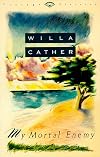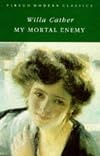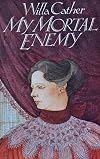
My Mortal Enemy
by Willa Cather 
On This Page
Description
First published in 1926, this book is Willa Cather's sparest and most dramatic novel, a dark and prescient portrait of a marriage that subverts our oldest notions about the nature of domestic happiness.As a young woman, Myra Henshawe gave up a fortune to marry for love—a boldly romantic gesture that became a legend in her family. But this worldly, sarcastic, and perhaps even wicked woman may have been made for something greater than love. In her portrait of Myra and in her exquisitely show more nuanced depiction of her marriage, Cather shows the evolution of a human spirit as it comes to bridle against the constraints of ordinary happiness and seek an otherwordly fulfillment. My Mortal Enemy is a work whose drama and intensely moral imagination make it unforgettable. Classic Literature. Literature. Fiction. show less
Tags
Recommendations
















Member Reviews
Nellie, young and inexperienced, tells the story of Myra, an older woman from her town who gives up a fortune to elope with Oswald, the man she loves. Nellie begins by relating the stories and gossip of her Aunt Lydia, who had once helped Myra elope. Then she relates three meetings with Myra in the course of Myra's life and marriage, and each meeting is filled with both mystery and with accurate, aching details of a life that has not gone according to plan. In a way the novel is a slight fragment of something larger--there is so much left unexplained and unexplored--but in another way it's perfect. It's a perfect use of a narrator with limited knowledge but extreme gifts of observation. I was trying to think of other novels I liked that show more used his narrative technique and came up with The Great Gatsby and Sophie's Choice, but in the case of My Mortal Enemy the narrative technique is far more pure, where so very little is revealed directly, and the only real entry into the novel's deepest meanings is contained in a single sentence: "Why must I die like this, alone with My Mortal Enemy?"
At its heart, a chilling, revelatory, terrifying look at marriage. show less
At its heart, a chilling, revelatory, terrifying look at marriage. show less
Summary: The story of Myra Driscoll Henshawe, who forsakes a fortune to go with her love to pursue fortune and fame in New York City.
This enigmatic novella by Willa Cather has recently passed into ranks of Public Domain works. Published in 1926, it comes between The Professor’s House and Death Comes for the Archbishop and is strikingly unlike either. The novella length is one distinction. The setting another, and the lead character a third.
The story begins in small town Illinois where Myra and Oliver Henshawe return to the small Illinois where they started out, falling in love and deciding to forsake Myra’s family fortune to pursue their own fortune ande fame in New York. And by local standards, it appears they have made it, show more especially as seen through the eyes of Nellie Birdseye and her mother Lydia, who are invited to go back to New York for the holidays.
Myra is a patron of the arts, the opera, and knows many wealthy people. Her apartment is richly furnished. Yet the reality is that Oliver has been but a modest success, and little “gaps” show themselves in Myra’s facade–times of jealousy and anger and disappointment with OIiver. We see Myra’s unhappiness in her decision to take the train with Nellie and Lydia back to Pittsburgh, getting away from Oliver.
The second part of the story occurs ten years later in a western town. Nellie is working there and runs into Oliver Henshawe. She learns that Oliver lost his job and they have fallen on hard times and live in a small apartment with noisy upstairs neighbors in the same town. Myra is ill, and, as it turns out, dying of a malignant growth. Oliver tends her faithfully but nothing satisfies her. At one point, she rails on him saying, “Why must I die like this, alone with my mortal enemy?” Nellie hears all this as she takes it on herself to have tea with Myra regularly, taking her to a favorite lookout, where, in the end, she is found dead.
One the one hand, Myra is an enthralling character, certainly for Nellie. And yet through Nellie’s eyes, we see a woman who nourishes fantastic ambitions that she imposes on OIiver, who loving and diligent as he is, is unable to achieve. Yet I find myself asking, was Oliver really the mortal enemy? I wonder if it was in fact her own disappointment, and her unwillingness to forgive the man who disappointed her. Or rather, was it life itself, which failed to live up to her expectations, leaving her to die in a seedy apartment? It all seems a sad tale of a woman so obsessed with what she wanted that she never could see what she had. show less
This enigmatic novella by Willa Cather has recently passed into ranks of Public Domain works. Published in 1926, it comes between The Professor’s House and Death Comes for the Archbishop and is strikingly unlike either. The novella length is one distinction. The setting another, and the lead character a third.
The story begins in small town Illinois where Myra and Oliver Henshawe return to the small Illinois where they started out, falling in love and deciding to forsake Myra’s family fortune to pursue their own fortune ande fame in New York. And by local standards, it appears they have made it, show more especially as seen through the eyes of Nellie Birdseye and her mother Lydia, who are invited to go back to New York for the holidays.
Myra is a patron of the arts, the opera, and knows many wealthy people. Her apartment is richly furnished. Yet the reality is that Oliver has been but a modest success, and little “gaps” show themselves in Myra’s facade–times of jealousy and anger and disappointment with OIiver. We see Myra’s unhappiness in her decision to take the train with Nellie and Lydia back to Pittsburgh, getting away from Oliver.
The second part of the story occurs ten years later in a western town. Nellie is working there and runs into Oliver Henshawe. She learns that Oliver lost his job and they have fallen on hard times and live in a small apartment with noisy upstairs neighbors in the same town. Myra is ill, and, as it turns out, dying of a malignant growth. Oliver tends her faithfully but nothing satisfies her. At one point, she rails on him saying, “Why must I die like this, alone with my mortal enemy?” Nellie hears all this as she takes it on herself to have tea with Myra regularly, taking her to a favorite lookout, where, in the end, she is found dead.
One the one hand, Myra is an enthralling character, certainly for Nellie. And yet through Nellie’s eyes, we see a woman who nourishes fantastic ambitions that she imposes on OIiver, who loving and diligent as he is, is unable to achieve. Yet I find myself asking, was Oliver really the mortal enemy? I wonder if it was in fact her own disappointment, and her unwillingness to forgive the man who disappointed her. Or rather, was it life itself, which failed to live up to her expectations, leaving her to die in a seedy apartment? It all seems a sad tale of a woman so obsessed with what she wanted that she never could see what she had. show less
This is a short novel/novella from the 1920's. The language and storytelling was beautiful. This turns out to be a rather sad story, eventually throwing ice water on running away for romantic love. We see parts of the life of Myra Henshawe and her husband Oswald through the eyes of young Nellie. Nellie is 15 when she first meets Myra at 45. Nellie has heard family stories, the stuff of legend, of the young Myra and is rather surprised at the reality. Myra seems to be rather quickly moving from nice to not so nice. Myra ends up living a broken life, having given up an inheritance to marry the man she loved. That isn't how it begins, but that is how it ends. Interesting set of characters and very descriptive scenes made this very much show more worth reading, but as I said, rather sad by the end.
Cather is quite a writer. 3 1/2 - 4 stars show less
Cather is quite a writer. 3 1/2 - 4 stars show less
I’ve had this strange, sad little novella for some time, the trouble with tiny little books is that they are easy to overlook. I do love Willa Cather’s writing, there’s a sense of place in her novels I feel right at home in. Her characters step from the pages fully formed and believable – as if from life. My Mortal Enemy was written during Willa Cather’s most creative period, I’m surprised it isn’t better known. One can’t help but feel that in the character of Myra Henshawe we must have someone who Willa Cather knew – or had at least heard of from somebody. According to A S Byatt in the introduction to this old Virago edition, this is indeed the case – we don’t know from exactly where the character comes, but it show more seems she was someone Cather knew. There is a quite definite deliberateness to the shortness of this little book, Cather gives us the essence of these people, and leaves us asking questions about them. It’s quite brilliant.
Our narrator Nellie Birdseye is fifteen when she first meets Myra Henshawe who is visiting Nellie’s home town with her husband. Nellie has grown up in Parthia, Illinois, hearing the stories of Myra Henshawe’s runaway marriage – how on one snowy night she had walked proudly out of the gates of her uncle’s wealthy home, to join Oswald Henshawe; the young man her uncle had forbidden her to marry.
‘But they’ve been happy, anyhow?’ I sometimes asked her.
‘Happy? Oh yes! As happy as most people.’
That answer was disheartening; the very point of their story was that they should be much happier than other people.”
Myra had walked away from her inheritance; no one believed that her uncle would ever change his mind. Nellie’s Aunt Lydia has fuelled Nellie’s imagination with romantic stories about Myra – and so at first Nellie is rather disappointed in the reality, a woman fussing about her husband’s shirts, much older than she had expected.
“After I went home from that first glimpse of the real Myra Henshawe, twenty-five years older than I had always imagined her, I could not help feeling a little disappointed. John Driscoll and his niece had suddenly changed places in my mind, and he had got, after all, the more romantic part. Was it not better to get out of the world with such pomp and dramatic splendour than to linger in it, having to take account of shirts and railway trains, and getting a double chin into the bargain?”
Myra at around forty-five, is sharp, often sarcastic, a figure of legend, who Nellie is so ready to be impressed by. Nellie and Aunt Lydia travel to New York City to spend Christmas with the Henshawes. Here the Henshawes live in an apartment – which Nellie loves the moment she sees it – in genteel poverty, surrounded by various artists and actors. Oswald enlists Aunt Lydia’s help in a small, but possibly significant deception to thwart his wife’s jealousy and Nellie later witnesses an argument between the Henshawes. Nellie and Aunt Lydia spend Christmas dinner with friends of Myra and Oswald and New Year they meet yet more artists. As Nellie and her aunt leave New York by train they are suddenly joined by Myra who has apparently quarrelled again with Oswald and she is on her way to visit friends in Pittsburgh.
Ten years later Nellie meets Myra and Oswald again. Both the Henshawes and Nellie have been driven to a little town on the west coast by economic necessity. Nellie has come as a teacher, a position that Myra heartily disapproves of. Myra is very ill, bedridden she is cared for by Oswald who when not caring for Myra works full time for the city traction company, a poorly paid lowly position. The Henshawes flat is small and shabby; their upstairs neighbours are dreadfully noisy. The dying Myra tells Nellie – about her life, how ‘they were never really happy’ instructs Nellie to ditch teaching and try journalism. Nellie takes Myra to a headland above the sea – a place that Myra becomes enchanted by and returns to again.
Poor Myra; achieved legendary status when she walked out on her inheritance one snowy night many, many years earlier, but then lived an ordinary, unremarkable life. Her great love turned sour, although we can only ever guess why. So the reader leaves Myra Henshawe with many questions still about her. show less
Our narrator Nellie Birdseye is fifteen when she first meets Myra Henshawe who is visiting Nellie’s home town with her husband. Nellie has grown up in Parthia, Illinois, hearing the stories of Myra Henshawe’s runaway marriage – how on one snowy night she had walked proudly out of the gates of her uncle’s wealthy home, to join Oswald Henshawe; the young man her uncle had forbidden her to marry.
‘But they’ve been happy, anyhow?’ I sometimes asked her.
‘Happy? Oh yes! As happy as most people.’
That answer was disheartening; the very point of their story was that they should be much happier than other people.”
Myra had walked away from her inheritance; no one believed that her uncle would ever change his mind. Nellie’s Aunt Lydia has fuelled Nellie’s imagination with romantic stories about Myra – and so at first Nellie is rather disappointed in the reality, a woman fussing about her husband’s shirts, much older than she had expected.
“After I went home from that first glimpse of the real Myra Henshawe, twenty-five years older than I had always imagined her, I could not help feeling a little disappointed. John Driscoll and his niece had suddenly changed places in my mind, and he had got, after all, the more romantic part. Was it not better to get out of the world with such pomp and dramatic splendour than to linger in it, having to take account of shirts and railway trains, and getting a double chin into the bargain?”
Myra at around forty-five, is sharp, often sarcastic, a figure of legend, who Nellie is so ready to be impressed by. Nellie and Aunt Lydia travel to New York City to spend Christmas with the Henshawes. Here the Henshawes live in an apartment – which Nellie loves the moment she sees it – in genteel poverty, surrounded by various artists and actors. Oswald enlists Aunt Lydia’s help in a small, but possibly significant deception to thwart his wife’s jealousy and Nellie later witnesses an argument between the Henshawes. Nellie and Aunt Lydia spend Christmas dinner with friends of Myra and Oswald and New Year they meet yet more artists. As Nellie and her aunt leave New York by train they are suddenly joined by Myra who has apparently quarrelled again with Oswald and she is on her way to visit friends in Pittsburgh.
Ten years later Nellie meets Myra and Oswald again. Both the Henshawes and Nellie have been driven to a little town on the west coast by economic necessity. Nellie has come as a teacher, a position that Myra heartily disapproves of. Myra is very ill, bedridden she is cared for by Oswald who when not caring for Myra works full time for the city traction company, a poorly paid lowly position. The Henshawes flat is small and shabby; their upstairs neighbours are dreadfully noisy. The dying Myra tells Nellie – about her life, how ‘they were never really happy’ instructs Nellie to ditch teaching and try journalism. Nellie takes Myra to a headland above the sea – a place that Myra becomes enchanted by and returns to again.
Poor Myra; achieved legendary status when she walked out on her inheritance one snowy night many, many years earlier, but then lived an ordinary, unremarkable life. Her great love turned sour, although we can only ever guess why. So the reader leaves Myra Henshawe with many questions still about her. show less
What a strange, sad little book this is. I agree with the reviewer who recommends not reading Kilby's introduction to the Vintage Classics edition; it's muddled my thinking about the book completely.
Cather, in her understated way, shows the reader the great tragedy of Myra Henshawe's life, which is that love, by itself, simply isn't enough to make Myra happy. Though Myra left her family and gave up her inheritance to marry her husband, their marriage is no more than ordinary, plagued by the same jealousies, banalities, and tiresome social obligations as everyone else's. Though Myra seems happy when we first meet her, later on, when she and her husband have fallen into poverty, she is ill and miserable, melodramatic and tyrranical, and, show more in fact, as ordinary in her unhappiness as she was in her previous happiness. Resentful of (and hateful towards) her husband, even as he acts as her nursemaid and provider, she allows her reduced circumstances to turn her into a whining, querulous, melodramatic old woman.
Though it is tempting to view Myra's death as a redemption or a recovering of her dignity, it is, I think, simply another selfish act, the sad punctuation at the end of a life begun with a brilliant, grand gesture and yet lived with crushing ordinariness under a thin, brittle veneer of excitement and bliss.
Beautifully terse, and well worth reading, though very different from much of Cather's other work. show less
Cather, in her understated way, shows the reader the great tragedy of Myra Henshawe's life, which is that love, by itself, simply isn't enough to make Myra happy. Though Myra left her family and gave up her inheritance to marry her husband, their marriage is no more than ordinary, plagued by the same jealousies, banalities, and tiresome social obligations as everyone else's. Though Myra seems happy when we first meet her, later on, when she and her husband have fallen into poverty, she is ill and miserable, melodramatic and tyrranical, and, show more in fact, as ordinary in her unhappiness as she was in her previous happiness. Resentful of (and hateful towards) her husband, even as he acts as her nursemaid and provider, she allows her reduced circumstances to turn her into a whining, querulous, melodramatic old woman.
Though it is tempting to view Myra's death as a redemption or a recovering of her dignity, it is, I think, simply another selfish act, the sad punctuation at the end of a life begun with a brilliant, grand gesture and yet lived with crushing ordinariness under a thin, brittle veneer of excitement and bliss.
Beautifully terse, and well worth reading, though very different from much of Cather's other work. show less
This is the second book I have read by this author. The prose draws me to the stories as to opposed to the action of an Elmore Leonard, Raymond Chandler, or today’s best sellers on the mystery/thriller list.
The author imparts the soften spoken stories of universal struggles reminiscent of the Arthur Miller play, Death of a Salesman. All our old cliches about love overcoming all are the wishful delusions of our hearts. Too many of us who have succumbed to the terrible smallness of envy, greed, and jealousy. The question presented is not whether love like all of life will eventually die, rather is grasping for the dream worth the fall. The author achieves the ultimate goal, investigating the existential question, leaving the ultimate show more conclusion to the reader. show less
The author imparts the soften spoken stories of universal struggles reminiscent of the Arthur Miller play, Death of a Salesman. All our old cliches about love overcoming all are the wishful delusions of our hearts. Too many of us who have succumbed to the terrible smallness of envy, greed, and jealousy. The question presented is not whether love like all of life will eventually die, rather is grasping for the dream worth the fall. The author achieves the ultimate goal, investigating the existential question, leaving the ultimate show more conclusion to the reader. show less
Rich girl renounces wealth to elope with boy, but it turns out that neither she nor he live "happily ever after". Cather writes with purity and simplicity in this novella, and the uttering of the title comes like a thunderbolt towards the end.
Quotes:
On married life:
"'But they've been happy, anyhow?' I sometimes asked her.
'Happy? Oh yes! As happy as most people.'
That answer was disheartening; the very point of their story was that they should be much happier than other people."
On middle age:
"After I went home from that first glimpse of the real Myra Henshawe, twenty-five years older than I had always imagined her, I could not help feeling a little disappointed. John Driscoll and his niece had suddenly changed places in my mind, and he show more had got, after all, the more romantic part. Was it not better to get out of the world with such pomp and dramatic splendour than to linger in it, having to take account of shirts and railway trains, and getting a double chin into the bargain?"
And this one as well, also reflecting unrealized potential:
"I wondered, as on the first time I saw him, in my own town, at the contradiction in his face: the strong bones, and the curiously shaped eyes without any fire in them. I felt that his life had not suited him; that he possessed some kind of courage and force which slept, which in another sort of world might have asserted themselves brilliantly. I thought he ought to have been a soldier or an explorer."
On nature, and redemption:
"I'd love to see this place at dawn," Myra said suddenly. "That is always such a forgiving time. When that first cold, bright streak comes over the water, it's as if all our sins were pardoned; as if the sky leaned over the earth and kissed it and gave it absolution. You know how the great sinners always came home to die in some religious house, and the abbot or the abbess went out and received them with a kiss?"
On youth:
"We think we are so individual and so misunderstood when we are young; but the nature our strain of blood carries is inside there, waiting, like our exoskeleton."
"To throw his youth away like that, and shoot himself at twenty-three! People are always talking about the joys of youth - but oh, how youth can suffer! I've not forgotten; those hot southern Illinois nights, when Oswald was in New York, and I had no word from him except through Liddy, and I used to lie on the floor all night and listen to the express trains go by. I've not forgotten."
On artists:
"How the great poets do shine on, Nellie! Into all the dark corners of the world. They have no night."
Klein's introduction was insightful, though as with all introductions, read it at the end to avoid spoiling the story and such that you have your own opinions based on what you've read, it's then like getting another viewpoint which you can accept some bits of and leave others. Some of the bits I liked:
"Willa Cather's mode was elegy, and as it must be for all elegists, the enemy was time, mortality itself."
"Will Cather was to remark that 'human relationships are the tragic necessity of human life; that they can never be wholly satisfactory, that every ego is half the time greedily seeking them, and half the time pulling away from them.'"
"There were others at the time of her greatest production who also made a religion of craftsmanship - Gertrude Stein, who was her exact contemporary, Ezra Pound, Hemingway - but next to Willa Cather they seem sloganeers. She quite alone, and without making a public campaign of it, put in the work and acheived a relentless purity of style. Never so pure and relentless as in 'My Mortal Enemy'." show less
Quotes:
On married life:
"'But they've been happy, anyhow?' I sometimes asked her.
'Happy? Oh yes! As happy as most people.'
That answer was disheartening; the very point of their story was that they should be much happier than other people."
On middle age:
"After I went home from that first glimpse of the real Myra Henshawe, twenty-five years older than I had always imagined her, I could not help feeling a little disappointed. John Driscoll and his niece had suddenly changed places in my mind, and he show more had got, after all, the more romantic part. Was it not better to get out of the world with such pomp and dramatic splendour than to linger in it, having to take account of shirts and railway trains, and getting a double chin into the bargain?"
And this one as well, also reflecting unrealized potential:
"I wondered, as on the first time I saw him, in my own town, at the contradiction in his face: the strong bones, and the curiously shaped eyes without any fire in them. I felt that his life had not suited him; that he possessed some kind of courage and force which slept, which in another sort of world might have asserted themselves brilliantly. I thought he ought to have been a soldier or an explorer."
On nature, and redemption:
"I'd love to see this place at dawn," Myra said suddenly. "That is always such a forgiving time. When that first cold, bright streak comes over the water, it's as if all our sins were pardoned; as if the sky leaned over the earth and kissed it and gave it absolution. You know how the great sinners always came home to die in some religious house, and the abbot or the abbess went out and received them with a kiss?"
On youth:
"We think we are so individual and so misunderstood when we are young; but the nature our strain of blood carries is inside there, waiting, like our exoskeleton."
"To throw his youth away like that, and shoot himself at twenty-three! People are always talking about the joys of youth - but oh, how youth can suffer! I've not forgotten; those hot southern Illinois nights, when Oswald was in New York, and I had no word from him except through Liddy, and I used to lie on the floor all night and listen to the express trains go by. I've not forgotten."
On artists:
"How the great poets do shine on, Nellie! Into all the dark corners of the world. They have no night."
Klein's introduction was insightful, though as with all introductions, read it at the end to avoid spoiling the story and such that you have your own opinions based on what you've read, it's then like getting another viewpoint which you can accept some bits of and leave others. Some of the bits I liked:
"Willa Cather's mode was elegy, and as it must be for all elegists, the enemy was time, mortality itself."
"Will Cather was to remark that 'human relationships are the tragic necessity of human life; that they can never be wholly satisfactory, that every ego is half the time greedily seeking them, and half the time pulling away from them.'"
"There were others at the time of her greatest production who also made a religion of craftsmanship - Gertrude Stein, who was her exact contemporary, Ezra Pound, Hemingway - but next to Willa Cather they seem sloganeers. She quite alone, and without making a public campaign of it, put in the work and acheived a relentless purity of style. Never so pure and relentless as in 'My Mortal Enemy'." show less
Members
- Recently Added By
Lists

Favourite Virago Modern Classics
183 works; 38 members

Books Read in 2016
110 works; 1 member

Canon de la narrativa universal del s. XX (cicutadry)
499 works; 3 members
Author Information

151+ Works 46,030 Members
Willa Siebert Cather was born in 1873 in the home of her maternal grandmother in western Virginia. Although she had been named Willela, her family always called her "Willa." Upon graduating from the University of Nebraska in 1895, Cather moved to Pittsburgh where she worked as a journalist and teacher while beginning her writing career. In 1906, show more Cather moved to New York to become a leading magazine editor at McClure's Magazine before turning to writing full-time. She continued her education, receiving her doctorate of letters from the University of Nebraska in 1917, and honorary degrees from the University of Michigan, the University of California, Columbia, Yale, and Princeton. Cather wrote poetry, short stories, essays, and novels, winning awards including the Pulitzer Prize for her novel, One of Ours, about a Nebraska farm boy during World War I. She also wrote The Professor's House, My Antonia, Death Comes for the Archbishop, and Lucy Gayheart. Some of Cather's novels were made into movies, the most well-known being A Lost Lady, starring Barbara Stanwyck. In 1961, Willa Cather was the first woman ever voted into the Nebraska Hall of Fame. She was also inducted into the Hall of Great Westerners in Oklahoma in 1974, and the National Women's Hall of Fame in Seneca, New York in 1988. Cather died on April 24, 1947, of a cerebral hemorrhage, in her Madison Avenue, New York home, where she had lived for many years. (Bowker Author Biography) show less
Willa Cather has a Legacy Library. Legacy libraries are the personal libraries of famous readers, entered by LibraryThing members from the Legacy Libraries group.
Some Editions
Awards and Honors
Awards
Notable Lists
Series
Belongs to Publisher Series
Mirmanda (93)
Work Relationships
Common Knowledge
- Canonical title
- My Mortal Enemy
- Original publication date
- 1926
- People/Characters
- Myra Henshawe
- Important places
- New York, New York, USA; Parthia, Illinois
- First words
- I first met Myra Henshawe when I was fifteen, but I had known about her ever since I could remember anything at all.
- Last words
- (Click to show. Warning: May contain spoilers.)I have heard again that strange complaint breathed by a dying woman in the stillness of night, like a confession of the soul: "Why must I die like this, alone with my mortal enemy?"
- Canonical DDC/MDS
- 813.52
- Canonical LCC
- PS3505.A87
Classifications
Statistics
- Members
- 697
- Popularity
- 40,985
- Reviews
- 25
- Rating
- (3.58)
- Languages
- 6 — English, French, German, Italian, Portuguese, Spanish
- Media
- Paper, Audiobook, Ebook
- ISBNs
- 43
- ASINs
- 23