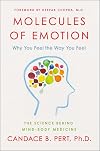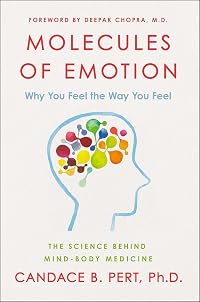
Molecules of Emotion: The Science behind Mind-Body Medicine
by Candace B. Pert
On This Page
Description
Why do we feel the way we feel? How do our thoughts and emotions affect our health? Are our bodies and minds distinct from each other or do they function together as parts of an interconnected system? In her groundbreaking book Molecules of Emotion, Candace Pert -- a neuroscientist whose extraordinary career began with her 1972 discovery of the opiate receptor -- provides startling and decisive answers to these and other challenging questions that scientists and philosophers have pondered show more for centuries. Her pioneering research on how the chemicals inside our bodies form a dynamic information network, linking mind and body, is not only provocative, it is revolutionary. By establishing the biomolecular basis for our emotions and explaining these new scientific developments in a clear and accessible way, Pert empowers us to understand ourselves, our feelings, and the connection between our minds and our bodies -- or bodyminds -- in ways we could never possibly have imagined before. From explaining how there is a scientific basis to popular wisdom about phenomena such as "gut feelings" to making comprehensible recent breakthroughs in cancer and AIDS research, Pert provides us with an intellectual adventure of the highest order. The journey Pert takes us on in Molecules of Emotion is one of personal as well as scientific discovery. Woven into her lucid explanations of the science underlying her work is the remarkable story of how, faced with personal and professional obstacles, she has grown as a woman and a mother and how her personal and spiritual development has made possible her remarkable scientific career. Molecules of Emotion is a landmark work, full of insight and wisdom and possessing that rare power to change the way we see the world and ourselves. Pert's striking conclusion that it is our emotions and their biological components that establish the crucial link between mind and body does not, however, serve to repudiate modern medicine's gains, rather, her findings complement existing techniques by offering a new scientific understanding of the power of our minds and our feelings to affect our health and well-being. show lessTags
Recommendations




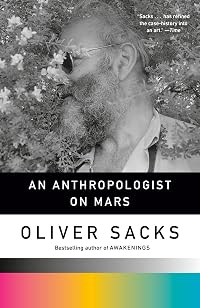
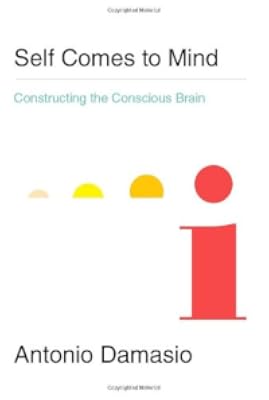
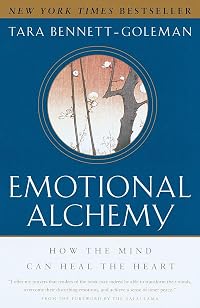
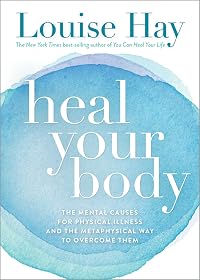

Member Recommendations
Member Reviews
Candace Pert, a neuroscientist and discoveror of the opiate receptor, recounts both the intricate relationship between mind, body, and emotions, and her own career uncovering those connections and the neurochemical basis of them. Beginning her career in the early 1970s, gender was an even bigger obstacle than it is now, which no cultural or legal expectation that it shouldn't be. Sometimes she had to fight for recognition of her contributions; other times she had to fight to be able to do the work at all.
But along the way, she made major discoveries, and had life-changing experiences. The mind-body dichotomy was still unquestioned scientific orthodoxy in her early days. She doesn't say, but I will: Rene Descartes has a lot to answer show more for. Pert's work with neuropeptides and their receptors helps to rebuild the essential unity of the person, mind, body, and emotions, and uncover the connections between our emotional health and our physical health.
There are times when this goes right up to edge of woo-woo, but it doesn't cross over. Pert is spiritual, religious, and very much a scientist. No, that's not a contradiction or a paradox. She's quite open about her beliefs, and the interrelations among the different aspects. Her central, guiding principle is a commitment to truth.
It's a fascinating story. There are times when I find it quite frustrating. It is, however, well worth reading if you are interested in the topic.
I bought this audiobook. show less
But along the way, she made major discoveries, and had life-changing experiences. The mind-body dichotomy was still unquestioned scientific orthodoxy in her early days. She doesn't say, but I will: Rene Descartes has a lot to answer show more for. Pert's work with neuropeptides and their receptors helps to rebuild the essential unity of the person, mind, body, and emotions, and uncover the connections between our emotional health and our physical health.
There are times when this goes right up to edge of woo-woo, but it doesn't cross over. Pert is spiritual, religious, and very much a scientist. No, that's not a contradiction or a paradox. She's quite open about her beliefs, and the interrelations among the different aspects. Her central, guiding principle is a commitment to truth.
It's a fascinating story. There are times when I find it quite frustrating. It is, however, well worth reading if you are interested in the topic.
I bought this audiobook. show less
The initial few chapters of the book talks a lot about the 'science' of the human body like the ligands, the opiate receptor, endorphins, effect of Acetylcholine. It was really nice to know that ligands such as dopamine, histamine, GABA, only comprise a tiny fraction of nervous system communication. The peptides, carriers of emotion and other information make up for most of all ligands.
The book has portions describing the successes and struggles of the author. Like when Dr. Pert was taken for granted and passed on for a Nobel Prize, though in reading the book, I strongly felt she should've been one of the receivers of the award.
The author very well describes how the mind and the body are just one and not separate. She explains how show more 'information' passage is not just through a synapse, but happens due to a much bigger psycho-somatic network inside our body.
There is a bit too much of politics in here for a Science book. This is my only let down for this book. show less
The book has portions describing the successes and struggles of the author. Like when Dr. Pert was taken for granted and passed on for a Nobel Prize, though in reading the book, I strongly felt she should've been one of the receivers of the award.
The author very well describes how the mind and the body are just one and not separate. She explains how show more 'information' passage is not just through a synapse, but happens due to a much bigger psycho-somatic network inside our body.
There is a bit too much of politics in here for a Science book. This is my only let down for this book. show less
I got this as a free audiobook from audible.com. I am a chemical engineer/chemist by trade and thought this sounded like an interesting read. The book is narrated by the author Candace Pert.
The very first thing I noticed is that the author is incredibly conceited, she spends a lot of time bragging about her accomplishments right away. This book is more of an autobiography than an actually book behind the science of emotion.
There are some interesting theories in this book, that I think many people would agree with. The main theory is that emotional state is caused by a variety of chemicals, particularly peptids. These molecules not only have an influence on your emotions but on your overall physical health as well, you can't really show more separate the two. I think this theory was groundbreaking at the time, but much more widely accepted now.
There is a also a lot of discussion about the male domination of science and how hard the author had to work to get recognized. I think maybe this might have been more true in the 70's than today. The author also comes to the realization by the end that maybe it was her aggressive attitude and combativeness that caused some of her issues with her male cohorts and I couldn't agree more.
Working as a female in a male dominated field I have found that the opinion of those around you (male or otherwise) is fed by your attitude towards them. I have never had a ton of issue with my male coworkers respecting me and treating me as an equal. I had some issues in college, but now that I am working with the people I want to work with and in a field I am comfortable in it just hasn't been an issue. If you have an attitude of competence, but aren't completely arrogant, I don't think you will have much of an issue.
Okay stepping off my soapbox now...
Overall this was an interesting read, but not exactly what I was hoping for or expecting. It is more an autobiography of Pert’s work and a treatise on the struggles of female scientists than an explanation behind the chemicals that guide our emotional and physical health. It was free so I can’t really complain, but I wouldn’t really recommend it either. show less
The very first thing I noticed is that the author is incredibly conceited, she spends a lot of time bragging about her accomplishments right away. This book is more of an autobiography than an actually book behind the science of emotion.
There are some interesting theories in this book, that I think many people would agree with. The main theory is that emotional state is caused by a variety of chemicals, particularly peptids. These molecules not only have an influence on your emotions but on your overall physical health as well, you can't really show more separate the two. I think this theory was groundbreaking at the time, but much more widely accepted now.
There is a also a lot of discussion about the male domination of science and how hard the author had to work to get recognized. I think maybe this might have been more true in the 70's than today. The author also comes to the realization by the end that maybe it was her aggressive attitude and combativeness that caused some of her issues with her male cohorts and I couldn't agree more.
Working as a female in a male dominated field I have found that the opinion of those around you (male or otherwise) is fed by your attitude towards them. I have never had a ton of issue with my male coworkers respecting me and treating me as an equal. I had some issues in college, but now that I am working with the people I want to work with and in a field I am comfortable in it just hasn't been an issue. If you have an attitude of competence, but aren't completely arrogant, I don't think you will have much of an issue.
Okay stepping off my soapbox now...
Overall this was an interesting read, but not exactly what I was hoping for or expecting. It is more an autobiography of Pert’s work and a treatise on the struggles of female scientists than an explanation behind the chemicals that guide our emotional and physical health. It was free so I can’t really complain, but I wouldn’t really recommend it either. show less
For those of you who wanted to know the physical location of your unconscious mind, Candance says that it is YOUR BODY!
Candance is an amazing woman who should have won a Nobel Prize in Medicine except, it seems, they don't give them to women! Her life story is quite interesting, as well as the science that she has discovered along the way. This is an excellent read!
I recently tried an experiment to test this hypothesis. During my last massage, I tried to just move my "mind" to what ever location on my back that was being massaged and see if any unusual memories popped up. In one case, while my masseuse was working on my lower back I had a flash back to a diving accident that I had 30 years ago when I lived in San Diego and was getting show more my SCUBA certification.-- I was doing a beach entry through the waves and I got caught by a wave and thrown back to the beach. Briefly, my world spun out of control and I eventually found myself lying on my back on the beach facing the sky. My instructor came to fetch me and reached down to help me right myself.
I had not thought about this incident in decades. The only reason that I can think of why it would come up now was that the masseuse was pressing on my lower back where memories of lying on my back on that beach were stored. Weird stuff! show less
Candance is an amazing woman who should have won a Nobel Prize in Medicine except, it seems, they don't give them to women! Her life story is quite interesting, as well as the science that she has discovered along the way. This is an excellent read!
I recently tried an experiment to test this hypothesis. During my last massage, I tried to just move my "mind" to what ever location on my back that was being massaged and see if any unusual memories popped up. In one case, while my masseuse was working on my lower back I had a flash back to a diving accident that I had 30 years ago when I lived in San Diego and was getting show more my SCUBA certification.-- I was doing a beach entry through the waves and I got caught by a wave and thrown back to the beach. Briefly, my world spun out of control and I eventually found myself lying on my back on the beach facing the sky. My instructor came to fetch me and reached down to help me right myself.
I had not thought about this incident in decades. The only reason that I can think of why it would come up now was that the masseuse was pressing on my lower back where memories of lying on my back on that beach were stored. Weird stuff! show less
Why do we feel the way we feel? How do our thoughts and emotions affect our health? Are our bodies and minds distinct from each other or do they function together as parts of an interconnected system?
In her groundbreaking book Molecules of Emotion, Candace Pert provides startling and decisive answers to these and other challenging questions that scientists and philosophers have pondered for centuries.
Her pinoeering research on how the chemicals inside our bodies form a dynamic information network, linking mind and body, is not only porvocatve, it is revolutionary. By establishing the biomoledular basis for our emotions and explaining these new scientific developments in a clear and accessible way, Pert empowers us to understand show more ourselves, our feelings, and the connection between our minds and our bodies-bodyminds-in ways we could never possibly have imagined before.
Molecules of Emotion is a landmark work, full of insight and wisdom and possessing that rare power to change the way we see the world and ourselves.
'Molecules of Emotion is ahighly inspiring story of the search for the biochemical links between consciousness, mind, and body that also weaves in Pert's deeply personal search for truth. Highly recommended!'-Dean Ornish, M.D., author of Eat More, Weigh Less
'Pick up the coolest, smartest, hardest-core mind-body book I've seen in a while.'-Lynn Harris, New York Daily News
Candace B. Pert, Ph.D., is a Research Professor in the Department of Physiology and Biophysics at Georgetown University Medical Center in Washington, D.C., where she also conducts AIDS research. She was featured in Bill Moyers's book and PBS series Healing and the Mind, and lectures extensively throughout the country.
Contents
Foreword by Deepak Chopra, M.D.
Chapter 1 The receptor revolution: An introductory lecture
Chapter 2 Romance of the opiate receptor
Chapter 3 Peptide generation: A continued lecture
Chapter 4 Brains and ambition
Chapter 5 Life at the palace
Chapter 6 Breaking the rules
Chapter 7 The biochemicals of emotion: A continued lecture
Chapter 8 Turning point
Chapter 9 The psychosomatic network: A concluding lecture
Chapter 10 Child of the new paradigm
Chapter 11 Crossing over, coming together
Chapter 12 Healing feeling
Chapter 13 Truth
Epilogue Peptide T-The story continues
Appendix A Prevention-oriented tips for healthful, blissful living
Appendix B Bodymind medicine: Resources and practitioners
Glossary
Recommended reading (bibliography)
Index show less
In her groundbreaking book Molecules of Emotion, Candace Pert provides startling and decisive answers to these and other challenging questions that scientists and philosophers have pondered for centuries.
Her pinoeering research on how the chemicals inside our bodies form a dynamic information network, linking mind and body, is not only porvocatve, it is revolutionary. By establishing the biomoledular basis for our emotions and explaining these new scientific developments in a clear and accessible way, Pert empowers us to understand show more ourselves, our feelings, and the connection between our minds and our bodies-bodyminds-in ways we could never possibly have imagined before.
Molecules of Emotion is a landmark work, full of insight and wisdom and possessing that rare power to change the way we see the world and ourselves.
'Molecules of Emotion is ahighly inspiring story of the search for the biochemical links between consciousness, mind, and body that also weaves in Pert's deeply personal search for truth. Highly recommended!'-Dean Ornish, M.D., author of Eat More, Weigh Less
'Pick up the coolest, smartest, hardest-core mind-body book I've seen in a while.'-Lynn Harris, New York Daily News
Candace B. Pert, Ph.D., is a Research Professor in the Department of Physiology and Biophysics at Georgetown University Medical Center in Washington, D.C., where she also conducts AIDS research. She was featured in Bill Moyers's book and PBS series Healing and the Mind, and lectures extensively throughout the country.
Contents
Foreword by Deepak Chopra, M.D.
Chapter 1 The receptor revolution: An introductory lecture
Chapter 2 Romance of the opiate receptor
Chapter 3 Peptide generation: A continued lecture
Chapter 4 Brains and ambition
Chapter 5 Life at the palace
Chapter 6 Breaking the rules
Chapter 7 The biochemicals of emotion: A continued lecture
Chapter 8 Turning point
Chapter 9 The psychosomatic network: A concluding lecture
Chapter 10 Child of the new paradigm
Chapter 11 Crossing over, coming together
Chapter 12 Healing feeling
Chapter 13 Truth
Epilogue Peptide T-The story continues
Appendix A Prevention-oriented tips for healthful, blissful living
Appendix B Bodymind medicine: Resources and practitioners
Glossary
Recommended reading (bibliography)
Index show less
Why do we feel the way we feel? How do our thoughts and emotions affect our health? Are our bodies and minds distinct from each other, or do they function together as parts of an interconnected system?This book explores how the chemicals inside our bodies form a dynamic information network, linking mind and body. The author establishes the biomolecular basis for our emotions.
Ratings
Members
- Recently Added By
Author Information

7+ Works 847 Members
Candace B. Pert, Ph.D., is a Research Professor in the Department of Physiology and Biophysics at Georgetown University Medical Center in Washington, D.C., where she also conducts AIDS research. She was featured in Bill Moyers's book and PBS series Healing and the Mind, and lectures extensively throughout the country.
All Editions
Common Knowledge
- Canonical title
- Molecules of Emotion: The Science behind Mind-Body Medicine
- Original title
- Molecules of Emotion: The Science behind Mind-Body Medicine
Classifications
Statistics
- Members
- 742
- Popularity
- 37,918
- Reviews
- 6
- Rating
- (3.94)
- Languages
- English, German, Italian
- Media
- Paper, Audiobook, Ebook
- ISBNs
- 13
- ASINs
- 8