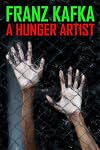
A Hunger Artist
by Franz Kafka 
On This Page
Description
In the days when hunger could be cultivated and practiced as an art form, the individuals who practiced it were often put on show for all to see. One man who was so devout in his pursuit of hunger pushed against the boundaries set by the circus that housed him and strived to go longer than forty days without food. As interest in his art began to fade, he pushed the boundaries even further. In this short story about one man's plight to prove his worth, Franz Kafka illustrates the themes of show more self-hatred, dedication, and spiritual yearning. show lessTags
Recommendations




















Member Recommendations

Member Reviews
"Un hombre condenado a mirar al mundo con una claridad tan enceguecedora que éste le resultó insoportable y se encaminó hacia la muerte"
Esta es la descripción que hace Kafka del ayunador, un hombre que conforme se describe su mundo y su necesidad de sentir hambre transmite un velo de angustia y desolación que sólo él, y sus semejantes, podían entender. El arquetipo del hombre solo cuando está rodeado de gente, siempre inconforme con el mundo y completamente incomprendido pero, que al mismo tiempo, entiende al mundo mejor que todos los habitantes que lo conforman.
Un cuento que abarca la inconformidad, la necesidad de sobresalir y hacerse invisible en un mismo momento, y la belleza/sufrimiento de morir por el amor al arte son show more sólo algunos de los aspectos que son demostrados en esta magnifica obra que no sólo analiza al artista en su desesperación y conformismo sinotambién al espectador en su fascinación y desprecio.
"Tal vez su esqueletica delgadez procedía de su descontento consigo mismo" show less
Esta es la descripción que hace Kafka del ayunador, un hombre que conforme se describe su mundo y su necesidad de sentir hambre transmite un velo de angustia y desolación que sólo él, y sus semejantes, podían entender. El arquetipo del hombre solo cuando está rodeado de gente, siempre inconforme con el mundo y completamente incomprendido pero, que al mismo tiempo, entiende al mundo mejor que todos los habitantes que lo conforman.
Un cuento que abarca la inconformidad, la necesidad de sobresalir y hacerse invisible en un mismo momento, y la belleza/sufrimiento de morir por el amor al arte son show more sólo algunos de los aspectos que son demostrados en esta magnifica obra que no sólo analiza al artista en su desesperación y conformismo sinotambién al espectador en su fascinación y desprecio.
"Tal vez su esqueletica delgadez procedía de su descontento consigo mismo" show less
Amazingly, hunger artists were real performers in centuries past. As in this short story, they would fast for up to 40 days as audiences paid to watch them sit in cages often under constant supervision. Spectators visited daily, and the final days of fasting drew the largest crowds.
While Kafka's work does not significantly deviate from the reality, his description of the artist's thought process is what distinguishes this story and leaves room for various interpretations. Is this an allegory for the misunderstood artist, does it have religious or ascetic significance, etc.? As always with Kafka, one never really knows.
While Kafka's work does not significantly deviate from the reality, his description of the artist's thought process is what distinguishes this story and leaves room for various interpretations. Is this an allegory for the misunderstood artist, does it have religious or ascetic significance, etc.? As always with Kafka, one never really knows.
What he did for fame. What he did to prove himself. How some people take things to extremes and then find the thing itself has taken them over. How pointless it is to die for some petty thing. How perhaps the clarity of imminent mortality makes the protagonist confess the true reason for his self-starvation. If he did, if it was.
Or if it was really about that at all, or was it really about the existential pleasure of living for the day and enjoying what there is? Or perhaps it was about if a tree falls in the forest but no one is there to see it... A novella, or a long short story of infinite depth and endless interpretations, but then that's the genius of Kafka all over.
Or if it was really about that at all, or was it really about the existential pleasure of living for the day and enjoying what there is? Or perhaps it was about if a tree falls in the forest but no one is there to see it... A novella, or a long short story of infinite depth and endless interpretations, but then that's the genius of Kafka all over.
This is a collection of four short stories, at least three of which concern performance art. These four are also included in some version of The Metamorphosis.
A Hunger/Fasting Artist
This is presumably where David Blaine got his inspiration, but Kafka, of course, is far more profound and disturbing.
Is he just a dedicated performer, or does self-starvation serve some higher purpose, or reflect Kafka's own concerns and problems with health and eating? Much of the inner turmoil sounds like someone with an eating disorder: "I have to fast, I can't help it" and "I could never find the nourishment I liked".
His greatest frustration is people assuming he cheats somehow. He is the only person who is 100% certain of the truth, and yet he is show more dissatisfied with himself because fasting is "the easiest thing in the world".
He's never allowed to fast for more than 40 days because the public lose interest, but you should be careful what you wish for. Fasting as a spectacle goes out of fashion; he is no longer the big draw he once was, and he ends up in a circus, alongside more interesting animals.
You can read the full text here (8 pages):
http://www.kafka-online.info/a-hunger-artist.html
For a different take on similar themes, see Han Kang's The Vegetarian (see my review HERE).
The First Sorrow
This tells of a trapeze artist so dedicated to his art, that he lives for and on his trapeze. Travel is torturous because he has to come down (though for longer journeys, he goes by train and lies in the overhead luggage rack!).
Voyeurism often features tangentially in Kafka's works (and sometimes explicitly), but that is not the trapeze artist's motivation. He is a pure artist, and prepared to sacrifice everything for that, regardless of any fame or approval.
A Little Woman
This seems to be the odd one out, as it doesn't feature a performance or any sort of artist. Instead, it is an apparently paranoid narration of a man who is despised and thus tormented by a woman who "is a complete stranger to me". She is "repulsed" and "highly dissatisfied with me" to the extent that she cannot sleep and thus cannot work. He does not know (or admit?) the cause, but feels guilt, as well as shame arising from the assumption that others condemn him. He claims "the relationship between us is entirely of her making and only exists from her point of view", but his reaction implies otherwise. He asks a friend for advice and awaits her judgement.
Josefine the Songstress or The Mouse People
One of Kafka's animal stories, though apart from the subtitle, you'd barely know it. It's also (probably) my least favourite, though I can't quite say why.
An unnamed narrator talks about Josfine: "the beauty of her song is such that even the dullest ear cannot resist it" and goes on to ponder whether it is really art, or merely an extension of the natural tendency to "pipe" (I presume "squeak" would be a better translation).
She has diva-ish tendencies and is revered by her people, such that "Josefine stands almost beyond the law". She says work impairs her voice, so invents work-related injuries, "So now we get a theatrical performance in addition to the concert". Should society support great artists?
You can read the full text here (20 pages), HERE.
See my Kafka-related bookshelf for other works by and about Kafka: HERE show less
A Hunger/Fasting Artist
This is presumably where David Blaine got his inspiration, but Kafka, of course, is far more profound and disturbing.
Is he just a dedicated performer, or does self-starvation serve some higher purpose, or reflect Kafka's own concerns and problems with health and eating? Much of the inner turmoil sounds like someone with an eating disorder: "I have to fast, I can't help it" and "I could never find the nourishment I liked".
His greatest frustration is people assuming he cheats somehow. He is the only person who is 100% certain of the truth, and yet he is show more dissatisfied with himself because fasting is "the easiest thing in the world".
He's never allowed to fast for more than 40 days because the public lose interest, but you should be careful what you wish for. Fasting as a spectacle goes out of fashion; he is no longer the big draw he once was, and he ends up in a circus, alongside more interesting animals.
You can read the full text here (8 pages):
http://www.kafka-online.info/a-hunger-artist.html
For a different take on similar themes, see Han Kang's The Vegetarian (see my review HERE).
The First Sorrow
This tells of a trapeze artist so dedicated to his art, that he lives for and on his trapeze. Travel is torturous because he has to come down (though for longer journeys, he goes by train and lies in the overhead luggage rack!).
Voyeurism often features tangentially in Kafka's works (and sometimes explicitly), but that is not the trapeze artist's motivation. He is a pure artist, and prepared to sacrifice everything for that, regardless of any fame or approval.
A Little Woman
This seems to be the odd one out, as it doesn't feature a performance or any sort of artist. Instead, it is an apparently paranoid narration of a man who is despised and thus tormented by a woman who "is a complete stranger to me". She is "repulsed" and "highly dissatisfied with me" to the extent that she cannot sleep and thus cannot work. He does not know (or admit?) the cause, but feels guilt, as well as shame arising from the assumption that others condemn him. He claims "the relationship between us is entirely of her making and only exists from her point of view", but his reaction implies otherwise. He asks a friend for advice and awaits her judgement.
Josefine the Songstress or The Mouse People
One of Kafka's animal stories, though apart from the subtitle, you'd barely know it. It's also (probably) my least favourite, though I can't quite say why.
An unnamed narrator talks about Josfine: "the beauty of her song is such that even the dullest ear cannot resist it" and goes on to ponder whether it is really art, or merely an extension of the natural tendency to "pipe" (I presume "squeak" would be a better translation).
She has diva-ish tendencies and is revered by her people, such that "Josefine stands almost beyond the law". She says work impairs her voice, so invents work-related injuries, "So now we get a theatrical performance in addition to the concert". Should society support great artists?
You can read the full text here (20 pages), HERE.
See my Kafka-related bookshelf for other works by and about Kafka: HERE show less
Oh, the misunderstood artist or shall I say "artiste"! Can't anyone allow him to pursue his art and follow his vision unimpeded? And what happens to the forgotten artist who still believes in that vision? This story gives us a glimpse into the mind of a hunger artist who became obsessed with carrying out a fast as he saw fit, only to be forgotten by his audience.
This type of performance art was once popular in Europe. The book is for a particular type of reader the Kafka aficionado. Otherwise it may be slightly unsettling.
This type of performance art was once popular in Europe. The book is for a particular type of reader the Kafka aficionado. Otherwise it may be slightly unsettling.
Estou escrevendo só agora depois de muito tempo de ter lido o conto, então sou obrigado a ser breve e não dar muitos detalhes; vou direto ao ponto, gostei bastante de ambos contos da coĺeção, tanto Um Artista da Fome quanto Josefina, e os dois me pareceram falar sobre criação literária, escrita, artistas no geral; é mais óbvio no caso de Josefina, apesar de ser construído envolto de um véu fantástico. Em todo o caso, dois ótimos contos.
same trick different pony
Members
- Recently Added By
Lists

German Literature
518 works; 56 members
Author Information

1,509+ Works 103,895 Members
Franz Kafka -- July 3, 1883 - June 3, 1924 Franz Kafka was born to middle-class Jewish parents in Prague, Czechoslovakia on July 3, 1883. He received a law degree at the University of Prague. After performing an obligatory year of unpaid service as law clerk for the civil and criminal courts, he obtained a position in the workman's compensation show more division of the Austrian government. Always neurotic, insecure, and filled with a sense of inadequacy, his writing is a search for personal fulfillment and understanding. He wrote very slowly and deliberately, publishing very little in his lifetime. At his death he asked a close friend to burn his remaining manuscripts, but the friend refused the request. Instead the friend arranged for publication Kafka's longer stories, which have since brought him worldwide fame and have influenced many contemporary writers. His works include The Metamorphosis, The Castle, The Trial, and Amerika. Kafka was diagnosed with tuberculosis (TB) in August 1917. As his disease progressed, his throat became affected by the TB and he could not eat regularly because it was painful. He died from starvation in a sanatorium in Kierling, near Vienna, after admitting himself for treatment there on April 10, 1924. He died on June 3 at the age of 40. (Bowker Author Biography) show less
Franz Kafka has a Legacy Library. Legacy libraries are the personal libraries of famous readers, entered by LibraryThing members from the Legacy Libraries group.
Some Editions
Series
Belongs to Publisher Series
Work Relationships
Is contained in
Contains
Has as a student's study guide
Has as a teacher's guide
Common Knowledge
- Canonical title
- A Hunger Artist
- Original title
- Ein Hungerkünstler
- Alternate titles*
- Een hongerkunstenaar en andere verhalen tijdens het leven van de schrijver gepubliceerd
- Original publication date
- 1922
- First words*
- Ik hoorde de wagen langs het tuinhek voorbijrijden, soms zag ik ze ook door de faluw bewegende openingen in het gebladerte.
- Original language
- German
*Some information comes from Common Knowledge in other languages. Click "Edit" for more information.
Classifications
Statistics
- Members
- 473
- Popularity
- 64,463
- Reviews
- 11
- Rating
- (3.98)
- Languages
- 7 — Dutch, English, German, Hungarian, Italian, Swedish, Turkish
- Media
- Paper, Audiobook, Ebook
- ISBNs
- 34
- ASINs
- 2