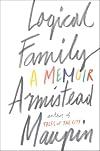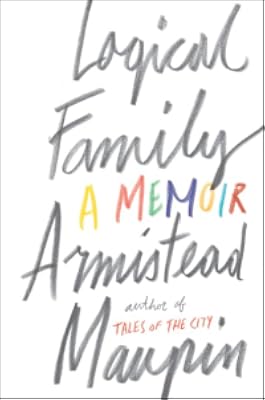
Logical Family: A Memoir
by Armistead Maupin
On This Page
Description
"A book for any of us, gay or straight, who have had to find our family. Maupin is one of America's finest storytellers, and the story of his life is a story as fascinating, as delightful and as compulsive as any of the tales he has made up for us."—Neil Gaiman"I fell in love with Maupin's effervescent Tales of the City decades ago, and his genius turn at memoir is no less compelling. Logical Family is a must read."—Mary Karr
In this long-awaited memoir, the beloved author of the show more bestselling Tales of the City series chronicles his odyssey from the old South to freewheeling San Francisco, and his evolution from curious youth to ground-breaking writer and gay rights pioneer. Also included is an exclusive conversation between Maupin and bestselling author Neil Gaiman.
Armistead Maupin was born in the mid-twentieth century and raised in the heart of conservative North Carolina, Armistead Maupin lost his virginity to another man "on the very spot where the first shots of the Civil War were fired." Realizing that the South was too small for him, this son of a traditional lawyer packed his earthly belongings into his Opel GT (including a beloved portrait of a Confederate ancestor), and took to the road in search of adventure. It was a journey that would lead him from a homoerotic Navy initiation ceremony in the jungles of Vietnam to that strangest of strange lands: San Francisco in the early 1970s.
Reflecting on the profound impact those closest to him have had on his life, Maupin shares his candid search for his "logical family," the people he could call his own. "Sooner or later, we have to venture beyond our biological family to find our logical one, the one that actually makes sense for us," he writes. "We have to, if we are to live without squandering our lives." From his loving relationship with his palm-reading Grannie who insisted Maupin was the reincarnation of her artistic bachelor cousin, Curtis, to an awkward conversation about girls with President Richard Nixon in the Oval Office, Maupin tells of the extraordinary individuals and situations that shaped him into one of the most influential writers of the last century.
Maupin recalls his losses and life-changing experiences with humor and unflinching honesty, and brings to life flesh-and-blood characters as endearing and unforgettable as the vivid, fraught men and women who populate his enchanting novels. What emerges is an illuminating portrait of the man who depicted the liberation and evolution of America's queer community over the last four decades with honesty and compassion—and inspired millions to claim their own lives.
. show less
Tags
Recommendations



















Member Recommendations

Member Reviews
Armistead Maupin is a surprisingly divisive figure: people like or dislike his books for obvious political reasons, of course, but also for the same sort of reasons that readers disagree about Dickens: he is a writer who produced most of his work as serials under heavy time-pressure, relying on a superb natural storytelling ability, deliberately terrible jokes, topical references and sometimes rather too facile sentimentality. If you first came across Tales of the city at a time when there was no positive, funny light fiction featuring LGBT characters (as I did), you might be inclined to regard it as wonderful; if you saw it on TV and then went back to read the books you might just as easily dismiss it as too glossy, romantic and show more American. I think he's one of the great modern authors of light fiction, up there with Wodehouse and Alexander McCall Smith, but I know a lot of my (gay) friends just don't see the point of him at all...
It's possibly a bit more interesting if you know something about Maupin's background - he comes from a very conservative family in Raleigh, North Carolina, where his ancestors included a slave-owning Confederate general, and his father sounds like the sort of lawyer who would happily have appeared for the prosecution in To kill a mockingbird. Maupin - although he was well aware of his sexuality from an early age - started out in life trying to fulfil the hopes of his family: he served as a junior naval officer in Vietnam, his first employer in his chosen civilian profession of journalism was Jesse Helms, and he volunteered for a veterans' "aid" project in Vietnam set up by Nixon's spin-doctors to try to discredit the anti-war movement (there's a gloriously creepy photo of him shaking hands with Nixon). It wasn't until he moved to San Francisco in the early 70s that he came out as a gay man and realised that the political movements he had been supporting were precisely those which were oppressing him and making it impossible for him to live his true identity.
A large part of Maupin's reasons for publishing this memoir now, in the Age of Trump, seems to be to take us through this painful process of awakening again and remind us of how easy it is to fall unreflectingly into accepting the (sometimes hateful) ideas that we see around us in the communities where we grow up.
Of course, this isn't the first time that Maupin has discussed his background: he's often used his relationship with his family and "the South" in his fiction, and he's always been open about his background in the press. In 1998, the British novelist Patrick Gale produced a very nice little biography of Maupin commissioned by Absolute Press for their excellent "Outlines" series of LGBT lives. By Gale's own account, they spent a hilarious few days together going over Maupin's past life in a series of interviews, which Gale eventually condensed into the 150-page format the series called for.
Having read that, I wasn't expecting to learn anything radically new from Maupin's own recollections of his early life: not surprisingly, what he says about himself in Logical family largely covers the same ground. Maupin reserves the right, in an "Author's Note" in the new book, to "plagiarise myself", and does so copiously: a lot of the jokes and phrasing are very close to the wording that Gale transcribed from their interviews nearly twenty years ago. But of course, there's a lot more background detail, and a few slight changes of emphasis - I felt that Maupin's father was presented as less of an ogre, more of a slightly tragic buffoon who committed himself to an indefensible value-system and was subsequently unable to go back even when he knew that what he was saying was absurd, for instance. And Maupin's time in the navy is seen less as a foolish aberration and more as a youthful adventure that taught him things about comradeship, subversion, and how male communities work.
Maupin wonders from time to time whether his professional storytelling instinct is leading him to "improve" on incidents in his past - there's a wonderful side-note about a discussion with the historian Douglas Brinkley, who, having been told the anecdote about Maupin's conversation with Nixon in the Oval Office, checks it out on Nixon's notorious tapes ("the tapes", Maupin calls them) and discovers that it was even funnier - in a creepy kind of way - than Maupin tells it.
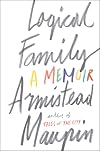
There is also rather more here about his reactions to the killing of Harvey Milk, whom he seems to have known quite well. This is one event that Maupin obviously felt he was too close to to be able to bring it into his fiction - I was always a little puzzled about why he used the (more obscure, to most of us) Jonestown massacre in a plot without any mention of Milk. (I don't think the cover designer of this book can have noticed the comment about Milk disregarding a death-threat because it was written in crayon, though...)
An interesting, funny, and very well written memoir, as you would expect - probably something to read for the pleasure of the text rather than for the information it brings. show less
It's possibly a bit more interesting if you know something about Maupin's background - he comes from a very conservative family in Raleigh, North Carolina, where his ancestors included a slave-owning Confederate general, and his father sounds like the sort of lawyer who would happily have appeared for the prosecution in To kill a mockingbird. Maupin - although he was well aware of his sexuality from an early age - started out in life trying to fulfil the hopes of his family: he served as a junior naval officer in Vietnam, his first employer in his chosen civilian profession of journalism was Jesse Helms, and he volunteered for a veterans' "aid" project in Vietnam set up by Nixon's spin-doctors to try to discredit the anti-war movement (there's a gloriously creepy photo of him shaking hands with Nixon). It wasn't until he moved to San Francisco in the early 70s that he came out as a gay man and realised that the political movements he had been supporting were precisely those which were oppressing him and making it impossible for him to live his true identity.
A large part of Maupin's reasons for publishing this memoir now, in the Age of Trump, seems to be to take us through this painful process of awakening again and remind us of how easy it is to fall unreflectingly into accepting the (sometimes hateful) ideas that we see around us in the communities where we grow up.
Of course, this isn't the first time that Maupin has discussed his background: he's often used his relationship with his family and "the South" in his fiction, and he's always been open about his background in the press. In 1998, the British novelist Patrick Gale produced a very nice little biography of Maupin commissioned by Absolute Press for their excellent "Outlines" series of LGBT lives. By Gale's own account, they spent a hilarious few days together going over Maupin's past life in a series of interviews, which Gale eventually condensed into the 150-page format the series called for.
Having read that, I wasn't expecting to learn anything radically new from Maupin's own recollections of his early life: not surprisingly, what he says about himself in Logical family largely covers the same ground. Maupin reserves the right, in an "Author's Note" in the new book, to "plagiarise myself", and does so copiously: a lot of the jokes and phrasing are very close to the wording that Gale transcribed from their interviews nearly twenty years ago. But of course, there's a lot more background detail, and a few slight changes of emphasis - I felt that Maupin's father was presented as less of an ogre, more of a slightly tragic buffoon who committed himself to an indefensible value-system and was subsequently unable to go back even when he knew that what he was saying was absurd, for instance. And Maupin's time in the navy is seen less as a foolish aberration and more as a youthful adventure that taught him things about comradeship, subversion, and how male communities work.
Maupin wonders from time to time whether his professional storytelling instinct is leading him to "improve" on incidents in his past - there's a wonderful side-note about a discussion with the historian Douglas Brinkley, who, having been told the anecdote about Maupin's conversation with Nixon in the Oval Office, checks it out on Nixon's notorious tapes ("the tapes", Maupin calls them) and discovers that it was even funnier - in a creepy kind of way - than Maupin tells it.
There is also rather more here about his reactions to the killing of Harvey Milk, whom he seems to have known quite well. This is one event that Maupin obviously felt he was too close to to be able to bring it into his fiction - I was always a little puzzled about why he used the (more obscure, to most of us) Jonestown massacre in a plot without any mention of Milk. (I don't think the cover designer of this book can have noticed the comment about Milk disregarding a death-threat because it was written in crayon, though...)
An interesting, funny, and very well written memoir, as you would expect - probably something to read for the pleasure of the text rather than for the information it brings. show less
If you've known and followed Armistead Maupin's Tales of the City books (and the TV serials made from them), then you probably already have read about, or heard about, some of his life stories that he covers in this book.
Even so, to have the chance to hear him tell these stories in his own words, in his own voice, was quite special. Maupin has an uplifting and affirming way of writing, that is so accessible and so pleasant to read. It that style coupled with his sincerity and honesty that captured readers from the initial serialized stories in the San Francisco Chronicle, and that made all of his Tales books such a joy to read. Like many gay men of my age these books hold a special place in my heart and bring back many memories of my show more own coming out and my life journey since.
That sincere, honest, pleasant style carries through here to the stories of his own life. I can't recommend this one enough - best in audiobook format. show less
Even so, to have the chance to hear him tell these stories in his own words, in his own voice, was quite special. Maupin has an uplifting and affirming way of writing, that is so accessible and so pleasant to read. It that style coupled with his sincerity and honesty that captured readers from the initial serialized stories in the San Francisco Chronicle, and that made all of his Tales books such a joy to read. Like many gay men of my age these books hold a special place in my heart and bring back many memories of my show more own coming out and my life journey since.
That sincere, honest, pleasant style carries through here to the stories of his own life. I can't recommend this one enough - best in audiobook format. show less
A must-read if you're a Maupin fan, but this memoir should have a lot of appeal for readers who aren't familiar with his Tales of the City series. The first half of the book is a surprisingly openhearted portrait of Maupin's dysfunctional upper-crust Raleigh family, and of Maupin's young adulthood as a insecure, sheltered neoconservative estranged from his own sexuality. The second half chronicles his creative and personal life in San Francisco, where Maupin assembles a new identity and chosen family and witnesses the rollercoaster of San Francisco history in the 70s and 80s.
This book is unabashedly, gloriously namedropp-y (the clickbait title would be, "You'll Never Guess Which North Carolina Conservative was Armistead Maupin's First show more Boss"). Yet Maupin delivers a book with as much substance as gossip, a romping narrative that has a lot to say about Southern, and American, identity.
The audiobook is read by the author, and beautifully so. I'll have to keep an eye out for book signings in this area; I'd love to meet him. Now if only I can find a time machine that can take me back to 1970s San Francisco.... show less
This book is unabashedly, gloriously namedropp-y (the clickbait title would be, "You'll Never Guess Which North Carolina Conservative was Armistead Maupin's First show more Boss"). Yet Maupin delivers a book with as much substance as gossip, a romping narrative that has a lot to say about Southern, and American, identity.
The audiobook is read by the author, and beautifully so. I'll have to keep an eye out for book signings in this area; I'd love to meet him. Now if only I can find a time machine that can take me back to 1970s San Francisco.... show less
Mostly funny anecdotes. A little self-indulgent. But I mostly enjoyed reading it.
I'm not certain if the gory details of how racist his parents and family were, and how he was when growing up (into his twenties), are productive? Slurs abound. Like, Armistead, I think you're trying to be honest and transparent about where you came from and what you used to believe, but did you ever have a black character in Tales or no? And the (literal) bed built by the enslaved people your ancestors owned, you still sleep comfortably in it?
I'm not certain if the gory details of how racist his parents and family were, and how he was when growing up (into his twenties), are productive? Slurs abound. Like, Armistead, I think you're trying to be honest and transparent about where you came from and what you used to believe, but did you ever have a black character in Tales or no? And the (literal) bed built by the enslaved people your ancestors owned, you still sleep comfortably in it?
Beautifully written autobiography that not only covers how he came to write the “Tales of the City” serial but a stunningly honest portrayal of a conservative southern boy becoming an outspoken gay icon. There are poetic passages that cement his standing as a treasured author.
Beautifully written. I loved its reminders of the importance of human connection, and loving people as they are without asking them to be the way you think they should be. I’ve had the good fortune of meeting Maupin several times on his book tours, and he’s a brilliant, kind, humble human being, well-deserving of the recognition given for the way he has changed our culture.
I loved Armistead MAupin's Tales of the City series,and I'm happy to say that I loved his memoir of growing up in a conservative southern family and finding his own way to the truth of his life in San Francisco just as much. It's funny, sad, heartwarming and, ultimately, optimistic about the human condition. We need more people like him gracing out planet.
Members
- Recently Added By
Published Reviews
ThingScore 75
Logical Family, like all of Maupin’s books, is best read quickly, and just once. That’s entertainment.
added by thorold
Lists

Sexuality & Gender
160 works; 3 members
Author Information

40+ Works 24,079 Members
Armistead Maupin was born in Washington D.C. on May 13, 1944. He received a B.A. from the University of North Carolina at Chapel Hill. He served as a naval officer in the Mediterranean and with the River Patrol Force in Vietnam. He worked as a reporter for a newspaper in Charleston, South Carolina, before being assigned to the San Francisco bureau show more of the Associated Press in 1971. In 1976, he launched his groundbreaking Tales of the City serial in the San Francisco Chronicle. The series describes a group of characters that live together in a boarding house in San Francisco. Eventually, these Tales were collected into a series of six novels. In 1993, the British Broadcasting Company adapted them for a television series that aired on PBS in 1994. His other works include Maybe the Moon, Michael Tolliver Lives, and The Days of Anna Madrigal. The Night Listener was adapted into a movie starring Robin Williams and Toni Collette. (Bowker Author Biography) show less
Awards and Honors
Distinctions
The Guardian Book of the Day (2017-09-27)
Notable Lists
Common Knowledge
- Canonical title*
- Mon autre famille
- Original title
- Logical Family
- Original publication date
- 2017
- People/Characters
- Armistead Maupin; Christopher Isherwood; Ian McKellen; Harvey Milk; Rock Hudson
- Important places
- Raleigh, North Carolina, USA; San Francisco, California, USA; Vietnam
- Dedication
- For Christopher Turner,
my beloved husband - First words
- WHEN I WAS A BOY IN Raleigh I was afraid of being locked in Oakwood Cemetery overnight.
- Last words
- (Click to show. Warning: May contain spoilers.)Everything is fine at 28 Barbary Lane.
Your loving son,
Michael
*Some information comes from Common Knowledge in other languages. Click "Edit" for more information.
Classifications
Statistics
- Members
- 297
- Popularity
- 108,386
- Reviews
- 12
- Rating
- (4.16)
- Languages
- English, French
- Media
- Paper, Audiobook, Ebook
- ISBNs
- 21
- ASINs
- 6