
On This Page
Description
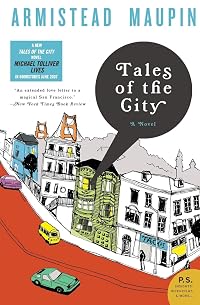
A naive young secretary forsakes Cleveland for San Francisco, tumbling headlong into a brave new world of laundromat lotharios and cutthroat debutantes.Tags
Recommendations




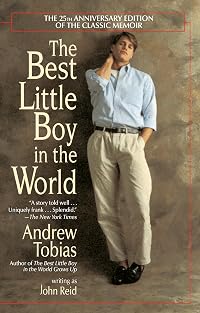
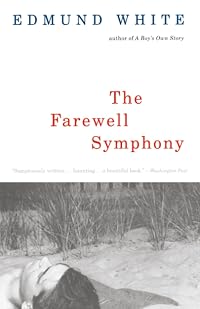

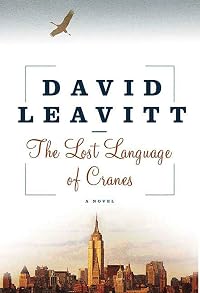
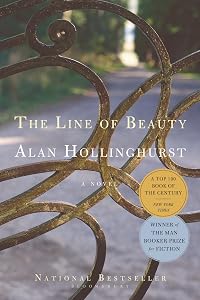



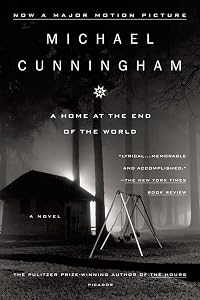
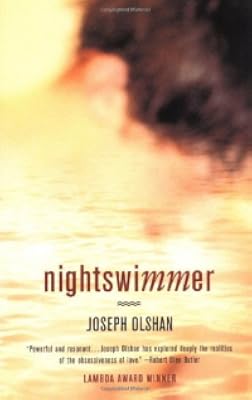
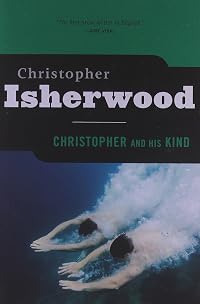

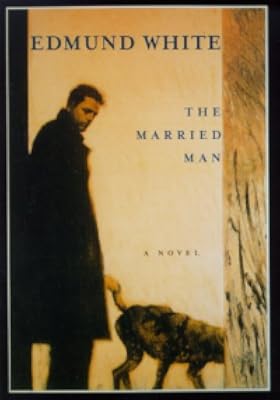
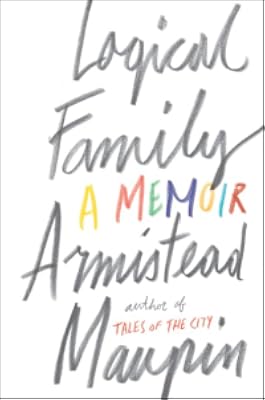
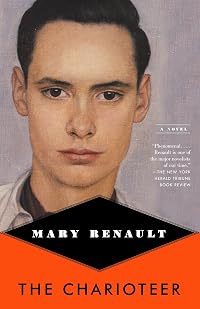
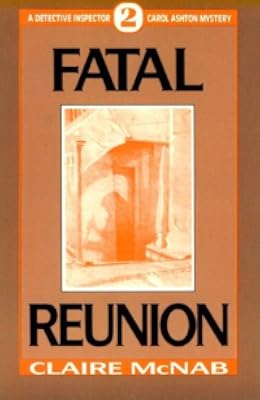
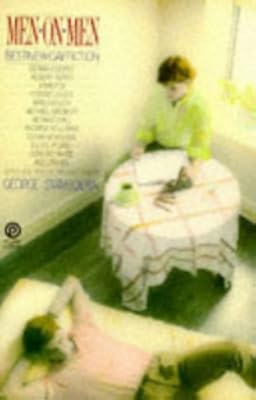



Member Recommendations
20
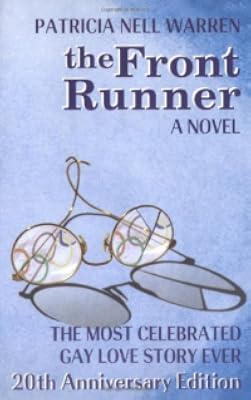
Jannes Tales of the City was the main inspiration for McCall Smith Wehen he decided to write Scotland Street. The two books have a lot in common, including the episodic format, the light-hearted tone and the premise of a house and it's tenants.
41
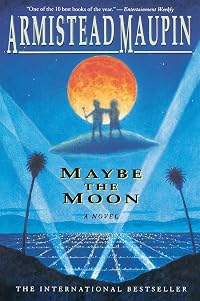
kraaivrouw Both books capture San Francisco in unique ways.
21
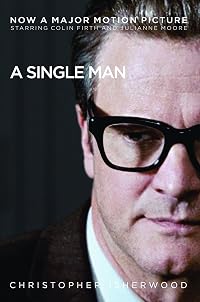
jonathankws Interlinked short stories set in and around an apartment block in 1930s Berlin. One of the short stories was the inspiration for the musical Cabaret.

by anonymous user

Member Reviews
my god, this was SO much fun.
camp, cheeky, sexy and full of drama. the characters all have weird names and there's a LOT of them but they all start to intersect and interact (and interfere) with each other's lives in a way that is totally delicious. i adored it and think it's kind of in the spirit of like queer as folk or the l word only better.
full of twists, turns, lightning-fast dialogue and such a beautiful love letter to san francisco.
a total delight!
camp, cheeky, sexy and full of drama. the characters all have weird names and there's a LOT of them but they all start to intersect and interact (and interfere) with each other's lives in a way that is totally delicious. i adored it and think it's kind of in the spirit of like queer as folk or the l word only better.
full of twists, turns, lightning-fast dialogue and such a beautiful love letter to san francisco.
a total delight!
Re-reading this makes you feel seriously old! At one stage in my life I practically knew the Tales of the city books by heart: I haven't looked at them for ages, but reading Mary Ann in autumn prompted me to dig them out again (and fire up my vintage VCR to watch the TV adaptation again as well).
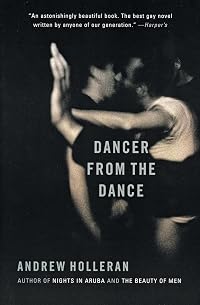
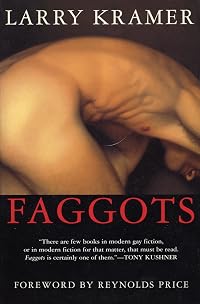
The thing you forget, especially if you have the TV series in mind, is that this isn't seventies nostalgia. It is The Seventies. Tales of the city came out in book form in 1978, the same year as Dancer from the dance and Faggots. While New York was inventing "gay writing", Maupin was writing about lesbian, gay and transsexual characters as though there was nothing about their sexuality that was the least bit more profound, spiritual, absurd, or show more grotesque than there was about the strange things that heterosexuals get up to. He was normalising the whole sodom-and-gomorah world of seventies San Francisco for his readers by writing about it in a superb pastiche romantic comedy style, heavily laced with references to the most down-to-earth bits of fifties American popular culture. And he got away with it! It's basically the same trick they use in The Simpsons: if you make the audience laugh, give them a bit of sentiment towards the end, and never bore them or pretend that you know better than they do, then you can discuss almost any subject.
It's a trick, but it takes a lot of skill, and in Maupin's case it would never have worked without his amazingly sharp dialogue. All those references to Hitchcock, Tennessee Williams and Noël Coward aren't there by accident: Maupin clearly has a very sharp eye for what works on stage and screen, and uses it to pare down his text to the absolute minimum. Brilliant stuff: he's definitely up there with writers like Kipling, Raymond Chandler and P.G. Wodehouse at the very top end of popular fiction. show less
The thing you forget, especially if you have the TV series in mind, is that this isn't seventies nostalgia. It is The Seventies. Tales of the city came out in book form in 1978, the same year as Dancer from the dance and Faggots. While New York was inventing "gay writing", Maupin was writing about lesbian, gay and transsexual characters as though there was nothing about their sexuality that was the least bit more profound, spiritual, absurd, or show more grotesque than there was about the strange things that heterosexuals get up to. He was normalising the whole sodom-and-gomorah world of seventies San Francisco for his readers by writing about it in a superb pastiche romantic comedy style, heavily laced with references to the most down-to-earth bits of fifties American popular culture. And he got away with it! It's basically the same trick they use in The Simpsons: if you make the audience laugh, give them a bit of sentiment towards the end, and never bore them or pretend that you know better than they do, then you can discuss almost any subject.
It's a trick, but it takes a lot of skill, and in Maupin's case it would never have worked without his amazingly sharp dialogue. All those references to Hitchcock, Tennessee Williams and Noël Coward aren't there by accident: Maupin clearly has a very sharp eye for what works on stage and screen, and uses it to pare down his text to the absolute minimum. Brilliant stuff: he's definitely up there with writers like Kipling, Raymond Chandler and P.G. Wodehouse at the very top end of popular fiction. show less
Maupin introduces us to a large ensemble cast of quirky, complex, and lovable (well, mostly) characters from all walks of life, building what feels like a very realistic microcosm of San Francisco in the mid-1970s. The story is a bit choppy due to extremely short chapter lengths -- this work was originally published as a newspaper serial -- but that same issue also becomes something of a strength, since it forces the author to be economical with his words. Description is minimal but precise, and characterization is accomplished mostly through sharp, often funny and just as frequently heartbreaking dialogue. Some of the coincidental meetings and frankly bizarre plot developments are a little far-fetched, but the breezy tone keeps you show more turning the pages. I love these characters, who are as real in my mind as any I've ever encountered. show less
Having done the unthinkable, and watched not one but two sets of the television show based on Armistead Maupin’s classic novels of San Francisco, it was about time that I actually read the tales that made Barberry Lane so famous. Like the adaptation, I was charmed by the quietness of Maupin’s writing style; his characters are lively, and their stories contain many comedic moments, but the overarching tone remains one imbued with a sense of gravitas. He could have easily tapped into the excitement of the disco-infused queer bars or the melo-drama of the numerous love triangles that emerge, but instead each scene maintains a sense of calm as we watch Mary Ann and her cast of friends from a certain distance. This style definitely kept show more me engaged throughout the tv shows, and it made the book a breeze to read, but I’m not sure I feel the same drive to continue reading. We get solid endings for some of the characters (and having jumped ahead to the latest Netflix show we’re privy to additional details), but by the final pages it is clear that Maupin is leaving himself plenty of room to carry on the stories in a number of exciting directions. For readers who got to explore his new San Francisco as it was being published, I can see their appetites being substantial for more, but in hindsight the stories sit as more of a testament to their time than as an enduring classic - though some consider Maupin’s place as one of the great queer American writers to be exactly that. I don’t disagree, since his work is lovely and paints a distinctly unique picture of queer life in America, I’m just not sure that his stories are able to leave the same impression on me as those who came later. Still an interesting read, and well worth picking up. show less
Tales of the City by Armistead Maupin is the first volume in a group of novels that consist of stories written originally in a serialized form that appeared as installments in the San Francisco Chronicle. In this volume, the stories were inspired by his observations of life in the city during the mid 1970’s and feature a group of people who are loosely interconnected, but the star of the book is the city of San Francisco.
There is a marvellous mix of characters from gay to straight, old to young, male to female. They are sympathetic, vibrant and realistic. Their stories run the range of emotions from playful to sentimental, humorous to touching. The author effortlessly carried me back to the 1970’s with a simple whiff of Charlie show more perfume, a mention of a movie called “Young Frankenstein” and a stray pamphlet encouraging one to vote for Jimmy Carter.
Like a small time capsule, Tales From the City captures that short period in San Francisco when the hippies had moved on and AIDS and HIV had yet to appear. Maupin captures the rhythms of the city that he writes about and with it’s authentic setting and whimsical stories, I enjoyed this book immensely. show less
There is a marvellous mix of characters from gay to straight, old to young, male to female. They are sympathetic, vibrant and realistic. Their stories run the range of emotions from playful to sentimental, humorous to touching. The author effortlessly carried me back to the 1970’s with a simple whiff of Charlie show more perfume, a mention of a movie called “Young Frankenstein” and a stray pamphlet encouraging one to vote for Jimmy Carter.
Like a small time capsule, Tales From the City captures that short period in San Francisco when the hippies had moved on and AIDS and HIV had yet to appear. Maupin captures the rhythms of the city that he writes about and with it’s authentic setting and whimsical stories, I enjoyed this book immensely. show less
This is a real trip. A trip back in time to a certain place. Maupin takes very normal people and reveals why they are wonderful. Their humanness shines. It was almost impossible to put down. I wonder if many of the 1970/San Francisco references would go over the heads of the current generation? The author took subject matter and people who could have had very dreary stories written about them, and instead gave them a heart-warming tale with honesty. A sort of "At Home in Mitford" for alternative lifestyle folks. I enjoyed this to the end and would happily read more by this author.
I still love it--I've loved it since it was lent to me in 1988--but some of it hasn't aged particularly well. That's okay with me; one of its best qualities is its very firm place in time, and the subsequent books carry that on. But I wonder if new readers will get out of it the same things I do just because I remember the 70s pretty well.
One thing I noticed this time is that Mary Ann is set up from the very beginning to be exactly who she turns out to be in Sure of You, which I haven't read since it was first published because... well... I hated who she turned out to be.I didn't remember until I got there how it ended, but now I remember that the last time I read it this bothered me too--does Mary Ann feel absolutely no show more responsibility to tell the authorities and get some help for Lexy (the little girl), even if it means she'll have to answer uncomfortable questions? Ugh. Even for the one of the Me Generation in the Me Decade, that seems pretty callous.
Anyway, even by the time I read it in 1988, it was pretty difficult to imagine moving to San Francisco and finding a place of your own. The people I knew who were moving out there then had multiple roommates and *still* paid more rent than I could even imagine affording. So even by the time I first read it, it had a nostalgic feel. Now, of course, it feels like (and is) a gentle, distant past that will never come around again. But I love to visit it from time to time in these books. show less
One thing I noticed this time is that Mary Ann is set up from the very beginning to be exactly who she turns out to be in Sure of You, which I haven't read since it was first published because... well... I hated who she turned out to be.
Anyway, even by the time I read it in 1988, it was pretty difficult to imagine moving to San Francisco and finding a place of your own. The people I knew who were moving out there then had multiple roommates and *still* paid more rent than I could even imagine affording. So even by the time I first read it, it had a nostalgic feel. Now, of course, it feels like (and is) a gentle, distant past that will never come around again. But I love to visit it from time to time in these books. show less
Members
- Recently Added By
Published Reviews
Un petit bijou d'humour et d'humanisme.
added by Ariane65
Lists

The Guardian's 1000 Novels Everyone Must Read
1,005 works; 547 members

PBS The Great American Read
100 works; 21 members

BBC's 100 Novels That Shaped Our World
100 works; 22 members

Books Set in California
112 works; 15 members

Best Friendship Stories
205 works; 16 members

Best Lesbian Fiction (And Narrative Non-Fiction)
155 works; 36 members

Houses and Buildings as Characters in Fiction
182 works; 29 members
The American Experience
173 works; 18 members

1970s
657 works; 23 members

BBC Radio 4 Bookclub
340 works; 13 members

Blue Pyramid 1,276 Best Books of All Time
1,248 works; 32 members

Best books made into television
66 works; 4 members
Ten Books That Have Stayed With Me
160 works; 30 members

Best LGBT Fiction
144 works; 25 members

Urban Fiction
74 works; 7 members

A Novel Cure
742 works; 23 members

Transgender Characters
91 works; 5 members

Good LGBT fiction for LGBT folk and friends
537 works; 50 members

Favorite Books from the 1970s
28 works; 3 members

Books Set in San Francisco
31 works; 7 members

Books Read in 2022
5,166 works; 114 members

Books Read in 2009
464 works; 11 members
American Lit for Eng 11 Research Project
368 works; 6 members
Read These Too
458 works; 9 members

Books Read in 2013
1,630 works; 51 members
San Francisco One City One Book Selections
15 works; 2 members

Swinging Seventies
255 works; 17 members

Mustich's 1000 Books to Read Before You Die: A Life Changing List
1,001 works; 19 members

Books Read in 2024
4,623 works; 126 members

BBC World Book Club
265 works; 5 members

Books We Love to Reread
688 works; 296 members

Retrospective of 20th- and 21st-century literature
154 works; 1 member

Our Favorite Comfort Reads
334 works; 200 members
Books We Want To Read Again For The First Time
384 works; 160 members

Books Read in 2019
4,052 works; 110 members
Author Information

40+ Works 24,036 Members
Armistead Maupin was born in Washington D.C. on May 13, 1944. He received a B.A. from the University of North Carolina at Chapel Hill. He served as a naval officer in the Mediterranean and with the River Patrol Force in Vietnam. He worked as a reporter for a newspaper in Charleston, South Carolina, before being assigned to the San Francisco bureau show more of the Associated Press in 1971. In 1976, he launched his groundbreaking Tales of the City serial in the San Francisco Chronicle. The series describes a group of characters that live together in a boarding house in San Francisco. Eventually, these Tales were collected into a series of six novels. In 1993, the British Broadcasting Company adapted them for a television series that aired on PBS in 1994. His other works include Maybe the Moon, Michael Tolliver Lives, and The Days of Anna Madrigal. The Night Listener was adapted into a movie starring Robin Williams and Toni Collette. (Bowker Author Biography) show less
Some Editions
Awards and Honors
Distinctions
Notable Lists
Series

Belongs to Publisher Series
Work Relationships
Is contained in
Contains
Common Knowledge
- Canonical title
- Tales of the City
- Original title
- Tales of the City
- Original publication date
- 1978
- People/Characters
- Michael Tolliver; Mary Ann Singleton; Brian Hawkins; Anna Madrigal; Mona Ramsey; Jon Fielding (show all 9); DeDe Day; Beauchamp Day; Edgar Halcyon
- Important places
- San Francisco, California, USA
- Related movies
- Tales of the City (1993 | IMDb)
- Epigraph
- It's an odd thing, but anyone who disappears is said to be seen in San Francisco.
--Oscar Wilde - Dedication
- For my mother and father and my family at The Duck House
- First words
- Mary Ann Singleton was twenty-five years old when she saw San Francisco for the first time.
- Quotations
- «Personne n'est heureux. Et puis qu'est-ce qu'être heureux ? Puisque le bonheur s'arrête dès qu'on rallume la lumière.»
[Nobody's happy. What's happy? Happiness is over when the lights come on.
Anna Madrigal... (show all) replies: "Screw that. Wash your mouth out. Who taught you that half-assed existential drivel?"]
«Parfois j'ai le sentiment que le bon Dieu a mis les femmes sur cette terre pour rappeler aux hommes l'heure des cocktails.»
[Sometimes I think God put women on this earth to remind men of cocktail parties.]
«Noël est une conspiration pour bien faire sentir aux célibataires qu'ils sont seuls.»
[Christmas is a conspiracy to make single people feel lonely]
«La nuit de Noël est la plus horrible des nuits pour rester seul au lit, car le réveil ne ressemble pas du tout aux pubs Kodak avec des gosses en pantoufles... Ca ressemble à n'importe quelle autre journée de l'année !Â... (show all)»
[Christmas Eve is the most horrible night of the year to go to bed alone . . . because when you wake up it's not going to be one of the Kodak commercials with kids in slippers . . . It's going to be just like any other goddamned day of the year!]
Il y a de meilleurs moyens que le sexe pour créer des liens profonds. Et durables.
["There are better ways than sex to create deep bonds. And sustainable." {online translation}] - Last words
- (Click to show. Warning: May contain spoilers.)She stood there for a moment, humming to herself, then removed a joint from a tortoise-shell cigarette case and laid it gently on the grave.
(Click to show. Warning: May contain spoilers.)"Have fun," she smiled. "It's Colombian." - Publisher's editor*
- Jean-Claude Zylberstein
- Blurbers
- White, Edmund; Tan, Amy; Isherwood, Christopher; McCauley, Stephen
- Original language
- English
*Some information comes from Common Knowledge in other languages. Click "Edit" for more information.
Classifications
Statistics
- Members
- 5,392
- Popularity
- 2,490
- Reviews
- 113
- Rating
- (3.86)
- Languages
- 10 — Danish, Dutch, English, Finnish, French, German, Italian, Portuguese, Spanish, Swedish
- Media
- Paper, Audiobook, Ebook
- ISBNs
- 76
- UPCs
- 2
- ASINs
- 33