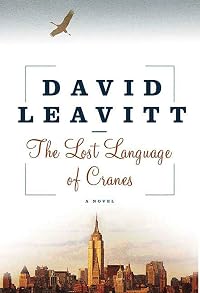
The Lost Language of Cranes
by David Leavitt
On This Page
Description
Set in the 1980s against the backdrop of a swiftly gentrifying Manhattan, The Lost Language of Cranes tells the story of twenty-five-year-old Philip Benjamin, who realizes he must come out to his parents after falling in love for the first time with a man. Philip's parents are facing their own problems: pressure from developers and the loss of their longtime home. But the real threat to the family is Philip's father's own struggle with his suppressed homosexuality, realized only in Sunday show more afternoon visits to gay porn theaters. Philip's revelation to his parents leads his father to a point of crisis and provokes changes that forever alter the landscape of the family's lives. show lessTags
Recommendations



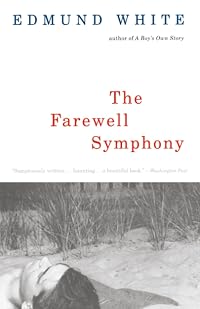
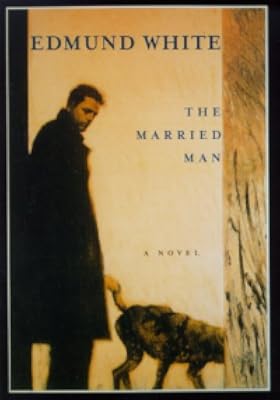
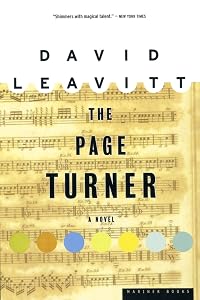
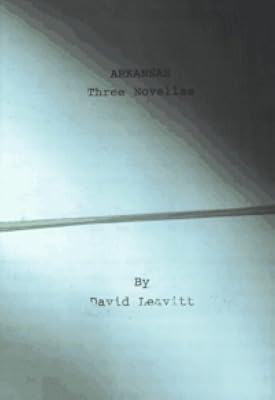





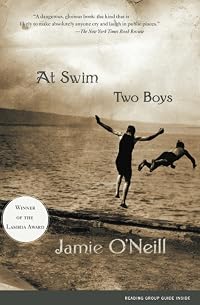


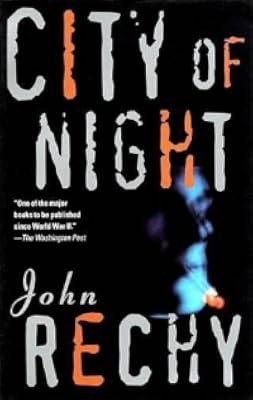
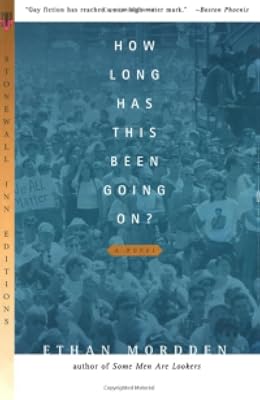
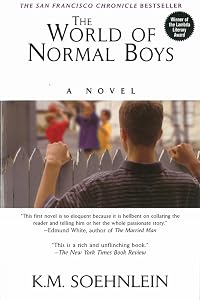



Member Recommendations

Member Reviews
The novel centers around several different gay men in 1980s New York City. Philip is "out" with his friends, but afraid to tell his parents that he's gay. Philip's lover, Eliot, is completely comfortable with who he is, but this makes it surprisingly difficult for Philip and Eliot to relate to each other. Philip's father, Owen, is meanwhile coming to some realizations of his own about his desires, as well as his ability and willingness to continue suppressing them. The era plays a big role in the story, both because it was a time when the older generation started realizing there might be other avenues open to them besides denial and living a "normal" life, and because the specter of AIDS looms large.
Communication gaps, and how we work show more to make ourselves understood is a recurring theme. Another is the role of confession, specifically whether revealing your secrets is a selfish act or a means to draw you closer to someone. One of the things I enjoyed about the book was that Rose, Philip's mother and Owen's wife, is as fully formed as the other characters. It would be easy to only see her through the filter of the men in her life, but she is a complete person. She faces a changing world in the city in addition to the undercurrents in her family. I found Owen the most difficult to sympathize with, but this may be a generational issue. In the book as a whole, I enjoyed the lack of easy answers or pat emotions.
Recommended for: people interested in stories of family dynamics, anyone who's ever felt alienated.
Quote: "Such efforts of affection were nothing for him; his life had been full of them, pats and caresses and casual kisses, whereas for Philip to touch a hand to a cheek was an action of such magnitude that it had to be counted, treasured, preserved. It radiated power; it demanded bravery. Philip understood that there were people in the world like Eliot for whom love and sex came easy, without active solicitation, like a strong wind to which they only had to turn their faces and it would blow over them. He also understood he was not one of those people." show less
Communication gaps, and how we work show more to make ourselves understood is a recurring theme. Another is the role of confession, specifically whether revealing your secrets is a selfish act or a means to draw you closer to someone. One of the things I enjoyed about the book was that Rose, Philip's mother and Owen's wife, is as fully formed as the other characters. It would be easy to only see her through the filter of the men in her life, but she is a complete person. She faces a changing world in the city in addition to the undercurrents in her family. I found Owen the most difficult to sympathize with, but this may be a generational issue. In the book as a whole, I enjoyed the lack of easy answers or pat emotions.
Recommended for: people interested in stories of family dynamics, anyone who's ever felt alienated.
Quote: "Such efforts of affection were nothing for him; his life had been full of them, pats and caresses and casual kisses, whereas for Philip to touch a hand to a cheek was an action of such magnitude that it had to be counted, treasured, preserved. It radiated power; it demanded bravery. Philip understood that there were people in the world like Eliot for whom love and sex came easy, without active solicitation, like a strong wind to which they only had to turn their faces and it would blow over them. He also understood he was not one of those people." show less
The Lost Language of Cranes focuses on a very specific time and place in queer history, and as a result any given reader's mileage may vary. The story focuses on the Benjamin family, consisting of parents Owen and Rose and son Philip. Owen and Rose are in danger of losing their apartment, and Owen and Philip are both closeted gay men living in 1980s New York.
I want to start by saying that I enjoyed the read overall, because I did indeed finish it. The story was interesting, and I appreciated the sheer amount of introspection we're given from all of the different perspectives. The very last scene is brilliantly written, and I think it is an image I'll be thinking about for days to come.
I say all this first because I have some big show more gripes that I'll be going into now.
There is an additional subplot about a Black lesbian named Jerene that, frankly, does not get enough time in the spotlight. There is so much more that Leavitt could have done with her and her story, but as it is, it just seems like it was thrown in as a way to have additional representation (and to explain the title of the book). It feels like there was a half-hearted attempt to tie Jerene's story in with Philip's, but it ultimately felt like she was playing the role of the main character's boy-trouble confidant, which, ew.
Rose, Owen's wife and Philip's mother, becomes intolerable toward the last third or so of the book. It made me want to throw my book at the wall with how much I despised her. This is all fine, but Leavitt seems to be trying to gain her some sympathy points toward the very end, which - hell no. She's an awful, selfish person, and she doesn't deserve a redemption arc, as flimsy as this one is.
Because this book was written in the 80s - the same time in which the book takes place - there are things that readers today may struggle with, internalized homophobia chief among them. I'm an advocate for reading with the time and place in mind, but others may not be able to do so. That's worth keeping in mind before checking this one out.
All in all, it's clear that Leavitt is a good writer, and the use of scene and character is great; I'd be interested in reading Leavitt's other work. I just wish the women were treated a little differently than they are here. show less
I want to start by saying that I enjoyed the read overall, because I did indeed finish it. The story was interesting, and I appreciated the sheer amount of introspection we're given from all of the different perspectives. The very last scene is brilliantly written, and I think it is an image I'll be thinking about for days to come.
I say all this first because I have some big show more gripes that I'll be going into now.
There is an additional subplot about a Black lesbian named Jerene that, frankly, does not get enough time in the spotlight. There is so much more that Leavitt could have done with her and her story, but as it is, it just seems like it was thrown in as a way to have additional representation (and to explain the title of the book). It feels like there was a half-hearted attempt to tie Jerene's story in with Philip's, but it ultimately felt like she was playing the role of the main character's boy-trouble confidant, which, ew.
Rose, Owen's wife and Philip's mother, becomes intolerable toward the last third or so of the book. It made me want to throw my book at the wall with how much I despised her. This is all fine, but Leavitt seems to be trying to gain her some sympathy points toward the very end, which - hell no. She's an awful, selfish person, and she doesn't deserve a redemption arc, as flimsy as this one is.
Because this book was written in the 80s - the same time in which the book takes place - there are things that readers today may struggle with, internalized homophobia chief among them. I'm an advocate for reading with the time and place in mind, but others may not be able to do so. That's worth keeping in mind before checking this one out.
All in all, it's clear that Leavitt is a good writer, and the use of scene and character is great; I'd be interested in reading Leavitt's other work. I just wish the women were treated a little differently than they are here. show less
Compelling study of a family living in early 80's Manhattan. The characters are largely sympathetic, the writing draws one right in, and Leavitt has an enviable way of marking details so that they are both fascinating and telling. There was, however, a strong sense that these characters live lives in which most actions are continuous and repeated and important thoughts and emotions occur often but at no particular, specific time. It is as if they live constantly in the past imperfective, and while I'm sure that was intentional and pointed, it did became tiresome by the end of the book.
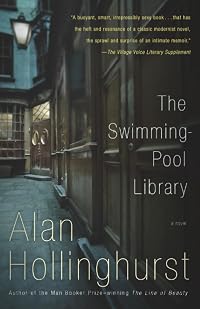
I always find it hard to review a two-star book, because the inevitable question is 'well why did you read it?' I read this because it was sort of hinted to me that Leavitt is a kind of American Alan Hollinghurst. However, his writing lacks the grace and style of Hollinghurst, and his characters lack the depth and complexity.
Essentially this is a book about miserable people written in lifeless prose. As a contrast, I'm reading Howard Jacobson at the moment, who writes about miserable people with sparkling, witty prose and it makes all the difference.
I did wonder as I read it if this book has just aged badly, and that at the time of writing it could get away with its dead prose and maudlin world view because it had political currency. show more However, there are many positive reviews on here, so I guess it just didn't provide that specific thing that separates my taste from that of many others. show less
Essentially this is a book about miserable people written in lifeless prose. As a contrast, I'm reading Howard Jacobson at the moment, who writes about miserable people with sparkling, witty prose and it makes all the difference.
I did wonder as I read it if this book has just aged badly, and that at the time of writing it could get away with its dead prose and maudlin world view because it had political currency. show more However, there are many positive reviews on here, so I guess it just didn't provide that specific thing that separates my taste from that of many others. show less
A well-written novel. Not quite a coming-of-age novel, but rather a coming-to-terms novel detailing the main character's sexual maturation, his decision to reveal his homosexuality to his parents, and the ramifications of the announcement. Although the story line may now seem dated or mundane, the very ordinariness lends a certain sweetness to the story. Especially since it is intertwined with the background of the quickly gentrifying NYC of the 1980s and the effect of change on longtime habits & modes of being of the characters.
I wasn't impressed with this one. Leavitt has a tendency to tell us what's happening, then take three steps backward to tell us what led up to that happening, filling in the even earlier backstory along the way. The result is that you read 10 pages to find out: Owen is walking somewhere. His wife is home working (and they have to either buy their apartment or move, and they have a grown son, here's what his apartment is like, and here's what they talked about when she had lunch with him one time and then she took a cab ride but that was another day because now we're back in the apartment hearing about how her husband was gone when she woke up and now it's page 14 and she's working, like she was on page 4, and she's going to go for a show more walk.) Then we meet the son and his lover, but now we're going back 3 weeks to read the story of how they met.
Novels don't have to be completely linear, but I began to feel like I was floundering around inside this one, trying to find the story, trying to figure out if anything was actually going to happen that related to the situation the author chose to begin his novel with. (It does, but by the time it did I cared less than I had at the beginning.)
Some of the dialogue seems contrived. Phillip sounds like a bad parody of a mental health counselor: "I miss her. I feel very sad about it." And some of the conversations between father and son toward the end of the book, I just found impossible to swallow, which in turn made the relationship seem false. Since that relationship was a pivotal part of the novel, it was disappointing to say the least. show less
Novels don't have to be completely linear, but I began to feel like I was floundering around inside this one, trying to find the story, trying to figure out if anything was actually going to happen that related to the situation the author chose to begin his novel with. (It does, but by the time it did I cared less than I had at the beginning.)
Some of the dialogue seems contrived. Phillip sounds like a bad parody of a mental health counselor: "I miss her. I feel very sad about it." And some of the conversations between father and son toward the end of the book, I just found impossible to swallow, which in turn made the relationship seem false. Since that relationship was a pivotal part of the novel, it was disappointing to say the least. show less
Set in the 1980s against the backdrop of a swiftly gentrifying Manhattan, The Lost Language of Cranes tells the story of twenty-five-year-old Philip, who realizes he must come out to his parents after falling in love for the first time with a man. Philip's parents are facing their own crisis: pressure from developers and the loss of their longtime home. But the real threat to this family is Philip's father's own struggle with his latent homosexuality, realized only in his Sunday afternoon visits to gay porn theaters. Philip's admission to his parents and his father's hidden life provoke changes that forever alter the landscape of their worlds.
Members
- Recently Added By
Lists

1001 Books You Must Read Before You Die
1,448 works; 1,136 members

Best Lesbian Fiction (And Narrative Non-Fiction)
155 works; 36 members

1980s
356 works; 23 members

The American Experience
173 works; 18 members

Books With Interesting Titles
173 works; 14 members
1,001 BYMRBYD Concensus
723 works; 27 members

Best LGBT Fiction
144 works; 25 members

Five star books
1,767 works; 110 members

Top Five Books of 2012
55 works; 11 members

Good LGBT fiction for LGBT folk and friends
553 works; 52 members

First Novels
373 works; 17 members
Books Read in 2012
816 works; 34 members
Author Information

59+ Works 8,792 Members
David Leavitt's first collection of stories, "Family Dancing," was a finalist for both the National Book Critics Circle Award & the PEN/Faulkner Prize. "The Lost Language of Cranes" was made into a BBC film, & "While England Sleeps" was shortlisted for the Los Angeles Times Fiction Prize. Leavitt is also the author of "Equal Affections," "A Place show more I've Never Been," "Arkansas," & "The Page Turner." With Mark Mitchell, he coedited "The Penguin Book of Short Stories" & "The Pages Passed from Hand to Hand" & cowrote "Italian Pleasures." He is recipient of fellowships from the John Simon Guggenheim Foundation & the National Endowment for the Arts. He divides his time between Italy and Florida. (Bowker Author Biography) show less
Some Editions
Awards and Honors
Series
Belongs to Publisher Series
Work Relationships
Has the adaptation
Common Knowledge
- Canonical title
- The Lost Language of Cranes
- Original title
- The Lost Language of Cranes
- Original publication date
- 1986
- People/Characters
- Philip Benjamin; Owen Benjamin; Rose Benjamin; Eliot Abrams; Jerene Parks; Brad Robinson
- Important places
- New York, New York, USA; Venice, Veneto, Italy
- Related movies
- The lost language of cranes (1991)
- Epigraph
- Forgive me if you read this ...
I had gone so long without loving,
I hardly knew what I was thinking.
- James Merrill, "Days of 1964" - Dedication
- In memory of my mother, Gloria Rosenthal Leavitt
- First words
- Early on a rainy Sunday afternoon in November a man was hurrying down Third Avenue, past closed and barred florist shops and newsstands, his hands stuffed into his pockets and his head bent against the wind.
- Quotations
- "Hello," Philip said. "This is Philip."
"Philip, it's your father."
"I'm afraid I can't come to the phone right now, but if you'll leave me a message when you hear the beep - "
"Fag, fag, fag, your father is a goddam... (show all)ned fag," Owen screamed into the phone.
" - happy to call you back as soon as I can."
"Fag," Owen said morosely.
"Thank you for calling."
"Fag father of fag son," Owen said.
The beep sounded.
Owen hung up. - Last words
- (Click to show. Warning: May contain spoilers.)Philip stepped past him into the kitchen. He brushed his teeth, watched the brush move back and forth in the mirror. Then he rinsed his mouth and stood in the entry to the kitchen before his father's prone body. He would lie awake for a long time, he knew, looking at Owen's white ankles in the bright moonlight.
- Original language
- English
- Canonical DDC/MDS
- 813.54
- Canonical LCC
- PS3562.E2618
Classifications
Statistics
- Members
- 1,389
- Popularity
- 17,160
- Reviews
- 23
- Rating
- (3.71)
- Languages
- 10 — Catalan, Dutch, English, French, German, Greek, Italian, Polish, Spanish, Swedish
- Media
- Paper, Audiobook, Ebook
- ISBNs
- 42
- UPCs
- 1
- ASINs
- 15