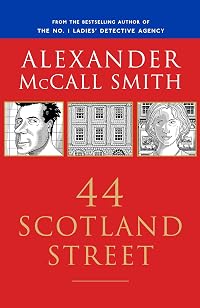
On This Page
Description
When Pat rents a room in Edinburgh, she acquires some interesting neighbors--including a pushy Stockbridge mother and her talented, sax-playing, five-year-old son. Her job at an art gallery hardly keeps her busy until she suspects one painting in the collection may be an undiscovered work by a Scottish master.Tags
Recommendations


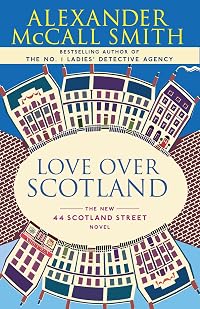


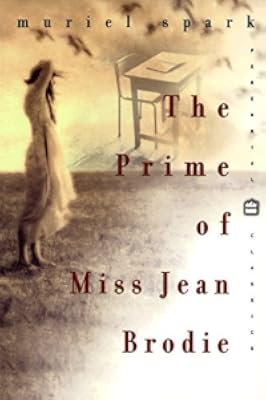
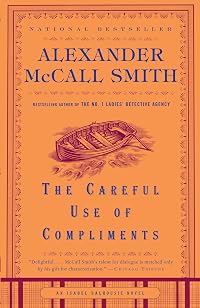
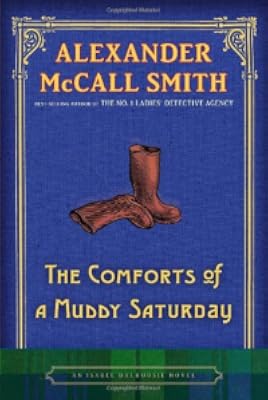
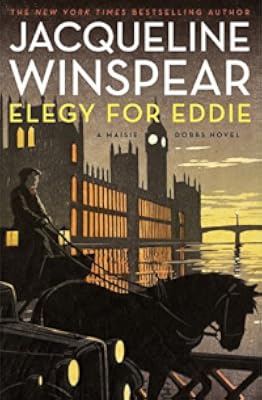
Member Recommendations
BookshelfMonstrosity These character-driven novels use vignettes and ensemble casts to explore multiple plots and the relationships between characters. 44 Scotland Street is both comical and upbeat, while The Imperfectionists is more nuanced, complex, and thoughtful.
Member Reviews
This isn't quite Tales of the city transposed to Edinburgh, though: you would probably need Irvine Welsh to do that. In McCall Smith's world, almost all the characters are straight, white, middle-class Scots from the New Town (diversity isn't entirely forgotten, though: there is always Big Lou, a working-class woman from Arbroath, who runs the coffee bar that is one of the focuses of the story...). There's not very much going on here that would be out of place in the world of Miss Jean Brodie. That's obviously quite deliberate: to create a world in which his broad newspaper readership will feel comfortable, McCall Smith makes Edinburgh a very cosy, enclosed place, where people hang the works of Scottish painters on their walls, read show more Scottish novels, and listen to Scottish music. They are dimly aware of the concept of "Glasgow", even if they haven't actually been there, whilst "London" and "England" are well outside their lines of cultural reference, playing about as much part in their daily lives as New York City might for the average resident of the Bay Area.
Within this limited world, we have a rather amusing time, because McCall Smith is a very talented comic writer. Misunderstandings abound, the vain and intolerant get their comeuppance, the lovelorn might — or might not — find their dream partners, dogs lust after ankles to bite, paintings are lost and found, the Association of Scottish Nudists undergo a constitutional crisis but never seem to take their clothes off, and occasional gentle fun is poked at the Edinburghness of Edinburgh. At the heart of the story are characters we treasure from the start: anthropologist-at-large Domenica, portrait painter and dog-owner Angus Lordie, hapless gallery-owner Matthew, and, rapidly stealing the show, the unfortunate six-year-old Bertie, with his well-meaning but horrendously pushy mother Irene who never allows him a breathing space in between saxophone lessons, Italian conversation and Yoga For Tots.
Seriously addictive, but terminally pleasant. show less
Within this limited world, we have a rather amusing time, because McCall Smith is a very talented comic writer. Misunderstandings abound, the vain and intolerant get their comeuppance, the lovelorn might — or might not — find their dream partners, dogs lust after ankles to bite, paintings are lost and found, the Association of Scottish Nudists undergo a constitutional crisis but never seem to take their clothes off, and occasional gentle fun is poked at the Edinburghness of Edinburgh. At the heart of the story are characters we treasure from the start: anthropologist-at-large Domenica, portrait painter and dog-owner Angus Lordie, hapless gallery-owner Matthew, and, rapidly stealing the show, the unfortunate six-year-old Bertie, with his well-meaning but horrendously pushy mother Irene who never allows him a breathing space in between saxophone lessons, Italian conversation and Yoga For Tots.
Seriously addictive, but terminally pleasant. show less
Alexander McCall Smith had already created two incredibly diverse series — one with Mma Precious Ramotswe, the intuitive and clever Botswanan detective who debuted in the novel The No. 1 Ladies' Detective Agency, and philosopher Isabel Dalhousie of The Sunday Philosophy Club series — when a chance meeting with Armistead Maupin gave us 44 Scotland Street. Speaking with Maupin, the author of Tales of the City, gave Smith the idea of borrowing the idea of the apartment house in San Francisco and transplanting it to Edinburgh’s trendy New Town neighborhood. This being Smith, the result isn’t the least derivative.
As Maupin’s tale begins with Mary Ann Singleton moving into an apartment at 28 Barbary Lane, 44 Scotland Street begins show more when Pat MacGregor, a girl on her second gap year, decides to share a flat in the eponymous building. As the chapters of Tales of the City were serialized in The San Francisco Chronicle in 1976, the 110 chapters of 44 Scotland Street were serialized in The Scotsman in 2004. But there, the similarities end. While Maupin wrote mostly about young people adjusting to hip San Francisco, the flats at 44 Scotland Street contain residents of the breadth of society: uncertain Pat; her flatmate, narcissistic, smug, and unscrupulous Bruce Anderson; the sophisticated semi-retired anthropologist Domenica MacDonald and her custard-colored Mercedes-Benz 560 SEC; and beleaguered Bertie Pollack, his milquetoast father Stuart, and his extremely pushy, snobbish mother, Irene, an aficionado of ultra-modern child psychology theories who’s intent on turning her son into a saxophone-playing, Italian-speaking prodigy. The novel also delves into the inhabitants’ friends, family, and employers. While the chapters are short, Smith, as always , manages to maintain the perfect balancing act in which he tackles Big Ideas and philosophical questions — the “conversations about things worth talking about,” as one character calls it — while remaining amusing and often laugh-out-loud funny.
Be sure to have the next book in the series in hand before you finish 44 Scotland Street: You’ll be eager to tackle Espresso Tales right away to discover what further adventures befall the 44 Scotland Street denizens. show less
As Maupin’s tale begins with Mary Ann Singleton moving into an apartment at 28 Barbary Lane, 44 Scotland Street begins show more when Pat MacGregor, a girl on her second gap year, decides to share a flat in the eponymous building. As the chapters of Tales of the City were serialized in The San Francisco Chronicle in 1976, the 110 chapters of 44 Scotland Street were serialized in The Scotsman in 2004. But there, the similarities end. While Maupin wrote mostly about young people adjusting to hip San Francisco, the flats at 44 Scotland Street contain residents of the breadth of society: uncertain Pat; her flatmate, narcissistic, smug, and unscrupulous Bruce Anderson; the sophisticated semi-retired anthropologist Domenica MacDonald and her custard-colored Mercedes-Benz 560 SEC; and beleaguered Bertie Pollack, his milquetoast father Stuart, and his extremely pushy, snobbish mother, Irene, an aficionado of ultra-modern child psychology theories who’s intent on turning her son into a saxophone-playing, Italian-speaking prodigy. The novel also delves into the inhabitants’ friends, family, and employers. While the chapters are short, Smith, as always , manages to maintain the perfect balancing act in which he tackles Big Ideas and philosophical questions — the “conversations about things worth talking about,” as one character calls it — while remaining amusing and often laugh-out-loud funny.
Be sure to have the next book in the series in hand before you finish 44 Scotland Street: You’ll be eager to tackle Espresso Tales right away to discover what further adventures befall the 44 Scotland Street denizens. show less
Alexander McCall Smith's 44 Scotland Street is not really a novel. As its preface explains, it wasn't written as one, either. Each of its one-hundred-and-ten chapters was published individually, day by day, in the Edinburgh-based newspaper The Scotsman. As such, it exists not so much as a cohesive novel, but as one-hundred-and-ten individual titbits of light amusement – exactly the kind of thing that one might be in the mood for when one sits down to read the paper on a lazy Sunday afternoon. McCall Smith has created a cast of peculiar and familiar characters, exaggerated just enough to fuel his dry, relaxed humour. His technique is quite reminiscent of the Australian mockumentary Summer Heights High, (but done in much better show more taste!)
While it may be enjoyable, however, 44 Scotland Street suffers from a lack of something every novel needs: a plot. After finishing this book, I reread The Herald's quote – 'Cliffhanger endings, intrigue, romance, comedy . . . McCall Smith is incapable of being dull' – with more than a little scepticism. There may be comedy and romance here, but intrigue is somewhat lacking, and there are hardly any 'cliffhanger endings'. In fact, 'dull' is exactly what McCall Smith often comes dangerously close to being. The trouble with putting one-hundred-and-ten pieces of light amusement so close to each other is that they tend to roll together into one large piece of meandering tedium. There is simply not enough development, nor enough cohesion, to hold a reader's interest for any extended period of time.
On the other hand, when it is read in short doses – as was originally intended – 44 Scotland Street is quite an enjoyable book. With its gentle philosophy, subtle humour and occasional poignancy, it is a perfect way to unwind and de-stress for a few minutes each day. McCall Smith spends pages and pages developing rich and detailed characters that readers will come to love (and hate!)
As a novel, it leaves something to be desired, but as a newspaper serial, it is an undeniable success. Recommended especially for those who have lived in Edinburgh – locals will get an extra kick out of this book. show less
While it may be enjoyable, however, 44 Scotland Street suffers from a lack of something every novel needs: a plot. After finishing this book, I reread The Herald's quote – 'Cliffhanger endings, intrigue, romance, comedy . . . McCall Smith is incapable of being dull' – with more than a little scepticism. There may be comedy and romance here, but intrigue is somewhat lacking, and there are hardly any 'cliffhanger endings'. In fact, 'dull' is exactly what McCall Smith often comes dangerously close to being. The trouble with putting one-hundred-and-ten pieces of light amusement so close to each other is that they tend to roll together into one large piece of meandering tedium. There is simply not enough development, nor enough cohesion, to hold a reader's interest for any extended period of time.
On the other hand, when it is read in short doses – as was originally intended – 44 Scotland Street is quite an enjoyable book. With its gentle philosophy, subtle humour and occasional poignancy, it is a perfect way to unwind and de-stress for a few minutes each day. McCall Smith spends pages and pages developing rich and detailed characters that readers will come to love (and hate!)
As a novel, it leaves something to be desired, but as a newspaper serial, it is an undeniable success. Recommended especially for those who have lived in Edinburgh – locals will get an extra kick out of this book. show less
On my second read of this book, I enjoyed it possibly more than the first time because I knew what to expect. This is not a novel of plot and event. It wanders from one character to the next, and lets you into their stream of consciousness in a way that might feel frustrating if you want Things to Happen. But I love this book for its close affinity with the city of Edinburgh, and the feeling it gives me of getting introduced (or, even better, re-introduced) to people who have lived in and breathed the air of the Scottish capital so that it's part of who they are. And the reader has the privilege of just going along for the ride in their everyday lives... walking with them over to their favorite coffee bar, hanging out with them during a show more slow period at work, having incidental conversations that stray hither and yon, and musing with them over many of life's imponderables. It's the closest substitute I can imagine for traveling to Edinburgh and actually making friends with everyday people. You wouldn't expect to solve a murder mystery or embark on a romance for the ages on a real-life normal trip, would you? But you might expect to meet someone interesting and chat with them about this and that, and maybe even meet their friends, right? And not all of them will be your cup of tea--a few of them could be annoying. But it's a whole social process of slowly expanding the network of people that have let you into their lives and thought processes. That's what this book does. No more, but no less. It's as loosely plotted as life itself, but that's why I find it in a class by itself.
------------------------
Original review follows.
------------------------
Great storytelling and a diverse and interesting cast of characters. I'll be checking out more of this series.
I've read the No. 1 Ladies' Detective Agency books by the same author, and it's interesting to note the similarity in style between the two series, even though their settings could not be more different. The internal monologue that the characters have is very deliberate and calculated...while interesting, I do have to say that it feels less than realistic on some characters. I thought this was a quirk of the other series, or that maybe the author was using it to convey his impressions of the culture and thinking in Botswana, but I find it in this one as well. show less
------------------------
Original review follows.
------------------------
Great storytelling and a diverse and interesting cast of characters. I'll be checking out more of this series.
I've read the No. 1 Ladies' Detective Agency books by the same author, and it's interesting to note the similarity in style between the two series, even though their settings could not be more different. The internal monologue that the characters have is very deliberate and calculated...while interesting, I do have to say that it feels less than realistic on some characters. I thought this was a quirk of the other series, or that maybe the author was using it to convey his impressions of the culture and thinking in Botswana, but I find it in this one as well. show less
[This is a review I wrote in 2007]
I loved this book. It was a real delight to read. A treasure trove of wonderfully exaggerated characters, each highlighting a different aspect of the bourgeois Edinburgh society that Alexander McCall Smith is portraying in this novel. The plots are funny, and although not entirely believable... if you stretch your imagination just a little bit, you're almost there!
The main character is Pat. Pat is 20 and taking a second year out before going to uni. She's just found herself a room to rent at 44 Scotland Street and walked into job in an art gallery (a struggling art gallery!)...
Meet Bruce, the self-absorbed narcissistic but also very fit flatmate. Meet Matthew, the new boss who knows nothing at all about show more art and even less about running a successful business. Meed Domenica, the welcoming, supportive and fascinating neighbour. Then, of course there's snooty neighbour Irene and her sax playing, french-speaking 5 year old son... Of course many more such characters are just waiting to make your acquaintance in this fabulously witty novel.
There are mini plot lines and cliffhangers throughout to keep your attention going and the pages turning. The novel itself is a breakdown of neat little 2 or 2.5 page segments, amounting to an amazing 110 chapters. Usually, this kind of breakdown is an annoyance and can feel very stilted, but Alexander McCall Smith makes this work so well and ties in all the threads so that you barely notice. The book originally began as daily instalments in "The Scotsman" paper, hence so many chapters but it works so well if you read it all in one go. The only very slight irritation for me is that Pat comes across as just a bit too sensible and sophisticated for her 20 years... but then again, I guess none of the characters in the book are entirely believable...... show less
I loved this book. It was a real delight to read. A treasure trove of wonderfully exaggerated characters, each highlighting a different aspect of the bourgeois Edinburgh society that Alexander McCall Smith is portraying in this novel. The plots are funny, and although not entirely believable... if you stretch your imagination just a little bit, you're almost there!
The main character is Pat. Pat is 20 and taking a second year out before going to uni. She's just found herself a room to rent at 44 Scotland Street and walked into job in an art gallery (a struggling art gallery!)...
Meet Bruce, the self-absorbed narcissistic but also very fit flatmate. Meet Matthew, the new boss who knows nothing at all about show more art and even less about running a successful business. Meed Domenica, the welcoming, supportive and fascinating neighbour. Then, of course there's snooty neighbour Irene and her sax playing, french-speaking 5 year old son... Of course many more such characters are just waiting to make your acquaintance in this fabulously witty novel.
There are mini plot lines and cliffhangers throughout to keep your attention going and the pages turning. The novel itself is a breakdown of neat little 2 or 2.5 page segments, amounting to an amazing 110 chapters. Usually, this kind of breakdown is an annoyance and can feel very stilted, but Alexander McCall Smith makes this work so well and ties in all the threads so that you barely notice. The book originally began as daily instalments in "The Scotsman" paper, hence so many chapters but it works so well if you read it all in one go. The only very slight irritation for me is that Pat comes across as just a bit too sensible and sophisticated for her 20 years... but then again, I guess none of the characters in the book are entirely believable...... show less
I love McCall Smith's No. 1 Ladies' Detective Agency series, I like the Isabel Dalhousie series, and I thoroughly enjoy the Professor von Igelfeld books. This was my first foray into the 44 Scotland Street series. It provided a different reading experience than the books I've read from the author's other series.
I found this book harder to put down at the end of a chapter when I needed to move on to other activities. The novel was originally serialized in the Scotsman newspaper, and in the preface McCall Smith discusses how he adapted his writing style for the serial format. The chapters are shorter than those in his other novels, and there are more of them -- 110 in all. Each chapter ends with an unresolved situation in order to keep show more newspaper readers hooked and eager for the next installment. I found myself reading in longer stretches than I intended to because there didn't seem to be a good place to stop!
The book reminds me of a soap opera, where all of the characters are connected in some way to 44 Scotland Street. Some of the characters live there, and the others are connected to one or more of the residents by work, social, or family ties. Just as in a soap opera, some plot lines are more interesting than others. The two threads I liked the most involved Pat, the 20-year-old girl who has just moved away from home, and Bertie, a 5-year old prodigy. Both of these characters are learning how to make their way in the world -- Pat as a newly independent young woman taking on adult responsibilities and forming adult relationships, and Bertie chafing under his mother's pressure to excel while all he really wants is to be like other boys his age. I look forward to reading more about Pat and Bertie as the series progresses! show less
I found this book harder to put down at the end of a chapter when I needed to move on to other activities. The novel was originally serialized in the Scotsman newspaper, and in the preface McCall Smith discusses how he adapted his writing style for the serial format. The chapters are shorter than those in his other novels, and there are more of them -- 110 in all. Each chapter ends with an unresolved situation in order to keep show more newspaper readers hooked and eager for the next installment. I found myself reading in longer stretches than I intended to because there didn't seem to be a good place to stop!
The book reminds me of a soap opera, where all of the characters are connected in some way to 44 Scotland Street. Some of the characters live there, and the others are connected to one or more of the residents by work, social, or family ties. Just as in a soap opera, some plot lines are more interesting than others. The two threads I liked the most involved Pat, the 20-year-old girl who has just moved away from home, and Bertie, a 5-year old prodigy. Both of these characters are learning how to make their way in the world -- Pat as a newly independent young woman taking on adult responsibilities and forming adult relationships, and Bertie chafing under his mother's pressure to excel while all he really wants is to be like other boys his age. I look forward to reading more about Pat and Bertie as the series progresses! show less
Once The No. 1 Ladies' Detective Agency became popular, it seems like everyone raced out to read all the rest of what Alexander McCall Smith had written. So that probably means I am the last person on the planet to read this first book in the Scotland Street series. Interestingly though, I haven't heard much talk about this series and that's too bad. Because as charming as the Botswana books are, I liked this one even a shade more.
This novel has a varied, colorful, and extensive cast of characters populating its pages and the reader gets to know each and every one of them as individual characters. Most of the characters live at 44 Scotland Street in Edinburgh. Pat is having her second gap year because of vaguely alluded to show more circumstances. She moves into a flat with Bruce, a good looking but rather narcissistic, somewhat lazy young man. Neighbor Domenica, a widowed former academic becomes friends with Pat. Five year old genius Bertie lives with his domineering mother and father in the building as well. As the lives of these tenants, and a few outside characters, intertwine, the reader is treated to mundane lives and events written in a most delightful and engaging way. Unrequited love, failed set-ups, therapy, and misunderstandings abound in the daily lives of our characters. But far from being boringly domestic, this gives the book a comfortable and familiar and pleasing feel.
I thoroughly enjoyed my time at 44 Scotland Street and hopped right out to make sure I had all the subsequent books in the series because I am curious to see where the vagaries of fate will take our characters next. And I fully expect to be introduced to the people alluded to but missing from this installment. There is a serial feel to the book itself so there are natural stopping places throughout if you find yourself enchanted by this one too late at night as I did. The characters are all very complete in themselves, feeling as if they could be your very own next door neighbors. And the descriptions of Edinburgh are intriguing and wonderful. This book and the city it represents are both wonderful to visit (although I think I'd stay out of the old train tunnels given my slight claustrophobia, thanks) and I look forward to future visits to Scotland Street. show less
This novel has a varied, colorful, and extensive cast of characters populating its pages and the reader gets to know each and every one of them as individual characters. Most of the characters live at 44 Scotland Street in Edinburgh. Pat is having her second gap year because of vaguely alluded to show more circumstances. She moves into a flat with Bruce, a good looking but rather narcissistic, somewhat lazy young man. Neighbor Domenica, a widowed former academic becomes friends with Pat. Five year old genius Bertie lives with his domineering mother and father in the building as well. As the lives of these tenants, and a few outside characters, intertwine, the reader is treated to mundane lives and events written in a most delightful and engaging way. Unrequited love, failed set-ups, therapy, and misunderstandings abound in the daily lives of our characters. But far from being boringly domestic, this gives the book a comfortable and familiar and pleasing feel.
I thoroughly enjoyed my time at 44 Scotland Street and hopped right out to make sure I had all the subsequent books in the series because I am curious to see where the vagaries of fate will take our characters next. And I fully expect to be introduced to the people alluded to but missing from this installment. There is a serial feel to the book itself so there are natural stopping places throughout if you find yourself enchanted by this one too late at night as I did. The characters are all very complete in themselves, feeling as if they could be your very own next door neighbors. And the descriptions of Edinburgh are intriguing and wonderful. This book and the city it represents are both wonderful to visit (although I think I'd stay out of the old train tunnels given my slight claustrophobia, thanks) and I look forward to future visits to Scotland Street. show less
Members
- Recently Added By
Lists

Most Popular Books Tagged Scotland
35 works; 2 members

BBC Radio 4 Bookclub
340 works; 13 members

Urban Fiction
74 works; 7 members

Books Set in Scotland
21 works; 5 members

Carole's List
445 works; 13 members

Books Read in 2019
4,052 works; 110 members

Books With Place Names in the Title
215 works; 10 members
Author Information

310+ Works 125,371 Members
Alexander McCall Smith was born on August 24, 1948 in Zimbabwe. He was a professor of medical law at the University of Edinburgh, but he left in 2005 to focus on his writing. He has written over 60 books, including specialist academic titles including Forensic Aspects of Sleep and The Criminal Law of Botswana, short story collections including show more Portuguese Irregular Verbs, and children's books including The Perfect Hamburger. He is best known for the No. 1 Ladies' Detective Agency series. He also writes the Corduroy Mansions, Isabel Dalhousie and 44 Scotland Street series. He has received numerous awards, including The Crime Writers' Association Dagger in the Library Award and the 2004 United Kingdom's Author of the Year Award. His book, The Full Cupboard of Life, received the Saga Award for Wit in the United Kingdom. In 2007, he received a CBE for his services in literature. (Bowker Author Biography) show less
Some Editions
Awards and Honors
Notable Lists
Series

Work Relationships
Is contained in
44 Scotland Street 5 Book Collection (44 Scotland Street / Espresso Tales / Love Over Scotland / The World According to Bertie / The Unbearable Lightness of Scones) by Alexander McCall Smith
Common Knowledge
- Canonical title
- 44 Scotland Street
- Original title
- 44 Scotland Street
- Original publication date
- 2005-03-31
- People/Characters
- Bruce Anderson; Pat Macgregor; Domenica Macdonald; Matthew Duncan; Gordon Todd; Raeburn Todd (show all 21); Sasha Todd; Lizzie Todd; Big Lou; Irene Pollock; Stuart Pollock; Bertie Pollock; Dr Hugo Fairbairn; Angus Lordie; Ian Rankin; Elspeth Harmony; Ramsey Dunbarton; Tofu; Olive; Hiawatha; Aloysius 'Lard' O'Connor
- Important places
- Edinburgh, Scotland, UK
- Dedication
- This is for Lucinda Mackay
- First words
- Most books start with an idea in the author's head. This book started with a conversation that I had in California, at a party held by the novelist Amy Tan, whose generosity to me has been remarkable. -Preface
Pat stood before the door at the bottom of the stair, reading the names underneath the buttons. Syme, Macdonald, Pollock, and then the name she was looking for: Anderson. That would be Bruce Anderson, the survey... (show all)or, the person to whom she had spoken on the telephone. He was the one who collected the rent, he said, and paid the bills. He was the one who had said she could come and take a look at the place and she whether she wanted to live there. -Chapter 1, Stuff Happens - Last words
- (Click to show. Warning: May contain spoilers.)What is my wish: it is for love over Scotland, like tears of rain—that is enough.
- Canonical DDC/MDS
- 823.914
- Canonical LCC
- PR6063.C326 A613
Classifications
Statistics
- Members
- 3,677
- Popularity
- 4,394
- Reviews
- 129
- Rating
- (3.53)
- Languages
- 8 — English, Estonian, French, German, Italian, Latvian, Swedish, Turkish
- Media
- Paper, Audiobook, Ebook
- ISBNs
- 50
- UPCs
- 1
- ASINs
- 12