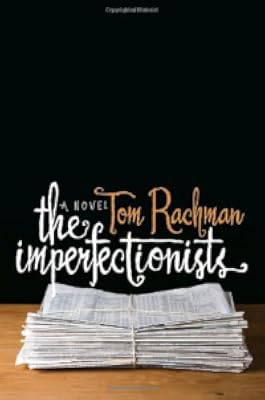
The Imperfectionists
by Tom Rachman
On This Page
Description
An "imperfect" crew of reporters and editors working for an international English language newspaper stumble toward an uncertain future as the era of print news gives way to the Internet age. The story is set against the gorgeous backdrop of Rome.Tags
Recommendations






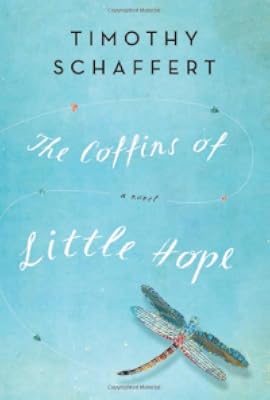
Member Recommendations





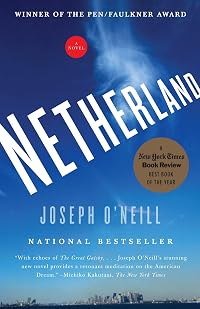
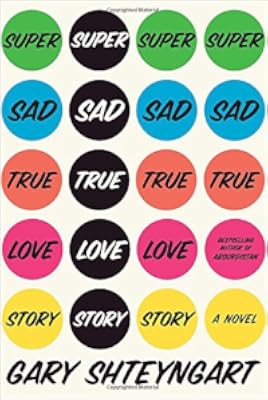
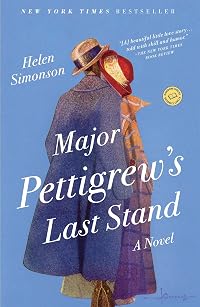
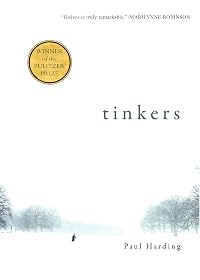
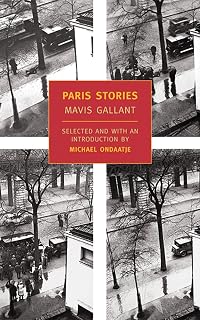
giovannigf Office Politics reads like a direct predecessor to The Imperfectionists: a fairly realistic (and biting) satire of the machinations behind a literary magazine, described from the point of view of each of the main characters.

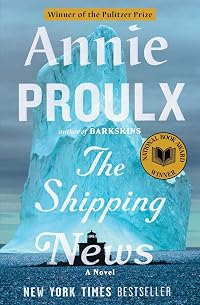
BookshelfMonstrosity These character-driven novels use vignettes and ensemble casts to explore multiple plots and the relationships between characters. 44 Scotland Street is both comical and upbeat, while The Imperfectionists is more nuanced, complex, and thoughtful.
Member Reviews
Rating: 4* of five
The Publisher Says: Set against the gorgeous backdrop of Rome, Tom Rachman’s wry, vibrant debut follows the topsy-turvy private lives of the reporters, editors, and executives of an international English language newspaper as they struggle to keep it—and themselves—afloat.
Fifty years and many changes have ensued since the paper was founded by an enigmatic millionaire, and now, amid the stained carpeting and dingy office furniture, the staff’s personal dramas seem far more important than the daily headlines. Kathleen, the imperious editor in chief, is smarting from a betrayal in her open marriage; Arthur, the lazy obituary writer, is transformed by a personal tragedy; Abby, the embattled financial officer, show more discovers that her job cuts and her love life are intertwined in a most unexpected way. Out in the field, a veteran Paris freelancer goes to desperate lengths for his next byline, while the new Cairo stringer is mercilessly manipulated by an outrageous war correspondent with an outsize ego. And in the shadows is the isolated young publisher who pays more attention to his prized basset hound, Schopenhauer, than to the fate of his family’s quirky newspaper.
As the era of print news gives way to the Internet age and this imperfect crew stumbles toward an uncertain future, the paper’s rich history is revealed, including the surprising truth about its founder’s intentions.
Spirited, moving, and highly original, The Imperfectionists will establish Tom Rachman as one of our most perceptive, assured literary talents.
My Review: I was very remiss with this book. It came out in 2010, and I read it that year. I've since gifted it to several others. Did I set down a review? No! Lazy lazy me. That doesn't mean that I don't encourage you to read it, because I do.
There is nothing of the novel about the book, though. Don't go in thinking you'll get Time's Arrow bedecked with cohesive details. You're getting interconnected short stories set in the same world. But say that to the marketing people at any publishing house, the buyers at every bookery, and even the Woman in the Street, and watch their eyes dim and their arms cross and their butts shift uncomfortably in the chair. Stories = Death in publishing. Less than a third the copies of a novel, be it hit, bestseller, or failure. So disheartening! So very annoying to me, too, since what is a chapter except a deeply woven short story set in a shared universe?
Anyway. Enough about that.
Why should all you storyphobes read this book?
That's one of many passages that made me pause, reach for the Book Darts, and mull. Memories are us, we are our memories, life is a brief flash before the eyes and then a deposit on the stockpile of memories. Yes. Well. What makes that okay, for me, is the existence of literature and the presence in my environment of books. So Rachman puts it to me, in this passage, that my stockpile of memories is susceptible to loss and reminds me that it's something to fear...except:
Aha. Yes. As bad as it gets is losing the memories to come! Agreed, and in a very odd way, it soothed a bit of my ill temper at the inevitability of death. (I'm still ticked at the prevalence of loss, which is in fact a thing to dread.)
That is the bargain one makes in forming relationships, though. Loss is a part of it, whether to death or separation. We're always in a process of loss after a certain age, or a process of *consciousness* of loss to be precise. It's the defining characteristic of being in relationship. Or A defining characteristic, as Rachman points out:
For good or for ill, that is the basic motivation, the essential need, the driving desire of them all, be they romantic, sexual, casual, intense, fleeting, or enduring. We want something, unless we're Bodhisattvas. That makes the whole of human existence sound so tawdry, doesn't it?
But nothing in all of the Universe is unmixed. Not even the pure chemical elements are unmixed. After all they each and every one began their existence as hydrogen, the simplest thing in all of creation, and were forced, compressed, annealed into their current pure states by the explosion and death of a star. From that death, that ultimate transformation of a bright and shining object into a myriad of other, unshining things, all of existence as we know it flows. Our own lives show us that endings are beginnings and all beginnings are neutral. It's what one does next, what flash of the present one accepts into the stockpile of memories, that determines which endings are "good" and which "bad." Rachman says this more succinctly, I think, when he writes, “Anything that's worth anything is complicated.”
Mmm hmmm.
This work is licensed under a Creative Commons Attribution-NonCommercial-ShareAlike 3.0 Unported License. show less
The Publisher Says: Set against the gorgeous backdrop of Rome, Tom Rachman’s wry, vibrant debut follows the topsy-turvy private lives of the reporters, editors, and executives of an international English language newspaper as they struggle to keep it—and themselves—afloat.
Fifty years and many changes have ensued since the paper was founded by an enigmatic millionaire, and now, amid the stained carpeting and dingy office furniture, the staff’s personal dramas seem far more important than the daily headlines. Kathleen, the imperious editor in chief, is smarting from a betrayal in her open marriage; Arthur, the lazy obituary writer, is transformed by a personal tragedy; Abby, the embattled financial officer, show more discovers that her job cuts and her love life are intertwined in a most unexpected way. Out in the field, a veteran Paris freelancer goes to desperate lengths for his next byline, while the new Cairo stringer is mercilessly manipulated by an outrageous war correspondent with an outsize ego. And in the shadows is the isolated young publisher who pays more attention to his prized basset hound, Schopenhauer, than to the fate of his family’s quirky newspaper.
As the era of print news gives way to the Internet age and this imperfect crew stumbles toward an uncertain future, the paper’s rich history is revealed, including the surprising truth about its founder’s intentions.
Spirited, moving, and highly original, The Imperfectionists will establish Tom Rachman as one of our most perceptive, assured literary talents.
My Review: I was very remiss with this book. It came out in 2010, and I read it that year. I've since gifted it to several others. Did I set down a review? No! Lazy lazy me. That doesn't mean that I don't encourage you to read it, because I do.
There is nothing of the novel about the book, though. Don't go in thinking you'll get Time's Arrow bedecked with cohesive details. You're getting interconnected short stories set in the same world. But say that to the marketing people at any publishing house, the buyers at every bookery, and even the Woman in the Street, and watch their eyes dim and their arms cross and their butts shift uncomfortably in the chair. Stories = Death in publishing. Less than a third the copies of a novel, be it hit, bestseller, or failure. So disheartening! So very annoying to me, too, since what is a chapter except a deeply woven short story set in a shared universe?
Anyway. Enough about that.
Why should all you storyphobes read this book?
“What I really fear is time. That's the devil: whipping us on when we'd rather loll, so the present sprints by, impossible to grasp, and all is suddenly past, a past that won't hold still, that slides into these inauthentic tales. My past- it doesn't feel real in the slightest. The person who inhabited it is not me. It's as if the present me is constantly dissolving. There's that line from Heraclitus: 'No man steps in the same river twice, for it is not the same river and he is not the same man.' That's quite right. We enjoy this illusion of continuity, and we call it memory. Which explains, perhaps, why our worst fear isn't the end of life but the end of memories.”
That's one of many passages that made me pause, reach for the Book Darts, and mull. Memories are us, we are our memories, life is a brief flash before the eyes and then a deposit on the stockpile of memories. Yes. Well. What makes that okay, for me, is the existence of literature and the presence in my environment of books. So Rachman puts it to me, in this passage, that my stockpile of memories is susceptible to loss and reminds me that it's something to fear...except:
“You can’t dread what you can’t experience. The only death we experience is that of other people. That’s as bad as it gets. And that’s bad enough, surely.”
Aha. Yes. As bad as it gets is losing the memories to come! Agreed, and in a very odd way, it soothed a bit of my ill temper at the inevitability of death. (I'm still ticked at the prevalence of loss, which is in fact a thing to dread.)
That is the bargain one makes in forming relationships, though. Loss is a part of it, whether to death or separation. We're always in a process of loss after a certain age, or a process of *consciousness* of loss to be precise. It's the defining characteristic of being in relationship. Or A defining characteristic, as Rachman points out:
“I have to wonder if you're not being slightly naive here. I mean, are you saying that you want nothing from people? You have no motives? Everybody has motives. Name the person, the circumstances, I'll name the motive. Even saints have motives -- to feel like saints, probably. ... But still, the point of any relationship is obtaining something from another person.”
For good or for ill, that is the basic motivation, the essential need, the driving desire of them all, be they romantic, sexual, casual, intense, fleeting, or enduring. We want something, unless we're Bodhisattvas. That makes the whole of human existence sound so tawdry, doesn't it?
But nothing in all of the Universe is unmixed. Not even the pure chemical elements are unmixed. After all they each and every one began their existence as hydrogen, the simplest thing in all of creation, and were forced, compressed, annealed into their current pure states by the explosion and death of a star. From that death, that ultimate transformation of a bright and shining object into a myriad of other, unshining things, all of existence as we know it flows. Our own lives show us that endings are beginnings and all beginnings are neutral. It's what one does next, what flash of the present one accepts into the stockpile of memories, that determines which endings are "good" and which "bad." Rachman says this more succinctly, I think, when he writes, “Anything that's worth anything is complicated.”
Mmm hmmm.
This work is licensed under a Creative Commons Attribution-NonCommercial-ShareAlike 3.0 Unported License. show less
I was suprised by how very much I enjoyed this wonderful debut novel. Revolving around the lives of the current staff of an English language daily published in Rome, the narrative is broken up by snippets from the past that give the reader greater insight into the paper than the characters themselves have. Each chapter is a short story about one of the characters; the way they weave together to tell the story of the paper itself is a delightful surprise.
Each of these vignettes has its own flavor, and while some are happy or redemptive, most highlight the feelings of futility that must haunt many newsrooms as newspapers are overtaken by the realities of the digital age. Regardless, this is an excellent debut novel with characters any show more reader is sure to remember. Highly recommended! show less
Each of these vignettes has its own flavor, and while some are happy or redemptive, most highlight the feelings of futility that must haunt many newsrooms as newspapers are overtaken by the realities of the digital age. Regardless, this is an excellent debut novel with characters any show more reader is sure to remember. Highly recommended! show less
The Imperfectionists is a near-perfect little gem about the staff of a failing English-language newspaper in Rome. Each chapter is a short story complete unto itself, yet each story helps propel the narrative forward. The world of journalism is one of my favorite settings for books and movies, so it was natural that I would take to this - although it is disconcerting how many of the characters seem to actively hate their jobs. These are wonderful characters: the older, computer-phobic man who tries to bluff his way through a story and annoys his editor by - ugh - faxing it; the woman on the copy desk who is too insignificant even to get fired; the corrections editor who actively enjoys pouncing on writers' mistakes. Rachman's perfectly show more controlled tone is funny and sad at once, so after we witness the not-so-gentle lampooning of each character, we are laughing at them and crying with them. show less
In 1953, a rich American who finds himself in Rome has an idea: The war is over, there's a new world being born... Why not start a newspaper? Not just any newspaper, but a Serious Newspaper, an English-language newspaper that reports news from all over the world, seriously and intelligently. Done and done: he hires two intelligent editors and they get down to business.
Fast-forward 50-odd years: it's the late 00s, the paper is still based in Rome, still reporting news, still with a loyal if dwindling readership... but both the paper and the people working there are going through a huge mid-life crisis. CNN and the Internet have changed the news irrevocably, the old newsmen have died of lung cancer or strokes ages ago, the owners have show more become professional investors, and the elephant in the room is trumpeting something that sounds like a last sad chorus.
"The internet is to news," he said, "what car horns are to music."
And at that point, this probably sounds like a serious and slightly crotchety tale of how oh my times have changed, dearie me, nobody has any yada yada yada anymore. Except here's what Rachman does: he visits a different character in each chapter - the editors, the journalists, the owners, the foreign correspondents, the trainees, the readers - picking up the story from their point of view, both of journalism and the world, and their whole lives; what's left of it when they've sacrificed almost everything to run a tiny Serious newspaper that everyone knows is dying. And every chapter, while carrying the plot forward somewhere in the background, subverts the previous one. There are almost no Network- (or The Newsroom-)style proud defenses of the role of journalism, and if there are, the next chapter is bound to turn them on their head by giving the talking stick to a character who thinks the previous one is a pretentious prat. And is happy to tell us about it in detail; someone has to be blamed for the fact that something is about to end, after all.
There are laughs, there are tears, there's love and heartbreak and ugly death, absolutely brilliant little character sketches that would work as separate short stories... but put it all together and you get this puzzle of a novel, sliding down so easily that you barely notice how Rachman piles on all the sneaky backstory and all the ways people can dedicate their lives to exposing The Truth, while living lives filled with lies and wishful thinking and things they cannot bear to see... y'know, life. There's the title, I guess. show less
Fast-forward 50-odd years: it's the late 00s, the paper is still based in Rome, still reporting news, still with a loyal if dwindling readership... but both the paper and the people working there are going through a huge mid-life crisis. CNN and the Internet have changed the news irrevocably, the old newsmen have died of lung cancer or strokes ages ago, the owners have show more become professional investors, and the elephant in the room is trumpeting something that sounds like a last sad chorus.
"The internet is to news," he said, "what car horns are to music."
And at that point, this probably sounds like a serious and slightly crotchety tale of how oh my times have changed, dearie me, nobody has any yada yada yada anymore. Except here's what Rachman does: he visits a different character in each chapter - the editors, the journalists, the owners, the foreign correspondents, the trainees, the readers - picking up the story from their point of view, both of journalism and the world, and their whole lives; what's left of it when they've sacrificed almost everything to run a tiny Serious newspaper that everyone knows is dying. And every chapter, while carrying the plot forward somewhere in the background, subverts the previous one. There are almost no Network- (or The Newsroom-)style proud defenses of the role of journalism, and if there are, the next chapter is bound to turn them on their head by giving the talking stick to a character who thinks the previous one is a pretentious prat. And is happy to tell us about it in detail; someone has to be blamed for the fact that something is about to end, after all.
There are laughs, there are tears, there's love and heartbreak and ugly death, absolutely brilliant little character sketches that would work as separate short stories... but put it all together and you get this puzzle of a novel, sliding down so easily that you barely notice how Rachman piles on all the sneaky backstory and all the ways people can dedicate their lives to exposing The Truth, while living lives filled with lies and wishful thinking and things they cannot bear to see... y'know, life. There's the title, I guess. show less
I very much enjoyed this collection of linked vignettes. At turns heartbreaking and comic, these peaks into the lives of people associated with a failing newspaper depict the way in which we delude ourselves and others into believing everything is good and fine and normal in our lives. Just as the paper is barely surviving, so are many of these people about to drown under the weight of misconception, miscommunication and missed opportunity. Rachman is a fine writer, providing surprisingly full portraits of his characters despite the limits of the story format. And he is funny! The chapter about the Cairo stringer is a wonderfully exaggerated portrait of naiveté and egotism. Asked how he likes Cairo, the young wanna-be journalist show more replies:
”I have a couple of gripes, but they’re pretty minor.”
“Like?”
“Nothing serious.”
“Tell me one.”
“Well, the air is kind of hard to breathe, with all this pollution. Sort of like inhaling from an exhaust pipe. The heat makes me faint sometimes. And the food isn’t all that edible. Or maybe I’ve just been unlucky. Also, it’s a police state, which I don’t love. And I get the impression the locals want to shoot me. Only when I talk to them, though. Which is my fault – my Arabic is useless. But basically, yeah,” he summarizes, “it’s really interesting.”
This book won’t work for everyone, but I appreciated Rachman’s ability to do so much so well in so limited a way. show less
”I have a couple of gripes, but they’re pretty minor.”
“Like?”
“Nothing serious.”
“Tell me one.”
“Well, the air is kind of hard to breathe, with all this pollution. Sort of like inhaling from an exhaust pipe. The heat makes me faint sometimes. And the food isn’t all that edible. Or maybe I’ve just been unlucky. Also, it’s a police state, which I don’t love. And I get the impression the locals want to shoot me. Only when I talk to them, though. Which is my fault – my Arabic is useless. But basically, yeah,” he summarizes, “it’s really interesting.”
This book won’t work for everyone, but I appreciated Rachman’s ability to do so much so well in so limited a way. show less
Tom Rachman’s perfect debut novel The Imperfectionists consists of a series of interconnected short stories about people linked by an English-language international newspaper based in Rome, each chapter neatly self-contained but simultaneously referring to previous tales and containing clues to ensuing ones. It’s one of the greatest books I’ve ever read.
Rachman once worked as an editor at The International Herald Tribune, but the fictional international newspaper — founded by enigmatic millionaire Cyrus Ott for reasons only hinted at until the last chapter and now teetering on insolvency with a circulation of merely 10,000— bears little resemblance to the legendary Paris-based newspaper. Even a legendary former editor-in-chief show more of the unnamed Rome paper characterizes it as “a second-tier international newspaper,” one whose circulation never hits 40,000. The novel is mostly set in 2006 and 2007, but each chapter is bookended by flashbacks to the newspaper’s glorious founding and more illustrious past.
Despite the title, each of the poignant short stories is perfect: over-the-hill Paris correspondent and one-time lothario Lloyd Burko, disenchanted obituary writer Arthur Gopal; corrections editor Herman Cohen, who has lived in the shadow of a larger-than-life novelist his whole life; business editor Hardy Benjamin and her definitely imperfect boyfriend, perennially dissatisfied editor-in-chief Kathleen Solson, the heartless chief financial officer Abbey Pinnola, the ineffectual new publisher, Oliver Ott, grandson of the magnetic founder, among others. I found myself devouring each chapter/short story, each a witty gem where even the tiny details served to reveal the subject’s inner character. Some tales are sorrowful, some triumphant, all are mesmerizing as they unpeel the veneer that all of us assume at work to reveal the flawed human underneath.
What I found astounding is that Rachman was in his 30s when he penned The Imperfectionists. How had the British-born, Canadian-reared ex-pat journalist garnered so much insight into human nature, the dissatisfactions of the middle-aged, and the pitfalls of growing old before even hitting 40? Every character and every tiny detail rings true.
Journalists will especially adore The Imperfectionists, with its reminder of the Golden Age of journalism, with Underwriter typewriters and on-the-job drinking. What newspaper reporter doesn’t identify with Arthur Gopal when he observes, “’news’ is often a polite way of saying ‘editor’s whim’”?
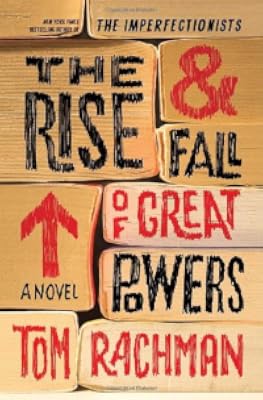
Don’t miss this fascinating novel. I can hardly wait for Rachman’s upcoming The Rise & Fall of Great Powers to be released in a few days. show less
Rachman once worked as an editor at The International Herald Tribune, but the fictional international newspaper — founded by enigmatic millionaire Cyrus Ott for reasons only hinted at until the last chapter and now teetering on insolvency with a circulation of merely 10,000— bears little resemblance to the legendary Paris-based newspaper. Even a legendary former editor-in-chief show more of the unnamed Rome paper characterizes it as “a second-tier international newspaper,” one whose circulation never hits 40,000. The novel is mostly set in 2006 and 2007, but each chapter is bookended by flashbacks to the newspaper’s glorious founding and more illustrious past.
Despite the title, each of the poignant short stories is perfect: over-the-hill Paris correspondent and one-time lothario Lloyd Burko, disenchanted obituary writer Arthur Gopal; corrections editor Herman Cohen, who has lived in the shadow of a larger-than-life novelist his whole life; business editor Hardy Benjamin and her definitely imperfect boyfriend, perennially dissatisfied editor-in-chief Kathleen Solson, the heartless chief financial officer Abbey Pinnola, the ineffectual new publisher, Oliver Ott, grandson of the magnetic founder, among others. I found myself devouring each chapter/short story, each a witty gem where even the tiny details served to reveal the subject’s inner character. Some tales are sorrowful, some triumphant, all are mesmerizing as they unpeel the veneer that all of us assume at work to reveal the flawed human underneath.
What I found astounding is that Rachman was in his 30s when he penned The Imperfectionists. How had the British-born, Canadian-reared ex-pat journalist garnered so much insight into human nature, the dissatisfactions of the middle-aged, and the pitfalls of growing old before even hitting 40? Every character and every tiny detail rings true.
Journalists will especially adore The Imperfectionists, with its reminder of the Golden Age of journalism, with Underwriter typewriters and on-the-job drinking. What newspaper reporter doesn’t identify with Arthur Gopal when he observes, “’news’ is often a polite way of saying ‘editor’s whim’”?
Don’t miss this fascinating novel. I can hardly wait for Rachman’s upcoming The Rise & Fall of Great Powers to be released in a few days. show less
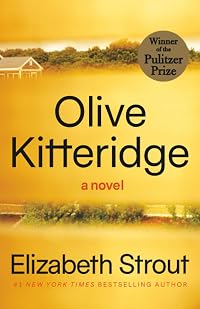
The genre of the minute seems to be a collection of interconnected short stories that share either a theme (American Salvage by Bonnie Jo Campbell), or a character (Olive Kitteridge by Elizabeth Strout) and although Tom Rachman’s new book is described as a novel by the publisher, for this reader, it met all the requirements of a short story collection. At any rate, what Rachman has produced is a cynical, raucous, wry, humor-filled book based on the slow-dying newspaper business and those who are employed in it.
In 1953, Cyrus Ott, a wealthy American businessman decides to start an international English-language newspaper, based in Rome and sold around the world. Each chapter, or story, in the book is entitled by a headline and told show more from the point of view of a newspaper employee, for the most part. At the end of each chapter/story, there are a few pages documenting the history of the newspaper over the years. If a format like this has been used in the past, I’m not aware of it. It is very, very clever. It helps that Rachman has a way with words and can turn a phrase with the best of them. He’s nothing short of terrific in his debut offering.
Choosing a couple favorites is not easy since each story is so well done but here are two that stood out:
In “The Sex Lives of Islamic Extremists,” Winston Cheung is trying out for the job of Cairo stringer, but since he’s not really a reporter he hasn’t a clue how to get a story from people whose language he doesn’t speak, and whose culture he doesn’t understand. Unexpectedly, another reporter, Rich Snyder, also trying out for the position, shows up and proceeds to systemically take over Winston’s apartment, his life and his prospects for the job. Rachman characterizes this overbearing moron with such skill that it makes it easy for the reader to compare him to real life characters that make up the part and parcel of everyday life. And Cheung makes himself an easy target for Snyder’s manipulation:
“By early evening, he is still at the computer, rising only to gorge himself on Winston’s food and spread his possessions across the floor. Various items of Snyder’s—a hairbrush, Kevlar messenger bag, sports socks, deodorant spray—appear on the carpet around him in a widening radius. The baboon marking his territory.” (Page 137)
In “Markets Crash Over Fears of China Slowdown,” Chief Financial Officer, Abbey Pagnola has the task of trying to right the financial ship of the newspaper by reducing the size of the staff. Unexpectedly, the latest employee to be let go is sitting right next to her on a trans-Atlantic flight. She doesn’t recognize him at first, but when she does, she is totally mortified:
“Her brain clicks: it’s Dave Belling.
She wants to die. This is copydesk Dave. Newly fired Dave. Dave, who was laid off to cut costs. Dave, whom she ordered fired. Eleven hours beside him. Worse still, she has been caught in travel mode, in sweatpants, hair in pigtails. (At the paper, she’s all suits and boots, eyes cold as coins.)”
The author develops the story from there but in no way prepares the reader for the shocking ending.
Laugh out loud funny; three dimensional characters, all flawed, all imperfect; and cynicism from beginning to end, Rachman boldly asks the question, “Who can you trust?” In so doing, he’s written a gem of a story and made an auspicious debut. Very highly recommended. show less
In 1953, Cyrus Ott, a wealthy American businessman decides to start an international English-language newspaper, based in Rome and sold around the world. Each chapter, or story, in the book is entitled by a headline and told show more from the point of view of a newspaper employee, for the most part. At the end of each chapter/story, there are a few pages documenting the history of the newspaper over the years. If a format like this has been used in the past, I’m not aware of it. It is very, very clever. It helps that Rachman has a way with words and can turn a phrase with the best of them. He’s nothing short of terrific in his debut offering.
Choosing a couple favorites is not easy since each story is so well done but here are two that stood out:
In “The Sex Lives of Islamic Extremists,” Winston Cheung is trying out for the job of Cairo stringer, but since he’s not really a reporter he hasn’t a clue how to get a story from people whose language he doesn’t speak, and whose culture he doesn’t understand. Unexpectedly, another reporter, Rich Snyder, also trying out for the position, shows up and proceeds to systemically take over Winston’s apartment, his life and his prospects for the job. Rachman characterizes this overbearing moron with such skill that it makes it easy for the reader to compare him to real life characters that make up the part and parcel of everyday life. And Cheung makes himself an easy target for Snyder’s manipulation:
“By early evening, he is still at the computer, rising only to gorge himself on Winston’s food and spread his possessions across the floor. Various items of Snyder’s—a hairbrush, Kevlar messenger bag, sports socks, deodorant spray—appear on the carpet around him in a widening radius. The baboon marking his territory.” (Page 137)
In “Markets Crash Over Fears of China Slowdown,” Chief Financial Officer, Abbey Pagnola has the task of trying to right the financial ship of the newspaper by reducing the size of the staff. Unexpectedly, the latest employee to be let go is sitting right next to her on a trans-Atlantic flight. She doesn’t recognize him at first, but when she does, she is totally mortified:
“Her brain clicks: it’s Dave Belling.
She wants to die. This is copydesk Dave. Newly fired Dave. Dave, who was laid off to cut costs. Dave, whom she ordered fired. Eleven hours beside him. Worse still, she has been caught in travel mode, in sweatpants, hair in pigtails. (At the paper, she’s all suits and boots, eyes cold as coins.)”
The author develops the story from there but in no way prepares the reader for the shocking ending.
Laugh out loud funny; three dimensional characters, all flawed, all imperfect; and cynicism from beginning to end, Rachman boldly asks the question, “Who can you trust?” In so doing, he’s written a gem of a story and made an auspicious debut. Very highly recommended. show less
Members
- Recently Added By
Published Reviews
The novel is alternately hilarious and heart-wrenching, and it's assembled like a Rubik's Cube. I almost feel sorry for Rachman, because a debut of this order sets the bar so high.
added by lkernagh
Enjoy "The Imperfectionists" for the gem that it is.
added by lkernagh
"The Imperfectionists" is about what happens when professionals realize that their craft no longer has meaning in the world's eyes (think of all those hardworking monk-scribes idled by Gutenberg) and that the only people who really understand them are on the same foundering ship, and that, come to think of it, they really loved that damn ship for all it made their lives hell.
added by lkernagh
Lists

Best 21st Century Books (So Far)
670 works; 85 members

The Best of Canadian Literature
235 works; 33 members

Best Workplace Fiction
47 works; 18 members

Books Read in 2014
2,343 works; 89 members

New Authors to Read
21 works; 3 members

Paris, City of Lights
103 works; 17 members

First Novels
373 works; 17 members

Books Set in Rome
98 works; 2 members

Books Featured on Readers' Review of the Diane Rehm Show
161 works; 8 members

Global Reads: Books Set in Western Europe
186 works; 10 members

World Books
51 works; 4 members
Author Information

6+ Works 5,254 Members
Tom Rachman was born in London, England and raised in Vancouver, Canada. He is a graduate of the University of Toronto and the Columbia School of Journalism. He was a foreign correspondent for the Associated Press and from 2006 to 2008 was an editor at the International Herald Tribune in Paris. Rachman is the author of The Imperfectionists and The show more Rise & Fall of Great Powers. (Bowker Author Biography) show less
Some Editions
Awards and Honors
Awards
Distinctions
Notable Lists
Series
Belongs to Publisher Series
dtv premium (24821)
dtv (14097)
Common Knowledge
- Canonical title
- The Imperfectionists
- Original title
- The imperfectionists
- Original publication date
- 2010
- People/Characters
- Cyrus Ott; Arthur Gopal; Betty Lieb; Leo Marsh; Dave Belling; Lloyd Burko (show all 14); Craig Menzies; Clint Oakley; Hardy Benjamin; Herman Cohen; Kathleen Solson; Winston Cheung; Ruby Zaga; Oliver Ott
- Important places
- Rome, Italy; Atlanta, Georgia, USA; Paris, France; Cairo, Egypt
- Related movies
- The Imperfectionists (2013 | IMDb)
- Dedication
- For Claire and Jack.
- First words
- Lloyd shoves off the bedcovers and hurries to the front door in white underwear and black socks.
- Quotations
- If history taught us anything, Arthur muses, it is that men with mustaches must never achieve positions of power.
- Last words
- (Click to show. Warning: May contain spoilers.)The paper - that daily report on the idiocy and the brilliance of the species - had never before missed an appointment. Now it is gone.
- Blurbers
- Phillips, Arthur
- Original language*
- Englisch
*Some information comes from Common Knowledge in other languages. Click "Edit" for more information.
Classifications
Statistics
- Members
- 4,015
- Popularity
- 3,888
- Reviews
- 230
- Rating
- (3.66)
- Languages
- 15 — Chinese, Danish, Dutch, English, Estonian, Finnish, French, German, Italian, Lithuanian, Romanian, Russian, Spanish, Swedish, Portuguese (Portugal)
- Media
- Paper, Audiobook, Ebook
- ISBNs
- 48
- ASINs
- 28