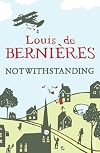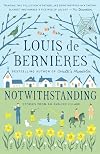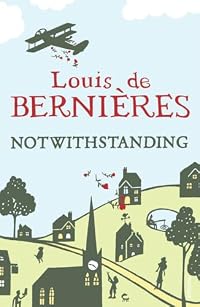
Notwithstanding: Stories from an English Village
by Louis De Bernières
On This Page
Description
"Comic, wistfully nostalgic stories about English village life, from the author of Corelli's Mandolin"--Tags
Recommendations






























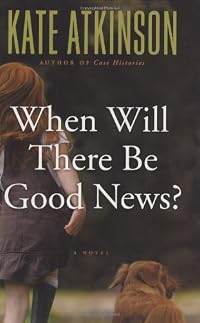
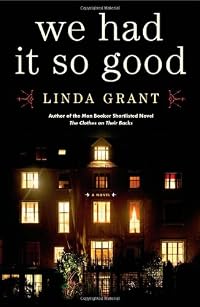
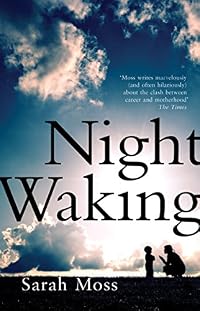



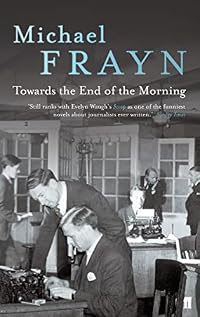


Member Recommendations



Member Reviews
When I started reading this book of short stories set in a quaint English village peopled by quaint English characters, I imagined it was going to be tea,cucumber sandwiches and sausage rolls,compared with the other books I've read by Bernières (the South American trilogy, Capt. Corelli's mandolin and Birds without Wings) which were more comparable with raw slabs of beef or tough barbecued goat. But in Notwithstanding there is an underlying unquietness, a delightfully sensitive yet unsentimental hint of nostalgia; the tea tastes of cat pee and an old lady walks on the snow without leaving footprints. I loved it from beginning to end. I would have liked more - a story about the background characters such as the ditching and hedging man, show more the nuns, and Mrs Rendall. I was wiping away tears as I read the Afterword, and resonated with the statement "Britain really is an immense lunatic asylum". The Britain of my childhood and the one that I miss.
I can't find this book any more, did I give it to someone? show less
I can't find this book any more, did I give it to someone? show less
I picked this up expecting to take my time (as I usually do with short story collections) but I was so taken with the village of Notwithstanding and its inhabitants that before I knew it I was turning the last page.
This is a collection of short vignettes based on the village where de Bernières grew up. This is a nostalgic look at eccentric England - a varied cast of characters whose stories overlap and portray a picture of the past. Some tales are humorous; some tragic; some sad - all are very British. In some ways this is a very bleak story - as a way of life disappears; houses bought by incomers - pricing locals out of the market; the old guard grow old and die; the young lose their innocence and change. But amongst this he has show more managed to capture an essence of place and changing times while remaining constant with his love for the lost rural life that he knew as a boy. I really liked the way de Bernières managed to touch my emotions - I smiled, I laughed and I cried; got angry in one or two places. It worked for me! show less
This is a collection of short vignettes based on the village where de Bernières grew up. This is a nostalgic look at eccentric England - a varied cast of characters whose stories overlap and portray a picture of the past. Some tales are humorous; some tragic; some sad - all are very British. In some ways this is a very bleak story - as a way of life disappears; houses bought by incomers - pricing locals out of the market; the old guard grow old and die; the young lose their innocence and change. But amongst this he has show more managed to capture an essence of place and changing times while remaining constant with his love for the lost rural life that he knew as a boy. I really liked the way de Bernières managed to touch my emotions - I smiled, I laughed and I cried; got angry in one or two places. It worked for me! show less
I’ll be honest, if two people I trust hadn’t recommended this to me, and one of them lent me a copy, I probably wouldn’t have read it. I adored [b:Captain Corelli's Mandolin|3388|Corelli's Mandolin|Louis de Bernières|https://images.gr-assets.com/books/1479680795s/3388.jpg|2771048], but am generally suspicious of novels with cover quotes from the Daily Mail describing them as delightful and heart-warming. I did enjoy this book, taking my mother’s advice and skipping the chapter titled ‘Rabbit’. (She suggested that it would upset me, as I have a strong emotional attachment to bunnies.) It was a sadder book than I expected and seemed akin to a scrapbook of the past. The structure, of vignettes that darted about in time, worked show more pretty well. There were an awful lot of deaths and quite a few love affairs, although my favourite chapters included neither. The human characters were fairly compelling, the animals more so. Perhaps the best feature of the book, and what really tied it together, was the hedging and ditching man. He lurked in the background, perpetually contemplating some object unearthed from a hedge or ditch and acting as a calm counterpoint to the rather frenetic pace of other characters’ lives.
I am ambivalent about the level of nostalgia exhibited by the book. At times it seemed to me the past was being rather romanticised, especially when ghosts cropped up. There was a certain humorous pragmatism to temper this, however. Funnily enough, Louis de Bernières now lives not too far from the village where I spent my primary school years. I’ve even spotted him once, many years later, while out for a walk with my parents. My own experience of growing up in a village took place in the 1990s and was thus quite different to that set out in ‘Notwithstanding’. There are little echoes of familiarity in the gossipiness, but the village high street I knew was mostly estate agents and antique shops. The afterword reflected my experience more acutely, in fact. This novel was well-crafted, but not entirely to my taste. The title was a stroke of genius, though. show less
I am ambivalent about the level of nostalgia exhibited by the book. At times it seemed to me the past was being rather romanticised, especially when ghosts cropped up. There was a certain humorous pragmatism to temper this, however. Funnily enough, Louis de Bernières now lives not too far from the village where I spent my primary school years. I’ve even spotted him once, many years later, while out for a walk with my parents. My own experience of growing up in a village took place in the 1990s and was thus quite different to that set out in ‘Notwithstanding’. There are little echoes of familiarity in the gossipiness, but the village high street I knew was mostly estate agents and antique shops. The afterword reflected my experience more acutely, in fact. This novel was well-crafted, but not entirely to my taste. The title was a stroke of genius, though. show less
A collection of linked short-stories set in a fictionalised version of the village in which the author grew up. De Bernieres writes with affection about rural England, without succumbing to a belief in any mythical golden age of village life. As is generally the case with short stories, I liked some of the tales and characters a lot more than others and as a result I would say that I liked this book rather than loved it. One of my favourite observations was the character who, thinking herself out of touch, wondered whether "with it" was still "with it" or has gone out of fashion. It is difficult to answer that query because, whilst they all seem to occur between the 50s and 80s, it isn't always clear when some of the stories are set. It show more is also difficult to answer because I'm not "with it" myself, though I suspect the answer is "no". show less
‘Notwithstanding’ is the name of a mythical English village, the name picked because the village life is notwithstanding. A set of interconnected stories show us the lives of the various village eccentrics as their way of life dies off. Some have the feel of fairy tale or fable; others are vignettes. Several characters show up multiple times; the most common is the boy Robert, who rescues and rehabilitates injured and orphaned birds, including a talking rook named Lizzie, and catches a legendary pike. Among the other villagers are the widow who goes everywhere with her husband’s ghost, the aging general whose mind is slipping and now goes to town with no pants on, a woman who realizes she’d best try and get on with folks, a show more Sixth Sense style ghost story, a maid who is seduced by her employer’s son, a ghost who summons the Rector, and more. The thread that binds them together is the erosion of village life by new people; people who complain about roosters crowing in the country, about ponds that aren’t fenced off, and the like. It’s nostalgia (de Bernieres grew up in just such a village and is most likely Robert) and it’s sweet in places, sad in many places, and funny in others. I don’t tend to go for ‘sweet’ or ‘cozy’ books but this one hit me just right. show less
Louis de Bernieres has always been drawn to far-flung locations: Latin America, the Australian Outback, Greek islands. But in this beautiful collection of short stories he focuses his attentions closer to home, recalling the English village life of his childhood. Yet this work is no less exotic, strange and wonderful than his earlier books, featuring a whole cast of eccentric, melancholic and enjoyable characters. These stories twist between amusing tweeness and heart wrenching sadness. There are many funny moments but the overall tone is one of nostalgia for a world we have lost. Melancholy creeps in as the stories progress and the final tales deal with the loss of old village life: the death of the Notwithstanding's 'last true show more peasant' and the way in which second-home owners have now made it impossible for children to buy houses and settle in the village where they grew up.
Having grown up in a rural village myself I found myself nodding at many of the quirky details such as the way that people are known simply as "the owner of (insert dog's name here)" and the way, as De Bernieres writes in his afterword: "those who grow up loving the countryside do so in the same way they grow to love their parents" - frustrating at times but an irrevocable part of who you are. In fact, I've never known a writer capture the way I feel in that respect quite so perfectly. This a return to form for De Bernieres after the slightly lacklustre Partisan's Daughter. A bitter-sweet collection of stories to savour. show less
Having grown up in a rural village myself I found myself nodding at many of the quirky details such as the way that people are known simply as "the owner of (insert dog's name here)" and the way, as De Bernieres writes in his afterword: "those who grow up loving the countryside do so in the same way they grow to love their parents" - frustrating at times but an irrevocable part of who you are. In fact, I've never known a writer capture the way I feel in that respect quite so perfectly. This a return to form for De Bernieres after the slightly lacklustre Partisan's Daughter. A bitter-sweet collection of stories to savour. show less
Quirky, Interesting, Charming Stories
These are not what I would call cozy stories. Most of them have a dark twist. Some are heart-breaking. Nor would I call them stories about the quintecential English village. No village would be this British, nor would its residents be this eccentric.
“Notwithstanding” is a collection of quirky, amusing, and often charming short stories. The town of Notwithstanding is a conglomerate of all that is an English village, as is Garrison Keillor’s Lake Wobegon is all that is small town Minnesotan. Although, de Bernières states that he drew from his hometown of Wormley, in Surrey, and the surrounding villages.
Eleven of the 22 stories were previously published in magazines, newspapers and on radio. At show more 360 pages, de Bernières gives the reader lots of entertainment for the price. The tales are well-written and sprinkled with interesting, uncommon words, such as palaver, costive, mashed neeps, tench, rudd. The stories could be stand-alone, but do reference events occurring in earlier tales.
The characters are singular. My favorite is Obadiah Oak, known as Jack, who is the village’s last peasant. Jack lives in a tiny cottages handed down through seven generations and smelling of two hundred years of peasant life. His teeth are like tombstones, his stubble like a filecard, his lips like kippers.
Evidence of the quality of “Notwithstanding” is that my husband, a very discerning reader, picked it up when I had barely turned the last page and began reading it with chuckles and occasional grimaces. It does not disappoint. show less
These are not what I would call cozy stories. Most of them have a dark twist. Some are heart-breaking. Nor would I call them stories about the quintecential English village. No village would be this British, nor would its residents be this eccentric.
“Notwithstanding” is a collection of quirky, amusing, and often charming short stories. The town of Notwithstanding is a conglomerate of all that is an English village, as is Garrison Keillor’s Lake Wobegon is all that is small town Minnesotan. Although, de Bernières states that he drew from his hometown of Wormley, in Surrey, and the surrounding villages.
Eleven of the 22 stories were previously published in magazines, newspapers and on radio. At show more 360 pages, de Bernières gives the reader lots of entertainment for the price. The tales are well-written and sprinkled with interesting, uncommon words, such as palaver, costive, mashed neeps, tench, rudd. The stories could be stand-alone, but do reference events occurring in earlier tales.
The characters are singular. My favorite is Obadiah Oak, known as Jack, who is the village’s last peasant. Jack lives in a tiny cottages handed down through seven generations and smelling of two hundred years of peasant life. His teeth are like tombstones, his stubble like a filecard, his lips like kippers.
Evidence of the quality of “Notwithstanding” is that my husband, a very discerning reader, picked it up when I had barely turned the last page and began reading it with chuckles and occasional grimaces. It does not disappoint. show less
Members
- Recently Added By
Lists

Fiction: Classics, Literary, Short Stories
85 works; 1 member

History: England, Ireland, Scotland, Wales
94 works; 2 members
Author Information

37+ Works 18,255 Members
Louis de Bernières was born on December 8, 1954, in England to a military family. He spent four months in the British army in his late teens. When he was nineteen, he spent a year in Colombia where he wrote a short story about a true incident of violence that occurred there. Fifteen years later, while recuperating from a motorcycle accident, de show more Bernières used that short story as the basis for the first volume of his Latin American Trilogy, The War of Don Emmanuel's Nether Parts, Senor Vivo and the Coca Lord, and The Troublesome Offspring of Cardinal Guzman. In the 1980s, de Bernières worked as an auto mechanic and then as a supply teacher in London. In 1993 he took a holiday on the Greek island of Cephallonia. That became the setting for Captain Correlli's Mandolin, a novel of war, love, and heroism, which remained on the (London) Times bestseller list for four years. It has sold more than 600,000 copies, has been reprinted in paperback more than thirty times, and has been translated into more than seventeen languages.The book also won the Commonwealth Writers Prize for Best Book. It was also shortlisted for the 1994 Sunday Express Book of the Year. De Bernières was named one of Granta's 20 Best British Novelists in 1993, and Author of the Year 1998 by England's Publishing News. He will be give the opening night address at the 2015 Melbourne Writers Festival. His title The Dust that Falls from Dreams made the New Zealand Best Seller List in 2015 (Bowker Author Biography) show less
Some Editions
Awards and Honors
Work Relationships
Common Knowledge
- Canonical title
- Notwithstanding: Stories from an English Village
- Original title
- Notwithstanding
- Original publication date
- 2009-12-14
- Important places
- Surrey, England, UK
- Dedication
- This book is dedicated to my children, Robin and Sophie. May they take their village with them wherever they go
- First words
- 'I'm not in. Over'
- Disambiguation notice
- Contains:
・Archie and the Birds
・Obadiah Oak, Mrs. Griffiths and the Carol Singers
・Archie and the Woman
・The Girt Pike
・Mrs. Griffith' Part-Time Job
・The Auspicious Meeting of the First Two Memb... (show all)ers of the Famous Notwithstanding Wind Quartet
・Mrs. Mac
・Colonel Barkwell, Troodos and the Fish
・All My Everlasting Love
・The Devil and Bessie Mauderfield
・The Auspicious Meeting of the Third Member of the Famous Notwithstanding Wind Quartet with the First Two
・Footprint in the Snow
・The Happy Death of the General
・Rabbit
・This Beautiful House
・Talking to George
・The Auspicious Meeting of the First Member of the Famous Notwithstanding Wind Quartet with the Fourth
・Silly Bugger (1)
・Silly Bugger (2)
・Horatio and All That
・The Broken Heart
・The Death of Miss Agatha Feakes
・Afterword
Classifications
Statistics
- Members
- 346
- Popularity
- 90,978
- Reviews
- 25
- Rating
- (3.93)
- Languages
- 5 — Czech, English, French, Greek, Slovak
- Media
- Paper, Audiobook, Ebook
- ISBNs
- 13
- ASINs
- 3