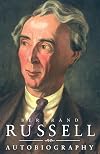
The Autobiography of Bertrand Russell
by Bertrand Russell
The Autobiography of Bertrand Russell (Collections and Selections — Complete in three volumes)
On This Page
Description
Bertrand Russell remains one of the greatest philosophers and most complex and controversial figures of the twentieth century. Here, in this frank, humorous and decidedly charming autobiography, Russell offers readers the story of his life - introducing the people, events and influences that shaped the man he was to become. Originally published in three volumes in the late 1960s, Autobiography by Bertrand Russell is a revealing recollection of a truly extraordinary life written with the show more vivid freshness and clarity that has made Bertrand Russell's writings so distinctively his own. show lessTags
Recommendations
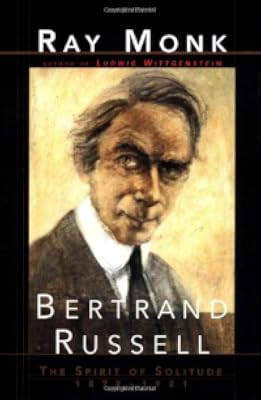






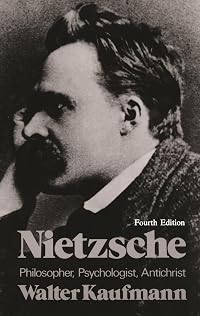
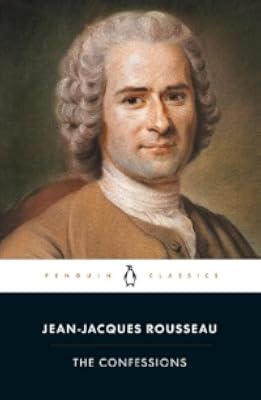
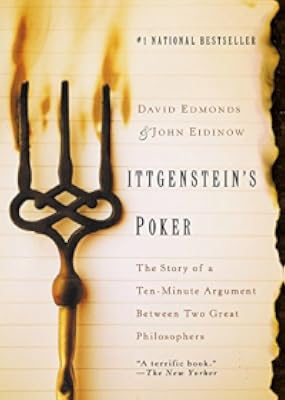
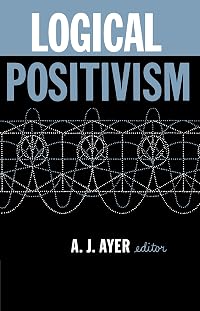

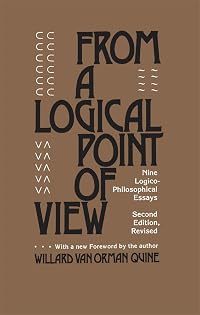


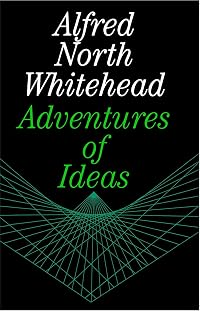

Member Recommendations
Member Reviews
(Comments on Volume 1:) My second reading of this first volume (of 3) of Russell's autobio was so long delayed that I had forgotten that many of the chapters end with lengthy collections of letters. E.g. two remarkable 1911 letters from set-theory founder Georg Cantor ("one of the greatest intellects of the [1800s]", Russell rightly opines) reveal how it was (barely) that no meeting of the two thinkers ever took place. Earlier in the volume, naturally, Russell describes how his eponymous paradox, and the eventual writing of the landmark _Principia Mathematica_ with Alfred North Whitehead, stemmed from studying Cantor's work. Whitehead's philosophy, he says, was "very obscure", and a painful illness that befell Whitehead's wife was what show more gave rise to the pacifist/compassionate aspects of his own philosophy. The points I've mentioned, of course, are but a minuscule subset of all the events and people Russell talks about.
(Comments on Volume 2:) This middle volume -- the thickest of the 3 volumes -- covers Russell's pacifist activism (and 1918 imprisonment) during World War I, his months-long sojourns in Russia and China at the start of the 1920s, the years partly spent in running an elementary school of his own design, and his years-long sojourn in the US prior to and during much of World War II. In regard to the latter period, I was surprised to be reminded that for a time he lived in Princeton and had weekly discussions with Einstein, Gödel, and Pauli. A large fraction of the volume is taken up by letters to and from famous and not-so-famous people.
(Comments on Volume 3:) His final years coinciding with the first half of the Cold War, Russell was perhaps the most prominent of peace activists, involving himself in the buildup to the Pugwash conferences (including the securing of an important co-signature from Albert Einstein at the very end of the latter's life), the Campaign for Nuclear Disarmament (advocating and effecting a shift towards non-violent civil disobedience), his Peace Foundations (additionally concerned with human rights), and the International War Crimes Tribunal (concerned with US actions in Vietnam). He also tells of receiving the 1950 Nobel prize in literature. This may strike some present-day readers as ironic, since all Russell's writings are pervaded by the use of "man" to mean "man or woman" (and "men" to mean "people") and the heavy use of "which" as a restrictive relative pronoun show less
(Comments on Volume 2:) This middle volume -- the thickest of the 3 volumes -- covers Russell's pacifist activism (and 1918 imprisonment) during World War I, his months-long sojourns in Russia and China at the start of the 1920s, the years partly spent in running an elementary school of his own design, and his years-long sojourn in the US prior to and during much of World War II. In regard to the latter period, I was surprised to be reminded that for a time he lived in Princeton and had weekly discussions with Einstein, Gödel, and Pauli. A large fraction of the volume is taken up by letters to and from famous and not-so-famous people.
(Comments on Volume 3:) His final years coinciding with the first half of the Cold War, Russell was perhaps the most prominent of peace activists, involving himself in the buildup to the Pugwash conferences (including the securing of an important co-signature from Albert Einstein at the very end of the latter's life), the Campaign for Nuclear Disarmament (advocating and effecting a shift towards non-violent civil disobedience), his Peace Foundations (additionally concerned with human rights), and the International War Crimes Tribunal (concerned with US actions in Vietnam). He also tells of receiving the 1950 Nobel prize in literature. This may strike some present-day readers as ironic, since all Russell's writings are pervaded by the use of "man" to mean "man or woman" (and "men" to mean "people") and the heavy use of "which" as a restrictive relative pronoun show less
The Founding Fathers obviously placed a high value on happiness or they wouldn't have insisted on pursuit of it as a basic right in a major American document. Bertrand Russell, who already as an adolescent was trying to reconcile the meaning of life and the role of reason, adopted a Millian (if that's a word) premise to "act in a manner. . . to be most likely to produce the greatest happiness, considering both the intensity of the happiness and the number of people made happy." In The Autobiography of Bertrand Russell, volume I, Conscience, he argued, was too dependent upon education, a product a evolution and education, and therefore "it is an absurdity to follow that rather than reason." The inherited part "can only be principles show more leading to the preservation of the species" and the education part of conscience is derived from the same imparted wisdom that "made Bloody Mary burn the Protestants." Russell was good friends with Alfred Whitehead who was a teacher and mentor to him, although in later years to parted on aspects of their philosophies. He perceived Whitehead as having the qualities of a perfect teacher: "He took a interest in those with whom he had to deal and knew both their strong and weak points. He would elicit from a pupil the best of which a pupil was capable. He was never repressive, or sarcastic or any of those things that inferior teachers like to be. I think that in all the abler young men with whom he came in contact, he inspired, as he did in me, a very real and lasting affection."
Russell's comments about people he met and his friends were amusingly perspicacious. "My impression of the old families of Philadelphia Quakers was that they had all the effeteness of a small aristocracy. Old misers of ninety would sit brooding over their hoard while their children of sixty or seventy waited for their death with what patience they could command. Various forms of mental disorder appeared common. Those who must be accounted sane were apt to be very stupid."
It was while in the midst of writing his great Principia Mathematica that he had a revelation that was to alter his life. Alfred Whitehead's wife was in severe pain from a heart condition and while attending to her he came to the following reflections: "the loneliness of the human soul in unendurable; nothing can penetrate it except the highest intensity of the sort that religious teachers have preached; whatever does not spring from this motive is harmful, or at best war is wrong, that a public school [the English public school is the equivalent of an American private school:] is abominable, that the use of force is to be deprecated, and that in relations one should penetrate to the core of loneliness in each person and speak to that. . . . cared only for exactness and analysis, I found myself filled with semi-mystical feelings about beauty, with an intense interest in children, and with some desire almost as profound as that of the Buddha to find some philosophy which should make life endurable." show less
Russell's comments about people he met and his friends were amusingly perspicacious. "My impression of the old families of Philadelphia Quakers was that they had all the effeteness of a small aristocracy. Old misers of ninety would sit brooding over their hoard while their children of sixty or seventy waited for their death with what patience they could command. Various forms of mental disorder appeared common. Those who must be accounted sane were apt to be very stupid."
It was while in the midst of writing his great Principia Mathematica that he had a revelation that was to alter his life. Alfred Whitehead's wife was in severe pain from a heart condition and while attending to her he came to the following reflections: "the loneliness of the human soul in unendurable; nothing can penetrate it except the highest intensity of the sort that religious teachers have preached; whatever does not spring from this motive is harmful, or at best war is wrong, that a public school [the English public school is the equivalent of an American private school:] is abominable, that the use of force is to be deprecated, and that in relations one should penetrate to the core of loneliness in each person and speak to that. . . . cared only for exactness and analysis, I found myself filled with semi-mystical feelings about beauty, with an intense interest in children, and with some desire almost as profound as that of the Buddha to find some philosophy which should make life endurable." show less
Peak into the world of a true renaissance man. It begins to divert about halfway through towards his relationships and marriage, but his insight is keen and his writing is excellent.
after this book I read Monks autobiography and that gives not a positive image og Russel. Insincere. "Is this the man that always taught me to be honest" is a comment of one of his daughters.
The greatest combination of intellect and humanity I have come across.
Great read. Very insightful.
Members
- Recently Added By
Lists

Best Autobiographies and Memoirs
370 works; 67 members

The Works of Bertrand Russell
62 works; 1 member

Reading list
170 works; 1 member

Favourite Books
1,819 works; 316 members

In Our Time books
4,934 works; 2 members
Author Information

425+ Works 39,476 Members
Bertrand Arthur William Russell (1872-1970) was a British philosopher, logician, essayist and social critic. He was best known for his work in mathematical logic and analytic philosophy. Together with G.E. Moore, Russell is generally recognized as one of the main founders of modern analytic philosophy. Together with Kurt Gödel, he is regularly show more credited with being one of the most important logicians of the twentieth century. Over the course of a long career, Russell also made contributions to a broad range of subjects, including the history of ideas, ethics, political and educational theory, and religious studies. General readers have benefited from his many popular writings on a wide variety of topics. After a life marked by controversy--including dismissals from both Trinity College, Cambridge, and City College, New York--Russell was awarded the Order of Merit in 1949 and the Nobel Prize for Literature in 1950. Noted also for his many spirited anti-nuclear protests and for his campaign against western involvement in the Vietnam War, Russell remained a prominent public figure until his death at the age of 97. (Bowker Author Biography) show less
Awards and Honors
Series

Belongs to Publisher Series
Work Relationships
Common Knowledge
- Canonical title
- The Autobiography of Bertrand Russell
- Original title
- The Autobiography of Bertrand Russell
- Original publication date
- 1967-04, vol. 1; 1968, vol. 2; 1969, vol. 3; 1975, omnibus
- Dedication
- To Edith
Through the long years
I sought peace,
I found ecstasy, I found anguish,
I found madness,
I found loneliness,
I found the solitary pain
that gnaws the heart,
But peace I did not fin... (show all)d.
Now, old & near my end,
I have known you,
And, knowing you,
I have found both ecstasy & peace,
I know rest,
After so many lonely years.
I know what life & love may be.
Now, if I sleep,
I shall sleep fulfilled. - First words
- Three passions, simple but overwhelmingly strong, have governed my life: the longing for love, the search for knowledge, and unbearable pity for the suffering of mankind.
- Last words
- (Click to show. Warning: May contain spoilers.)These things I believe, and the world, for all its horrors, has left me unshaken.
- Original language
- English
- Canonical DDC/MDS
- 828.91203
- Disambiguation notice
- This work is the omnibus edition containing all three volumes of The Autobiography of Bertrand Russell.
Do not combine with: Volume 1 (1872-1914)
Do not combine with: Volume 2 (1914-1944)
Do not ... (show all)combine with: Volume 3 (1944-1967)
Classifications
- Genres
- Biography & Memoir, Philosophy, Nonfiction, History
- DDC/MDS
- 828.91203 — Literature & rhetoric English & Old English literatures English miscellaneous writings English miscellaneous writings 1900- English miscellaneous writings 1900-1999 English miscellaneous writings 1900-1945 Diaries,journals, notebooks, reminiscences
- LCC
- B1649 .R94 .A33 — Philosophy, Psychology and Religion Philosophy (General) By period Modern By region or country
- BISAC
Statistics
- Members
- 830
- Popularity
- 33,143
- Reviews
- 9
- Rating
- (3.91)
- Languages
- 7 — English, Finnish, French, Romanian, Russian, Spanish, Turkish
- Media
- Paper, Ebook
- ISBNs
- 19
- UPCs
- 1
- ASINs
- 25