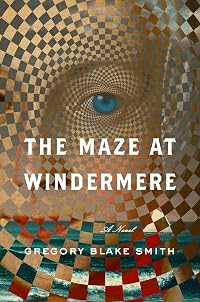
The Maze at Windermere
by Gregory Blake Smith
On This Page
Description
"A richly layered novel of love, ambition, and duplicity, set against the storied seascape of Newport, Rhode Island A reckless wager between a tennis pro with a fading career and a drunken party guest--the stakes are an antique motorcycle and an heiress's diamond necklace--launches a narrative odyssey that braids together three centuries of aspiration and adversity. A witty and urbane bachelor of the Gilded Age embarks on a high-risk scheme to marry into a fortune; a young writer soon to show more make his mark turns himself to his craft with harrowing social consequences; an aristocratic British officer during the American Revolution carries on a courtship that leads to murder; and, in Newport's earliest days, a tragically orphaned Quaker girl imagines a way forward for herself and the slave girl she has inherited. In The Maze at Windermere Gregory Blake Smith weaves these intersecting worlds into a brilliant tapestry, charting a voyage across the ages into the maze of the human heart"-- show lessTags
Recommendations












Member Reviews
The main narrative of The Maze at Windermere follows a mostly washed-up tennis pro, Sandy Alison, through a summer teaching and living among the very wealthy in Newport, RI. Gregory Blake Smith twists the straightforward novel by weaving four other time periods (1896, 1863, 1778 and 1692) and inhabitants of Newport into the novel. I’m not going to lie--it’s a lot to keep track of. Smith employs a variety of formats to keep the sections distinct--mostly by dated diary and journal entries, and he does a good job of fleshing out each character and time period. Enough so that even as his clearly defined chapters dissolve into briefer montages in the last section of the book the distinction and clarity remain. A number of contrivances show more that mesh the characters together--the house, names, Henry James--can be seen as clever or annoying...I liked it. The Maze at Windermere is a historically interesting novel that examines love, art, social class and outsiders during five time periods in Newport, RI. show less
When parchment was rare and expensive, it would often be reused, scraping or washing away the old text before writing the new. This is called a palimpsest. In The Maze at Windermere, Gregory Blake Smith creates a literary palimpsest of Newport, Rhode Island. Smith weaves together five narratives from 1692 to 2011. The thing with a palimpsest is sometimes you get glimpses of the older document and in these narratives, you get glimpses of connections across the years, names, libraries, and streets repeat, but so do the emotional themes of love, courtship, and desire.
The opening narrative gives us Randy, a nice guy whose professional tennis career was good, but never great, and now, in 2011, he is no longer top tier who is beguiled by a show more young heiress he meets while sleeping with her best friend and sister-in-law. In 1896, a gay man whose family pays him just enough to stay away from them is courting a widow with two children and a very suspicious father. In 1863, Henry James befriends a young woman who inspires his famed Daisy Miller. In 1778, a British second son is an officer in the British Army occupying Newport becomes obsessed with a young Jewish woman and seeks her ruin. The fifth narrative is the story of a young orphaned Quaker girl in 1692 whose faced with several existential questions that will determine her life and that of Ashes, her slave, and the freedman who lovers her.
Each story is intriguing and compelling on its own but brought together with such mastery of the voices and mores of different times, they form a marvel of a novel. At first, there is a bit of adjustment as narrative voices shift from time period to time period though we are informed by chapter headings noting the year. By the end, the shifts happen at a faster pace and there are no more headings, but it does not matter because we know instantly whose story we are reading, so distinct are their voices. Within a sentence, we know where we are.
The Maze at Windermere is fascinating for several reasons. No one hands out bows to tie up loose ends, yet we can anticipate some sad and some happy endings. I appreciate how well Smith avoids putting 21st-century mores into the characters from the previous four centuries. I love how different each character’s voice is, not just in what they talk about, but in how they speak, the words and syntax, from the informality of contemporary Sandy to the formal precision of Henry James to the ritualized piety of Prudie.
I love how our characters’ struggle “to understand who we are, why we are here, to love and be loved” is so different for each character. Yes, they are all seeking similar objects, but through far different means and to different ends. It’s beautifully done because you don’t realize it is happening until you suddenly see through the text of one narrative into another, to the palimpsest, and just sit back in awe of the subtle genius at work.
I received an e-galley of The Maze at Windermere from the publisher through NetGalley.
The Maze at Windermere at Penguin Random House | Viking
Gregory Blake Smith faculty page at Carleton
https://tonstantweaderreviews.wordpress.com/2018/02/21/9780735221925/ show less
The opening narrative gives us Randy, a nice guy whose professional tennis career was good, but never great, and now, in 2011, he is no longer top tier who is beguiled by a show more young heiress he meets while sleeping with her best friend and sister-in-law. In 1896, a gay man whose family pays him just enough to stay away from them is courting a widow with two children and a very suspicious father. In 1863, Henry James befriends a young woman who inspires his famed Daisy Miller. In 1778, a British second son is an officer in the British Army occupying Newport becomes obsessed with a young Jewish woman and seeks her ruin. The fifth narrative is the story of a young orphaned Quaker girl in 1692 whose faced with several existential questions that will determine her life and that of Ashes, her slave, and the freedman who lovers her.
Each story is intriguing and compelling on its own but brought together with such mastery of the voices and mores of different times, they form a marvel of a novel. At first, there is a bit of adjustment as narrative voices shift from time period to time period though we are informed by chapter headings noting the year. By the end, the shifts happen at a faster pace and there are no more headings, but it does not matter because we know instantly whose story we are reading, so distinct are their voices. Within a sentence, we know where we are.
The Maze at Windermere is fascinating for several reasons. No one hands out bows to tie up loose ends, yet we can anticipate some sad and some happy endings. I appreciate how well Smith avoids putting 21st-century mores into the characters from the previous four centuries. I love how different each character’s voice is, not just in what they talk about, but in how they speak, the words and syntax, from the informality of contemporary Sandy to the formal precision of Henry James to the ritualized piety of Prudie.
I love how our characters’ struggle “to understand who we are, why we are here, to love and be loved” is so different for each character. Yes, they are all seeking similar objects, but through far different means and to different ends. It’s beautifully done because you don’t realize it is happening until you suddenly see through the text of one narrative into another, to the palimpsest, and just sit back in awe of the subtle genius at work.
I received an e-galley of The Maze at Windermere from the publisher through NetGalley.
The Maze at Windermere at Penguin Random House | Viking
Gregory Blake Smith faculty page at Carleton
https://tonstantweaderreviews.wordpress.com/2018/02/21/9780735221925/ show less
Five protagonists spanning three centuries, linked only by the ground they walk on (Newport Rhode Island), confront the same universal questions of morality in ways specific to their particular time, culture, and personal history. There's a fading tennis pro in 2011, a hanger-on to the rich and famous in Gilded Age 1898, a very young Henry James (!) in 1863, an aristocratic cad in 1798, and a 15 year old Puritan girl in 1692. Each story is engrossing in its own way and you can enjoy them simply at the plot and character level, but if you want to dig deep you could write a dissertation about themes and allusions, overt and covert, to other novels and characters. The only thing that kept this novel from being virtually perfect for me was show more the character of Alice DuPont, who seemed like a collection of characteristics, rather than a character. In any other novel, this would be a serious flaw for me, but here it's dwarfed by how terrific everything else is. show less
Literary readers should love this one, but it definitely requires some "work" on the part of the reader. It took me an unusually long time to finish, and I think that was mostly because of the format. I would describe the structure as five novellas set in different time periods, but in the same location, Newport, and told in rotating chapters (2011, 1896, 1863, 1778, and 1692). Until the final section where suddenly all of the time periods are compressed into short paragraphs as each story reaches its denouement. To me, the author was trying to echo the feel of a maze. At first, it takes you a while to get oriented, and you slowly wend your way. But as you reach the center, you are moving more quickly and decisively and with shorter show more movements. The novellas are not really inter-related, but there are elements (physical, philosophical, thematic and literary) that echo through them. It's really quite a clever novel and one that would hold up well to multiple readings.
All that being said, the quality of the stories varied widely for me, and that's why it really didn't rise to the 5 star level. Each story is one of love and obsession. The 2011 story was, for me, by far the most interesting. It tells the tale of a handsome tennis pro and a love triangle of sorts where the two women involved are both very interesting in their circumstance and character. I loved this story and found myself wanting to return to it over and over (but had to wait patiently through the other four chapters each time). The story set in 1896 was a close second and focused on a gay man in society who is attempting to marry a rich widow against the wishes of her father. The third novella is historical fiction about the life of Henry James whose work crops up repeatedly in other parts of the book. The fourth and fifth stories struck me as much more forced than the first two . . .as if the author had a structure in mind, and the final two tales were necessary elements, but they didn't arise organically.
But nonetheless, I really enjoyed intellectual challenges put forth in the book as they added to the stories and weren't contrived and truly added to the reading experience as opposed to leaving the reader exhausted, or worse, bored. show less
All that being said, the quality of the stories varied widely for me, and that's why it really didn't rise to the 5 star level. Each story is one of love and obsession. The 2011 story was, for me, by far the most interesting. It tells the tale of a handsome tennis pro and a love triangle of sorts where the two women involved are both very interesting in their circumstance and character. I loved this story and found myself wanting to return to it over and over (but had to wait patiently through the other four chapters each time). The story set in 1896 was a close second and focused on a gay man in society who is attempting to marry a rich widow against the wishes of her father. The third novella is historical fiction about the life of Henry James whose work crops up repeatedly in other parts of the book. The fourth and fifth stories struck me as much more forced than the first two . . .as if the author had a structure in mind, and the final two tales were necessary elements, but they didn't arise organically.
But nonetheless, I really enjoyed intellectual challenges put forth in the book as they added to the stories and weren't contrived and truly added to the reading experience as opposed to leaving the reader exhausted, or worse, bored. show less
In this novel, the setting of Newport, RI is the backdrop to centuries worth of characters. The modern-day setting is about Sandy Alison, an almost tennis star, and his relationships with several women in the town. Then there are 5 more characters/time periods: a gilded age gay man trying to marry money, Henry James as a young man during the Civil War, the diary of a British nobleman during the Revolutionary War, and a young woman in pre-Revolutionary days who finds herself on her own when her parents die young.
If it sounds like a lot, it was. I thought there were too many different timelines going on for most of the book. But about halfway through I started to accept the jostling around and realize how interestingly Smith was creating show more connections and parallels between the people and using the setting to create connections as well. These were done with subtlety and nuance and I started to enjoy the book more when I focused on those details rather than each of the different characters for themselves.
Overall, I would recommend this book if you happen upon it. show less
If it sounds like a lot, it was. I thought there were too many different timelines going on for most of the book. But about halfway through I started to accept the jostling around and realize how interestingly Smith was creating show more connections and parallels between the people and using the setting to create connections as well. These were done with subtlety and nuance and I started to enjoy the book more when I focused on those details rather than each of the different characters for themselves.
Overall, I would recommend this book if you happen upon it. show less
Sex, Lies, Deceit, and Romance
The Maze at Windermere will enrapture many, particularly those who thrive on the idea of love in its various manifestation (of which you’ll find several here), and it will lure and then disappoint some, especially those requiring a tidy, if not, happy ending, not to mention a clearer unity of stories.
The Maze at Windermere traces the passions of five pairings from different periods: current, 1890s (Gilded Age), 1860s (Civil War), 1700s (Revolutionary War), and late 1600s (early Colonial). Each takes place on the same ground, Newport, RI, and the surrounding country. Each pairing explores a different twist on love, all fraught with challenge and steep difficulty. What unites the five tales related in show more short alternating sequences, a device that certainly puts you in eager anticipation for the next installment but that also irritates by forcing you to regularly refocus your attention, is the locale, portrayed through the years, and the various expressions of longing and love:
Sandy Alison plays and teaches tennis, though now the end of his career as a player looms large before him. The big athletic type favored with easy charm, he has worked his way though many women on the circuit he travels, including Newport. In Newport, he has just finished an affair with Margo Du Pont (or, rather, she with him), resident of Windermere, and begun one with Aisha, a jewelry artist from Brooklyn who resides at the house in summer. Aisha serves as a companion and protector of Alice Du Pont, bright, eccentric, depressive and at times suicidal, afflicted with cerebral palsy, though the effects are modest. Ultimately, through machinations left to the reader, Alice and Sandy strike up a friendship leading to more, and a huge complication. Alice exhibits a peculiar quirkiness that makes her different and appealing, especially to what Sandy has been accustomed to. Novelist Henry James novels get bandied about frequently.
Mr. Franklin Drexel, of limited means and secretly gay (the only way you could be in the Gilded Age), has been hiding his gray, wondering how much longer he can play the young, gay (older usage) bonhomie to the monied set. Then an opportunity presents itself under the tutelage of the grand dame Mrs. Belmont: courtship and eventual marriage of a widow with children. This, however, is an opportunity fraught with problems that make for quite a confrontation. Yes, Franklin is a cad, but one caught in a terrible vice. You might feel a bit of sympathy for the poor fellow.
Not only does Alice Du Pont invoke Henry James often, he appears as the featured character in the Civil War sequences. James was well known for his asexuality and here Smith explores James’ struggle with the real and art. James wants to become a novelist. He thinks among the best ways to accomplish his desire is to closely observe people and record their actions in his notebook. He does so with a young woman he likes and admires greatly, Alice Taylor. However, these are the 1860s and women have little freedom and in this society love making can amount to an over abundance of smiles. Henry gets a comeuppance he doesn’t see coming.
In 1778, the British find themselves billeted in Newport and Major Ballard needs diversion. He finds it when he espies Judith Da Silva, daughter of man who knows how to prosper in war or peace. The Da Silvas are originally Portuguese from a line of Jews who have suffered through Inquisition, survived, and prospered. Ballard develops an unnatural desire for Miss Da Silva and an equally unnatural hatred of Mr. Da Silva. His lust for Miss Da Silva devolves into a disturbing plan of personal gratification and revenge. This particular tale does stretch credulity a bit in its denouement.
And before all these, there is Prudence Selwyn, a fifteen-year-old Quaker, whose mother died recently, and whose father is presumed lost at sea, caring for a toddler sister. In the 1690s, a woman had extremely limited oppositions outside of marriage for survival. A young woman in Prudence’s situation had fewer still, with one of those few marriage to an older, established man. Prudence can’t bear the thought of it. With ingenuity and knowledge, she devises a plan to extricate herself from her situation and marry a man her age she can love.
So, there are the stories and how they relate to each other. If they appeal to you, you will enjoy the novel. However, even if you like a bit more closure than you may find in The Maze at Windermere, you will take solace in the author’s skillful prose that mimics each era beautifully, making the tales palpably atmospheric. It’s one of the best features of the novel. show less
The Maze at Windermere will enrapture many, particularly those who thrive on the idea of love in its various manifestation (of which you’ll find several here), and it will lure and then disappoint some, especially those requiring a tidy, if not, happy ending, not to mention a clearer unity of stories.
The Maze at Windermere traces the passions of five pairings from different periods: current, 1890s (Gilded Age), 1860s (Civil War), 1700s (Revolutionary War), and late 1600s (early Colonial). Each takes place on the same ground, Newport, RI, and the surrounding country. Each pairing explores a different twist on love, all fraught with challenge and steep difficulty. What unites the five tales related in show more short alternating sequences, a device that certainly puts you in eager anticipation for the next installment but that also irritates by forcing you to regularly refocus your attention, is the locale, portrayed through the years, and the various expressions of longing and love:
Sandy Alison plays and teaches tennis, though now the end of his career as a player looms large before him. The big athletic type favored with easy charm, he has worked his way though many women on the circuit he travels, including Newport. In Newport, he has just finished an affair with Margo Du Pont (or, rather, she with him), resident of Windermere, and begun one with Aisha, a jewelry artist from Brooklyn who resides at the house in summer. Aisha serves as a companion and protector of Alice Du Pont, bright, eccentric, depressive and at times suicidal, afflicted with cerebral palsy, though the effects are modest. Ultimately, through machinations left to the reader, Alice and Sandy strike up a friendship leading to more, and a huge complication. Alice exhibits a peculiar quirkiness that makes her different and appealing, especially to what Sandy has been accustomed to. Novelist Henry James novels get bandied about frequently.
Mr. Franklin Drexel, of limited means and secretly gay (the only way you could be in the Gilded Age), has been hiding his gray, wondering how much longer he can play the young, gay (older usage) bonhomie to the monied set. Then an opportunity presents itself under the tutelage of the grand dame Mrs. Belmont: courtship and eventual marriage of a widow with children. This, however, is an opportunity fraught with problems that make for quite a confrontation. Yes, Franklin is a cad, but one caught in a terrible vice. You might feel a bit of sympathy for the poor fellow.
Not only does Alice Du Pont invoke Henry James often, he appears as the featured character in the Civil War sequences. James was well known for his asexuality and here Smith explores James’ struggle with the real and art. James wants to become a novelist. He thinks among the best ways to accomplish his desire is to closely observe people and record their actions in his notebook. He does so with a young woman he likes and admires greatly, Alice Taylor. However, these are the 1860s and women have little freedom and in this society love making can amount to an over abundance of smiles. Henry gets a comeuppance he doesn’t see coming.
In 1778, the British find themselves billeted in Newport and Major Ballard needs diversion. He finds it when he espies Judith Da Silva, daughter of man who knows how to prosper in war or peace. The Da Silvas are originally Portuguese from a line of Jews who have suffered through Inquisition, survived, and prospered. Ballard develops an unnatural desire for Miss Da Silva and an equally unnatural hatred of Mr. Da Silva. His lust for Miss Da Silva devolves into a disturbing plan of personal gratification and revenge. This particular tale does stretch credulity a bit in its denouement.
And before all these, there is Prudence Selwyn, a fifteen-year-old Quaker, whose mother died recently, and whose father is presumed lost at sea, caring for a toddler sister. In the 1690s, a woman had extremely limited oppositions outside of marriage for survival. A young woman in Prudence’s situation had fewer still, with one of those few marriage to an older, established man. Prudence can’t bear the thought of it. With ingenuity and knowledge, she devises a plan to extricate herself from her situation and marry a man her age she can love.
So, there are the stories and how they relate to each other. If they appeal to you, you will enjoy the novel. However, even if you like a bit more closure than you may find in The Maze at Windermere, you will take solace in the author’s skillful prose that mimics each era beautifully, making the tales palpably atmospheric. It’s one of the best features of the novel. show less
Five separate timelines, five storylines that come together thematically, the Gilded Age AND Puritans AND Henry James? I can't possibly review this book fairly because rarely has a novel been so specifically tailored to my own personal tastes. Loved it, loved it, loved it.
Members
- Recently Added By
Lists

Five star books
1,767 works; 110 members

Publishers Weekly Best Books of the Week / Starred Reviews 2018
78 works; 2 members

Books Read in 2018
4,360 works; 110 members

Dim Sum Lunch Reading
43 works; 2 members
Author Information

6 Works 338 Members
Gregory Blake Smith is the Lloyd P. Johnson-Norwest Professor of English and the Liberal Arts at Carleton College. He holds an MFA from the Iowa Writers' Workshop and is the author of three novels: The Madonna of Las Vegas, The Devil in the Dooryard, and The Divine Comedy of John Venner, which was selected as a Notable Book of the Year by the New show more York Times Book Review. show less
Some Editions
Awards and Honors
Awards
Distinctions
Common Knowledge
- Canonical title
- The Maze at Windermere
- Original publication date
- 2018-01-09
- People/Characters
- Henry James
- Important places
- Newport, Rhode Island, USA
- Dedication
- for Laura
- First words
- He was trying to explain to her how he'd gotten to be where he was.
- Original language
- English
Classifications
Statistics
- Members
- 297
- Popularity
- 108,189
- Reviews
- 13
- Rating
- (3.85)
- Languages
- English
- Media
- Paper, Audiobook, Ebook
- ISBNs
- 6
- ASINs
- 2