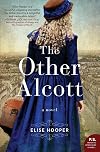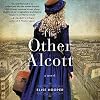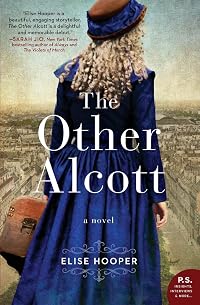
The Other Alcott
by Elise Hooper
On This Page
Description
A People Magazine and POPSUGAR pick! "[May's] adventures illuminate the world of intrepid female artists in the late 1800s […] The Other Alcott comes alive in its development of the relationship between Louisa and May." --The New York Times Elise Hooper's debut novel conjures the fascinating, untold story of May Alcott-Louisa's youngest sister and an artist in her own right. We all know the story of the March sisters, heroines of Louisa May Alcott's Little Women. But while everyone cheers show more on Jo March, based on Louisa herself, Amy March is often the least favorite sister. Now, it's time to learn the truth about the real "Amy", Louisa's sister, May. Stylish, outgoing, creative, May Alcott grows up longing to experience the wide world beyond Concord, Massachusetts. While her sister Louisa crafts stories, May herself is a talented and dedicated artist, taking lessons in Boston, turning down a marriage proposal from a well-off suitor, and facing scorn for entering what is very much a man's profession. Life for the Alcott family has never been easy, so when Louisa's Little Women is published, its success eases the financial burdens they'd faced for so many years. Everyone agrees the novel is charming, but May is struck to the core by the portrayal of selfish, spoiled "Amy March." Is this what her beloved sister really thinks of her? So May embarks on a quest to discover her own true identity, as an artist and a woman. From Boston to Rome, London, and Paris, this brave, talented, and determined woman forges an amazing life of her own, making her so much more than merely "The Other Alcott." "Elise Hooper's thoroughly modern debut gives a fresh take on one of literature's most beloved families. To read this book is to understand why the women behind Little Women continue to cast a long shadow on our imaginations and dreams. Hooper is a writer to watch!"-Elisabeth Egan, author of A Window Opens. show lessTags
Recommendations









Member Reviews
I can't believe that this is author, Elise Hooper's debut novel. It reads like it came from a seasoned professional with many best sellers under her belt.
This book is unique and refreshing to visit the Alcott sisters. The ones who inspired the March sisters from Little Women. As the author pointed out there is not much known about who the real inspiration behind Amy is. I have to tell you that May is nothing like Amy. She is not spoiled. In fact; she is resilient, intelligent, caring, and talented. Plus, she did not go in search of love but love did find her. I enjoyed traveling all over with May from Rome, to London, to Paris.
Actually, reading this book, I did see a bit of a different side of Louisa. I was kind of surprised to found show more her unsupportive of May and her endeavors. Louisa kept pursuing her dreams until she became a published writer but yet when May wanted to go out and become an artist, she was not as supportive. This book made me a fan. I can't wait to read more from Elise Hooper. show less
This book is unique and refreshing to visit the Alcott sisters. The ones who inspired the March sisters from Little Women. As the author pointed out there is not much known about who the real inspiration behind Amy is. I have to tell you that May is nothing like Amy. She is not spoiled. In fact; she is resilient, intelligent, caring, and talented. Plus, she did not go in search of love but love did find her. I enjoyed traveling all over with May from Rome, to London, to Paris.
Actually, reading this book, I did see a bit of a different side of Louisa. I was kind of surprised to found show more her unsupportive of May and her endeavors. Louisa kept pursuing her dreams until she became a published writer but yet when May wanted to go out and become an artist, she was not as supportive. This book made me a fan. I can't wait to read more from Elise Hooper. show less
If you've read Louisa May Alcott's Little Women, you likely identified with Jo the most. Jo is the most intriguing character, spunky and creative and devoted to family. Meg is too responsible. Beth is too good. And Amy is too spoiled and selfish. But what of the women who these characters were based on, Amy in particular? Was she really as bratty as she comes off as being much of the time in Little Women? Elise Hooper's novel, The Other Alcott, looks at May Alcott, the golden, youngest sister who was the model for Louisa's Amy but who was so much more than her sister's creation.
Opening with the celebration of the wonderful reviews on the publication of Little Women, May Alcott is depressed and humiliated to find that the critics, so show more positive about her sister's writing, are critical, in fact dismissive, of her illustrations for novel and she questions her art as a result. Eventually determining that her greatest wish is to be an artist of some acclaim despite the reviews, she vows to carry on, to search out instruction, and to be recognized for her own talent rather than being pigeonholed as Louisa's sister, or worse as the petulant and flighty Amy March. Her own drive to create is no less than her sister's. But the Alcott's circumstances, Louisa's role as sole financial support of the struggling family, and the fact that May is a woman often make it hard for her to pursue her own dreams. She does eventually find opportunities, both in Boston and in Europe to learn and create art even as she tries to temper her envy of her sister's fame and to overcome her reliance on Louisa's financial backing.
Hooper has drawn May not as Amy March but as a determined and ambitious artist who sometimes chafes at the responsibility thrust upon her in regards to her family. She and sister Louisa have a relationship that feels entirely human and realistic, alternately loving and contentious. May can be resentful and feel taken advantage of but her love for her family still shines through. It is clear that while May makes personal sacrifices to tend to her family when she is called upon to do so, she also never stops pushing forward for the thing that is her very lifeblood, painting and drawing. The novel is very much stripped of the romanticism of Little Women and feels very historically real, especially when dealing with poverty and opportunities for women. The depiction of the art scene in Europe and the way that the Academie Francaise dictated public acceptance of art and conferred success on the approved artists was very well done. And May's own journey, personally and artistically is quite an interesting one indeed but the biggest theme of the novel besides May's determination is her relationship with her sister Louisa and how two talented and smart women related to and saw each other, especially in a world that didn't value women's contributions nearly as much as they should have. Fans of Little Women will undoubtedly enjoy this look into the little sister and her own not insignificant accomplishments. For another fictional take on May Alcott, compare this to Little Woman in Blue by Jeannine Atkins as well. show less
Opening with the celebration of the wonderful reviews on the publication of Little Women, May Alcott is depressed and humiliated to find that the critics, so show more positive about her sister's writing, are critical, in fact dismissive, of her illustrations for novel and she questions her art as a result. Eventually determining that her greatest wish is to be an artist of some acclaim despite the reviews, she vows to carry on, to search out instruction, and to be recognized for her own talent rather than being pigeonholed as Louisa's sister, or worse as the petulant and flighty Amy March. Her own drive to create is no less than her sister's. But the Alcott's circumstances, Louisa's role as sole financial support of the struggling family, and the fact that May is a woman often make it hard for her to pursue her own dreams. She does eventually find opportunities, both in Boston and in Europe to learn and create art even as she tries to temper her envy of her sister's fame and to overcome her reliance on Louisa's financial backing.
Hooper has drawn May not as Amy March but as a determined and ambitious artist who sometimes chafes at the responsibility thrust upon her in regards to her family. She and sister Louisa have a relationship that feels entirely human and realistic, alternately loving and contentious. May can be resentful and feel taken advantage of but her love for her family still shines through. It is clear that while May makes personal sacrifices to tend to her family when she is called upon to do so, she also never stops pushing forward for the thing that is her very lifeblood, painting and drawing. The novel is very much stripped of the romanticism of Little Women and feels very historically real, especially when dealing with poverty and opportunities for women. The depiction of the art scene in Europe and the way that the Academie Francaise dictated public acceptance of art and conferred success on the approved artists was very well done. And May's own journey, personally and artistically is quite an interesting one indeed but the biggest theme of the novel besides May's determination is her relationship with her sister Louisa and how two talented and smart women related to and saw each other, especially in a world that didn't value women's contributions nearly as much as they should have. Fans of Little Women will undoubtedly enjoy this look into the little sister and her own not insignificant accomplishments. For another fictional take on May Alcott, compare this to Little Woman in Blue by Jeannine Atkins as well. show less
The Other Alcott is an insightful biographical novel about Louisa May Alcott’s less famous but equally talented younger sister May. As it turns out Abigail ‘May’, who was portrayed as the pampered ‘Amy’ in her sister’s book Little Women, had creative aspirations of her own. This story of her life and the art world she lived in follows her from Concord and Boston to London, Rome, and Paris, where she twice exhibited at the Paris Salon. It’s rich in exploring the bonds – and often times rivalry – between the two sisters and packs an emotional wallop at the end. My thanks to the publisher and LibraryThing Early Reviewers for an advance copy of this book.
 This review was written for LibraryThing Early Reviewers.
With their unique upbringing, it's no wonder that the two most ambitious sisters would be at odds some of the time. This is what Hopper capitalizes on in a wonderful historical novel detailing the life of May Alcott, post publication of Little Women. I have visited Orchard House, and been riveted by the drawings and scribblings on the wallpaper that are preserved under glass. What I missed out on was the extent of May's success and the story of her life, one that is as interesting for the time as Louisa's. In the latter part of the 19th century, the suffragist movement was just getting started and both Louisa and May benefited from access to education that other women of their day did not. (in addition to their access to famed writers show more of the day via their father's transcedentalist connections). If you have a spark of interest in the lives of the Alcotts, this is a must read. show less
This review was written for LibraryThing Early Reviewers.*I received a copy of this book through LibraryThing Early Reviewers.*
Last week I attended an exhibition of impressionist women artists and this was the perfect novel to follow it up with. May Alcott, the lesser known sister of Louisa May Alcott (of Little Women fame), was a talented artist who exhibited her work at the exclusive Paris Salon and who studied in Europe for years to advance her art. While sadden by the book's conclusion, I am happy to know more about this fascinating 19th-century woman. I'd recommend this book to anyone with an interest in women artists and Impressionist Paris.
Last week I attended an exhibition of impressionist women artists and this was the perfect novel to follow it up with. May Alcott, the lesser known sister of Louisa May Alcott (of Little Women fame), was a talented artist who exhibited her work at the exclusive Paris Salon and who studied in Europe for years to advance her art. While sadden by the book's conclusion, I am happy to know more about this fascinating 19th-century woman. I'd recommend this book to anyone with an interest in women artists and Impressionist Paris.
This review was written for LibraryThing Early Reviewers.First, let me confess that I’ve never read LITTLE WOMEN, though I’ve seen every one of the movies. I am therefore familiar with the March family and the Alcotts lived in my home town of Concord, MA. I picked up this book specifically to learn more about May Alcott, the youngest of the four daughters and the sister on which Amy March was based.
I enjoyed getting to know May and her two older sisters (the fourth is already deceased when this book begins) and appreciated this author’s effort to explore a professional rivalry between Louisa the writer and May the artist. I also enjoyed getting a sense of what it was like for a woman to want to be a artist in the later 1800s, when marriage with children was the expected life path. I show more also enjoyed the way the author integrated stories of other artists in May’s studies in Boston, France, England, and Italy.
But I felt disappointed with the writing of the book which seemed to wander. It seemed at times like a book about May’s struggle to realize her artistic ambitions. Other times it seemed much more about her competitive relationship with Louisa. There were rivalries with fellow women artists thrown in. And, of course, a romance or two. But I had the sense that the author couldn’t quite decide what the focus of the book should be. Or perhaps, it was more an issue of not joining together all these disparate elements in a cohesive whole. The result was that I finished the book feeling unsatisfied. I hope your experience is better. show less
I enjoyed getting to know May and her two older sisters (the fourth is already deceased when this book begins) and appreciated this author’s effort to explore a professional rivalry between Louisa the writer and May the artist. I also enjoyed getting a sense of what it was like for a woman to want to be a artist in the later 1800s, when marriage with children was the expected life path. I show more also enjoyed the way the author integrated stories of other artists in May’s studies in Boston, France, England, and Italy.
But I felt disappointed with the writing of the book which seemed to wander. It seemed at times like a book about May’s struggle to realize her artistic ambitions. Other times it seemed much more about her competitive relationship with Louisa. There were rivalries with fellow women artists thrown in. And, of course, a romance or two. But I had the sense that the author couldn’t quite decide what the focus of the book should be. Or perhaps, it was more an issue of not joining together all these disparate elements in a cohesive whole. The result was that I finished the book feeling unsatisfied. I hope your experience is better. show less
First, let me confess that I’ve never read LITTLE WOMEN, though I’ve seen every one of the movies. I am therefore familiar with the March family and the Alcotts lived in my home town of Concord, MA. I picked up this book specifically to learn more about May Alcott, the youngest of the four daughters and the sister on which Amy March was based.
I enjoyed getting to know May and her two older sisters (the fourth is already deceased when this book begins) and appreciated this author’s effort to explore a professional rivalry between Louisa the writer and May the artist. I also enjoyed getting a sense of what it was like for a woman to want to be a artist in the later 1800s, when marriage with children was the expected life path. I show more also enjoyed the way the author integrated stories of other artists in May’s studies in Boston, France, England, and Italy.
But I felt disappointed with the writing of the book which seemed to wander. It seemed at times like a book about May’s struggle to realize her artistic ambitions. Other times it seemed much more about her competitive relationship with Louisa. There were rivalries with fellow women artists thrown in. And, of course, a romance or two. But I had the sense that the author couldn’t quite decide what the focus of the book should be. Or perhaps, it was more an issue of not joining together all these disparate elements in a cohesive whole. The result was that I finished the book feeling unsatisfied. I hope your experience is better. show less
I enjoyed getting to know May and her two older sisters (the fourth is already deceased when this book begins) and appreciated this author’s effort to explore a professional rivalry between Louisa the writer and May the artist. I also enjoyed getting a sense of what it was like for a woman to want to be a artist in the later 1800s, when marriage with children was the expected life path. I show more also enjoyed the way the author integrated stories of other artists in May’s studies in Boston, France, England, and Italy.
But I felt disappointed with the writing of the book which seemed to wander. It seemed at times like a book about May’s struggle to realize her artistic ambitions. Other times it seemed much more about her competitive relationship with Louisa. There were rivalries with fellow women artists thrown in. And, of course, a romance or two. But I had the sense that the author couldn’t quite decide what the focus of the book should be. Or perhaps, it was more an issue of not joining together all these disparate elements in a cohesive whole. The result was that I finished the book feeling unsatisfied. I hope your experience is better. show less
Members
- Recently Added By
Lists

Author Information

5 Works 1,059 Members
Awards and Honors
Awards
Common Knowledge
- Canonical title
- The Other Alcott
- Original publication date
- 2017
- People/Characters
- Louisa May Alcott
- Blurbers
- Egan, Elisabeth; Conklin, Tara; Jio, Sarah
Classifications
Statistics
- Members
- 304
- Popularity
- 105,437
- Reviews
- 25
- Rating
- (3.59)
- Languages
- English
- Media
- Paper, Audiobook, Ebook
- ISBNs
- 11
- ASINs
- 2