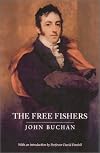
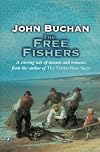
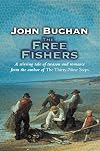
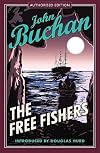
The Free Fishers
by John Buchan
On This Page
Description
When Anthony Lammas, minister of the Kirk and Professor of Logic at St Andrews University, leaves his home town for London on business, he little imagines that within two days he will be deeply entangled in a web of mystery and intrigue. But he's no ordinary professor. His boyhood allegiance to a brotherhood of deep-sea fishermen is to involve him and handsome ex-pupil, Lord Belses, with a beautiful but dangerous woman.Set in the bleak Yorkshire hamlet of Hungrygrain during the Napoleonic show more Wars, this is a stirring tale of treason and romance. show lessTags
Recommendations













Member Reviews
John Buchan was notoriously embarrassed by the huge success of his spy thrillers: he'd very much have preferred to be remembered as the reincarnation of Sir Walter Scott, but somehow his historical novels never quite worked. They were always just a little bit too staid and respectable, and his historical characters always seemed a bit too much like the usual John Buchan characters dressed up in historical costumes.
This one is set mostly in the Borders and in Norfolk in what seems to be April, 1812. Despite Buchan's well-known passion for angling, it turns out not to be a fishing story at all — the Free Fishers of the title are East Coast fishermen, but for reasons never properly explained they have been roped in by the authorities to show more assist in a counter-espionage operation on shore. Amongst those involved is the youthful Professor Nanty Lammas of the University of St Andrews — philosopher, minister of the Kirk, and man-of-action manqué. Together with a young Lord, a couple of salty fishermen, some intrepid Scottish ladies, and a stage-coach-driving English baronet (because this is the Regency, after all) they set out to foil a dastardly plot by French agents to assassinate the Prime Minister, Spencer Perceval, and put the blame on a beautiful young woman.
Lots of colourful Scots dialect, a few good chases over the moors, but rather a lot of tedious four-in-hand driving, and far too many conferences. And all the potentially interesting small-boat stuff happens offstage. They sent him off to govern Canada soon after this came out, and he took the hint and gave up trying to write historical novels... show less
This one is set mostly in the Borders and in Norfolk in what seems to be April, 1812. Despite Buchan's well-known passion for angling, it turns out not to be a fishing story at all — the Free Fishers of the title are East Coast fishermen, but for reasons never properly explained they have been roped in by the authorities to show more assist in a counter-espionage operation on shore. Amongst those involved is the youthful Professor Nanty Lammas of the University of St Andrews — philosopher, minister of the Kirk, and man-of-action manqué. Together with a young Lord, a couple of salty fishermen, some intrepid Scottish ladies, and a stage-coach-driving English baronet (because this is the Regency, after all) they set out to foil a dastardly plot by French agents to assassinate the Prime Minister, Spencer Perceval, and put the blame on a beautiful young woman.
Lots of colourful Scots dialect, a few good chases over the moors, but rather a lot of tedious four-in-hand driving, and far too many conferences. And all the potentially interesting small-boat stuff happens offstage. They sent him off to govern Canada soon after this came out, and he took the hint and gave up trying to write historical novels... show less
The Free Fishers is set in Scotland during the Napoleonic Wars, and involves a plot of murder and sedition. We get the story from the experience of Anthony Lammas, a prematurely grave professor in the college of St. Andrews. Anthony was raised on the coast and is the unofficial chaplain of the secret society of the Free Fishers. The Free Fishers have a sort of network strung all along the coast, with all the secret messages and missions that one could wish for. Anthony — or "Nanty," as he is nicknamed — sets off on an errand for the college, only to find he's actually been chosen for something quite different. He is to find the young Lord Belses and prevent him from fighting a duel over the honor of a Mrs. Cranmer, who is reputed to show more be a dangerous spy. But this is just the first strand in the web...
So the stage is set for valiant deeds and gloomy castles, and moonlit chases over the heather. It was interesting how none of the characters are really given a glowing review at the start of the story, and I disliked all of them in varying degrees at first. But then as the story moves on, events draw out the best qualities of each player, and they start to look better against the backdrop of the action. By the time the tale was done, I was quite resigned to all of them, and even appreciated the ones who had seemed the most distasteful in the beginning. And yet Buchan always keeps us at arms' length from almost everyone. You get the feeling that you shouldn't pry.
It's interesting to see Nanty swinging between the solemn gravity of his professorship and the rowdy fun of the Free Fishers. He reminded me of Stevenson's protagonists, outsiders caught up in something bigger than themselves. The story started off rather slowly until I hit the first moonlit chase, wherein revelations are made that suddenly glued me to the pages. That is where Buchan started turning over everything I thought I knew about the characters. One could wish for a little more time spent on the Free Fishers themselves, since the main fascination of secret societies is to uncover what makes them so secret. Ah well.
The writing is quite good, and sometimes I would linger over certain phrases and descriptions that were particularly apt. This was my first Buchan, and while it's certainly nothing groundbreaking, I found it pleasantly diverting. David Daniell, who wrote the introduction for this edition, likens Buchan's style to that of both Stevenson and Scott, and I think that's a valid assessment. Fans of classics and of historical fiction will enjoy this story. show less
So the stage is set for valiant deeds and gloomy castles, and moonlit chases over the heather. It was interesting how none of the characters are really given a glowing review at the start of the story, and I disliked all of them in varying degrees at first. But then as the story moves on, events draw out the best qualities of each player, and they start to look better against the backdrop of the action. By the time the tale was done, I was quite resigned to all of them, and even appreciated the ones who had seemed the most distasteful in the beginning. And yet Buchan always keeps us at arms' length from almost everyone. You get the feeling that you shouldn't pry.
It's interesting to see Nanty swinging between the solemn gravity of his professorship and the rowdy fun of the Free Fishers. He reminded me of Stevenson's protagonists, outsiders caught up in something bigger than themselves. The story started off rather slowly until I hit the first moonlit chase, wherein revelations are made that suddenly glued me to the pages. That is where Buchan started turning over everything I thought I knew about the characters. One could wish for a little more time spent on the Free Fishers themselves, since the main fascination of secret societies is to uncover what makes them so secret. Ah well.
The writing is quite good, and sometimes I would linger over certain phrases and descriptions that were particularly apt. This was my first Buchan, and while it's certainly nothing groundbreaking, I found it pleasantly diverting. David Daniell, who wrote the introduction for this edition, likens Buchan's style to that of both Stevenson and Scott, and I think that's a valid assessment. Fans of classics and of historical fiction will enjoy this story. show less
Proper adventure book with British government in peril, beautiful rich women in peril and a lot of good eggs dashing around. Set before the railways (about the first decade of the 1800s)so most of the dashing around is done by coach. Wonderful technical descriptions of the transport - lots of different types of coaches/carriages and horses. Several crashes and near misses :-
"By God sir," Robin gasped. "That's the nicest bit of coachmanship I ever seen." "Simple enough," said Sir Turnour coolly, "if you keep your head and know the meaning of proper harnessing. I couldn't have done that if the pole chain hadn't been the right length - and the wheelers properly curbed up."
A bit 'Top Gear' with horses, but the real delight is the the show more Scottish vernacular and all the tearing around. I still like 'John Burnett of Barnes' best. But this rates 3 and a half stars. show less
"By God sir," Robin gasped. "That's the nicest bit of coachmanship I ever seen." "Simple enough," said Sir Turnour coolly, "if you keep your head and know the meaning of proper harnessing. I couldn't have done that if the pole chain hadn't been the right length - and the wheelers properly curbed up."
A bit 'Top Gear' with horses, but the real delight is the the show more Scottish vernacular and all the tearing around. I still like 'John Burnett of Barnes' best. But this rates 3 and a half stars. show less
Proper adventure book with British government in peril, beautiful rich women in peril and a lot of good eggs dashing around. Set before the railways (about the first decade of the 1800s)so most of the dashing around is done by coach. Wonderful technical descriptions of the transport - lots of different types of coaches/carriages and horses. Several crashes and near misses :-
"By God sir," Robin gasped. "That's the nicest bit of coachmanship I ever seen." "Simple enough," said Sir Turnour coolly, "if you keep your head and know the meaning of proper harnessing. I couldn't have done that if the pole chain hadn't been the right length - and the wheelers properly curbed up."
A bit 'Top Gear' with horses, but the real delight is the the show more Scottish vernacular and all the tearing around. I still like 'John Burnett of Barnes' best. But this rates 3 and a half stars. show less
"By God sir," Robin gasped. "That's the nicest bit of coachmanship I ever seen." "Simple enough," said Sir Turnour coolly, "if you keep your head and know the meaning of proper harnessing. I couldn't have done that if the pole chain hadn't been the right length - and the wheelers properly curbed up."
A bit 'Top Gear' with horses, but the real delight is the the show more Scottish vernacular and all the tearing around. I still like 'John Burnett of Barnes' best. But this rates 3 and a half stars. show less
This was the first John Buchan novel outside the Richard Hannay series that I have read, and therefore the first of his historical books. I enjoyed it more than I expected to, the plot was entertaining and fast-paced, the descriptions of the scenery as good as those in the other Buchan novels I've read, and the chracters were realistic and likeable. In addition, it was refreshing that the author avoided the cloying sweetness of the predictable 'happy ever after' ending. I'm looking forward to reading the other books by Buchan I have sat on my shelves.
Ratings
Members
- Recently Added By
Author Information

280+ Works 17,557 Members
John Buchan was born in Perth on 26th August, 1875. Educated at Glasgow University and Brasenose College, Oxford, in 1898 Buchan won the Newdigate Prize for poetry. Although trained as a lawyer, Buchan became private secretary to Lord Alfred Milner, high commissioner for South Africa. In 1903 he returned to England where he became a director of show more the publishing company, Thomas Nelson & Sons. In 1910 Buchan had his first novel, Prester John, published. In July 1914, Blackwood's Magazine began serializing Buchan's The Thirty-Nine Steps. With Britain on the verge of war, the nation was obsessed with German spy fever and its subject matter made it an immediate success. When it was published in book form, it sold over 25,000 copies in three months. Charles Masterman, the journalist, was appointed head of the government's War Propaganda Bureau. Masterman recruited Buchan and asked him to organise the publication of a history of the war in the form of a monthly magazine. Published by his own company, the first installment of the Nelson's History of the War appeared in February, 1915. A further twenty-three appeared at regular intervals throughout the war. In the spring of 1915, Buchan agreed to become one of the five journalists attached to the British Army. He was given responsibility for providing articles for The Times and the Daily News. In June 1916, Buchan was recruited by the British Army to draft communiqués for Sir Douglas Haig and other members of the General Headquarters Staff. Given the rank of Second Lieutenant in the Intelligence Corps, Buchan was also provided with the documents needed to write the Nelson's History of the War. Buchan's History of the War provided the public with a completely false impression of what was going on the Western Front. Buchan also wrote a series of propoganda pamphlets published by Oxford University Press. In February, 1917, the government established a Department of Information. Given the rank Lieutenant Colonel, Buchan was put in charge on the department on an annual salary of £1,000 a year. After the war Buchan continued to write adventures stories such as Huntingtower, The Three Hostages, and Witch Wood (1927). He also became involved in politics and in 1927 was elected Conservative MP for the Scottish Universities. Buchan held the seat until granted the title Baron Tweedsmuir in 1935. Buchan was president of the Scottish History Society from 1929 to 1932, and wrote biographies of Montrose and Sir Walter Scott. Buchan also served as governor-general of Canada from 1935 to 1937 and chancellor of Edinburgh University from 1937 to 1940. John Buchan died on 12th February, 1940. (Bowker Author Biography) show less
Series
Belongs to Publisher Series
Penguin Books (1954)
Work Relationships
Is contained in
Common Knowledge
- Original publication date
- 1934
- People/Characters
- Anthony Lammas; Lord Belses; Mrs. Cranmer
- Important places
- Scotland, UK; Edinburgh, Scotland, UK; Northumberland, England, UK; Norfolk, England, UK; Leith, Edinburgh, Scotland, UK
- Important events
- Napoleonic Wars
- Dedication
- To John Key Hutchinson In Memory of our Boyhood on the Coast of Fife
- First words
- Mr. Anthony Lammas, whose long legs had been covering ground at the rate of five miles an hour, slacked his pace, for he felt the need of ordering a mind which for some hours had been dancing widdershins.
- Last words
- (Click to show. Warning: May contain spoilers.)'Babbie,' he shouted, 'you are letting the porridge burn again. Have I not told you a hundred times that I cannot abide burnt porridge?'
Classifications
Statistics
- Members
- 201
- Popularity
- 161,388
- Reviews
- 5
- Rating
- (3.33)
- Languages
- English
- Media
- Paper, Ebook
- ISBNs
- 15
- ASINs
- 23