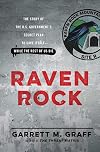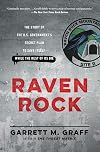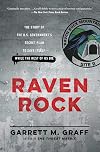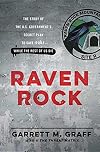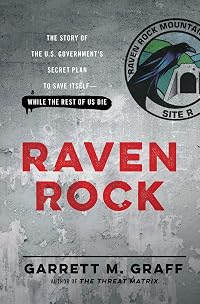
Raven Rock: The Story of the U.S. Government's Secret Plan to Save Itself While the Rest of Us Die
by Garrett M. Graff
On This Page
Description
"The eye-opening truth about the government's secret plans to survive a catastrophic attack on US soil--even if the rest of us die--a roadmap that spans from the dawn of the nuclear age to today"--Provided by publisher.Tags
Recommendations





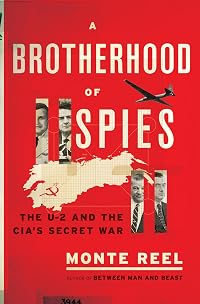
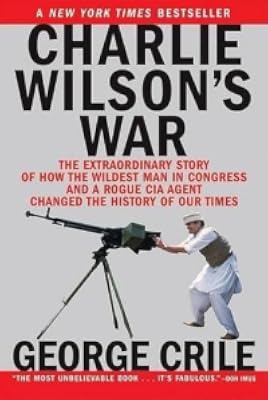
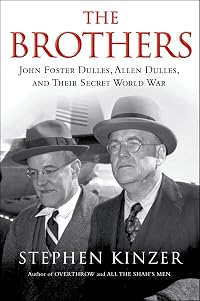
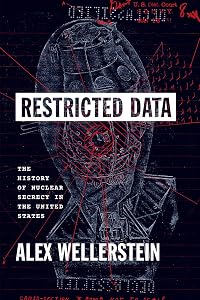












Member Reviews
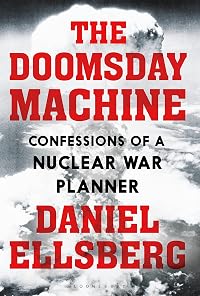
I read Raven Rock right after Daniel Ellsberg's The Doomsday Machine: Confessions of a Nuclear War Planner (which I recommend), which made for some enlightening moments of reading the same events from different perspectives. Eisenhower's predelegation of nuclear weapons authority, for example, comes across quite differently when it's discovered in the field vs. evolved from the president's concerns. Add Eric Schlosser's Command and Control: Nuclear Weapons, the Damascus Accident, and the Illusion of Safety, and we're now far enough from the Cold War to have a set of accessible histories of the era that give more of the picture of just how dangerous it was.
Ellsberg: The plan was to kill everybody in response to any active war with the show more Soviets.
Schlosser: We came a lot closer to accidental war than we knew, and we also almost nuked ourselves a few times.
Graff: Your plan to escape to the wilderness was futile because the Soviets knew about, and presumably targeted, the secret bunkers you didn't know were in the same hills.
Ellsberg, again: Nuclear war plans were going to kill everyone, anyway.
I've read heavier books and papers about nuclear weapons strategy over the years, but these books have provided the context that was always secret. Let's call it, seeing the challenge with fresh eyes. show less
Ellsberg: The plan was to kill everybody in response to any active war with the show more Soviets.
Schlosser: We came a lot closer to accidental war than we knew, and we also almost nuked ourselves a few times.
Graff: Your plan to escape to the wilderness was futile because the Soviets knew about, and presumably targeted, the secret bunkers you didn't know were in the same hills.
Ellsberg, again: Nuclear war plans were going to kill everyone, anyway.
I've read heavier books and papers about nuclear weapons strategy over the years, but these books have provided the context that was always secret. Let's call it, seeing the challenge with fresh eyes. show less
Two disclosures: I was a very minor player during the Cold War as an American diplomat, and I know the author, who is a close friend of our oldest son. Okay, that out of the way, this is an important book, well-researched and well-written. Graff relates the history of efforts to insure continuity of government in the event of a nuclear war from the time of Harry Truman through the end of the Obama Administration. That's a lot of ground to cover but cover it he does, and well. This book brought back a lot of memories, from the Cuban Missile Crisis to war exercises I took part in as an embassy liaison--in one of the bunkers Graff mentions in passing. For others this book is an education, raising questions about the orientation of our show more "defense" strategy in the nuclear age, the likelihood that a nuclear exchange or other major disaster affecting Washington, D.C. will leave our Constitutional processes intact, and the efficacy of disaster planning. show less
Super interesting cold war history book that doesn't really focus on the cold war, but rather focuses on the continuity of government planning from ~1950 - 2001. Closely follows presidential changes between administrations, ongoing war efforts, and CoG events and how they shaped the way the govt handles situations. Pretty interesting actually!
Raven Rock is an exhaustive history/survey of the procedures and facilities for saving the US Federal government from a nuclear attack. Today we call it "prepping" but the government has been doing it large-scale since the 1950s. The book centers on two hardened bunkers, one near Camp David Maryland called Raven Rock; and Mount Weather in Virginia. Places where everyone in DC -- with the right pass -- would supposedly bug-out in the event of incoming ICBMs. There are many other hardened bunkers around the US, 100s of them. The program, known as Continuity of Government, costs over 2 billion a year. It has evolved over the years with each President as the book goes into great detail.
A book on this topic could easily stray into show more conspiracy woowoo but it stays grounded in the facts. While most of it is new to me, I didn't find much surprising but am glad to put all these things into context and remove some of the secrecy surrounding the program which just shows it to be weird and fragile in the end. If we did have a nuclear war it would be a failure of the government and better off starting over from scratch. The bunkers create a false sense of security, ironically heightening the danger of creating the thing it seeks to avoid. show less
A book on this topic could easily stray into show more conspiracy woowoo but it stays grounded in the facts. While most of it is new to me, I didn't find much surprising but am glad to put all these things into context and remove some of the secrecy surrounding the program which just shows it to be weird and fragile in the end. If we did have a nuclear war it would be a failure of the government and better off starting over from scratch. The bunkers create a false sense of security, ironically heightening the danger of creating the thing it seeks to avoid. show less
This was a really good book. Since the beginning of the Cold War the government has spent billions on the continuation of itself, its institutions and people in the event of a nuclear war. Bunkers have been dug, evacuation schemes devised in what became giant Rube-Goldberg contraptions. As trial runs have happened and natural disasters occurred, one thing is obvious, plans for dealing with a widespread nuclear are not up to task.
Note to publisher: This is a book about government; a glossary of acronyms would have been handy.
Note to publisher: This is a book about government; a glossary of acronyms would have been handy.
While there was VERY interesting information in this book, it was frequently buried under piles of not terribly pertinent details. A member of my book group compared the book to a text book. The level of detail in this book made it a grueling read for me.
So while the information about the U.S.'s doomsday prep is fascinating, this book is definitely not a nonfiction novel.
So while the information about the U.S.'s doomsday prep is fascinating, this book is definitely not a nonfiction novel.
More like 4.5 stars. Really deep dive into our government's preparedness for nuclear war. The thing I had trouble with was keeping all the people straight, some didn't have explanations of their role or why they were in the book.
Members
- Recently Added By
Lists

BEST BOOKS TO UNDERSTAND XX CENTURY'S HISTORY
63 works; 3 members

The Cold War
54 works; 2 members
Author Information

14+ Works 2,456 Members
Garrett M. Graff, a magazine journalist and historian, has spent more than a dozen years covering politics, technology, and national security. He's written for publications from Wired to the New York Times, and he's served as the editor of two of Washington's most prestigious magazines, Washingtonian and Politico Magazine. His books include The show more Threat Matrix: Inside Robert Mueller's FBI and the War on Global Terror and The First Campaign: Globalization, the Web, and the Race for the White House. He lives in Vermont. show less
Common Knowledge
- Canonical title
- Raven Rock: The Story of the U.S. Government's Secret Plan to Save Itself While the Rest of Us Die
- Original publication date
- 2017
- Epigraph
- Doomsday is near. Die all, die merrily.
--Henry IV, Part 1, Shakespeare - Dedication
- To KFB, who encourages my curiosity
- Publisher's editor
- Ferrari-Adler, Jofie; Haubner, Julianna; Evans, Jonathan; Chase, Fred; Schweitzer, Jay
- Blurbers
- Thomas, Evan; Brower, Kate Andersen; Isaacson, Walter; Wilber, Del Quentin
- Original language
- English
- Canonical DDC/MDS
- 363.350973
- Canonical LCC
- UA927 .G73 2017
Classifications
- Genres
- History, Nonfiction, General Nonfiction, Politics and Government
- DDC/MDS
- 363.350973 — Society, government, & culture Social problems and social services Public Safety - Police, Crime Investigation Terrorism, Disasters, Civil Defense Civil defense Civil defense (historical ∙ biographical ∙ geographical) Civil defense in North America Civil defense in the United States
- LCC
- UA927 .G73 — Military Science Armies: Organization, distribution, military situation Armies: Organization, distribution, military situation Civil defense
- BISAC
Statistics
- Members
- 337
- Popularity
- 93,825
- Reviews
- 8
- Rating
- (3.76)
- Languages
- English
- Media
- Paper, Audiobook, Ebook
- ISBNs
- 8
- ASINs
- 4