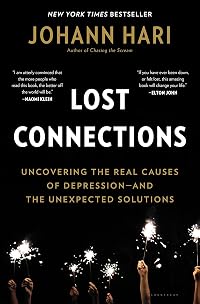
Lost Connections: Why You’re Depressed and How to Find Hope
by Johann Hari
On This Page
Description
The New York Times bestseller from the author of Chasing the Scream, offering a radical new way of thinking about depression and anxiety.What really causes depression and anxiety—and how can we really solve them? Award-winning journalist Johann Hari suffered from depression since he was a child and started taking antidepressants when he was a teenager. He was told that his problems were caused by a chemical imbalance in his brain. As an adult, trained in the social sciences, he began to show more investigate whether this was true-and he learned that almost everything we have been told about depression and anxiety is wrong.
Across the world, Hari found social scientists who were uncovering evidence that depression and anxiety are not caused by a chemical imbalance in our brains. In fact, they are largely caused by key problems with the way we live today. Hari's journey took him from a mind-blowing series of experiments in Baltimore, to an Amish community in Indiana, to an uprising in Berlin. Once he had uncovered nine real causes of depression and anxiety, they led him to scientists who are discovering seven very different solutions—ones that work.
It is an epic journey that will change how we think about one of the biggest crises in our culture today. His TED talk, "Everything You Think You Know About Addiction Is Wrong," has been viewed more than eight million times and revolutionized the global debate. This book will do the same. show less
Tags
Recommendations

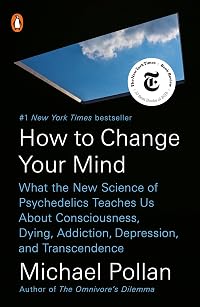

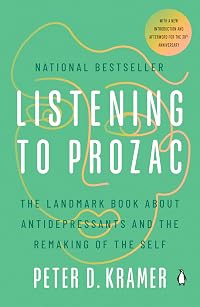
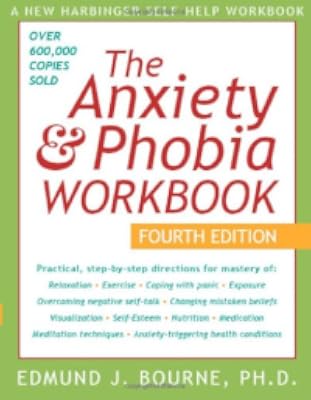
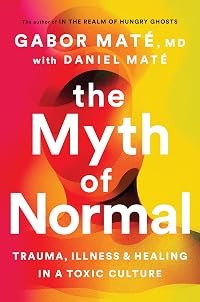















Member Recommendations

Member Reviews
Johann Hari takes a stand against the commonly held belief that anxiety and depression are caused by chemical imbalances in the brain. Instead, he cites studies that have shown the causes to be cultural, environmental, and sociological. He recommends fixing the sources of depression through reconnecting with people, values, meaningful work, the natural world, a hopeful future, and respect/status. He contends we have lost these important forms of connection in our modern individualistic society.
This is a book of “big audacious claims;” however, I did not find it particularly innovative. Many others have pointed to people struggling with grief, poverty, and childhood traumas as being candidates to develop depression. Avoiding show more overreliance on social media, digital devices, and advertising are also fairly commonly espoused solutions, as is the value of mindfulness and talk therapy.
I enjoyed the success stories where people have connected with each other. These are uplifting and heartwarming stories of community activism, gardening groups, a small business collective, and several others. But these are anecdotes not proofs. Hari is a journalist, not a scientist. I would have appreciated more quotes containing evidence from the footnoted sources. Hari’s social solutions are oriented toward cultural changes that, as he admits, would be difficult to agree upon, fund, and implement.
In summary, this is not the scientific book that I thought it was when I picked it up. This is a topic of interest to me, and I have read many books with different approaches. In my opinion, the field is not as clear-cut as Hari paints it in this book. I recommend reading widely and consulting qualified professionals before making any health-related decisions or discontinuing any prescribed medications.
2.5 show less
This is a book of “big audacious claims;” however, I did not find it particularly innovative. Many others have pointed to people struggling with grief, poverty, and childhood traumas as being candidates to develop depression. Avoiding show more overreliance on social media, digital devices, and advertising are also fairly commonly espoused solutions, as is the value of mindfulness and talk therapy.
I enjoyed the success stories where people have connected with each other. These are uplifting and heartwarming stories of community activism, gardening groups, a small business collective, and several others. But these are anecdotes not proofs. Hari is a journalist, not a scientist. I would have appreciated more quotes containing evidence from the footnoted sources. Hari’s social solutions are oriented toward cultural changes that, as he admits, would be difficult to agree upon, fund, and implement.
In summary, this is not the scientific book that I thought it was when I picked it up. This is a topic of interest to me, and I have read many books with different approaches. In my opinion, the field is not as clear-cut as Hari paints it in this book. I recommend reading widely and consulting qualified professionals before making any health-related decisions or discontinuing any prescribed medications.
2.5 show less
This book was a surprise. Hari carefully challenges the still-popular belief that depression is fundamentally an imbalance of brain hormones like seratonin. Instead, he convincingly (very convincingly, in fact) marshals the alternative view that people how are depressed are victims not of brain chemicals, but of social malfunctions. Loneliness, pursuit of "junk values" such as material acquisition, dead end and humiliating work conditions, are among the variables that research has shown align with diagnoses of depression--independent of brain functions. This is why antidepressants are largely ineffective, at least over the long term.
Besides the captivating ideas, the prose itself is engaging, and does an excellent job of leading the show more reader through an ocean of research literature. show less
Besides the captivating ideas, the prose itself is engaging, and does an excellent job of leading the show more reader through an ocean of research literature. show less
In Lost Connections: Uncovering the Real Causes of Depression – and the Unexpected Solutions, Johann Hari takes a stand against the idea of biological causation of depression and anxiety. I expected going in that I would disagree with what Hari had to say, but it surpassed my expectations.
To start off, let me tell you the perspective I’m coming from. I support a biopsychosocial model that recognizes mental illness as complex and multifactorial. Every individual’s illness stems from a unique combination of factors, and for a treatment plan to work best it needs to effectively target whatever contributing factors can be identified. Sometimes that’s meds, sometimes that’s psychotherapy, and more often than not, it’s a show more combination of multiple different strategies. Meds aren’t a miracle cure, but then again, nothing is.
Now that we’ve got that out of the way, let’s jump headfirst into the book.
Antidepressants will fix everything?
This book set off red flags for me early on. The author wrote that, at age 18, he had an epiphany—he had this medical condition called depression. From information in the media, he knew that antidepressants were just the thing to quickly fix everything. Initially, he believed that paroxetine made him feel even better than simply not being depressed. He even spread the word to others that depression was all about serotonin and antidepressants were the best thing since sliced bread.
Years later, his therapist pointed out to him that he still seemed depressed; the author insisted that he couldn’t possibly be, because paroxetine was keeping his serotonin levels up. After that, he changed his mind and decided to stop meds. “It was only when I stopped taking the [SSRI] and I started having more pleasurable sex again that I remembered regular sex is one of the best natural antidepressants in the world.”
If whatever is going on with you is fixed by sex, let me suggest that it’s probably not depression.
Enter Irving Kirsch
Part of Hari’s information-gathering in preparing this book was speaking to researcher Irving Kirsch. Kirsch criticized the typical design of drug trials, i.e. randomized placebo-controlled trials. Kirsch argued that to truly understand the effect of a drug, there should be 3 arms to these kinds of studies: drug, placebo, and no-intervention, with the third arm capturing the number of people who get better with no treatment or placebo at all.
This sounds all well and good, except that it gives you zero new information about what the drug does, making it rather irrelevant.
The serotonin hypothesis
Hari presented the inaccurate serotonin deficiency hypothesis for depression as reason to believe the illness doesn’t have a biological basis. That hypothesis was originally developed to try to explain why drugs that blocked serotonin reuptake had an antidepressant effect, and at the time they didn’t have the scientific techniques available to test whether this was really accurate.
It’s since become clear that depression is not related to a deficit in the absolute amount of serotonin, but that doesn’t mean we should throw the baby out with the bathwater. Just because the overly simplistic early explanation was wrong doesn’t mean that neurotransmitters have nothing to do with depression period, and it doesn’t mean that antidepressants that affect neurotransmission won’t work. It’s like saying that because the flat earth hypothesis is wrong, there must be no earth at all.
Bereavement and depression
The author raised concerns about bereavement being mislabelled as depression. He interviewed a woman who said “So now if your baby dies and you go to the doctor the next day and you’re in extreme distress, you can be diagnosed immediately.” That’s simply untrue, but presumably it was included anyway for emotional impact.
In the DSM-IV, someone couldn’t be diagnosed with a major depressive episode if they were also going through bereavement. Hari raised concerns that maybe depression wasn’t so sound an entity if a normal experience mimicked the symptoms, but then turned around and questioned the removal of that bereavement exclusion in the DSM-5 and the addition of only a “vague footnote”.
That “vague footnote” doesn’t look vague to me, and it’s not a footnote. The relevant section in the DSM-5 says:
Responses to a significant loss (e.g., bereavement, financial ruin, losses from a natural disaster, a serious medical illness or disability) may include the feelings of intense sadness, rumination about the loss, insomnia, poor appetite, and weight loss noted in Criterion A, which may resemble a depressive episode. Although such symptoms may be understandable or considered appropriate to the loss, the presence of a major depressive episode in addition to the normal response to a significant loss should also be carefully considered. This decision inevitably requires the exercise of clinical judgment based on the individual’s history and the cultural norms for the expression of distress in the context of loss.
So yeah, no day-after-death diagnosis.
Disconnection as cause for depression
The author announced that based on his information gathering (and no training whatsoever in psychiatry/psychology), he has identified 9 causes of depression. He adds that depression is a form of grief over these various forms of disconnection—the lost connections of the book’s title. The identified causes for depression are:
Disconnection from meaningful work
Disconnection from other people
Disconnection from meaningful values: The author talked about “junk values”, and particularly materialism, as being problematic and something he had struggled with. It was around this point that it really started to sound like the author was referring to depression and anxiety as negative emotional states and existential malaise and not necessarily appreciating the difference between these emotion states and mood/anxiety disorders.
Disconnection from childhood trauma
Disconnection from status and respect
Disconnection from the natural world
Disconnection from a hopeful or secure future
The real role of genes and brain changes: The author saw 2 potential roles for biology: circumstances can cause brain changes that accelerate the problem, OR
genetic variations may contribute to depression but only in specific environmental circumstances; they can’t cause depression without an environmental trigger
Reconnection
Part II of the book, explores ways for people to reestablish those needed connections. This starts off with a rather rambling story about an apartment block in Berlin slated for demolition. An older woman had posted a note saying she was going to kill herself because she’d be losing her housing and she had no other options (there’s no indication that she had any history of mental illness).
This sparked community activism that positively impacted all of those involved. And lo and behold, the woman’s suicidal thinking disappeared! So that’s what I must have been missing those times I tried to kill myself! It called to mind a line from a medical historian interviewed in the documentary The Age of Anxiety: “If your problem can be corrected by a new boyfriend or a cheque for $5000, you probably don’t have a psychiatric disorder.”
Hari concluded that “It’s thinking about you, you, you that’s helped to make you feel so lousy. Don’t be you. Be us. Be we. Be part of the group. Make the group worth it… So part of overcoming our depression and anxiety—the first step, and one of the most crucial—is coming together.”
The author says that “work is essential”, which made me wonder why he doesn’t recognize the privilege of that stance. He talked to a woman who was anxious because of her negative work situation. She then decided to join her husband and others in creating a cooperative bike repair business, and things became hunky dory. The author describes this “recipe for mental health” as “Elect Your Boss”. So that’s what we’re all doing wrong…
Hari wrote that if he could speak to his younger self, he would say: “You are not suffering from a chemical imbalance in your brain. You are suffering from a social and spiritual imbalance in how we live. Much more than you’ve been told up to now, it’s not serotonin; it’s society. It’s not your brain; it’s your pain… Because you are being told depression and anxiety are misfirings of brain chemicals, you will stop looking for answers in your life and your psyche and your environment and how you might change them. You will become sealed off in a serotonin story.” I suspect there may be some funky paint fumes going on up in that serotonin story.
Some concluding thoughts
If this had been a book about general dissatisfaction, angst, and unhappiness in society at large, this would be a different review. I suspect that Hillary Clinton and some of the other well-known people who have commented positively on the book may have been looking at it from that perspective. If the book had talked about some people having mental illness that is heavily influenced by social/environmental factors, or the need to take social/environmental factors into account in approaching the treatment for mental illness, then I would have far more positive things to say.
But that’s not the case. He says it’s all disconnect. I think that’s just as bad as the purely biomedical stance that he criticizes. Such a reductionistic approach really isn’t useful to anybody. Beyond that, it’s insulting to those of us living with the complexity of severe mental illness.
So what can I conclude personally from this book? Apparently, I’m supposed to engage in local activism, participate in a community garden, start a co-op, hang out in nature, and get laid. Forget meds, give me a little penis therapy instead. Why would anyone be suicidal when they could bond over community activism?
Of the various disconnects that he believes cause depression, I had a whopping none for my first two depressive episodes. Screw pain, I was generally happy and optimistic. I had no childhood trauma, a supportive social circle, a job I liked, a strong preference for the value of travelling the world rather than accumulating possessions, a home in an urban oasis right with a forest just steps away… and yet there I was, depressed, psychotic, suicidal.
Meds are certainly not the only tool in my toolbox, but without them, I probably wouldn’t be alive today. I’m not alone in that experience of depression, and by laying out nine little boxes, Hari has effectively disconnected from those of us whose experiences of depression don’t fit those boxes.
https://mentalhealthathome.org/2018/05/15/book-review-rant-lost-connections/ show less
To start off, let me tell you the perspective I’m coming from. I support a biopsychosocial model that recognizes mental illness as complex and multifactorial. Every individual’s illness stems from a unique combination of factors, and for a treatment plan to work best it needs to effectively target whatever contributing factors can be identified. Sometimes that’s meds, sometimes that’s psychotherapy, and more often than not, it’s a show more combination of multiple different strategies. Meds aren’t a miracle cure, but then again, nothing is.
Now that we’ve got that out of the way, let’s jump headfirst into the book.
Antidepressants will fix everything?
This book set off red flags for me early on. The author wrote that, at age 18, he had an epiphany—he had this medical condition called depression. From information in the media, he knew that antidepressants were just the thing to quickly fix everything. Initially, he believed that paroxetine made him feel even better than simply not being depressed. He even spread the word to others that depression was all about serotonin and antidepressants were the best thing since sliced bread.
Years later, his therapist pointed out to him that he still seemed depressed; the author insisted that he couldn’t possibly be, because paroxetine was keeping his serotonin levels up. After that, he changed his mind and decided to stop meds. “It was only when I stopped taking the [SSRI] and I started having more pleasurable sex again that I remembered regular sex is one of the best natural antidepressants in the world.”
If whatever is going on with you is fixed by sex, let me suggest that it’s probably not depression.
Enter Irving Kirsch
Part of Hari’s information-gathering in preparing this book was speaking to researcher Irving Kirsch. Kirsch criticized the typical design of drug trials, i.e. randomized placebo-controlled trials. Kirsch argued that to truly understand the effect of a drug, there should be 3 arms to these kinds of studies: drug, placebo, and no-intervention, with the third arm capturing the number of people who get better with no treatment or placebo at all.
This sounds all well and good, except that it gives you zero new information about what the drug does, making it rather irrelevant.
The serotonin hypothesis
Hari presented the inaccurate serotonin deficiency hypothesis for depression as reason to believe the illness doesn’t have a biological basis. That hypothesis was originally developed to try to explain why drugs that blocked serotonin reuptake had an antidepressant effect, and at the time they didn’t have the scientific techniques available to test whether this was really accurate.
It’s since become clear that depression is not related to a deficit in the absolute amount of serotonin, but that doesn’t mean we should throw the baby out with the bathwater. Just because the overly simplistic early explanation was wrong doesn’t mean that neurotransmitters have nothing to do with depression period, and it doesn’t mean that antidepressants that affect neurotransmission won’t work. It’s like saying that because the flat earth hypothesis is wrong, there must be no earth at all.
Bereavement and depression
The author raised concerns about bereavement being mislabelled as depression. He interviewed a woman who said “So now if your baby dies and you go to the doctor the next day and you’re in extreme distress, you can be diagnosed immediately.” That’s simply untrue, but presumably it was included anyway for emotional impact.
In the DSM-IV, someone couldn’t be diagnosed with a major depressive episode if they were also going through bereavement. Hari raised concerns that maybe depression wasn’t so sound an entity if a normal experience mimicked the symptoms, but then turned around and questioned the removal of that bereavement exclusion in the DSM-5 and the addition of only a “vague footnote”.
That “vague footnote” doesn’t look vague to me, and it’s not a footnote. The relevant section in the DSM-5 says:
Responses to a significant loss (e.g., bereavement, financial ruin, losses from a natural disaster, a serious medical illness or disability) may include the feelings of intense sadness, rumination about the loss, insomnia, poor appetite, and weight loss noted in Criterion A, which may resemble a depressive episode. Although such symptoms may be understandable or considered appropriate to the loss, the presence of a major depressive episode in addition to the normal response to a significant loss should also be carefully considered. This decision inevitably requires the exercise of clinical judgment based on the individual’s history and the cultural norms for the expression of distress in the context of loss.
So yeah, no day-after-death diagnosis.
Disconnection as cause for depression
The author announced that based on his information gathering (and no training whatsoever in psychiatry/psychology), he has identified 9 causes of depression. He adds that depression is a form of grief over these various forms of disconnection—the lost connections of the book’s title. The identified causes for depression are:
Disconnection from meaningful work
Disconnection from other people
Disconnection from meaningful values: The author talked about “junk values”, and particularly materialism, as being problematic and something he had struggled with. It was around this point that it really started to sound like the author was referring to depression and anxiety as negative emotional states and existential malaise and not necessarily appreciating the difference between these emotion states and mood/anxiety disorders.
Disconnection from childhood trauma
Disconnection from status and respect
Disconnection from the natural world
Disconnection from a hopeful or secure future
The real role of genes and brain changes: The author saw 2 potential roles for biology: circumstances can cause brain changes that accelerate the problem, OR
genetic variations may contribute to depression but only in specific environmental circumstances; they can’t cause depression without an environmental trigger
Reconnection
Part II of the book, explores ways for people to reestablish those needed connections. This starts off with a rather rambling story about an apartment block in Berlin slated for demolition. An older woman had posted a note saying she was going to kill herself because she’d be losing her housing and she had no other options (there’s no indication that she had any history of mental illness).
This sparked community activism that positively impacted all of those involved. And lo and behold, the woman’s suicidal thinking disappeared! So that’s what I must have been missing those times I tried to kill myself! It called to mind a line from a medical historian interviewed in the documentary The Age of Anxiety: “If your problem can be corrected by a new boyfriend or a cheque for $5000, you probably don’t have a psychiatric disorder.”
Hari concluded that “It’s thinking about you, you, you that’s helped to make you feel so lousy. Don’t be you. Be us. Be we. Be part of the group. Make the group worth it… So part of overcoming our depression and anxiety—the first step, and one of the most crucial—is coming together.”
The author says that “work is essential”, which made me wonder why he doesn’t recognize the privilege of that stance. He talked to a woman who was anxious because of her negative work situation. She then decided to join her husband and others in creating a cooperative bike repair business, and things became hunky dory. The author describes this “recipe for mental health” as “Elect Your Boss”. So that’s what we’re all doing wrong…
Hari wrote that if he could speak to his younger self, he would say: “You are not suffering from a chemical imbalance in your brain. You are suffering from a social and spiritual imbalance in how we live. Much more than you’ve been told up to now, it’s not serotonin; it’s society. It’s not your brain; it’s your pain… Because you are being told depression and anxiety are misfirings of brain chemicals, you will stop looking for answers in your life and your psyche and your environment and how you might change them. You will become sealed off in a serotonin story.” I suspect there may be some funky paint fumes going on up in that serotonin story.
Some concluding thoughts
If this had been a book about general dissatisfaction, angst, and unhappiness in society at large, this would be a different review. I suspect that Hillary Clinton and some of the other well-known people who have commented positively on the book may have been looking at it from that perspective. If the book had talked about some people having mental illness that is heavily influenced by social/environmental factors, or the need to take social/environmental factors into account in approaching the treatment for mental illness, then I would have far more positive things to say.
But that’s not the case. He says it’s all disconnect. I think that’s just as bad as the purely biomedical stance that he criticizes. Such a reductionistic approach really isn’t useful to anybody. Beyond that, it’s insulting to those of us living with the complexity of severe mental illness.
So what can I conclude personally from this book? Apparently, I’m supposed to engage in local activism, participate in a community garden, start a co-op, hang out in nature, and get laid. Forget meds, give me a little penis therapy instead. Why would anyone be suicidal when they could bond over community activism?
Of the various disconnects that he believes cause depression, I had a whopping none for my first two depressive episodes. Screw pain, I was generally happy and optimistic. I had no childhood trauma, a supportive social circle, a job I liked, a strong preference for the value of travelling the world rather than accumulating possessions, a home in an urban oasis right with a forest just steps away… and yet there I was, depressed, psychotic, suicidal.
Meds are certainly not the only tool in my toolbox, but without them, I probably wouldn’t be alive today. I’m not alone in that experience of depression, and by laying out nine little boxes, Hari has effectively disconnected from those of us whose experiences of depression don’t fit those boxes.
https://mentalhealthathome.org/2018/05/15/book-review-rant-lost-connections/ show less
Hari argues that we don’t really know what the relationship between serotonin and mental states is, contrary to what popular science writing of the past 20 years indicated. More to the point, he argues that cultural, economic, and psychological factors are far more significant to many cases of depression than purely “endogenous” depression. Hari himself was on antidepressants for years, and suggests that they work for some subset of depressed people, but says that the evidence for long-term utility is far less than that for short-term assistance. He also argues that biologizing an explanation is not going to lead to more cultural acceptance by pointing to an experiment in which people who were told that mental illness was a result show more of biochemistry “zapped” a subject they perceived to be mentally ill more than people who were told that the illness was a result of what had happened to them in life. I want more data, but I’m open to persuasion.
As Hari points out, when upper-class white women complained of “the problem with no name” in the 1950s/60s, they had everything that their culture told them they were supposed to want. The problem was that their culture had crappy values, and adhering to those values was depression-making. Similarly, economic insecurity, huge inequalities, and constant media exposure to the life we “should” be living is depression-generating for many people today. So is trauma; he tells the heartbreaking, and Freud-evoking, story of an obesity doctor who started to ask people what else had happened to them around the time they started to put on weight, and heard numerous rape/abuse stories; he was then chastised by a colleague for believing his subjects. But for them, obesity seemed like a solution to the problem of being the target of predatory men; telling them to learn how to eat right would be “grotesque.” More generally, Hari considers depression “a response to the sense of humiliation the modern world inflicts on many of us”—the powerlessness at work, the lack of feeling that you matter, the constant comparisons to richer and better-looking people in ads, the insecurity that means you could lose status at any moment. These are the things that we ultimately need to fix, along with generating authentic connections to other people through volunteering and other kinds of social engagement. Hari concludes that we shouldn’t tell ourselves that, until those fixes exist, pills are likely going to be enough. show less
As Hari points out, when upper-class white women complained of “the problem with no name” in the 1950s/60s, they had everything that their culture told them they were supposed to want. The problem was that their culture had crappy values, and adhering to those values was depression-making. Similarly, economic insecurity, huge inequalities, and constant media exposure to the life we “should” be living is depression-generating for many people today. So is trauma; he tells the heartbreaking, and Freud-evoking, story of an obesity doctor who started to ask people what else had happened to them around the time they started to put on weight, and heard numerous rape/abuse stories; he was then chastised by a colleague for believing his subjects. But for them, obesity seemed like a solution to the problem of being the target of predatory men; telling them to learn how to eat right would be “grotesque.” More generally, Hari considers depression “a response to the sense of humiliation the modern world inflicts on many of us”—the powerlessness at work, the lack of feeling that you matter, the constant comparisons to richer and better-looking people in ads, the insecurity that means you could lose status at any moment. These are the things that we ultimately need to fix, along with generating authentic connections to other people through volunteering and other kinds of social engagement. Hari concludes that we shouldn’t tell ourselves that, until those fixes exist, pills are likely going to be enough. show less
I've often wondered about depression. It seems to take so many forms, from people who are miserable because of their life situation, to those suffering the most excruciating grief over the loss of a loved one. How could it be that one 'illness' could show the same symptoms despite the massive variety of possible causes? How could all of this be because of a chemical imbalance in the brain? If I feel sad, does it mean that the same thing is going wrong with my brain as is happening to the brain of a woman who miscarries? It doesn't make sense.
In 'Lost Connections' Johann Hari looks at depression from the inside. His own diagnosis of clinical depression led him to taking antidepressants for years, yet he never seemed to truly recover. As show more he wondered why, he began to question the assumptions that we have made in the past hundred years as to what the causes of depression are, and what depression actually is. This enlightening book is the result of his research, and as a lay reader on the topic I found it fascinating. His conclusions can be summed up rather simply: how is it possible to live happily in a world designed to make us miserable? When we re-frame depression that way, we see that the drugs won't work, they'll just make it worse: reconnection, as the title implies, is the route we must follow to escape our unhappiness.
There are those who have written negative reviews of this book, and I can certainly sympathise with the them - for three reasons. Firstly, Hari calls into question a lot of what we take for granted, and when you are convinced that the solution to your depression lies in finding the right drug cocktail, being told that the drugs are unlikely to work at all can feel like a slap in the face. Secondly, some readers have long been aware of the research that Hari references; nothing in the book will come as a surprise to them. To those of us who have never before read up on this issue, however, the book serves its purpose very well, summarising what we know and what we don't know about depression. And third, the writing style is not perfect; it's what I would call 'Gladwell-lite.' There are too many attempts to make of the story a real narrative, which means backtracking again and again to introduce characters the 'proper' way. Doing this once or twice would be forgivable, but the fact that it happens dozens of times every chapter means that reading the book is sometimes more of a struggle than it should be.
Despite any slightly negative words that I might offer about this text, I really have no hesitation in recommending it to everyone out there who either has depression, or is wondering how they might help somebody with depression. There's useful stuff in here - perhaps not the stuff that everybody wants or will use, but if you dig around and look for what resonates, you might find a new approach to living within these pages. show less
In 'Lost Connections' Johann Hari looks at depression from the inside. His own diagnosis of clinical depression led him to taking antidepressants for years, yet he never seemed to truly recover. As show more he wondered why, he began to question the assumptions that we have made in the past hundred years as to what the causes of depression are, and what depression actually is. This enlightening book is the result of his research, and as a lay reader on the topic I found it fascinating. His conclusions can be summed up rather simply: how is it possible to live happily in a world designed to make us miserable? When we re-frame depression that way, we see that the drugs won't work, they'll just make it worse: reconnection, as the title implies, is the route we must follow to escape our unhappiness.
There are those who have written negative reviews of this book, and I can certainly sympathise with the them - for three reasons. Firstly, Hari calls into question a lot of what we take for granted, and when you are convinced that the solution to your depression lies in finding the right drug cocktail, being told that the drugs are unlikely to work at all can feel like a slap in the face. Secondly, some readers have long been aware of the research that Hari references; nothing in the book will come as a surprise to them. To those of us who have never before read up on this issue, however, the book serves its purpose very well, summarising what we know and what we don't know about depression. And third, the writing style is not perfect; it's what I would call 'Gladwell-lite.' There are too many attempts to make of the story a real narrative, which means backtracking again and again to introduce characters the 'proper' way. Doing this once or twice would be forgivable, but the fact that it happens dozens of times every chapter means that reading the book is sometimes more of a struggle than it should be.
Despite any slightly negative words that I might offer about this text, I really have no hesitation in recommending it to everyone out there who either has depression, or is wondering how they might help somebody with depression. There's useful stuff in here - perhaps not the stuff that everybody wants or will use, but if you dig around and look for what resonates, you might find a new approach to living within these pages. show less
An interesting premise. I found the first half of the book more intriguing - his reporting of scientific studies that support his premise that there is little evidence to support the treatment of depression and anxiety with drugs - than I found his outline of suggested societal remedies in the second half. Although I’m not completely convinced I will certainly be more skeptical of explanations that depression and anxiety are brain disorders best treated with pharmaceuticals.
Depression and anxiety are now so widespread that it is tempting to see them as by-products of modern society itself, as the necessary price we pay for the techno marvels of our media-saturated, super-connected and fast paced world. Of course, as attested by the melancholia of the ancient Greeks, the demonic possession of medieval times, or the various strains of Freudian psychopathology, the basic mental categories involved are far from new. Some of us, it seems, have always suffered in these ways, and (as a consequence of human nature itself, it is often implied) will no doubt continue to do so.
But if there is something that distinguishes the modern phenomena of depression and anxiety, it is their scope. As Hari points out, around 1 show more in 5 US adults is currently taking some form of psychiatric medication. More specifically, recent figures suggest that around 13% of the US population now take antidepressants, with the UK not far behind – and the figures are rising. But why is this? Are the inhabitants of modern societies getting more anxious and depressed? Or is there some other reason? And, more importantly, what can we do about it? Lost Connections is Johann Hari’s attempt to answer these questions, which, as a long-term user of antidepressants, he would also seem to be in a good position to ask.
Hari’s account of his experience on antidepressants will no doubt resonate with many fellow sufferers: the initial revelation (depression is merely a chemical imbalance in the brain), the relief (this imbalance can be redressed by medication), followed by the familiar pattern of diminishing returns, as the initial effect is short lived (the initial dose must be increased, then increased again, then swapped for another brand, then that at a higher dose, then switched again for another drug… and so on). But Hari’s book is not a misery memoir; the personal experiences he recounts are not cries for sympathy or a need to share, but each is rather carefully chosen to illustrate key points and to underline his own sincere investment in the answers to the questions he seeks. As such, while it is in one sense a very personal book, it is also a keenly critical investigative journey. So, what does he find?
The biggest and most controversial of Hari’s claims comes at the very beginning: the drugs don’t work. Or rather, they work in the short term, and for a small minority of people. What’s more, as his investigations shockingly reveal, the ‘science’ behind antidepressants’ effectiveness is curiously weak. The notion that depression and anxiety are caused by a chemical imbalance or a lack of serotonin is debunked by a number of respected authorities, one of whom calls it frankly ‘a myth’. More digging reveals that the clinical trials that are meant to confirm the efficacy of antidepressants basically reveal them in most cases to be no more effective than a placebo; and even those cases where there is some effect, this is shown to be tiny. But can this really be the case? Would a tenth of the population be as well or better off on sugar pills? Throughout the book, Hari hedges his assertions and qualifies his findings, encouraging the reader to further investigate these obviously contentious topics (discussed and signposted in the endnotes). However, despite this modesty, it seems to me, Hari’s investigation is very even handed, often playing devil’s advocate to his own and other’s findings. Either way, Hari has done a huge public service in bringing this potential scandal to wider public attention.
However, Hari is not content with casting doubt on the efficacy of antidepressant medication, and looks first at what – if not brain chemistry – might be causing the current epidemic of depression and anxiety, before going on to suggest some possible solutions. In a nutshell, Hari argues, we are depressed and anxious because the world is depressing and anxiety making. We suffer because we are lonely; we live in isolated pockets, cut off from family and the wider community. Our work life is boring or stressful, and we are denied the meaning and sense of self-worth that a genuine task would provide. Stuck in dead-end jobs, in rigid hierarchies under uncaring bosses, we are denied status and a sense of purpose. We are cut off from the natural world, from the solace and sense of group belonging that evolution has programmed us to seek. As the impersonal machine of modern capitalist society churns on, it also ignores the cries for help that its inhumanity generates, failing to deal with childhood trauma and abuse, bereavement or other common negative experiences simply because the other cogs in the machine don’t have the time or energy to listen. Interestingly, Hari also largely dismisses the genetic causes, arguing that in depression and anxiety genes play at most a triggering role, making some of us merely more likely to develop symptoms under certain circumstances – and which in turn can be addressed best by social or psychological means. In summary, Hari concludes, depression and anxiety are determined by how people treat each other; their cure is therefore to change or redress that – to get a more meaningful job, to reconnect to each other and nature, to expand your sense of self through a sense of community, to give people a sense of security (perhaps through a universal basic income), or to break through the restrictions of the ego (through meditation, even perhaps micro-doses of magic mushrooms!).
For those suffering from anxiety or depression, some of these solutions may seem platitudes which ignore the seriousness of their condition. “Get some fresh air!”, “Go to the gym!”, and other well-meaning if misdirected advice, will be familiar to many sufferers. But Hari is not offering such platitudes. Faced with the reluctant conclusion that the drugs don’t work, his answers are not the bland prescriptions of someone with no empathy, but rather the tentative suggested steps of a fellow sufferer that he himself has begun to take. In this sense, the book’s humility and lack of dogma are its key strengths. It does not provide simple, clear cut answers, and the ones it does suggest imply a monumental task – that it is society that needs to change, not just the individual. However, it is an important and inspirational book, one which will hopefully inspire you to seek your own solutions, while providing intelligent and intriguing signposts to where you might possibly find them.
Gareth Southwell is a philosopher, writer and illustrator. show less
But if there is something that distinguishes the modern phenomena of depression and anxiety, it is their scope. As Hari points out, around 1 show more in 5 US adults is currently taking some form of psychiatric medication. More specifically, recent figures suggest that around 13% of the US population now take antidepressants, with the UK not far behind – and the figures are rising. But why is this? Are the inhabitants of modern societies getting more anxious and depressed? Or is there some other reason? And, more importantly, what can we do about it? Lost Connections is Johann Hari’s attempt to answer these questions, which, as a long-term user of antidepressants, he would also seem to be in a good position to ask.
Hari’s account of his experience on antidepressants will no doubt resonate with many fellow sufferers: the initial revelation (depression is merely a chemical imbalance in the brain), the relief (this imbalance can be redressed by medication), followed by the familiar pattern of diminishing returns, as the initial effect is short lived (the initial dose must be increased, then increased again, then swapped for another brand, then that at a higher dose, then switched again for another drug… and so on). But Hari’s book is not a misery memoir; the personal experiences he recounts are not cries for sympathy or a need to share, but each is rather carefully chosen to illustrate key points and to underline his own sincere investment in the answers to the questions he seeks. As such, while it is in one sense a very personal book, it is also a keenly critical investigative journey. So, what does he find?
The biggest and most controversial of Hari’s claims comes at the very beginning: the drugs don’t work. Or rather, they work in the short term, and for a small minority of people. What’s more, as his investigations shockingly reveal, the ‘science’ behind antidepressants’ effectiveness is curiously weak. The notion that depression and anxiety are caused by a chemical imbalance or a lack of serotonin is debunked by a number of respected authorities, one of whom calls it frankly ‘a myth’. More digging reveals that the clinical trials that are meant to confirm the efficacy of antidepressants basically reveal them in most cases to be no more effective than a placebo; and even those cases where there is some effect, this is shown to be tiny. But can this really be the case? Would a tenth of the population be as well or better off on sugar pills? Throughout the book, Hari hedges his assertions and qualifies his findings, encouraging the reader to further investigate these obviously contentious topics (discussed and signposted in the endnotes). However, despite this modesty, it seems to me, Hari’s investigation is very even handed, often playing devil’s advocate to his own and other’s findings. Either way, Hari has done a huge public service in bringing this potential scandal to wider public attention.
However, Hari is not content with casting doubt on the efficacy of antidepressant medication, and looks first at what – if not brain chemistry – might be causing the current epidemic of depression and anxiety, before going on to suggest some possible solutions. In a nutshell, Hari argues, we are depressed and anxious because the world is depressing and anxiety making. We suffer because we are lonely; we live in isolated pockets, cut off from family and the wider community. Our work life is boring or stressful, and we are denied the meaning and sense of self-worth that a genuine task would provide. Stuck in dead-end jobs, in rigid hierarchies under uncaring bosses, we are denied status and a sense of purpose. We are cut off from the natural world, from the solace and sense of group belonging that evolution has programmed us to seek. As the impersonal machine of modern capitalist society churns on, it also ignores the cries for help that its inhumanity generates, failing to deal with childhood trauma and abuse, bereavement or other common negative experiences simply because the other cogs in the machine don’t have the time or energy to listen. Interestingly, Hari also largely dismisses the genetic causes, arguing that in depression and anxiety genes play at most a triggering role, making some of us merely more likely to develop symptoms under certain circumstances – and which in turn can be addressed best by social or psychological means. In summary, Hari concludes, depression and anxiety are determined by how people treat each other; their cure is therefore to change or redress that – to get a more meaningful job, to reconnect to each other and nature, to expand your sense of self through a sense of community, to give people a sense of security (perhaps through a universal basic income), or to break through the restrictions of the ego (through meditation, even perhaps micro-doses of magic mushrooms!).
For those suffering from anxiety or depression, some of these solutions may seem platitudes which ignore the seriousness of their condition. “Get some fresh air!”, “Go to the gym!”, and other well-meaning if misdirected advice, will be familiar to many sufferers. But Hari is not offering such platitudes. Faced with the reluctant conclusion that the drugs don’t work, his answers are not the bland prescriptions of someone with no empathy, but rather the tentative suggested steps of a fellow sufferer that he himself has begun to take. In this sense, the book’s humility and lack of dogma are its key strengths. It does not provide simple, clear cut answers, and the ones it does suggest imply a monumental task – that it is society that needs to change, not just the individual. However, it is an important and inspirational book, one which will hopefully inspire you to seek your own solutions, while providing intelligent and intriguing signposts to where you might possibly find them.
Gareth Southwell is a philosopher, writer and illustrator. show less
Members
- Recently Added By
Lists

Top Five Books of 2018
802 works; 265 members

Review 1
30 works; 1 member

2023
32 works; 1 member

Psychology: Abuse, Grief, Self-Help
189 works; 1 member

Men's healing resources
747 works; 1 member
Author Information

12 Works 4,003 Members
Johann Hari is a British journalist. His TED talk, "Everything You Think You Know about Addiction Is Wrong," was one of the most viewed of 2015, and an extract from this book on the Huffington Past about the real cause of addiction went vital globally. Hari has twice been named Newspaper Journalist of the Year by Amnesty International for his show more reporting from the war in the Congo and the fall of Dubai. He has written for the New York Times, the Los Angeles Times, the Le Monde, State, the New Republic, 2nd the Nation, among other international publications. show less
Some Editions
Awards and Honors
Awards
Distinctions
Common Knowledge
- Canonical title*
- Depression - det är inte bara du : diagnos på ett omänskligt samhälle
- Original title
- Lost connections : uncovering the real causes of depression - and the unexpected solutions
- Original publication date
- 2018
- Dedication
- For Barbara Bateman, John Bateman, and Dennis Hardman
- First words
- One evening in the spring of 2014, I was walking down a small side street in central Hanoi when, on a stall by the side of the road, I saw an apple.
- Last words
- (Click to show. Warning: May contain spoilers.)It is only when we listen to our pain that we can follow it back to its source—and only there, when we can see its true causes, can we begin to overcome it.
- Publisher's editor
- Mueller, Anton
- Blurbers
- John, Elton; Klein, Naomi; Greenwald, Glenn; Huffington, Arianna; Maher, Bill; Frank, Thomas (show all 15); Ensler, Eve; Brand, Russell; Thompson, Emma; Eno, Brian; Touré; Haig, Matt; Monbiot, George; Pemberton, Max; Merkin, Daphne
*Some information comes from Common Knowledge in other languages. Click "Edit" for more information.
Classifications
- Genres
- General Nonfiction, Nonfiction
- DDC/MDS
- 616.85 — Applied science & technology Medicine & health Diseases, Allergies, Skin Conditions Nervous Disorders: Autism, Anorexia, OCD Miscellaneous
- LCC
- RC537 .H346 — Medicine Internal medicine Internal medicine Neurosciences. Biological psychiatry. Neuropsychiatry Psychiatry Psychopathology Neuroses
- BISAC
Statistics
- Members
- 1,303
- Popularity
- 18,591
- Reviews
- 45
- Rating
- (3.94)
- Languages
- 9 — Dutch, English, Finnish, French, German, Romanian, Spanish, Swedish, Turkish
- Media
- Paper, Audiobook, Ebook
- ISBNs
- 25
- ASINs
- 8