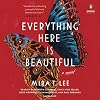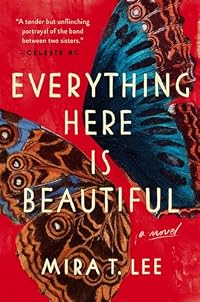
Everything Here Is Beautiful
by Mira T. Lee
On This Page
Description
"Two sisters--Miranda, the older, responsible one, always her younger sister's protector; Lucia, the headstrong, unpredictable one, whose impulses are huge and, often, life changing. When their mother dies and Lucia starts hearing voices, it is Miranda who must find a way to reach her sister. But Lucia impetuously plows ahead, marrying a bighearted, older man only to leave him, suddenly, to have a baby with a young Latino immigrant. She moves her new family from the States to Ecuador and show more back again, but the bitter constant is that she is, in fact, mentally ill. Lucia lives life on a grand scale, until, inevitably, she crashes to earth. Miranda leaves her own self-contained life in Switzerland to rescue her sister again--but only Lucia can decide whether she wants to be saved. The bonds of sisterly devotion stretch across oceans--but what does it take to break them? Told in alternating points of view, Everything Here Is Beautiful is, at its heart, the story of a young woman's quest to find fulfillment and a life unconstrained by her illness. But it's also an unforgettable, gut-wrenching story of the sacrifices we make to truly love someone--and when loyalty to one's self must prevail over all"-- show lessTags
Recommendations

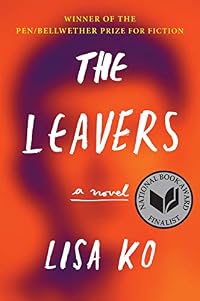
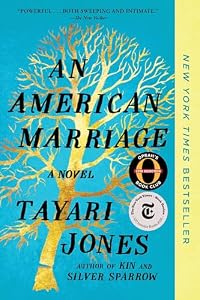
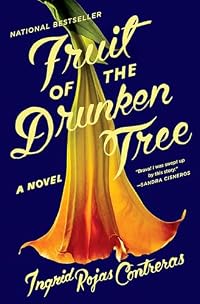
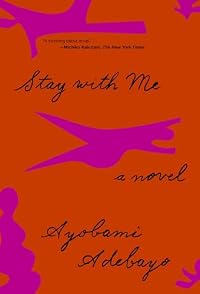



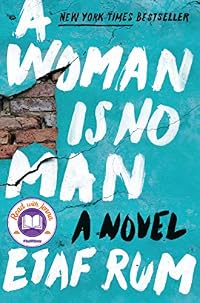
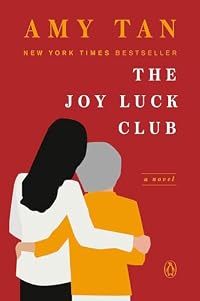
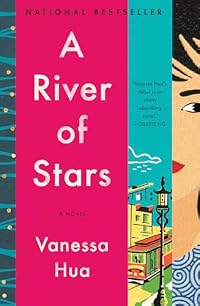
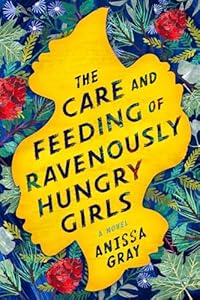



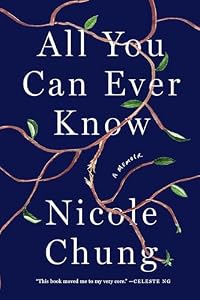
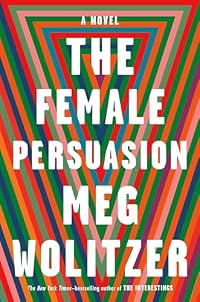
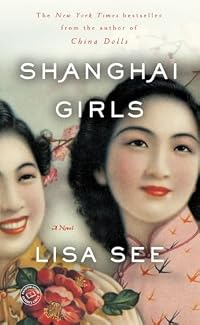

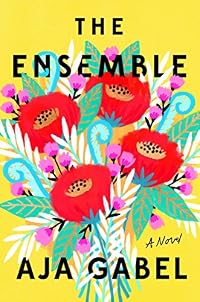
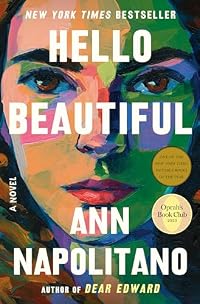
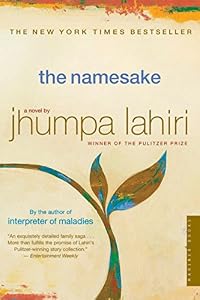
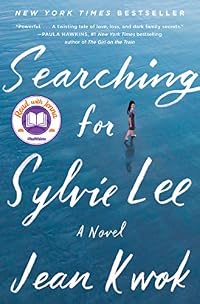

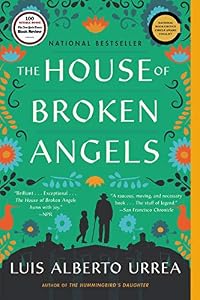




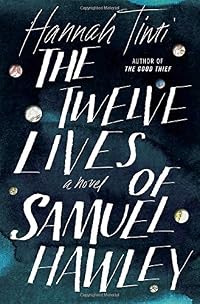

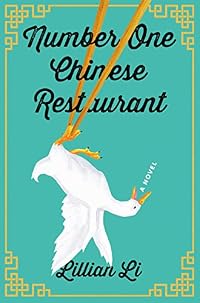
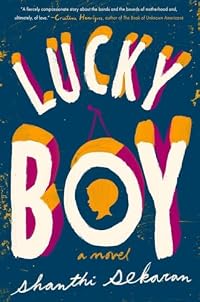
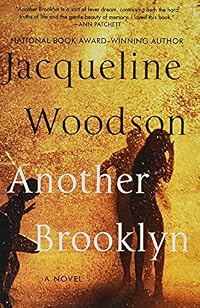

Member Recommendations

Member Reviews
Lucia and Miranda are sisters whose mother emigrated from China to New York. Protagonist Lucia has been diagnosed with schizophrenia. She marries and spends time in psychiatric wards. Her story is told through four perspectives – that of Lucia, Miranda, her first husband, and her second husband. She eventually moves to Ecuador with her second husband and daughter. Themes include mental illness, immigration, love, motherhood, and independence.
This is not a flashy novel, and it is sad, but it is very nicely put together. The characters feel like people I might know. The plot is creative. The writing is eloquent. Lee describes the locations in atmospheric detail. I could easily picture the dilapidated bus bumping along the narrow country show more roads from rural Ecuador to the nearest village. Dramatic tension is maintained by Lucia’s desire to direct her own life, whereas her sister and partners feel responsible for such issues as making sure she takes her medication and safeguarding her daughter. It is a complex situation since when Lucia is ill, she does not know she is ill. The various perspectives work together to give the reader enough information an understand of the characters’ motivations and fears.
It is character driven and contains action sequences tied to the major changes in life – marriage, relocating, divorce, childbirth, and, in Lucia’s case, stays in mental wards. It feels like a story of life, and how dealing with mental illness impacts everyone in the picture. I felt a range of emotions while reading it and would not recommend it to anyone currently suffering from depression. I found it multidimensional and original. show less
This is not a flashy novel, and it is sad, but it is very nicely put together. The characters feel like people I might know. The plot is creative. The writing is eloquent. Lee describes the locations in atmospheric detail. I could easily picture the dilapidated bus bumping along the narrow country show more roads from rural Ecuador to the nearest village. Dramatic tension is maintained by Lucia’s desire to direct her own life, whereas her sister and partners feel responsible for such issues as making sure she takes her medication and safeguarding her daughter. It is a complex situation since when Lucia is ill, she does not know she is ill. The various perspectives work together to give the reader enough information an understand of the characters’ motivations and fears.
It is character driven and contains action sequences tied to the major changes in life – marriage, relocating, divorce, childbirth, and, in Lucia’s case, stays in mental wards. It feels like a story of life, and how dealing with mental illness impacts everyone in the picture. I felt a range of emotions while reading it and would not recommend it to anyone currently suffering from depression. I found it multidimensional and original. show less
This is, first and foremost, the story of two sisters, one of whom suffers from mental illness. It's also the story of immigrants -- both documented and undocumented -- making their way in America. Miranda can remember coming to America from China with her mother, after her father's death. Lucia is younger, a free spirit whose mind eventually becomes unmoored from reality. Miranda is ever the protective older sibling -- too protective, perhaps?
The story explores painful questions. How do you help someone get well when that person doesn't recognize that she is sick? How does mental illness affect all those close to the person who is ill? Why are societal attitudes toward mental illness so different from attitudes toward physical illness? show more Can you always determine the boundary between the personality and actions of the person who is ill and actual manifestations of mental illness? (Is every reckless act the result of the illness?)
I just finished this, and it has left me feeling a bit melancholy. show less
The story explores painful questions. How do you help someone get well when that person doesn't recognize that she is sick? How does mental illness affect all those close to the person who is ill? Why are societal attitudes toward mental illness so different from attitudes toward physical illness? show more Can you always determine the boundary between the personality and actions of the person who is ill and actual manifestations of mental illness? (Is every reckless act the result of the illness?)
I just finished this, and it has left me feeling a bit melancholy. show less
This book will stick in my mind forever (a place where surprisingly little sticks). I'm amazed that this is a first novel - not a single wrong note for me. I love the way the author slowly builds an understanding of the characters by seeing them through various eyes as well as their own - and it happens gradually, just the way you get to know people in real life. It must be so hard to write idiosyncratic characters without making them annoying stereotypes, but that is definitely not the case here. Ditto for writing about mental illness without sinking into melodrama. There is a lot to think about in this book, and I think two key deep dives are to examine the title, and to think about one of Lucia's favorite portuguese words, saudade, show more which Wikipedia defines as "a deep emotional state of nostalgic or profound melancholic longing for an absent something or someone that one loves. Moreover, it often carries a repressed knowledge that the object of longing might never return".
I can't really point to examples of great writing because all of it is so seamlessly well done. But having personal experience with a loved one with mental illness, I was especially struck by Miranda's thoughts about her sister Lucia - that mental health advocates stress that a person with mental health struggles are more than their illness and shouldn't be defined by it, but there comes a point at which you wonder whether the illness hasn't swallowed them whole, and the person you loved is no longer there. "And then, her worst fear: that the line between her sister and the illness was becoming irrevocably blurred."
Last but not least, I didn't expect this to be such a compulsive, unputdownable read. I'll be on the lookout for Lee's next book. show less
I can't really point to examples of great writing because all of it is so seamlessly well done. But having personal experience with a loved one with mental illness, I was especially struck by Miranda's thoughts about her sister Lucia - that mental health advocates stress that a person with mental health struggles are more than their illness and shouldn't be defined by it, but there comes a point at which you wonder whether the illness hasn't swallowed them whole, and the person you loved is no longer there. "And then, her worst fear: that the line between her sister and the illness was becoming irrevocably blurred."
Last but not least, I didn't expect this to be such a compulsive, unputdownable read. I'll be on the lookout for Lee's next book. show less
Lucia and Miranda are sisters whose mother emigrated from China to New York. Protagonist Lucia has been diagnosed with schizophrenia. She marries and spends time in psychiatric wards. Her story is told through four perspectives – that of Lucia, Miranda, her first husband, and her second husband. She eventually moves to Ecuador with her second husband and daughter. Themes include mental illness, immigration, love, motherhood, and independence.
This is not a flashy novel, and it is sad, but it is very nicely put together. The characters feel like people I might know. The plot is creative. The writing is eloquent. Lee describes the locations in atmospheric detail. I could easily picture the dilapidated bus bumping along the narrow country show more roads from rural Ecuador to the nearest village. Dramatic tension is maintained by Lucia’s desire to direct her own life, whereas her sister and partners feel responsible for such issues as making sure she takes her medication and safeguarding her daughter. It is a complex situation since when Lucia is ill, she does not know she is ill. The various perspectives work together to give the reader enough information an understand of the characters’ motivations and fears.
It is character driven and contains action sequences tied to the major changes in life – marriage, relocating, divorce, childbirth, and, in Lucia’s case, stays in mental wards. It feels like a story of life, and how dealing with mental illness impacts everyone in the picture. I felt a range of emotions while reading it and would not recommend it to anyone currently suffering from depression. I found it multidimensional and original. show less
This is not a flashy novel, and it is sad, but it is very nicely put together. The characters feel like people I might know. The plot is creative. The writing is eloquent. Lee describes the locations in atmospheric detail. I could easily picture the dilapidated bus bumping along the narrow country show more roads from rural Ecuador to the nearest village. Dramatic tension is maintained by Lucia’s desire to direct her own life, whereas her sister and partners feel responsible for such issues as making sure she takes her medication and safeguarding her daughter. It is a complex situation since when Lucia is ill, she does not know she is ill. The various perspectives work together to give the reader enough information an understand of the characters’ motivations and fears.
It is character driven and contains action sequences tied to the major changes in life – marriage, relocating, divorce, childbirth, and, in Lucia’s case, stays in mental wards. It feels like a story of life, and how dealing with mental illness impacts everyone in the picture. I felt a range of emotions while reading it and would not recommend it to anyone currently suffering from depression. I found it multidimensional and original. show less
Excellent story of sisterhood, immigration/migration and mental illness. Miranda and Lucia are of Chinese descent - their mother came to America when Miranda was a child and Lucia was in utero. There are glimpses of their childhood here, mostly with Miranda as mother figure while their single mother worked her way up America’s ladder of success. The majority of the book takes place in their adulthood as Lucia struggles with potential bi-polar issues and other undiagnosed mental illnesses and Miranda stands by helplessly. Always fearless, Lucy spent her twenties traveling and writing. Now she is searching for stability to fill a void in her life (also part of her illness) and settles on marriage to a Russian Jew, Yonah. He has a zest show more for life having immigrated from Israel and experienced the alternative. This fits with some of Lucia’s manic episodes and all is well until she wants a child. She becomes involved with Manny, an illegal immigrant from Ecuador and together they have a child, Esperanza. This triggers a severe depressive incident and all involved struggle to cope. “...if pain and tears were correlated, surely we would’ve all drowned by now” (151), she observes later in more rational moments. Lucy’s solutions are never true solutions - moving to Ecuador becomes her next course of action with predictable results. Meanwhile Miranda struggles with the rightness of living her own life in Switzerland, finding happiness for herself and setting limits with her sister. This book does a great job of showing both the inside of the illness from Lucy’s view and the outside from the others in her life. Memorable characters and an uplifting ending that finds the bright side of a horrible situation. show less
This is a really good novel. It's about two Chinese American sisters and their journey through one of the sister's mental illness. The chapters alternate between different characters' point of view, and a chapter often covers several months or even years of story progression. Every chapter is well written and I feel has the literary value to be standalone short stories. (Ummm....maybe with the exception of the epilogue. The epilogue is not bad, but I feel the other chapters are of such high quality that it pales in comparison.) The author gave detailed description of life in NYC, rural Minnesota, urban Ecuador and rural Ecuador. I was impressed to learn the author had actually never been to Ecuador. It must have taken months of research show more in order to write in such detail! There were several chapters that ended on a surprising turning point and made me very eager to immediately continue into the next chapter.
In the books I've read in the past that were written by Asian American authors with Asian American main characters, the theme of Asian culture and identity always come up, and the way the themes are presented made me feel that I, a first generation immigrant from Asia, was not the book's target audience. It seems to me those books were written for non-Asian Americans to give them a seemingly authentic (but actually always a little off) (but it doesn't matter because the target readers wouldn't be able to tell) presentation of Asian culture or immigrant experience so the readers can feel they learned something, or they can feel they have increase their appreciation another ethnicity lol I am very happy to say this book is NOT one of those. It felt more like reading a novel published in my home country, in the Chinese language, targeted at Chinese readership -- an audience that do appreciate a Chinese cultural background but really care more about good characters and plot than anything else. The main characters' cultural background is there, but that's all that it is -- a background and not a main point. The theme of the book is who the characters are and what they choose to become when confronted with the sister's mental health issues. show less
In the books I've read in the past that were written by Asian American authors with Asian American main characters, the theme of Asian culture and identity always come up, and the way the themes are presented made me feel that I, a first generation immigrant from Asia, was not the book's target audience. It seems to me those books were written for non-Asian Americans to give them a seemingly authentic (but actually always a little off) (but it doesn't matter because the target readers wouldn't be able to tell) presentation of Asian culture or immigrant experience so the readers can feel they learned something, or they can feel they have increase their appreciation another ethnicity lol I am very happy to say this book is NOT one of those. It felt more like reading a novel published in my home country, in the Chinese language, targeted at Chinese readership -- an audience that do appreciate a Chinese cultural background but really care more about good characters and plot than anything else. The main characters' cultural background is there, but that's all that it is -- a background and not a main point. The theme of the book is who the characters are and what they choose to become when confronted with the sister's mental health issues. show less
This was an exquisite book.
It's not an easy tale to tell - one of mental illness, of immigrants both legal and illegal, of family and relationships both wonderful and strange.
Miranda, as the older sister, has always been protector, defender and the responsible one. And even more so now that their mother has passed away.
Lucia brims with vibrancy and vivacity. She's unconventional, some may say strange. She's lived in South America and is marrying an Israeli man she barely seems to know. And worse, she's started hearing voices. Just as soon as she married Yonah she decides she wants to have a child and leaves him for a young Ecuadorian man, Manny, who is in the country illegally.
Eventually they move back to his small village show more in Ecuador which soon proves a problem for Lucia's condition.
Lee said in an interview that she has family members with schizophrenia and in the book it is clear that she's dealt with various aspects of it, especially the way Miranda tries to handle the various hospital staff who don't seem to understand how best to treat her sister. Miranda has done all her research and is familiar with all the problems the different drugs give her sister.
In bringing in Manny to the story, we see someone who cares for Lucia and also tries to appease her, not knowing exactly what she needs but still trying his very best to help.
Everything Here is Beautiful is a must-read. I seldom say things like that so I hope you know I mean it. It was a story gently and thoughtfully told, one that explores different perspectives, one that shows us how mental illness affects family and loved ones. I read this for Asian Lit Bingo - Asian MC with Disability show less
Miranda, as the older sister, has always been protector, defender and the responsible one. And even more so now that their mother has passed away.
Lucia brims with vibrancy and vivacity. She's unconventional, some may say strange. She's lived in South America and is marrying an Israeli man she barely seems to know. And worse, she's started hearing voices. Just as soon as she married Yonah she decides she wants to have a child and leaves him for a young Ecuadorian man, Manny, who is in the country illegally.
Eventually they move back to his small village show more in Ecuador which soon proves a problem for Lucia's condition.
Lee said in an interview that she has family members with schizophrenia and in the book it is clear that she's dealt with various aspects of it, especially the way Miranda tries to handle the various hospital staff who don't seem to understand how best to treat her sister. Miranda has done all her research and is familiar with all the problems the different drugs give her sister.
In bringing in Manny to the story, we see someone who cares for Lucia and also tries to appease her, not knowing exactly what she needs but still trying his very best to help.
Everything Here is Beautiful is a must-read. I seldom say things like that so I hope you know I mean it. It was a story gently and thoughtfully told, one that explores different perspectives, one that shows us how mental illness affects family and loved ones. I read this for Asian Lit Bingo - Asian MC with Disability show less
Members
- Recently Added By
Lists

Top Five Books of 2020
982 works; 350 members

Top Five Books of 2018
802 works; 265 members

BookTok Adult
115 works; 2 members
Author Information

1 Work 682 Members
Awards and Honors
Awards
Distinctions
Notable Lists
Common Knowledge
- Original title
- Everything Here is Beautiful: A Novel
- Original publication date
- 2018-01
- People/Characters
- Miranda "Jie" Bok; Lucia " Mei" Bok; Yonah; Tess Carter; Stefan; Jonny (show all 22); Manuel Vargus; Esperanza "Essy" Sylvia Bok; Sylvia "Mami" Vargus; Fredy Vargus; Mrs. Gutierrez; Susi Hernandez; Coco Washington; Papi Vargus; Juan Vargus; Ricky Vargus; Nipa; Winston; Natey; Nele Hernandez; Anat; Rafael
- Important places
- New Jersey, USA; Providence, Rhode Island, USA; Boston, Massachusetts, USA; New York, New York, USA; Martez, Equador; Cuenca, Equador (show all 9); Esmeraldas, Equador; Switzerland; Meyer, Minnesota
- Dedication
- For the families
Empathy: because the commonality among human beings is emotion, and the only way we can bridge our vast discrepancies in experience is through what we feel. Let us be humbled in the knowledge that one may ... (show all)never fully understand the interior lives of others--but let us continue to care. - First words
- A summer day in New Jersey.
- Quotations
- There's a word for this in Portuguese: saudade. It's not exactly nostalgia, there's more of a longing in it, for a feeling or way of life that may be impossible to recapture--that may or may not have even existed in the first... (show all) place. "An indolent dreaming wistfulness" is how I've seen one writer describe it. Now that's a great word.
In the density of the city, she feels alone. In the open space of the campo, she feels constricted, the eyes of the family ever upon her.
There is a word for this, a beautiful word that unfurls from the tongue: velleity. The weakest form of volition. A mere wish, unaccompanied by an effort to obtain it.
But now, like this, I think love is just romantic way of explaining selflessness.
This was a brief encounter, tender, yet strained. They would part knowing what they'd always known: that they had each loved Lucia. And this was enough, for now, neither was ready for more. In grief, the future seems impossib... (show all)le.
How trite, but true: things change. Some all at once, some over a lifetime. - Last words
- (Click to show. Warning: May contain spoilers.)I waved and she waved. And I stood, watching, as she walked away---envious of her youth, admiring of her grace, though she wobbled every few steps on her Mary Janes, catching a heel on the pavement.
- Blurbers
- Ozeki, Ruth; Ng, Celeste; Mbue, Imbolo; Kwok, Jean; Pearl, Matthew; Ferriss, Lucy (show all 10); Fournier, Ron; Lukach, Mark; Thorpe, Rufi; Kalotay, Daphne
- Canonical DDC/MDS
- 813.6
- Canonical LCC
- PS3612.E3465
Classifications
Statistics
- Members
- 682
- Popularity
- 41,859
- Reviews
- 43
- Rating
- (3.92)
- Languages
- Dutch, English
- Media
- Paper, Audiobook, Ebook
- ISBNs
- 16
- ASINs
- 2