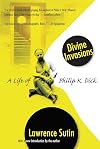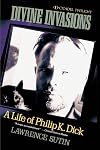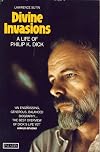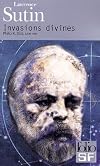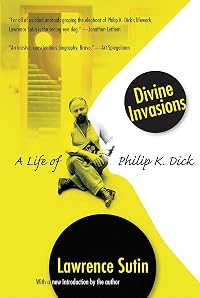
Divine Invasions: A Life of Philip K. Dick
by Lawrence Sutin
On This Page
Description
"The only biography I've ever read that's as exciting as a spy novel . . . Phil Dick's life was as weird and mysterious as any of his science fiction books."--Robert Anton Wilson With thirty-eight books currently in print and seven of his novels and short stories adapted into blockbuster films, Philip K. Dick is recognized worldwide as one of our time's greatest and most influential novelists. Lawrence Sutin's Divine Invasions, acknowledged by the Dick family as the official Philip K. Dick show more biography, illuminates the life of the man who loosed the bonds of the science-fiction genre and profoundly influenced such writers as Pynchon, Delillo, David Foster Wallace, and Jonathan Lethem. Absorbing, beautifully written, and profoundly revealing, Divine Invasions is a must-read for Dick fans and for all fans of contemporary fiction and film. show lessTags
Recommendations















Member Reviews
DIVINE INVASIONS is a readable, revealing biography of the 20th-century sci-fi titan into whose mind we all most wish we could climb. Philip K. Dick’s brilliance is never in doubt, even as author Lawrence Sutin guides us through the labyrinthine emotional upheavals and relationships of his life. And boy, are they fraught, particularly when it comes to women. From his love/hate vacillations with his mother to a slew of girlfriends to all five of his wives, PKD’s life reads at times like a hormone-filled, drug-addled teen drama. Sutin is clearly a superfan, but he presents his subject’s literary prowess and social prescience in counterpoint to a painful lifelong search for emotional wholeness. His approach feels both balanced and show more intimate, but isn’t afraid of a little humor now and then.
Tessa B. Dick, PKD’s fifth wife, has criticized Sutin on Amazon for giving the impression that he interviewed her for this book. But Sutin documents his sources in copious endnotes, also making clear in the text when something she says comes from a letter to him or when it comes from her writings, so careful readers shouldn’t be confused. Sutin drew on a vast number of sources throughout, including (but not limited to) extensive interviews with the people who lived and worked most closely with PKD.
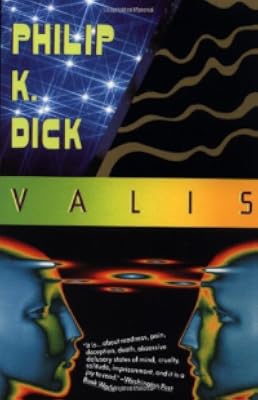
Although, as a biography, DIVINE INVASIONS rightfully focuses on life events, Sutin also delves deeply into a number of PKD’s most important works, including VALIS, THE MAN IN THE HIGH CASTLE, UBIK, and FLOW MY TEARS, THE POLICEMAN SAID, and also the lengthy EXEGESIS of his final years. For everything else, Sutin provides a comprehensive bibliography of publications and lost works, including synopses and ratings. Despite its wealth of detail, this biography is quick to devour and provides a welcome insight into the man and his prolific output. show less
Tessa B. Dick, PKD’s fifth wife, has criticized Sutin on Amazon for giving the impression that he interviewed her for this book. But Sutin documents his sources in copious endnotes, also making clear in the text when something she says comes from a letter to him or when it comes from her writings, so careful readers shouldn’t be confused. Sutin drew on a vast number of sources throughout, including (but not limited to) extensive interviews with the people who lived and worked most closely with PKD.
Although, as a biography, DIVINE INVASIONS rightfully focuses on life events, Sutin also delves deeply into a number of PKD’s most important works, including VALIS, THE MAN IN THE HIGH CASTLE, UBIK, and FLOW MY TEARS, THE POLICEMAN SAID, and also the lengthy EXEGESIS of his final years. For everything else, Sutin provides a comprehensive bibliography of publications and lost works, including synopses and ratings. Despite its wealth of detail, this biography is quick to devour and provides a welcome insight into the man and his prolific output. show less
I don't read literary biographies that often. In fact, I'm hard pressed to remember the name of a single one I've read. Part of the reason is I really hate the author-worship that surrounds so much of literature these days. The writer becomes so big, I can't help but think of them even when I'm reading their stuff. This is largely why I've never read David Foster Wallace, and likely never will.
But Philip K. Dick is different and I'm willing to make an exception here. Oh, I'll make other exceptions if a biography looks interesting, because I enjoy reading about interesting lives. Dick's life was interesting, but in such a strange way. Yeah, he was married five times, but he didn't really do anything. Didn't go to college (for long), show more didn't really have a job besides writing (he had one in a record store, for a few years out of high school). Didn't do much of anything, except write science fiction.
Of course, as with any figure who is famous enough for anecdotes to be told about and create a kind of mythos around, this book served to dispel a number of rumors. Dick's drug use wasn't really that unusual for the times, and the speed he took was prescribed for him for legitimate reasons. Most of all, however, he wasn't crazy. Well, not entirely, and not in any serious way. He was odd, but he was charming, he had friends, and was generally well-liked.
So what makes him so interesting, and this book so good? Well, I was interested for one. And Dick struggled with the same kinds of hardships that I've struggled with-- nothing too terrible (mostly), but enough to create some baggage. His relationship with his parents wasn't very good, though that was likely his fault more than anything. His twin sister died in infancy, and while I'm skeptical about the idea that this psychically scars surviving twins, the way his mother handled telling young Phil certainly would have left scars.
What really interested me, and what I could relate to, is the auto-didacticism of Dick, and his interest in the nature of things. What is real? What is human? What is god? He asks, and explores, these questions repeatedly not only in his books, but in his conversations with friends and his ongoing "exegesis" that served as a thousand-page inner dialog. Phil was a seeker, in a way that I never really was, but the curiosity and imagination that drove his seeking seemingly had no limits, to the point that it made him seem, and wonder if he was, crazy. I sometimes feel the same. Minus the imagination. show less
But Philip K. Dick is different and I'm willing to make an exception here. Oh, I'll make other exceptions if a biography looks interesting, because I enjoy reading about interesting lives. Dick's life was interesting, but in such a strange way. Yeah, he was married five times, but he didn't really do anything. Didn't go to college (for long), show more didn't really have a job besides writing (he had one in a record store, for a few years out of high school). Didn't do much of anything, except write science fiction.
Of course, as with any figure who is famous enough for anecdotes to be told about and create a kind of mythos around, this book served to dispel a number of rumors. Dick's drug use wasn't really that unusual for the times, and the speed he took was prescribed for him for legitimate reasons. Most of all, however, he wasn't crazy. Well, not entirely, and not in any serious way. He was odd, but he was charming, he had friends, and was generally well-liked.
So what makes him so interesting, and this book so good? Well, I was interested for one. And Dick struggled with the same kinds of hardships that I've struggled with-- nothing too terrible (mostly), but enough to create some baggage. His relationship with his parents wasn't very good, though that was likely his fault more than anything. His twin sister died in infancy, and while I'm skeptical about the idea that this psychically scars surviving twins, the way his mother handled telling young Phil certainly would have left scars.
What really interested me, and what I could relate to, is the auto-didacticism of Dick, and his interest in the nature of things. What is real? What is human? What is god? He asks, and explores, these questions repeatedly not only in his books, but in his conversations with friends and his ongoing "exegesis" that served as a thousand-page inner dialog. Phil was a seeker, in a way that I never really was, but the curiosity and imagination that drove his seeking seemingly had no limits, to the point that it made him seem, and wonder if he was, crazy. I sometimes feel the same. Minus the imagination. show less
Philip K Dick was/is a difficult subject for a biography. In addition to being a writer within the science fiction genre, he believed that he had been contacted by God, or at the very least, some superior intelligence that had the solutions to man's plight. Lawrence Sutin reports this in a factual way and leaves the reader to decide as to whether Dick was some kind of John the Baptist, proclaiming a new coming, or in need of mental health treatment. This seems to have been a concern to Dick, as well as Sutin.
Whatever the truth of the matter (and yes, I think I know which too) Philip K Dick had an interesting life and produced some of the finest books of the science fiction oeuvre. Dick's books tend not to concentrate upon the technology show more of the future so much as the interactions of an advanced society and so, his personal history are an interesting insight into his working. It is not imperative to read this book to enjoy Dick's fiction, but it certainly enhances the experience. show less
Whatever the truth of the matter (and yes, I think I know which too) Philip K Dick had an interesting life and produced some of the finest books of the science fiction oeuvre. Dick's books tend not to concentrate upon the technology show more of the future so much as the interactions of an advanced society and so, his personal history are an interesting insight into his working. It is not imperative to read this book to enjoy Dick's fiction, but it certainly enhances the experience. show less
Somehow reading this biography of PKD opens up his fictional world of paranoia, hypochondria, anxiety and phobia. He was not a happy man, but he stood firm in the face of life and reality and asked why.
A perfectly readable biography and career summary of PKD. Not the most narratively compelling nor providing the best analysis of the man. Doesn’t delve enough into the world (literary/political/social) surrounding him. Author a bit of a fan.
I have mixed feelings about this book, but overall I don't think it lives up to my expectations. I enjoyed the background material on the various books that PKD wrote. There are extensive quotes from "Exegesis", which I think is fantastic. Certainly prefrerable to wading through thousands of pages of material to get the highlights. He goes into great detail on the Valis phase of PKD's life, which is fine. Hardly any mention of Electric Sheep though.
My biggest problem is that the rest of the book reads like an oral history of the subjects life. It takes on a soap opera flavor at times, which arguably is unavoidable with this man's life.
Editing was poor, and I think it was hastily thrown together. I also note Tessa Dick's review on show more Amazon, which was insightful for me.
The summary of all of PKD works at the end was a great addition. It is impossible to separate the man from his books. show less
My biggest problem is that the rest of the book reads like an oral history of the subjects life. It takes on a soap opera flavor at times, which arguably is unavoidable with this man's life.
Editing was poor, and I think it was hastily thrown together. I also note Tessa Dick's review on show more Amazon, which was insightful for me.
The summary of all of PKD works at the end was a great addition. It is impossible to separate the man from his books. show less
I loved this biography of Science Fiction writer Dick. The writer Sutin tries to be very exact in his descriptions of Dick and his some of his works. Dick has written some books which have become famous as screen adaptations such as: Screamers, Blade Runner, Total Recall, and Minority Report. These are some of my favorite movies. The is another Blade Runner movie soon to be released which he did not write but still uses his characters.
Dick was introduced to gnosticism by Episcopal Bishop Pike. Pike was also involved with the illfated historical Jesus seminar. The book implies that Pike was responsible for Dick's novels having a deceptive surface to every character and a deceptive substance to all of reality. Like all of gnostic ideas, show more there was a spiritual kernal to be broken open to reveal a true spirit lying within it. His books had endless repetitions of this over and over, according to Sutin. DIck at the end of his life was close to being a believer in standard Christianity but he had his own idiosyncrasies which he did not relinquish. His near final years were lived in Fullerton and Santa Ana. He was pleased to live for a time near St Joseph's church in a nearby apartment so he could hear the bells tolling. I did a wedding for my friend there in that same church. I didn't know about this connection at the time.
Although DIck was always a weird personality he was a dedicated writer. Do Androids Dream of Electric Sheep? (rereleased as Blade Runner) is a masterpiece. It's actually the only book I've read of his although I just bought a copy of The Man in the High Castle.
Dick was widely read and was familiar with philosophy and some Roman Catholicism under the guise of what was called Natural Theology. Natural Theology is the discernment of God's exstence from God's effects found in the world and the world's cosmological order. Most people would do well to pass on it. Very few people like Science Fiction. Dick grew up in the Bay Area and lived in Berkeley and Oakland so I knew some of the streets mentioned when he was there many years before I was. Dick died in 1982 which was when I was in college in the SF Bay Area. show less
Dick was introduced to gnosticism by Episcopal Bishop Pike. Pike was also involved with the illfated historical Jesus seminar. The book implies that Pike was responsible for Dick's novels having a deceptive surface to every character and a deceptive substance to all of reality. Like all of gnostic ideas, show more there was a spiritual kernal to be broken open to reveal a true spirit lying within it. His books had endless repetitions of this over and over, according to Sutin. DIck at the end of his life was close to being a believer in standard Christianity but he had his own idiosyncrasies which he did not relinquish. His near final years were lived in Fullerton and Santa Ana. He was pleased to live for a time near St Joseph's church in a nearby apartment so he could hear the bells tolling. I did a wedding for my friend there in that same church. I didn't know about this connection at the time.
Although DIck was always a weird personality he was a dedicated writer. Do Androids Dream of Electric Sheep? (rereleased as Blade Runner) is a masterpiece. It's actually the only book I've read of his although I just bought a copy of The Man in the High Castle.
Dick was widely read and was familiar with philosophy and some Roman Catholicism under the guise of what was called Natural Theology. Natural Theology is the discernment of God's exstence from God's effects found in the world and the world's cosmological order. Most people would do well to pass on it. Very few people like Science Fiction. Dick grew up in the Bay Area and lived in Berkeley and Oakland so I knew some of the streets mentioned when he was there many years before I was. Dick died in 1982 which was when I was in college in the SF Bay Area. show less
Members
- Recently Added By
Author Information

7+ Works 1,342 Members
Lawrence Sutin teaches in the MFA program at Hamline University in St. Paul, Minnesota.
Awards and Honors
Awards
Series
Belongs to Publisher Series
Gallimard, Folio SF (88)
Common Knowledge
- Canonical title*
- Divine invasions: A life of Philip K. Dick
- Original title
- Divine invasions: A Life of Philip K. Dick
- Original publication date
- 1989
- People/Characters
- Philip K. Dick
- Important places
- Berkeley, California, USA; Marin County, California, USA; Oakland, California, USA; Santa Ana, California, USA; Chicago, Illinois, USA
- Related movies
- Blade Runner 2049 (2017 | IMDb); Minority Report (2002 | IMDb); Total Recall (1990 | IMDb); Blade Runner (1982 | IMDb); Screamers (1995 | IMDb); The Man in the High Castle (2015 | IMDb)
- Blurbers
- Spiegelman, Art; Lethem, Jonathan; Wilson, Robert Anton; Leary, Timothy
- Original language
- English
*Some information comes from Common Knowledge in other languages. Click "Edit" for more information.
Classifications
Statistics
- Members
- 632
- Popularity
- 45,989
- Reviews
- 12
- Rating
- (3.84)
- Languages
- 6 — English, French, German, Hungarian, Italian, Polish
- Media
- Paper, Ebook
- ISBNs
- 16
- ASINs
- 3