
The Book of Dust: The Secret Commonwealth (Book of Dust, Volume 2)
by Philip Pullman
The Book of Dust (2)
On This Page
Description
Twenty-year-old college undergraduate Lyra is once again thrown together with Malcom Polstead, now a professor, after Lyra and her daemon, Pantalaimon, receive secrets from a dying man about a daemon-haunted city and the origins of Dust.Tags
Recommendations











Member Reviews
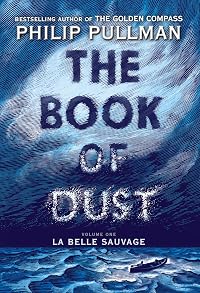
The first word that left my mouth when I finished reading this book was DAMN!! 600 pages only to reach ...what? Not a conclusion, but a pause, kind of like when the power fails 5 minutes before the end of a show. But once again, Pullman has developed a world of suspense and philosophy that is dense and compulsively readable. Three characters’ lives are inextricably intertwined: Malcolm Polstead, the scholar who had rescued Lyra when she was a baby, in events described in “La Belle Sauvage,” the first book in this second His Dark Materials trilogy; Lyra’s daemon Pantalaimon, from whom she is now able to separate; and Lyra herself, who is finding her way across Europe and Asia, to seek what she has lost and to face what is likely show more her destiny. It has always been clear, in the original trilogy and in these two volumes, that Lyra has some monumental purpose, the power to break open all that the religious authority holds sacred, to bring about a spiritual revolution, but that purpose has not been defined, not in 5 thick volumes. Her mission is always endangered, always precarious, but she is always protected, always finds a way to overcome these obstacles. It is a familiar story, but no less gripping in this iteration. It has been a long time since I read the original trilogy, and just as I did before “La Belle Sauvage,” I re-read some synopses to remind me of where it left off. But, where “Sauvage” was a prequel, this is a sequel, taking place almost 10 years after “The Subtle Knife” ended. It was a frustrating place for this book to end, just as some things are on the verge of resolution, but in the same moment it introduces the next layer of complication for Lyra’s quest. So, I shall settle in for another long wait! show less
Oddly ‘The Secret Commonwealth’ by Philip Pullman feels like the first of a trilogy rather than the second in ‘The Book of Dust’. Don’t get me wrong, I loved the book but the first half is taken up with world-building and the introduction of new characters, relationships and enmities. But this is the first time we see Lyra as a young woman ten or eleven years after we left her at the end of ‘The Amber Spyglass’, so much has changed. Oxford seems more modern, Lyra is surrounded by old friends and potential new enemies and, crucially, she is not getting on with her daemon Pan.
This latter fact, at first unthinkable, is the power driving the narrative. When Pan despairs of Lyra, who he thinks has changed unrecognisably, he show more sets out to recover the thing he fears she has lost. Her imagination. And Lyra, being Lyra, charges off in pursuit. Except she doesn’t know where Pan is going. Both are driven by love.
Add to this a changing political landscape with a new generation of scholars, scientists, politicians, priests and criminals and it soon becomes clear that Lyra and Pan are separated from each other in an increasingly toxic and dangerous world. Meanwhile the farmers of roses and makers of rose oil are being persecuted across Asia. Prices are rising as rose farms are burned and those who make their living from the flowers are destitute. A new rose oil with powerful and mysterious properties has been discovered in the East, and the Magisterium wants it all.
There is a sense of inevitability that Lyra will embark on a new quest taking her to strange lands. Quite how everything connects together is not clear and that is Pullman’s magic, he tells us just enough to puzzle us, to keep the curiosity burning and the pages turning, without allowing us to become bored or impatient.
What an enjoyment to encounter old friends from ‘His Dark Materials’ and some new ones made in ‘La Belle Sauvage’, the previous book in this second trilogy. I won’t name these friends as I don’t want to deprive you of the joy of meeting them again. As ever, this is a brilliantly imagined, intricately plotted world from Pullman with a modern story of refugees seeking safety from an oppressive and unforgiving regime. The refugees are fleeing the places through which Lyra and Pan are travelling. Will they be safe? Or will they be outwitted by old and new enemies.
Excellent.
Read more of my book reviews at http://www.sandradanby.com/book-reviews-a-z/ show less
This latter fact, at first unthinkable, is the power driving the narrative. When Pan despairs of Lyra, who he thinks has changed unrecognisably, he show more sets out to recover the thing he fears she has lost. Her imagination. And Lyra, being Lyra, charges off in pursuit. Except she doesn’t know where Pan is going. Both are driven by love.
Add to this a changing political landscape with a new generation of scholars, scientists, politicians, priests and criminals and it soon becomes clear that Lyra and Pan are separated from each other in an increasingly toxic and dangerous world. Meanwhile the farmers of roses and makers of rose oil are being persecuted across Asia. Prices are rising as rose farms are burned and those who make their living from the flowers are destitute. A new rose oil with powerful and mysterious properties has been discovered in the East, and the Magisterium wants it all.
There is a sense of inevitability that Lyra will embark on a new quest taking her to strange lands. Quite how everything connects together is not clear and that is Pullman’s magic, he tells us just enough to puzzle us, to keep the curiosity burning and the pages turning, without allowing us to become bored or impatient.
What an enjoyment to encounter old friends from ‘His Dark Materials’ and some new ones made in ‘La Belle Sauvage’, the previous book in this second trilogy. I won’t name these friends as I don’t want to deprive you of the joy of meeting them again. As ever, this is a brilliantly imagined, intricately plotted world from Pullman with a modern story of refugees seeking safety from an oppressive and unforgiving regime. The refugees are fleeing the places through which Lyra and Pan are travelling. Will they be safe? Or will they be outwitted by old and new enemies.
Excellent.
Read more of my book reviews at http://www.sandradanby.com/book-reviews-a-z/ show less
Terribly disappointing. It gets a second star because it started strong: we're back in Oxford with Lyra and Pan, she now a young woman reading and studying with the scholars of St Sophia's. But things are not the same... Lyra has apparently lost her native gift for reading the alethiometer. The Magisterium is gathering its power into a single, ominpotent council. But most unsettling of all, people and their daemons are drifting apart. Some pairs have learned to "separate," and their relationships are fraying. Lyra and Pan are quarrelling, moping, irritated with each other, and Pan rambles off on his own night after night. (After reading this far, I was upset when my beloved dog Theo decided not to come back to bed with me after show more breakfast one morning...) And then... the book starts to fall apart. There are spies, murders, a mysterious and contested source of oil somewhere in the Middle East (rose, not crude, but the parallel is clumsy and obvious), a refugee crisis... Lyra somehow dreams of or knows of the source of this oil (needed for the fingerbowls of the scholars... really??) and sets out to find it, for reasons not clear to her or the reader. Malcolm Polstead (of La Belle Sauvage - now a thirty-one year old professor of history and hopelessly in love with Lyra) sets off on his own mission. They have a network of sympathetic people who might aid them, but instead seem to randomly run into strangers who inexplicably offer food, shelter, aid... why? Wait, who was guy again? Then there's a novel and another book thought to be subversive which have stolen Lyra's imagination... oh yeah, the gyptians! In the marshes on their boats amid the "second commonwealth" of the title, peopled by fairies, trolls, will o the wisps, jacky lanterns, et al. Some of it is lovely, some of it is charming, and a lot of it is... boring. The plot relies on excessive coincidences, long talky infodumps, and Lyra pining for Will Parry. And Pan has left her altogether. Not sure I blame him. There is no doughty Iorek, no gallant and colorful Lee Scoresby, no deliciously nasty Mrs Coulter, no cryptic and dubious Lord Asriel, no haunting Cittagazze, or underworld with its sad, angry harpies - dazzling, difficult, and interesting characters and places that engaged us. Very, very sadly, I set the book back on the return-to-the-library pile.
Pullman didn't need to write these books. He wrote a wondrous, magical trilogy with a sly and erudite message, wonderful characters and splendid tropes and concepts. Perhaps he should have been content with that. show less
Pullman didn't need to write these books. He wrote a wondrous, magical trilogy with a sly and erudite message, wonderful characters and splendid tropes and concepts. Perhaps he should have been content with that. show less
I liked this better than I liked the first book in the trilogy, though I have to say that one makes more sense now that I’ve read this one. Pullman is definitely continuing the themes of that one and exploring the wider world outside of Lyra’s Oxford and previous adventures, and he’s also opening up more philosophical questions and teasing some things about Dust and daemons that I hope he plans to answer in book three.
This is definitely a more unsettling book (and trilogy) than I remember His Dark Materials being. It feels more adult, with more politics and serious questions and objects and events that don’t seem to fit into what we know of Lyra’s world or into the flow of the story. I’m still trying to piece together what show more Pullman’s trying to get at, and while i think I’ve got the bulk of it, like I said, I hope book three explains more things. Basically, though, things are dark and bad and creepy, and a fair bit of reading this was nerve-wracking, more in the vein of a spy thriller than anything else, I think. (Pullman has definitely been inspired by the politics of the last 5 or so years too.)
I did enjoy a lot of those dark moments intellectually, however, and they certainly hooked me. I wanted to know what was going on! What was up with the new characters! What the heck was the Magisterium’s problem, and specifically the problems of the two main Magisterium figures! If Lyra and Pan were going to be okay! If anyone commissioned the books that factor into Lyra and Pan’s parts of the story and why! And so much more.
It’s not purely dark, though. There are some familiar faces from His Dark Materials, and plenty of light, gentle moments, and touches of magic that don’t necessarily ease up on the darkness but at least shift it away from the Magisterium for a while. And Malcolm’s back, as an adult! And Pantalaimon gets a recurring POV! As much as this book is about fear and selfishness and loneliness, it’s also about hope and friendship and imagination.
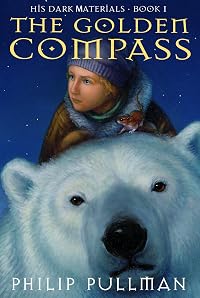
In all, I enjoyed the adventure of the story a lot, and seeing the ways other cultures function in Lyra’s alternate world. Even if I don’t quite understand what Pullman’s subtext always was, I also enjoyed the experience of trying to fit it together. I’m a lot happier about recommending this book than La Belle Sauvage, though I’m not so sure I’d rec it to anyone outside of the His Dark Materials/The Book of Dust fandom, at least not at this point. If nothing else, you’ve got to start with The Golden Compass, not this one.
To bear in mind: Fascists. Evil Christians. Attempted gang rape. Hostage situation. Hinky stuff with Asian-coded religious extremists that probably isn’t what it looks like on the surface. Hinky stuff between Malcolm and Lyra that I’m hoping isn’t what it looks like either. Cliffhanger, of sorts.
8/10 show less
This is definitely a more unsettling book (and trilogy) than I remember His Dark Materials being. It feels more adult, with more politics and serious questions and objects and events that don’t seem to fit into what we know of Lyra’s world or into the flow of the story. I’m still trying to piece together what show more Pullman’s trying to get at, and while i think I’ve got the bulk of it, like I said, I hope book three explains more things. Basically, though, things are dark and bad and creepy, and a fair bit of reading this was nerve-wracking, more in the vein of a spy thriller than anything else, I think. (Pullman has definitely been inspired by the politics of the last 5 or so years too.)
I did enjoy a lot of those dark moments intellectually, however, and they certainly hooked me. I wanted to know what was going on! What was up with the new characters! What the heck was the Magisterium’s problem, and specifically the problems of the two main Magisterium figures! If Lyra and Pan were going to be okay! If anyone commissioned the books that factor into Lyra and Pan’s parts of the story and why! And so much more.
It’s not purely dark, though. There are some familiar faces from His Dark Materials, and plenty of light, gentle moments, and touches of magic that don’t necessarily ease up on the darkness but at least shift it away from the Magisterium for a while. And Malcolm’s back, as an adult! And Pantalaimon gets a recurring POV! As much as this book is about fear and selfishness and loneliness, it’s also about hope and friendship and imagination.
In all, I enjoyed the adventure of the story a lot, and seeing the ways other cultures function in Lyra’s alternate world. Even if I don’t quite understand what Pullman’s subtext always was, I also enjoyed the experience of trying to fit it together. I’m a lot happier about recommending this book than La Belle Sauvage, though I’m not so sure I’d rec it to anyone outside of the His Dark Materials/The Book of Dust fandom, at least not at this point. If nothing else, you’ve got to start with The Golden Compass, not this one.
To bear in mind: Fascists. Evil Christians. Attempted gang rape. Hostage situation. Hinky stuff with Asian-coded religious extremists that probably isn’t what it looks like on the surface. Hinky stuff between Malcolm and Lyra that I’m hoping isn’t what it looks like either. Cliffhanger, of sorts.
8/10 show less
I wavered for a long time about whether to give this 4 or 5. I felt The Secret Commonwealth was definitely better than La Belle Sauvage, but it was a question of by how much.
It was a great feeling to come back to Lyra, even though the Lyra in this book is very different to the one we left at the end of His Dark Materials. I felt the character progression was very much believable - having gone through adolescence and education at a leading university, she is understandably a much more rational, sceptical young lady. However, she is still definitely haunted by her 13 year old self, both in terms of her experiences and through Pan, who continues to reflect her true character.
One of the strongest themes of the book was this exploration of show more the relationships between daemons and their humans, in light of them being separate beings but manifestations of the same spirit. The allusions to soul-searching, self-doubt and even mental illness were well thought out, and showed daemons as much more complex than natural spiritual counterparts. The conflict between rationalism and imagination, although sometimes a little pushed, was also engagingly addressed, and it was especially interesting to see it play out in Lyra's world where the fantastical and the extraordinary are much more apparent and ‘real’. The political maneuvering and machinations were intriguing too, and the continuation of tensions and issues from both La Belle Sauvage and His Dark Materials combined with Pullman's masterful weaving of the different story threads made it quite immersive.
I think the difficulty with The Secret Commonwealth is a combination of its length combined with its status as the middle book in the trilogy. The suspense gradually builds towards the second half of the book as Lyra’s problems spiral into the wider world, and with Pan's disconnection and also Malcolm's acts of espionage, the plot expands significantly. However, while there are many episodic climaxes and thrilling moments, there's no culmination or denouement, nothing that ultimately ties the plot together. This isn't helped by the cliffhanger ending, which though dramatic, left me feeling thoroughly unsatisfied. Given the tone of the book, which grows progressively darker, and it's not inconsiderable amount of pages, the lack of resolution left a bitter aftertaste. There's also the questionable Malcolm/Lyra coupling and the violent scene towards the end that was bound to cause discomfort, but many have picked at those already.
Ultimately, I think this was a difficult book for Pullman to write. On the one hand, he is returning to a fan-beloved character and world, both of which provide some easy familiarity. On the other hand, he has to introduce struggles and conflicts for both the world and the character that are somehow more complex and intense than the previous series where multiple worlds and universes were at stake. The result is a fantasy semi-thriller with a hint of grimdark seasoning, a YA adventure that wants to be a philosophical action drama. While on the whole it works very well, taking me on an intellectually gripping and well-crafted ride, it never really got me to a destination. Let's hope the next book shows us where that is. show less
It was a great feeling to come back to Lyra, even though the Lyra in this book is very different to the one we left at the end of His Dark Materials. I felt the character progression was very much believable - having gone through adolescence and education at a leading university, she is understandably a much more rational, sceptical young lady. However, she is still definitely haunted by her 13 year old self, both in terms of her experiences and through Pan, who continues to reflect her true character.
One of the strongest themes of the book was this exploration of show more the relationships between daemons and their humans, in light of them being separate beings but manifestations of the same spirit. The allusions to soul-searching, self-doubt and even mental illness were well thought out, and showed daemons as much more complex than natural spiritual counterparts. The conflict between rationalism and imagination, although sometimes a little pushed, was also engagingly addressed, and it was especially interesting to see it play out in Lyra's world where the fantastical and the extraordinary are much more apparent and ‘real’. The political maneuvering and machinations were intriguing too, and the continuation of tensions and issues from both La Belle Sauvage and His Dark Materials combined with Pullman's masterful weaving of the different story threads made it quite immersive.
I think the difficulty with The Secret Commonwealth is a combination of its length combined with its status as the middle book in the trilogy. The suspense gradually builds towards the second half of the book as Lyra’s problems spiral into the wider world, and with Pan's disconnection and also Malcolm's acts of espionage, the plot expands significantly. However, while there are many episodic climaxes and thrilling moments, there's no culmination or denouement, nothing that ultimately ties the plot together. This isn't helped by the cliffhanger ending, which though dramatic, left me feeling thoroughly unsatisfied. Given the tone of the book, which grows progressively darker, and it's not inconsiderable amount of pages, the lack of resolution left a bitter aftertaste. There's also the questionable Malcolm/Lyra coupling and the violent scene towards the end that was bound to cause discomfort, but many have picked at those already.
Ultimately, I think this was a difficult book for Pullman to write. On the one hand, he is returning to a fan-beloved character and world, both of which provide some easy familiarity. On the other hand, he has to introduce struggles and conflicts for both the world and the character that are somehow more complex and intense than the previous series where multiple worlds and universes were at stake. The result is a fantasy semi-thriller with a hint of grimdark seasoning, a YA adventure that wants to be a philosophical action drama. While on the whole it works very well, taking me on an intellectually gripping and well-crafted ride, it never really got me to a destination. Let's hope the next book shows us where that is. show less
I was really happy when it was announced that Philip Pullman was returning to the alternate universe of His Dark Materials with the Book of Dust, and even more pleased that the first book in this new series filled in some crucial parts of Lyra's backstory, but this second book is an even more triumphant return. We are now 20 or so years in the future from the events in the Book of Dust (10 years from where the Amber Spyglass leaves off), and get to see Lyra as a young college student return to her inadvertant war with the Magisterium. The main story focuses on Lyra and Pan's relationship, exploring the effects of their separation during the events in the world of the dead, and Lyra's struggle with her natural instincts towards believing show more in magic (aka the Secret Commonwealth). It seems that not all education has a positive effect, as in Lyra's case her studies and the predominant trend in literature has urged her to believe in reality and reality alone - which is completely at odds with the magical events that she has experienced during her many travels, even though they are no less real. This seems at first to be a bit of an odd dissonance in the story, but the point Pullman is trying to make, I think, is that young minds are constantly evolving, and their lack of experience and willingness to follow the crowd for accepatance's sake can easily over-rule any sort of logical intuition. In Lyra's case, this fundamental disbelief causes such a rift between herself and Pan (ironically, he's more logical and thoughtful than she is in some cases) that he leaves her entirely on a mad-cap quest to help her regain her imagination. Lyra is also forced to set off from her home base in Oxford, as the Magisterium begins to take too active a hand in her life in Oxford. These events which hinge on the travelling exploration adventure directly mirror the style that captivated readers in the Golden Compass/the Northern Lights, so I'm sure I'm not the only reader who was enthralled very quickly by this story.
On a different note, the background narrative surrounds the Magisterium and religion in this book much more heavily than we saw in the original series. Pullman is obviously writing for many of the readers who grew up reading the original series, who are now ready for a more adult narrative and want a more indepth look at the politics that were in the background of the events previously. This not only deepens the story considerably, but it also showcases the strength that the original stories were built on - if one knew how to read them, they were far more than simple fantasy adventure stories, and Pullman is deftly demonstrated that he can interweave thematic complexity without sacrificing the adventure, characters, and narrative that keeps us turning the pages. Unfortunately, readers are left on the edges of their seats with the final scene, as Lyra and Pan are on the verge of being reunited, but we get absolutely no closure whatsoever. Well played, Pullman, well played; now we'll all be pre-ordering the next book to make sure that we find out what happens next asap!!! show less
On a different note, the background narrative surrounds the Magisterium and religion in this book much more heavily than we saw in the original series. Pullman is obviously writing for many of the readers who grew up reading the original series, who are now ready for a more adult narrative and want a more indepth look at the politics that were in the background of the events previously. This not only deepens the story considerably, but it also showcases the strength that the original stories were built on - if one knew how to read them, they were far more than simple fantasy adventure stories, and Pullman is deftly demonstrated that he can interweave thematic complexity without sacrificing the adventure, characters, and narrative that keeps us turning the pages. Unfortunately, readers are left on the edges of their seats with the final scene, as Lyra and Pan are on the verge of being reunited, but we get absolutely no closure whatsoever. Well played, Pullman, well played; now we'll all be pre-ordering the next book to make sure that we find out what happens next asap!!! show less
If you're reading this review, you are familiar with and in thrall to Philip Pullman's created worlds, and you agonize over how long it takes for each new component of the trilogies to be born (Game of Thrones fans will get it). I see this as the only detriment to the thrills and stimulation provided by this incredible author, who may have surpassed Tolkien in the realm of fantasy (or is it? Dust is real, right?). The seemingly daunting 633 pages fly by, this time with parallels to our own world filled with the misery of religious extremism, the plight of refugees, and the consolidation of power by large evil corporate and religious entities. Hero Lyra, now twenty, is still arrogant and impulsive, and the doubts awoken by two popular show more books cause her to separate from her daemon Pan, leaving them both to undertake impossible journeys without each other for comfort. Lyra encounters some old friends, and the reader meets more horrific members of her mother's family, and underlying all is her tragic yearning for Will. Malcolm, who saved Lyra in the earlier La Belle Sauvage, undertakes a journey of his own to learn about rose oil, which is somehow enhances the properties of Dust, while his allies in Oxford are imprisoned as the Magisterium consolidates power. There are hardly words to describe the tension Pullman delivers and how difficult it is to wait for the third volume. Maybe I’ll go back to His Dark Materials in the meantime. show less
Members
- Recently Added By
Published Reviews
ThingScore 100
The Secret Commonwealth is a book whose political signification is much closer to the surface than in earlier work: both the refugee crisis and the current state of democracy are repeatedly referenced. There's something really interesting going on here: by interjecting familiar real-world concerns into a well-loved fiction universe, Pullman gives them added urgency, powerful resonance. A scene show more in which a ferry capsizes a boat of refugees is almost unreadably tragic; doubly so when we see it through the eyes of Lyra, with whom many of us have grown up. [...]
It's darker and more dangerous than much YA fiction, but there was nothing here that my 11-year-old couldn't handle – indeed he raced through it quicker than I did; loved it, if possible, even more. [...] That Pullman is our best children's author is clear; The Secret Commonwealth establishes him as one of our greatest writers, full stop. show less
It's darker and more dangerous than much YA fiction, but there was nothing here that my 11-year-old couldn't handle – indeed he raced through it quicker than I did; loved it, if possible, even more. [...] That Pullman is our best children's author is clear; The Secret Commonwealth establishes him as one of our greatest writers, full stop. show less
added by Cynfelyn
Lists

2020 Hugo Eligible Novels
71 works; 12 members

Top Five Books of 2019
387 works; 111 members

Favorite Books from the 2010s
75 works; 3 members

Books Read in 2019
4,052 works; 108 members

Books Read in 2020
4,379 works; 124 members

2010s
241 works; 3 members

Reading Glasses Podcast
410 works; 3 members

Books We Couldn't Put Down
443 works; 197 members

Books Read in 2025
4,091 works; 97 members
Author Information

90+ Works 150,978 Members
Philip Pullman was born in Norwich on October 19, 1946. He graduated from Oxford University with a degree in English. He taught at various Oxford middle schools and at Westminster College for eight years. He is the author of many acclaimed novels, plays, and picture books for readers of all ages. His first book, Count Karlstein, was published in show more 1982. His other books include: The Firework-Maker's Daughter; I Was a Rat!; Clockwork or All Wound Up; and The Good Man Jesus and the Scoundrel Christ. He is also the author of the Sally Lockhart series and the His Dark Materials Trilogy. He is the author of The Book of Dust, volume 1. He has received numerous awards including the Carnegie Medal and the Guardian Fiction Award for Northern Lights (The Golden Compass), the Whitbread Book of the Year Award for The Amber Spyglass, the Eleanor Farjeon Award for children's literature in 2002, and the Astrid Lindgren Award in 2005. (Bowker Author Biography) show less
Some Editions
Awards and Honors
Awards
Series

Belongs to Publisher Series
Gallimard, Folio (7022)
The Folio Society ((2399) 2022)
Work Relationships
Common Knowledge
- Canonical title*
- Het geheime bondgenootschap
- Original title
- The Secret Commonwealth
- Original publication date
- 2019-10-03
- People/Characters
- Lyra Belacqua; Malcolm Polstead; Alice Lonsdale; Hannah Relf; Pantalaimon; Olivier Bonneville (show all 8); Paul Delamare; Abdel Ionides
- Important places
- Oxford, Oxfordshire, England, UK
- Epigraph
- Every thing possible to be believ'd is an image of truth. —William Blake
- Dedication
- To Nick Messenger, fine poet and indomitable friend
- First words
- Pantalaimon, the dæmon of Lyra Belacqua, now called Lyra Silvertongue, lay along the windowsill of Lyra's little study-bedroom in St. Sophia's College in a state far from thought as he could get.
- Quotations
- Everything possible to be believ'd is an image of truth
- William Blake
It's the oldest human problem, Lyra, an' it's the difference between good and evil. Evil can be unscrupulous, and good can't. Evil has nothing to stop it doing what it wants, while good has one hand tied behind its back. To d... (show all)o the things it needs to do to win, it'd have to become evil do 'em.
There are too many habits, ways of thought, institutions, that are committed to the way things are and have always been. The truth would be swept away at once. Instead, we should delicately and subtly undermine the idea that ... (show all)truth and facts are possible in the first place. Once the people have become doubtful about the truth of anything, all kinds of things will be open to us. - Last words
- (Click to show. Warning: May contain spoilers.)To be concluded...
- Original language
- English
*Some information comes from Common Knowledge in other languages. Click "Edit" for more information.
Classifications
Statistics
- Members
- 2,616
- Popularity
- 7,207
- Reviews
- 73
- Rating
- (3.93)
- Languages
- 12 — Catalan, Danish, Dutch, English, Finnish, French, German, Italian, Polish, Spanish, Swedish, Portuguese (Portugal)
- Media
- Paper, Audiobook, Ebook
- ISBNs
- 51
- ASINs
- 11