
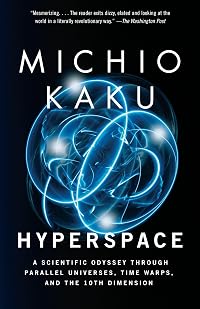
Hyperspace: A Scientific Odyssey Through Parallel Universes, Time Warps, and the Tenth Dimension
by Michio Kaku
On This Page
Description
Are there other dimensions beyond our own? Is time travel possible? Can we change the past? Are there gateways to parallel universes? All of us have pondered such questions, but there was a time when scientists dismissed these notions as outlandish speculations. Not any more. Today, they are the focus of the most intense scientific activity in recent memory. In Hyperspace, Michio Kaku, author of the widely acclaimed Beyond Einstein and a leading theoretical physicist, offers the first show more book-length tour of the most exciting (and perhaps most bizarre) work in modern physics, work which includes r show lessTags
Recommendations




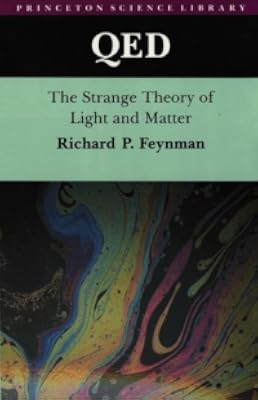
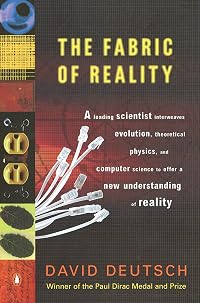
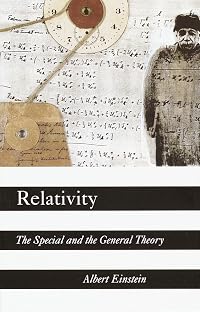
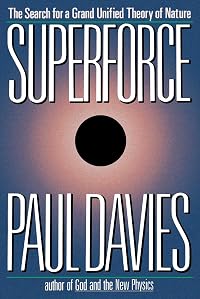

Member Recommendations
by anonymous user
Member Reviews
I was pleasantly surprised with this book. I've always had a thing for non fictions and having recently read 'selfish gene' (which is not at all related to physics. I know) I wasn’t sure what to expect and it was one hell of a ride. Michio Kaku has a very easy to read way of explaining the complicated things with interesting examples.
I've always had trouble grasping the idea of curved space. After finishing this book, not only do I have a better understanding of that, I'll go as far as to say that I have a much better understanding of the other dimensions as well.
Highly recommended for anyone who is remotely interested in science.
I've always had trouble grasping the idea of curved space. After finishing this book, not only do I have a better understanding of that, I'll go as far as to say that I have a much better understanding of the other dimensions as well.
Highly recommended for anyone who is remotely interested in science.
Mr. Kaku has always been one of my favorite guests on Coast to Coast AM, speculating on extraterrestrial civilizations and scientific knowledge and capability beyond ours. This book is an oddyssey on some of the more fantastical ideas that modern phycisists are speculationg at what lies beyond our perceptions in this, our physical universe. He starts with a history of physics, classical, relativity and quantum, and talks about the parallel developments in mathematics and then gets down to the fun stuff, that the structure of space is a far stranger and more possiblity laden place than conventional thought might admit to. The math can get a little heavy for someone with a non-math mind. But if ideas are what you are about, this book show more brings 'em. show less
Un gran libro que te introduce a una gran cantidad de ideas sobre física moderna de una manera muy apasionada que hará que no pares de leer hasta que lo termines. Muy recomendable.
I read this book a while back and just realized I never reviewed it. So actually this should probably go against the 2008 numbers, but who cares.
This book deals with high dimensional space time theories like superstring theory. This book is very readable for the non-physicists amoung us (myself included). The writing style of Kaku actually made 10 dimensional understandable despite the complex math underlying it and I actually understood how the 10 dimensions actually simplify the laws of nature.
Sure I took a couple physics courses in college, but we never got this deep and I'm no where near ready to take on Einstein, but this was actually an enjoyable read for those of you that are interested in seeing what some of the latest theories show more of space-time are. I've got a few more of Kaku's books on my TBR pile and look forward to tackling them. show less
This book deals with high dimensional space time theories like superstring theory. This book is very readable for the non-physicists amoung us (myself included). The writing style of Kaku actually made 10 dimensional understandable despite the complex math underlying it and I actually understood how the 10 dimensions actually simplify the laws of nature.
Sure I took a couple physics courses in college, but we never got this deep and I'm no where near ready to take on Einstein, but this was actually an enjoyable read for those of you that are interested in seeing what some of the latest theories show more of space-time are. I've got a few more of Kaku's books on my TBR pile and look forward to tackling them. show less
Not too long ago, I got a copy of [Everyone's Guide to Atoms, Einstein, and the Universe] in the member giveaway program. The book was quite fascinating, and kindled my interest.
A few months later, on a whim, I picked up this book. I had seen the author on TV a couple of times in the morning, and he was very interesting there.
I really enjoyed this book. The author puts in a lot of interesting quotes and asides about the various characters and personalities that come up thru the book.
I didn't find it as easy to digest, in whole, as Mr. Piccioni's book, but I still enjoyed it.
There are sections in here that will hurt your brain if you try and think it through (I'm looking at you, "Jane") ...but it's all in good fun. There are show more discussions of time travel, wormholes, parallel universes, death of the universe, etc.
The main topic is "string theory". It is really quite interesting, but I don't want to kid myself and think i have a complete handle on it. So the science in here seems to be really great.
The author brings up some other things I found kind of amusing. He seemed a little upset that Congress didn't fund a giant particle accelerator. I personally thought, "Good, that much money probably could be put into the debt" :)
Also there seems to be an idea that we can't progress beyond a certain level until the entire world is under one united government. Umm...yeah, don't see that happening any time soon. In my opinion, that's a good thing.
One thing puzzles me still with these type of books. There are all these great theories about how objects move, how space and the universe is defined, how subatomic particles and energy work. But, as of yet, I haven't caught on to how they would define basic life. What is a thought? What is an emotion? I guess these type of things are beyond the realm of physics, because physics wants to be something that can be proved by experimentation. The funny thing is, from what I understand here, there are some big parts of these theories that haven't fully been tested. So it seems to me, physics requires a bit of faith.
The thing is, these guys are always working on filling in the holes. It may very well be this book has some out of date information.
I did enjoy this book, and i've already started another of the authors books, Parallel Worlds. show less
A few months later, on a whim, I picked up this book. I had seen the author on TV a couple of times in the morning, and he was very interesting there.
I really enjoyed this book. The author puts in a lot of interesting quotes and asides about the various characters and personalities that come up thru the book.
I didn't find it as easy to digest, in whole, as Mr. Piccioni's book, but I still enjoyed it.
There are sections in here that will hurt your brain if you try and think it through (I'm looking at you, "Jane") ...but it's all in good fun. There are show more discussions of time travel, wormholes, parallel universes, death of the universe, etc.
The main topic is "string theory". It is really quite interesting, but I don't want to kid myself and think i have a complete handle on it. So the science in here seems to be really great.
The author brings up some other things I found kind of amusing. He seemed a little upset that Congress didn't fund a giant particle accelerator. I personally thought, "Good, that much money probably could be put into the debt" :)
Also there seems to be an idea that we can't progress beyond a certain level until the entire world is under one united government. Umm...yeah, don't see that happening any time soon. In my opinion, that's a good thing.
One thing puzzles me still with these type of books. There are all these great theories about how objects move, how space and the universe is defined, how subatomic particles and energy work. But, as of yet, I haven't caught on to how they would define basic life. What is a thought? What is an emotion? I guess these type of things are beyond the realm of physics, because physics wants to be something that can be proved by experimentation. The funny thing is, from what I understand here, there are some big parts of these theories that haven't fully been tested. So it seems to me, physics requires a bit of faith.
The thing is, these guys are always working on filling in the holes. It may very well be this book has some out of date information.
I did enjoy this book, and i've already started another of the authors books, Parallel Worlds. show less
Ok, I have tried reading this twice till now, but damn, at one point I just started zoning out because the concepts became kind of hard to understand.
But yes, this book is a hell of a wonderful book, and the author has done a wonderful job in writing this.
I will surely try reading this a third time, and I hope I can make it.
But yes, this book is a hell of a wonderful book, and the author has done a wonderful job in writing this.
I will surely try reading this a third time, and I hope I can make it.
I finished this book today. My mind is kind of swimming in it all and not focusing on any one idea presented.
I can't speak to the accuaracy of the science. He's my teacher, not my peer or my student. It doesn't sound crazy, so I believe he is accurately depeicting the state of physics as of the time the book was written.
The first time I read about superstrings, I thought it was a wonderful theory. It just "clicks" for me. This may have something to do with Kaku's ability to write clearly. I think it was in his book, Beyond Einstein where I first heard of the theory.
I'm more a metaphysicist than a physicist. (Not that I'm actually either.) I'm always trying to relate physics and religion and philosophy (and psychology and everything show more else!). A lot of that can be done with superstrings. Kaku addresses some of it. Scientists dismiss some things because they can't be repeated experimentally. Those are often the kinds of things I like to think about.
Some people in the past used the theory of multiple dimensions to explain where heaven was. Until and unless we find that particular dimension, of course the scientists will question it. It's their job (and nature) to question everything. But from the metaphysical point of view, it a very good thing to think about.... even if we don't get the right answer. If we have beliefs, they will definitely influence our conclusions.
This book feeds thoughts like this. Lots of "What if?" ideas come to me, too. I don't know the strict science or the math necessary, but I can think. I believe I have some powers of reasoning. A book like this also helps me keep on track because it tells of the paths that didn't work, the theories that didn't stand up to the experimentation, didn't fit the real world.
I wonder if I'm merely a child of my generation, one which has always seen rapid discovery and changes, or if I'm just one of the wild eyed dreamers of the world.
I like the idea of ten dimensions. I like the idea that those six extra dimensions, which are now curled up to Planck size (tiny!) may possibly, in the very distant future, provide the means of human survival. Assuming, of course, that we survive long enough to discover how to use them. I also like the idea that everything will come together one day and prove all to be inter-related.
© Copyright 2006 Airycat
My Writing.com Review show less
I can't speak to the accuaracy of the science. He's my teacher, not my peer or my student. It doesn't sound crazy, so I believe he is accurately depeicting the state of physics as of the time the book was written.
The first time I read about superstrings, I thought it was a wonderful theory. It just "clicks" for me. This may have something to do with Kaku's ability to write clearly. I think it was in his book, Beyond Einstein where I first heard of the theory.
I'm more a metaphysicist than a physicist. (Not that I'm actually either.) I'm always trying to relate physics and religion and philosophy (and psychology and everything show more else!). A lot of that can be done with superstrings. Kaku addresses some of it. Scientists dismiss some things because they can't be repeated experimentally. Those are often the kinds of things I like to think about.
Some people in the past used the theory of multiple dimensions to explain where heaven was. Until and unless we find that particular dimension, of course the scientists will question it. It's their job (and nature) to question everything. But from the metaphysical point of view, it a very good thing to think about.... even if we don't get the right answer. If we have beliefs, they will definitely influence our conclusions.
This book feeds thoughts like this. Lots of "What if?" ideas come to me, too. I don't know the strict science or the math necessary, but I can think. I believe I have some powers of reasoning. A book like this also helps me keep on track because it tells of the paths that didn't work, the theories that didn't stand up to the experimentation, didn't fit the real world.
I wonder if I'm merely a child of my generation, one which has always seen rapid discovery and changes, or if I'm just one of the wild eyed dreamers of the world.
I like the idea of ten dimensions. I like the idea that those six extra dimensions, which are now curled up to Planck size (tiny!) may possibly, in the very distant future, provide the means of human survival. Assuming, of course, that we survive long enough to discover how to use them. I also like the idea that everything will come together one day and prove all to be inter-related.
© Copyright 2006 Airycat
My Writing.com Review show less
Members
- Recently Added By
Author Information

39+ Works 15,111 Members
Michio Kaku was born January 24, 1947 in San Jose California. Kaku attended Cubberley High School in Palo Alto in the early 1960s and played first board on their chess team. At the National Science Fair in Albuquerque, New Mexico, he attracted the attention of physicist Edward Teller, who took Kaku as a protégé, awarding him the Hertz show more Engineering Scholarship. Kaku graduated summa cum laude from Harvard University with a B.S. degree in 1968 and was first in his physics class. He attended the Berkeley Radiation Laboratory at the University of California, Berkeley and received a Ph.D. in 1972 and held a lectureship at Princeton University in 1973. During the Vietnam War, Kaku completed his U.S. Army basic training at Fort Benning, Georgia and his advanced infantry training at Fort Lewis, Washington. Kaku currently holds the Henry Semat Chair and Professorship in theoretical physics and a joint appointment at City College of New York, and the Graduate Center of the City University of New York, where he has lectured for more than 30 years. He is engaged in defining the "Theory of Everything", which seeks to unify the four fundamental forces of the universe: the strong nuclear force, the weak nuclear force, gravity and electromagnetism. He was a visiting professor at the Institute for Advanced Study in Princeton, and New York University. He is a Fellow of the American Physical Society. He is listed in Who's Who in Science and Engineering, and American Men and Women of Science. He has published research articles on string theory from 1969 to 2000. In 1974, along with Prof. K. Kikkawa, he wrote the first paper on string field theory, now a major branch of string theory, which summarizes each of the five string theories into a single equation. In addition to his work on string field theory, he also authored some of the first papers on multi-loop amplitudes in string theory. Kaku is the author of several doctoral textbooks on string theory and quantum field theory and has published 170 articles in journals covering topics such as superstring theory, supergravity, supersymmetry, and hadronic physics. He is also author of the popular science books: Visions, Hyperspace, Einstein's Cosmos, Parallel Worlds, The Future of the Mind, and The Future of Humanity: Terraforming Mars, Interstellar Travel, Immortality, and Our Destiny Beyond. (Bowker Author Biography) show less
Some Editions
Awards and Honors
Awards
Notable Lists
Series
Belongs to Publisher Series
Common Knowledge
- Canonical title
- Hyperspace: A Scientific Odyssey Through Parallel Universes, Time Warps, and the Tenth Dimension
- Original title
- Hyperspace: A Scientific Odyssey Through Parallel Universes, Time Warps, and the Tenth Dimension
- Original publication date
- 1994
- Epigraph
- But the creative principle resides in mathematics. In a certain sense, therefore, I hold it true that pure thought can grasp reality, as the ancients dreamed.
Albert Einstein - Dedication
- This book is dedicated to my parents
- First words
- Two incidents from my childhood greatly enriched my understanding of the world and sent me on course to become a theoretical physicist.
- Last words
- (Click to show. Warning: May contain spoilers.)However, it seems to me that being blessed with the intellect to divine the ultimate secrets of nature gives meaning enough to life.
- Blurbers
- Barrow, John; Stephenson, Neal
- Original language
- English
Classifications
Statistics
- Members
- 3,156
- Popularity
- 5,496
- Reviews
- 20
- Rating
- (3.98)
- Languages
- 14 — Chinese, Czech, Dutch, English, Finnish, German, Hungarian, Italian, Polish, Portuguese, Russian, Serbian, Spanish, Ukrainian
- Media
- Paper, Audiobook, Ebook
- ISBNs
- 36
- ASINs
- 18