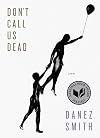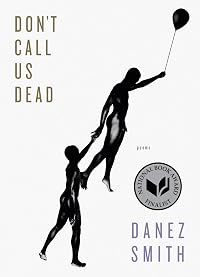
Don't Call Us Dead: Poems
by Danez Smith
On This Page
Description
Smith's unflinching poetry addresses race, class, sexuality, faith, social justice, mortality, and the challenges of living HIV positive at the intersection of black and queer identity. The collection opens with a heartrending sequence that imagines an afterlife for black men shot by police, a place where suspicion, violence, and grief are forgotten and replaced with the safety, love, and longevity they deserved on earth. "Dear White America," which Smith performed at the 2014 Rustbelt show more Midwest Region Poetry Slam, has as strong an impact on the page as it did on the spoken word stage. Smith's courage and hope amidst the struggle for unity in America will humble and uplift you. show lessTags
Recommendations
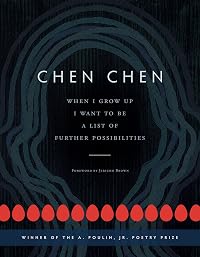
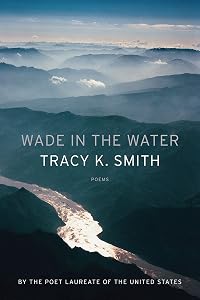
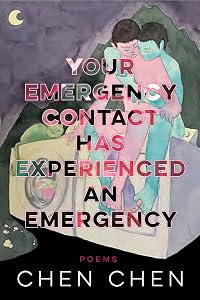
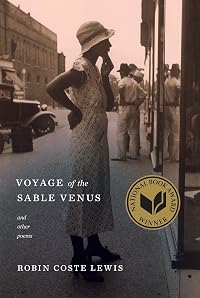
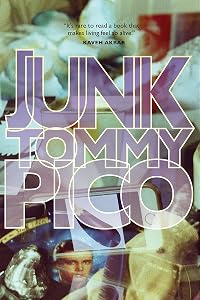
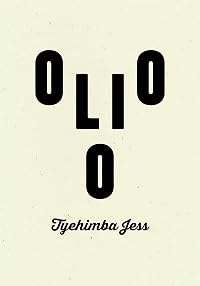

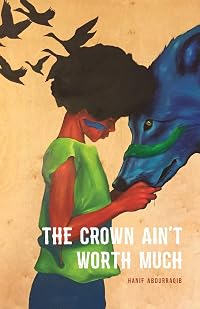

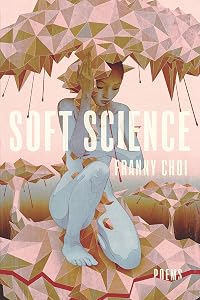

Member Recommendations
Member Reviews
Phenomenal work. Danez Smith is a wizard, and as soon as I finished this collection I purchased their more recent book.
Thrilling commentary on our nation's culture, and the fear experienced by those with Smith's intersecting marginalization. Poetry is about putting words to the abstract, and Smith elegantly shows us how our country is not only broken, but it was never working in the first place.
"Do I think someone created AIDS? Maybe. Nothing would surprise me in a country where you can burn a body with less outrage than a flag." (Approximate quote)
Thrilling commentary on our nation's culture, and the fear experienced by those with Smith's intersecting marginalization. Poetry is about putting words to the abstract, and Smith elegantly shows us how our country is not only broken, but it was never working in the first place.
"Do I think someone created AIDS? Maybe. Nothing would surprise me in a country where you can burn a body with less outrage than a flag." (Approximate quote)
harrowing poetry centred around all types of violence - internal and external, figurative and literal, interpersonal and microbial. even though this is a slim collection, the intensity of the poems (especially when parsed as a whole) led me to put it down a couple times. i never put it down for too long - though the poems are intense, they are also revelatory; everything smith writes is so beautiful despite the subject matter (often because of the subject) that it forces a reassessment of old beliefs and priorities.
I put off reading this for a stupid reason. I read several of these poems in earlier forms, in journals and anthologies and online and out loud. Because I'm a little obsessed with the author, I think his poems are overwhelmingly moving and true and painful and seeking and present and urgent and clear-eyed. I remember telling a friend about one and realizing I'd memorized the whole text, without effort or conscious attempt, just because I couldn't escape it.
Most of those poems are revised in this edition. Of course; most poets revise. Most poets revise unceasingly. And they discover new aspects in the revision. These revised poems are also good and meaningful and striking, and whichever version I prefer, I had nothing to fear from a new show more reading. And I'm stupid because there are other poems, new to me. Summer Somewhere alone had me sitting silent at the table for half an hour, trying to re-see the world.
I know most people have been turned off of poetry, from school English or bad live journals or a sense that they have to write a critical essay after reading each piece, and I never tell y'all you "have to" read the things I like, but it makes me sad that you don't get to have this experience. I recommend you read this. Just one poem. Or, hell, I'll make you a list. I'll tell you where to find the journals, or lend you the books. Call me and I'll read you something. Just keep trying until you find something so true it literally (literally!) takes your breath away. show less
Most of those poems are revised in this edition. Of course; most poets revise. Most poets revise unceasingly. And they discover new aspects in the revision. These revised poems are also good and meaningful and striking, and whichever version I prefer, I had nothing to fear from a new show more reading. And I'm stupid because there are other poems, new to me. Summer Somewhere alone had me sitting silent at the table for half an hour, trying to re-see the world.
I know most people have been turned off of poetry, from school English or bad live journals or a sense that they have to write a critical essay after reading each piece, and I never tell y'all you "have to" read the things I like, but it makes me sad that you don't get to have this experience. I recommend you read this. Just one poem. Or, hell, I'll make you a list. I'll tell you where to find the journals, or lend you the books. Call me and I'll read you something. Just keep trying until you find something so true it literally (literally!) takes your breath away. show less
If I had just once sentence to describe this book, I would say that it is a gift. Smith’s indefatigable commitment to truth – through beauty and ugliness, through clarity and doubt, through love and fear – challenges readers to look modern day Black/queer realities dead in the eyes and to imagine something better for Black/queer futures. I highly recommend reading this collection and accepting that challenge.
Smith is brilliant, one of the few exceptions to the rule that I don't really connect with poetry. Smith's work carves me out and teaches me. This collection is about the blood of black men, those who fall to white supremacy whether through the violence it creates, validates, and perpetuates, to HIV, or to suicide and other weapons. Their work is so raw, I almost feel like a voyeur reading it, as if I am seeing something private, the most intimate grief. This is stunning.
I read the collection and then got the audio read by the author. The experience is different and I am glad I did both.
I read the collection and then got the audio read by the author. The experience is different and I am glad I did both.
This was recommended to me by the wondrous people at Tailored Book Recommendations when I asked for more poetry, and I absolutely fell in love with it. Filled with fierce love, joy, and mourning, it centers its gravity on the expendability of black bodies -- particularly young black boys and gay black men.
The first series of poems, "summer, somewhere," imagines an afterlife of eternal summer for the black boys who died before they had a chance to be men. It contains one of my favorite stanzas:
paradise is a world where everything
is sanctuary & nothing is a gun.
As much as this collection wants you to bear witness to the gun -- literal guns, metaphorical guns -- the guns that kill you quick, and the guns that take half your life to kill show more you, your whole life to kill you. The guns someone brandishes at you and the guns swimming through your own veins. It also builds sanctuary. Through the imagined paradise of black boy heaven, the plot to "Dinosaurs in the Hood" (my favorite poem here), owning lust and love and connection as a gay black man, a "little prayer" for healing.
I checked this out from the library but I may need to buy a copy so that I can unfold it over and over, bear witness, and share the dream. show less
The first series of poems, "summer, somewhere," imagines an afterlife of eternal summer for the black boys who died before they had a chance to be men. It contains one of my favorite stanzas:
paradise is a world where everything
is sanctuary & nothing is a gun.
As much as this collection wants you to bear witness to the gun -- literal guns, metaphorical guns -- the guns that kill you quick, and the guns that take half your life to kill show more you, your whole life to kill you. The guns someone brandishes at you and the guns swimming through your own veins. It also builds sanctuary. Through the imagined paradise of black boy heaven, the plot to "Dinosaurs in the Hood" (my favorite poem here), owning lust and love and connection as a gay black man, a "little prayer" for healing.
I checked this out from the library but I may need to buy a copy so that I can unfold it over and over, bear witness, and share the dream. show less
This poetry collection is fierce and burning and bright.
I don't like to compare artworks because it feels unkind to both artists, but this collection feels like the Oscar-winning film Moonlight in poetry form.
The way he writes is exceptional and effortless, except it's come from a place of effort so it truly means something. Smith takes a queer, black young men, boys 'as brown as rye bread' and creates a paradise for them, so that when they die at the hands of police violence, they can be loved, cherished and honoured in the way they deserve.
Except it's not heaven, because the boys never died. They live on, eternally, never to be forgotten. All of their toxic masculinity washed away.
Smith uses his poetry to discuss some things that show more the queer community has long neglected, racism on Grindr, HIV diagnoses and writes them into being. With the ugly and the beautiful side by side and it feels like life.
We see a lot of young black men dying at the hands of police violence and it's exhausting and hard to picture an alternative. Without being able to see an alternative, we accept, as difficult as it might be, that this is the way things are, this is how they have to be, this is how they've been.
Smith, without ever disregarding his history, shows us what paradise might look like.
And it's black, and it's beautiful. show less
I don't like to compare artworks because it feels unkind to both artists, but this collection feels like the Oscar-winning film Moonlight in poetry form.
The way he writes is exceptional and effortless, except it's come from a place of effort so it truly means something. Smith takes a queer, black young men, boys 'as brown as rye bread' and creates a paradise for them, so that when they die at the hands of police violence, they can be loved, cherished and honoured in the way they deserve.
Except it's not heaven, because the boys never died. They live on, eternally, never to be forgotten. All of their toxic masculinity washed away.
Smith uses his poetry to discuss some things that show more the queer community has long neglected, racism on Grindr, HIV diagnoses and writes them into being. With the ugly and the beautiful side by side and it feels like life.
We see a lot of young black men dying at the hands of police violence and it's exhausting and hard to picture an alternative. Without being able to see an alternative, we accept, as difficult as it might be, that this is the way things are, this is how they have to be, this is how they've been.
Smith, without ever disregarding his history, shows us what paradise might look like.
And it's black, and it's beautiful. show less
Members
- Recently Added By
Lists

Trans Books by Trans Authors
134 works; 10 members

Books Read in 2018
4,360 works; 110 members

Review 4
37 works; 3 members
Author Information

6+ Works 1,413 Members
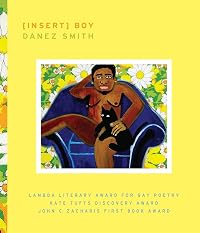
Danez Smith's debut poetry collection, [insert] boy, won the Kate Tufts Discovery Award and the Lambda Literary Award. Smith has received fellowships from the McKnight Foundation, the National Endowment for the Arts, and the Poetry Foundation, and has published poems in Granta, Poetry, and The Best American Poetry. Smith lives in Minneapolis.
Awards and Honors
Awards
Distinctions
The Guardian Book of the Day (2018-02-09)
Common Knowledge
- Original publication date
- 2017
- Dedication
- for Pookie /
my day one & best love
Classifications
Statistics
- Members
- 672
- Popularity
- 42,788
- Reviews
- 16
- Rating
- (4.45)
- Languages
- English, Portuguese (Portugal)
- Media
- Paper, Audiobook, Ebook
- ISBNs
- 8
- ASINs
- 3