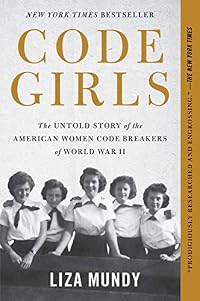
Code Girls: The Untold Story of the American Women Code Breakers of World War II
by Liza Mundy
On This Page
Description
The award-winning New York Times bestseller about the American women who secretly served as codebreakers during World War II—a "prodigiously researched and engrossing" (New York Times) book that "shines a light on a hidden chapter of American history" (Denver Post).Recruited by the U.S. Army and Navy from small towns and elite colleges, more than ten thousand women served as codebreakers during World War II. While their brothers and boyfriends took up arms, these women moved to Washington show more and learned the meticulous work of code-breaking. Their efforts shortened the war, saved countless lives, and gave them access to careers previously denied to them. A strict vow of secrecy nearly erased their efforts from history; now, through dazzling research and interviews with surviving code girls, bestselling author Liza Mundy brings to life this riveting and vital story of American courage, service, and scientific accomplishment. show less
Tags
Recommendations
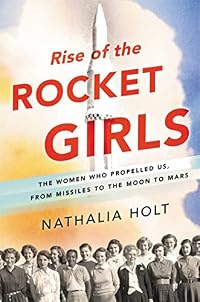
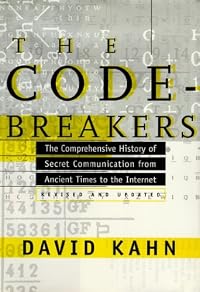
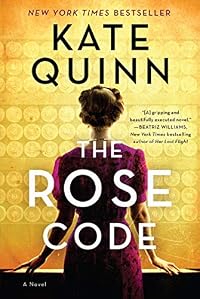
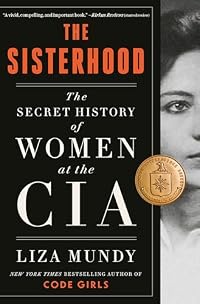









Member Recommendations
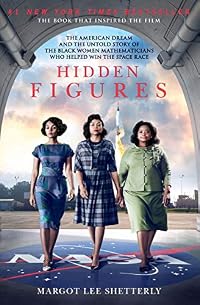
Hidden Figures: The American Dream and the Untold Story of the Black Women Mathematicians Who Helped Win the Space Race by Margot Lee Shetterly
themulhern Similar stories about overlooked and discriminated against mathematicians and computers.
Member Reviews
*I received a free copy of this book from the publisher through NetGalley in exchange for an honest review.*
Code Girls is far and away the BEST non-fiction I’ve read this year, if not in the past five years. Following the style of Hidden Figures in showing just how much work women have done to make our country what it is today, Liza Mundy reveals the women behind the code-breaking operation during World War II. During her research, she asked for documents to be declassified (some successfully, some not), giving us access to a whole new world of information about the lives of women during the war that they were never allowed to talk about.
What struck me most about this book is how well the author formats the narrative; she gives plenty show more of background information in the field of cryptanalysis, the context of what was happening during World War II at various times, and the context of just what the military was doing in order to combat the Axis nations. Within that, she follows the lives of a few women who left their normal lives to work for the government and help the war effort by joining a super secret project that broke codes for the military. Because of the way it’s written, you get both the full context of what’s happening and what the work the women are doing means, but you also get the human element of being able to relate to specific women who served as codebreakers, which is such a great balance to have in a non-fiction. It really helps it to become a page-turner and I was enthralled.
I never realized how much I didn’t know about the US World War II effort; I would poke at my husband throughout the day to share the most interesting tidbits and tell him about what I was learning; it almost made me feel like a little kid again, discovering information that fascinated and enthralled me. And, of course, it’s so great to hear the stories of women who were rock stars but never able to tell anyone about their accomplishments; it’s humbling to read about how much work they did and the sort of conditions they put up with in order to simply help us win the war.
This book is everything — heartbreaking, inspiring, emotional, and intelligently researched. I’m going to be buying copies of this for friends for Christmas this year, because this is a story that people need to know.
Also posted on Purple People Readers. show less
Code Girls is far and away the BEST non-fiction I’ve read this year, if not in the past five years. Following the style of Hidden Figures in showing just how much work women have done to make our country what it is today, Liza Mundy reveals the women behind the code-breaking operation during World War II. During her research, she asked for documents to be declassified (some successfully, some not), giving us access to a whole new world of information about the lives of women during the war that they were never allowed to talk about.
What struck me most about this book is how well the author formats the narrative; she gives plenty show more of background information in the field of cryptanalysis, the context of what was happening during World War II at various times, and the context of just what the military was doing in order to combat the Axis nations. Within that, she follows the lives of a few women who left their normal lives to work for the government and help the war effort by joining a super secret project that broke codes for the military. Because of the way it’s written, you get both the full context of what’s happening and what the work the women are doing means, but you also get the human element of being able to relate to specific women who served as codebreakers, which is such a great balance to have in a non-fiction. It really helps it to become a page-turner and I was enthralled.
I never realized how much I didn’t know about the US World War II effort; I would poke at my husband throughout the day to share the most interesting tidbits and tell him about what I was learning; it almost made me feel like a little kid again, discovering information that fascinated and enthralled me. And, of course, it’s so great to hear the stories of women who were rock stars but never able to tell anyone about their accomplishments; it’s humbling to read about how much work they did and the sort of conditions they put up with in order to simply help us win the war.
This book is everything — heartbreaking, inspiring, emotional, and intelligently researched. I’m going to be buying copies of this for friends for Christmas this year, because this is a story that people need to know.
Also posted on Purple People Readers. show less
This is a completely riveting book about a part of WWII history that, for a long time, went undiscussed. Liza Mundy does a fantastic job in conveying the skill and the integrity in the women who held these extremely important jobs. She also does a great job in showing us the lives of these women before, during, and after the war, and how policies of the time robbed them of the recognition they deserved--and often, kept them from pursuing careers using the skills they developed in the war.
Liza Mundy also managed to do something really impressive, in that she had me on the edge of my seat, absolutely riveted, at events that I know extremely well. I am a WWII historian, so the "how this happened" stuff is old hat to me. Yet by shedding show more light on the behind-the-scenes efforts that went on to break ciphers and codes that were integral to the war, she has added an entirely new perspective on the war effort during events like D-Day, the Battle of the Bulge, and the dropping of atomic bombs on Japan. It's thoroughly fascinating material. show less
Liza Mundy also managed to do something really impressive, in that she had me on the edge of my seat, absolutely riveted, at events that I know extremely well. I am a WWII historian, so the "how this happened" stuff is old hat to me. Yet by shedding show more light on the behind-the-scenes efforts that went on to break ciphers and codes that were integral to the war, she has added an entirely new perspective on the war effort during events like D-Day, the Battle of the Bulge, and the dropping of atomic bombs on Japan. It's thoroughly fascinating material. show less
Liza Mundy's "Code Girls" is a splendid, well-researched work of non-fiction that sheds light on the contribution of highly educated women who were plucked from their hometowns and colleges to serve their country during the Second World War. What they had in common was an aptitude for breaking the enemies' complex codes. After being vetted and tested by government officials, the recruits were trained in the top-secret science of cryptanalysis.
The author conducted interviews, consulted oral histories and other primary sources, and studied declassified documents stored "at the national Archives and Record Administration II in College Park, MD." These files "had sat gathering dust for over seventy years." We now know that the U. S. Army show more and Navy created a program that taught thousands of women to closely examine and decrypt German and Japanese message systems. Gleaning facts about the enemies' casualties, troop movements, supply convoys, and planned attacks gave our military leaders the information that they needed to make strategic decisions. There is no question that the code breakers' work saved countless American lives.
Mundy provides an overview of the attack on Pearl Harbor; America's shift from isolationism to a war footing; the shortage of men to fill jobs on the home front; and the horrible toll that the Second World War took on American troops and their loved ones. However, it is her focus on particular women that creates a vivid picture of who the code girls were, where they came from, how they handled their demanding jobs, and what effect their clandestine activities had on their personal lives.
Code breaking was a painstaking task that required skilled workers who were patient, highly motivated, and intuitive. The most successful among them had excellent memories and the ability to see both the forest AND the trees. "Code Girls" is an entertaining, enlightening, and riveting account of a turning point in American history. Liz Mundy's beautifully crafted prose flows effortlessly. She brilliantly portrays the personalities, successes and failures, and personal sacrifices of the female code breakers who, without fanfare, played a key role in helping the Allied forces defeat Germany and Japan. show less
The author conducted interviews, consulted oral histories and other primary sources, and studied declassified documents stored "at the national Archives and Record Administration II in College Park, MD." These files "had sat gathering dust for over seventy years." We now know that the U. S. Army show more and Navy created a program that taught thousands of women to closely examine and decrypt German and Japanese message systems. Gleaning facts about the enemies' casualties, troop movements, supply convoys, and planned attacks gave our military leaders the information that they needed to make strategic decisions. There is no question that the code breakers' work saved countless American lives.
Mundy provides an overview of the attack on Pearl Harbor; America's shift from isolationism to a war footing; the shortage of men to fill jobs on the home front; and the horrible toll that the Second World War took on American troops and their loved ones. However, it is her focus on particular women that creates a vivid picture of who the code girls were, where they came from, how they handled their demanding jobs, and what effect their clandestine activities had on their personal lives.
Code breaking was a painstaking task that required skilled workers who were patient, highly motivated, and intuitive. The most successful among them had excellent memories and the ability to see both the forest AND the trees. "Code Girls" is an entertaining, enlightening, and riveting account of a turning point in American history. Liz Mundy's beautifully crafted prose flows effortlessly. She brilliantly portrays the personalities, successes and failures, and personal sacrifices of the female code breakers who, without fanfare, played a key role in helping the Allied forces defeat Germany and Japan. show less
This book is so dense with details that at times I felt inundated with and drowning in the written word. It really should have been two separate books: one about the code breaking work and one really about the women. If you are interested in the personal lives of the women, how they were recruited, what their jobs meant to them, how they coped, and what happened after the war, then much of this book won’t appeal to you. If you want to know what the jobs themselves entailed, how the codes were written and broken, then you probably don’t care how the girls managed to get a mattress home from the store. While the author did focus on a couple of main code breakers, there were so many secondary characters with not a lot of narrative to show more connect them that it was hard to keep things straight. Still, it is an interesting and often overlooked part of the war and is worth reading, even if the book tended to be overwhelming at times. show less
I love reading well written history books and my interest mostly lies in politics or WWII. However, my knowledge about the Second World War has been limited to Nazism, the Holocaust and the occupation of Paris. This book covers a new aspect of the war for me – an American women’s perspective. Many men have been recognized and celebrated for the parts they played in the Allied victory and all of them were well deserved. However, what we never realize is the extent of involvement of women in wartime activities and how they have never been appropriately appreciated. This book gives a small glimpse into the lives of some such women code breakers who played a crucial part in the war.
This was a time when women wanted to get educated, even show more in unusual fields like math and science but didn’t have many job prospects because all the “important” jobs were required for men. This forced even highly intelligent and capable women to settle for low paying teaching jobs, sometimes in remote places with no facilities. But the war changed everything. All the healthy men were needed to fight the war from the frontlines and it was only the women who were left and they had to be engaged in intelligence activities to support the forces and gain advantage over the Axis powers. This books tells the story of how highly intelligent women graduates were picked from colleges and also school teachers who were tested and shipped to DC. They were sworn to an oath of secrecy, mostly had to learn cryptanalysis on the job and get to work immediately. They played a crucial role in the battle of Midway, the attack and killing of Japanese commander Yamamoto who was responsible for Pearl Harbor and the sinking of many enemy ships. Their code breaking skills were highly responsible for cutting off supplies to the Japanese troops in the Pacific and create a diversion that helped the Allied forces in the D-Day invasion of Normandy.
The book describes a lot of technical details about code breaking in the initial days and might be very interesting for readers of the profession. It explores the relationships that these amazing women forged with each other and in some cases maintained their whole life. But the author is also able to show us how these women were affected by the war – they were happy when they helped in the defeat of the enemies, satisfied with saving the lives of their countrymen but also devastated when their own family members sacrificed their lives. Their aspirations, friendships, vulnerabilities are captured well in the book. At the same time, the stereotypes and misogyny they faced is also quite clearly captured.
What happened to these women after the war is worth noting and mentioned in the last chapter. Most of the women had to settle as homemakers because the jobs were for men and they couldn’t disclose their code breaking activities. Some women did manage to go back to college and become professionals in other fields. Nothing would ever be the same for them though. However, some women managed to remain in the code breaking profession. But most of them remained close to each other because only they understood.
I feel proud and privileged to read about these women. We should appreciate what they did in times when women were not considered capable of anything other than being housewives and mothers. They have made it possible for us to pursue our dreams and prove that women can be anything they want to be. I salute these amazing women for their work and it’s time they are all celebrated. And I thank the author for bringing their story to us.
PS: I thank Hachette books and Netgalley for providing me an ARC of the book in exchange for an honest review. show less
This was a time when women wanted to get educated, even show more in unusual fields like math and science but didn’t have many job prospects because all the “important” jobs were required for men. This forced even highly intelligent and capable women to settle for low paying teaching jobs, sometimes in remote places with no facilities. But the war changed everything. All the healthy men were needed to fight the war from the frontlines and it was only the women who were left and they had to be engaged in intelligence activities to support the forces and gain advantage over the Axis powers. This books tells the story of how highly intelligent women graduates were picked from colleges and also school teachers who were tested and shipped to DC. They were sworn to an oath of secrecy, mostly had to learn cryptanalysis on the job and get to work immediately. They played a crucial role in the battle of Midway, the attack and killing of Japanese commander Yamamoto who was responsible for Pearl Harbor and the sinking of many enemy ships. Their code breaking skills were highly responsible for cutting off supplies to the Japanese troops in the Pacific and create a diversion that helped the Allied forces in the D-Day invasion of Normandy.
The book describes a lot of technical details about code breaking in the initial days and might be very interesting for readers of the profession. It explores the relationships that these amazing women forged with each other and in some cases maintained their whole life. But the author is also able to show us how these women were affected by the war – they were happy when they helped in the defeat of the enemies, satisfied with saving the lives of their countrymen but also devastated when their own family members sacrificed their lives. Their aspirations, friendships, vulnerabilities are captured well in the book. At the same time, the stereotypes and misogyny they faced is also quite clearly captured.
What happened to these women after the war is worth noting and mentioned in the last chapter. Most of the women had to settle as homemakers because the jobs were for men and they couldn’t disclose their code breaking activities. Some women did manage to go back to college and become professionals in other fields. Nothing would ever be the same for them though. However, some women managed to remain in the code breaking profession. But most of them remained close to each other because only they understood.
I feel proud and privileged to read about these women. We should appreciate what they did in times when women were not considered capable of anything other than being housewives and mothers. They have made it possible for us to pursue our dreams and prove that women can be anything they want to be. I salute these amazing women for their work and it’s time they are all celebrated. And I thank the author for bringing their story to us.
PS: I thank Hachette books and Netgalley for providing me an ARC of the book in exchange for an honest review. show less
Wow, wow, wow!!!
This book was an incredible story, told lovingly by Liza Mundy. I loved the way Ms. Mundy wrote about each of the code girls, including their back story, and the toll working a secret operation took on their lives. I also loved learning about the way the girls were recruited, how they lived and worked together, and especially, how their contributions helped the Allied war effort.
This book could have been very dry, but Ms. Mundy anecdotes about each of these women brought the story to life. I was familiar with Alan Turing and his work, but I was not familiar with the work done by these women during and after WWII.
I also really enjoyed learning some local history. Living in Baltimore, I am familiar with Goucher College, show more but not its participation in the war effort. I also wasn't aware of its earlier location. I also enjoyed hearing about Arlington Hall, and the other locations around the DC metro area.
I especially was thrilled to read about these smart women. Women who have brains and used them to their best capacity. However, I was saddened to read about the sexism and the inequity of pay, as well as the stigma of pregnancy. I was inspired to read how the ambition of these women to do more with their lives, use their education, and to better themselves and their family was woven in their character.
These women are heroes. I thank Liza Mundy for bringing their stories to life.
FANTASTIC!!
#CodeGirls #LizaMundy show less
This book was an incredible story, told lovingly by Liza Mundy. I loved the way Ms. Mundy wrote about each of the code girls, including their back story, and the toll working a secret operation took on their lives. I also loved learning about the way the girls were recruited, how they lived and worked together, and especially, how their contributions helped the Allied war effort.
This book could have been very dry, but Ms. Mundy anecdotes about each of these women brought the story to life. I was familiar with Alan Turing and his work, but I was not familiar with the work done by these women during and after WWII.
I also really enjoyed learning some local history. Living in Baltimore, I am familiar with Goucher College, show more but not its participation in the war effort. I also wasn't aware of its earlier location. I also enjoyed hearing about Arlington Hall, and the other locations around the DC metro area.
I especially was thrilled to read about these smart women. Women who have brains and used them to their best capacity. However, I was saddened to read about the sexism and the inequity of pay, as well as the stigma of pregnancy. I was inspired to read how the ambition of these women to do more with their lives, use their education, and to better themselves and their family was woven in their character.
These women are heroes. I thank Liza Mundy for bringing their stories to life.
FANTASTIC!!
#CodeGirls #LizaMundy show less
In World War II, a critical part of the war effort was breaking German and Japanese codes. Yet, unlike major European countries, the US had very little in the way of a cryptography operation. One had been developed during the first World War, but Henry Stimson, William Howard Taft's Secretary of State, closed it down when he came into office in 1929. His statement, "Gentlemen don't read each other's mail," is beautiful, but of course, in the context of international diplomacy, completely wrong The Navy managed to preserve a tiny operation, but the onset of World War II, the US needed to ramp cryptography back up from almost nothing, very rapidly.
Yet the men, who "ought" to have done that work, were needed for combat operations. Enter show more the women.
Mundy, based on extensive research including interviews with many of the surviving "code girls," gives us a revealing, compelling picture of the women, their experiences, the history of American cryptography, and the vital role it played in WWII.
Drawing women in to war work, as well as industrial work, to fill the places of men needed for combat, was a major social upheaval in America, and after the war ended, there was an equally major effort to roll it back and send women back home to make room, and inviting homes, for returning men. Yet "freeing the men to fight" had also meant, in many cases, that the women's own brothers or husbands or sweethearts were killed, even as the coders' and others' work had been aimed at keeping the fighting men safe and bringing them home faster.
At the same time, cryptography during the war was a major opportunity for women interested in math to do real and meaningful work in it, rather than being regarded as having wasted their time on a subject not really considered fit for women.
The conflicting pressures, as well as both the restrictions of highly classified war work combined with the freedom of earning their own money in settings far removed from their families and the neighbors they grew up among, created an exciting, confusing, challenging life for women cryptographers, even as the small number of men in their ranks experienced, too often, being regarded as failures and perhaps cowards, despite often being men who were too old for military service, or classified as 4F, medically unable to meet the physical demands of combat. Like the women, they were doing the work they could do, valuable work, that enabled the combat soldiers to fight more effectively.
It's a fascinating look at a long-hidden but vital aspect of the war, one the women and men involved couldn't talk about until decades later.
Highly recommended.
I bought this audiobook. show less
Yet the men, who "ought" to have done that work, were needed for combat operations. Enter show more the women.
Mundy, based on extensive research including interviews with many of the surviving "code girls," gives us a revealing, compelling picture of the women, their experiences, the history of American cryptography, and the vital role it played in WWII.
Drawing women in to war work, as well as industrial work, to fill the places of men needed for combat, was a major social upheaval in America, and after the war ended, there was an equally major effort to roll it back and send women back home to make room, and inviting homes, for returning men. Yet "freeing the men to fight" had also meant, in many cases, that the women's own brothers or husbands or sweethearts were killed, even as the coders' and others' work had been aimed at keeping the fighting men safe and bringing them home faster.
At the same time, cryptography during the war was a major opportunity for women interested in math to do real and meaningful work in it, rather than being regarded as having wasted their time on a subject not really considered fit for women.
The conflicting pressures, as well as both the restrictions of highly classified war work combined with the freedom of earning their own money in settings far removed from their families and the neighbors they grew up among, created an exciting, confusing, challenging life for women cryptographers, even as the small number of men in their ranks experienced, too often, being regarded as failures and perhaps cowards, despite often being men who were too old for military service, or classified as 4F, medically unable to meet the physical demands of combat. Like the women, they were doing the work they could do, valuable work, that enabled the combat soldiers to fight more effectively.
It's a fascinating look at a long-hidden but vital aspect of the war, one the women and men involved couldn't talk about until decades later.
Highly recommended.
I bought this audiobook. show less
Members
- Recently Added By
Lists

Top Five Books of 2017
757 works; 230 members

Female spies
13 works; 2 members

Women in War
148 works; 29 members

Books Read in 2017
4,248 works; 129 members

Hachette Book Group
152 works; 6 members

Books Read in 2018
4,360 works; 110 members

To Read
617 works; 7 members

Books Read in 2024
4,623 works; 126 members

Women in War
7 works; 1 member

Books Read in 2026
1,665 works; 62 members
Author Information

8+ Works 2,619 Members
Liza Mundy is the bestselling author of Michelle: A Biography and Everything Conceivable. A longtime award-winning reporter for The Washington Post, she is currently a fellow at the New America Foundation. She lives in Arlington, Virginia.
Some Editions
Awards and Honors
Awards
Distinctions
Notable Lists
Work Relationships
Common Knowledge
- Canonical title
- Code Girls: The Untold Story of the American Women Code Breakers of World War II
- Original title
- Code Girls: The Untold Story of the American Women Code Breakers of World War II
- Original publication date
- 2017
- People/Characters
- Dorothy "Dot" Braden; George Fabyan; Elizebeth Smith Friedman; William F. Friedman; Agnes Meyer Driscoll; Anne White
- Important places
- Arlington Hall, Arlington, Virginia, USA
- Important events
- Pearl Harbor Attack; World War II; D-Day, Normandy, France 1944
- Epigraph
- I'm in some kind of hush, hush business. Somewhere in Wash. D.C. If I say anything I'll get hung for sure. I guess I signed my life away. But I don't mind it.
- Jaenn Magdalene Coz, writing to her mother in 194... (show all)5 - Dedication
- To all these women, and to Margaret Talbot
- First words
- The planes looked like distant pinpoints at first, and few who saw them took them seriously even up to the moment they dropped theirs payloads.
- Last words
- (Click to show. Warning: May contain spoilers.)That day of commitment to democracy remained sacred to her.
(Click to show. Warning: May contain spoilers.)(Epilogue) It feels as if an enemy might still be at the window, listening in. - Blurbers
- Abbott, Karen; Holt, Nathalia; Frankel, Glenn; Povich, Lynn; Lemmon, Gayle Tzemach
- Original language
- English
- Canonical DDC/MDS
- 940.54867309252
- Canonical LCC
- D810.C88
Classifications
- Genres
- History, General Nonfiction, Technology, Nonfiction
- DDC/MDS
- 940.54867309252 — History & geography History of Europe History of Europe 1918- Military history of World War II Other Topics Unconventional warfare of Allies
- LCC
- D810 .C88 — History of Europe, Asia, Africa and Oceania History (General) World War II (1939-1945)
- BISAC
Statistics
- Members
- 1,882
- Popularity
- 11,337
- Reviews
- 58
- Rating
- (4.07)
- Languages
- English
- Media
- Paper, Audiobook, Ebook
- ISBNs
- 27
- ASINs
- 4