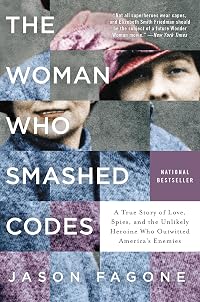
The Woman Who Smashed Codes: A True Story of Love, Spies, and the Unlikely Heroine Who Outwitted America's Enemies
by Jason Fagone
On This Page
Description
National BestsellerNPR Best Book of the Year
"Not all superheroes wear capes, and Elizebeth Smith Friedman should be the subject of a future Wonder Woman movie." —The New York Times
Joining the ranks of Hidden Figures and In the Garden of Beasts, the incredible true story of the greatest codebreaking duo that ever lived, an American woman and her husband who invented the modern science of cryptology together and used it to confront the evils of their time, solving puzzles that unmasked show more Nazi spies and helped win World War II.
In 1916, at the height of World War I, brilliant Shakespeare expert Elizebeth Smith went to work for an eccentric tycoon on his estate outside Chicago. The tycoon had close ties to the U.S. government, and he soon asked Elizebeth to apply her language skills to an exciting new venture: code-breaking. There she met the man who would become her husband, groundbreaking cryptologist William Friedman. Though she and Friedman are in many ways the "Adam and Eve" of the NSA, Elizebeth's story, incredibly, has never been told.
In The Woman Who Smashed Codes, Jason Fagone chronicles the life of this extraordinary woman, who played an integral role in our nation's history for forty years. After World War I, Smith used her talents to catch gangsters and smugglers during Prohibition, then accepted a covert mission to discover and expose Nazi spy rings that were spreading like wildfire across South America, advancing ever closer to the United States. As World War II raged, Elizebeth fought a highly classified battle of wits against Hitler's Reich, cracking multiple versions of the Enigma machine used by German spies. Meanwhile, inside an Army vault in Washington, William worked furiously to break Purple, the Japanese version of Enigma—and eventually succeeded, at a terrible cost to his personal life.
Fagone unveils America's code-breaking history through the prism of Smith's life, bringing into focus the unforgettable events and colorful personalities that would help shape modern intelligence. Blending the lively pace and compelling detail that are the hallmarks of Erik Larson's bestsellers with the atmosphere and intensity of The Imitation Game, The Woman Who Smashed Codes is page-turning popular history at its finest.
. show less
Tags
Recommendations
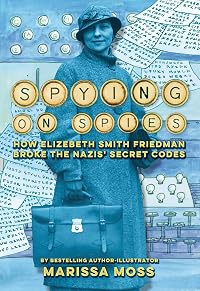
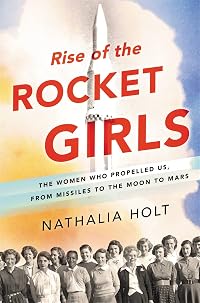
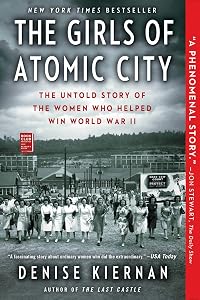
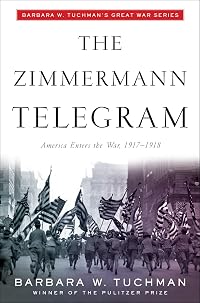
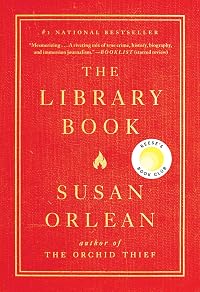






Member Recommendations
Member Reviews
This was a fascinating biography of a woman who had a profound effect on codebreaking and who almost managed to be totally overlooked. Elizebeth Smith was a Quaker schoolteacher hired by an eccentric millionaire to work on his odd theory about William Shakespeare's plays. He believed that they were written by Francis Bacon, and the proof lay in obscure marks found in an early printing of the plays.
The search for proof that Francis Bacon wrote Shakespeare's plays was only one of the many experiments going on at Riverbank. Also there working on genetic research was an American Jew named William S. Friedman. The two formed a friendship and then a romance and a duo that is directly responsible for the United States' codebreaking agencies. show more
Elizebeth and William worked on various codes which allowed Elizebeth, working for the Coast Guard, to track down and capture rum runners and other local criminals, and William to be instrumental in breaking the codes sent by America's enemies during World War I.
While William's work is well known and celebrated, Elizebeth's was lost in file cabinets and classified by the nascent NSA. But her role in breaking codes and locating Nazis in South America was vital to the war effort in World War II.
There are lots of take-aways for me. I didn't form a good impression of J. Edgar Hoover and the early years of the FBI. He was quick to claim credit for other people's successes. As this quote says: "It's not quite true that history is written by the winners. It's written by the best publicists on the winning team."
I came away from this story with really impressed at how a man and woman working with pencil, paper, and brains could do so much to solve so many puzzles. I was also impressed by Elizebeth's modesty in that she didn't think what she did was all that special. show less
The search for proof that Francis Bacon wrote Shakespeare's plays was only one of the many experiments going on at Riverbank. Also there working on genetic research was an American Jew named William S. Friedman. The two formed a friendship and then a romance and a duo that is directly responsible for the United States' codebreaking agencies. show more
Elizebeth and William worked on various codes which allowed Elizebeth, working for the Coast Guard, to track down and capture rum runners and other local criminals, and William to be instrumental in breaking the codes sent by America's enemies during World War I.
While William's work is well known and celebrated, Elizebeth's was lost in file cabinets and classified by the nascent NSA. But her role in breaking codes and locating Nazis in South America was vital to the war effort in World War II.
There are lots of take-aways for me. I didn't form a good impression of J. Edgar Hoover and the early years of the FBI. He was quick to claim credit for other people's successes. As this quote says: "It's not quite true that history is written by the winners. It's written by the best publicists on the winning team."
I came away from this story with really impressed at how a man and woman working with pencil, paper, and brains could do so much to solve so many puzzles. I was also impressed by Elizebeth's modesty in that she didn't think what she did was all that special. show less
Knowledge itself is power.
So said Francis Bacon in 1597, but it was to become the byline of Elizebeth and William Friedman, America's top cryptanalysts during the world wars. A husband and wife team, the Friedman's decoded more spy transmissions, broke more Enigma and Purple machines, and wrote more how-to papers than any other cryptographers in the country of their time. Historically most of the credit was given to William, but recently unclassified records show that Elizebeth's work was equal to and perhaps greater than (and certainly longer running) than her more famous husband.
In 1916 Elizebeth was in Chicago trying to drum up a job in literature or research. Something unusual, she told the librarian at the Newberry. She was there show more to see a First Folio of Shakespeare that was on display. The librarian introduced her to George Fabyan, a textile tycoon who was obsessed with finding secret messages in the Shakespeare texts proving that Francis Bacon was the true author. He hired her to work on this project and took her to Riverbank, his estate outside Geneva, Illinois.
Riverbank was a fascinating place. Fabyan had built a sort of scientific commune with numerous labs, renowned scientists, and research projects in a wide array of fields, from acoustics to genetic engineering. Although Elizebeth dunked the Baconian theory of Shakespeare authorship, through the project she met a young genetic botanist, William Friedman, who would become her partner in life and work. When WWI broke out, America had no cryptographers, and Fabyan offered up Riverbank and the Friedmans for government use. Before long all encrypted messages intercepted by any branch of the US government were finding their way to the Friedmans. They not only broke codes, but wrote papers documenting their methods, and taught military personnel the basics of cryptology.
After the war, William continued to work for the army, but Elizebeth was recruited by the Treasury Department, specifically the Coast Guard, who had all the internal listening posts. She became the head cryptologist there and spent the 1920s and 30s breaking the codes of rum runners and drug dealers. The intelligence she provided led to the arrest of large rings in both America and Canada. She testified in numerous court trials and became known as the "Key Woman of the T-Men" and "Lady Manhunter." Later she would call these years, target practice, for the invisible war of 1939-45.
As fascism increased worldwide and America tried to stay out of the war, FDR and others in his administration became increasingly concerned about the threat of fascist governments in the Western Hemisphere. If the Nazis gained a foothold in South America, they would be within striking distance of the US itself. So Elizebeth's ears were trained on Nazi spies based primarily in Brazil and Argentina. She and her Coast Guard team began breaking codes, including three Enigma machines, that proved the Nazis were trying, sometimes successfully, to orchestrate coups and establish fascist governments in countries like Bolivia. In addition, she monitored channels that were providing US ship movements to Germany. This intel would save countless ships and sailors from Nazi U-boats. Although the nascent FBI's chief, J. Edgar Hoover, would claim all the credit, it was Elizebeth and her team that broke the Nazi spy ring in South America.
After the war, Elizebeth, like all cryptologists, signed an agreement of secrecy. She never spoke about her work to anyone for the rest of her life. She spent the ensuing decades tending her ailing husband and ensuring that his legacy was not forgotten. She died, unrecognized and poor, in 1980. Fortunately, her papers finally came to light when some Coast Guard records were declassified, and she started to get the recognition she deserved. She was an amazing woman, and this book is a must-read for anyone interested in the foundation of American cryptology or codebreaking during the world wars. With almost 100 pages of notes and references, the book is well-researched and is a prime example of good narrative nonfiction. show less
So said Francis Bacon in 1597, but it was to become the byline of Elizebeth and William Friedman, America's top cryptanalysts during the world wars. A husband and wife team, the Friedman's decoded more spy transmissions, broke more Enigma and Purple machines, and wrote more how-to papers than any other cryptographers in the country of their time. Historically most of the credit was given to William, but recently unclassified records show that Elizebeth's work was equal to and perhaps greater than (and certainly longer running) than her more famous husband.
In 1916 Elizebeth was in Chicago trying to drum up a job in literature or research. Something unusual, she told the librarian at the Newberry. She was there show more to see a First Folio of Shakespeare that was on display. The librarian introduced her to George Fabyan, a textile tycoon who was obsessed with finding secret messages in the Shakespeare texts proving that Francis Bacon was the true author. He hired her to work on this project and took her to Riverbank, his estate outside Geneva, Illinois.
Riverbank was a fascinating place. Fabyan had built a sort of scientific commune with numerous labs, renowned scientists, and research projects in a wide array of fields, from acoustics to genetic engineering. Although Elizebeth dunked the Baconian theory of Shakespeare authorship, through the project she met a young genetic botanist, William Friedman, who would become her partner in life and work. When WWI broke out, America had no cryptographers, and Fabyan offered up Riverbank and the Friedmans for government use. Before long all encrypted messages intercepted by any branch of the US government were finding their way to the Friedmans. They not only broke codes, but wrote papers documenting their methods, and taught military personnel the basics of cryptology.
After the war, William continued to work for the army, but Elizebeth was recruited by the Treasury Department, specifically the Coast Guard, who had all the internal listening posts. She became the head cryptologist there and spent the 1920s and 30s breaking the codes of rum runners and drug dealers. The intelligence she provided led to the arrest of large rings in both America and Canada. She testified in numerous court trials and became known as the "Key Woman of the T-Men" and "Lady Manhunter." Later she would call these years, target practice, for the invisible war of 1939-45.
As fascism increased worldwide and America tried to stay out of the war, FDR and others in his administration became increasingly concerned about the threat of fascist governments in the Western Hemisphere. If the Nazis gained a foothold in South America, they would be within striking distance of the US itself. So Elizebeth's ears were trained on Nazi spies based primarily in Brazil and Argentina. She and her Coast Guard team began breaking codes, including three Enigma machines, that proved the Nazis were trying, sometimes successfully, to orchestrate coups and establish fascist governments in countries like Bolivia. In addition, she monitored channels that were providing US ship movements to Germany. This intel would save countless ships and sailors from Nazi U-boats. Although the nascent FBI's chief, J. Edgar Hoover, would claim all the credit, it was Elizebeth and her team that broke the Nazi spy ring in South America.
After the war, Elizebeth, like all cryptologists, signed an agreement of secrecy. She never spoke about her work to anyone for the rest of her life. She spent the ensuing decades tending her ailing husband and ensuring that his legacy was not forgotten. She died, unrecognized and poor, in 1980. Fortunately, her papers finally came to light when some Coast Guard records were declassified, and she started to get the recognition she deserved. She was an amazing woman, and this book is a must-read for anyone interested in the foundation of American cryptology or codebreaking during the world wars. With almost 100 pages of notes and references, the book is well-researched and is a prime example of good narrative nonfiction. show less
If you've ever enjoyed working puzzles, this book will get you hooked. It is a fascinating biography of Elizebeth Smith whose work breaking codes in WWI started her on a life-changing path. Born in Indiana, she went looking for adventure in New York City after earning a degree in literature and found herself dragged back to Illinois by an eccentric millionaire to decipher the secret messages hidden in Shakespeare's works. Fortunately for her, WWI broke out just as she was realizing there were no such messages and the millionaire promoted her skills to his contacts in the War Department. Without training but with a strong ability to detect patterns, she and her co-worker basically wrote the book on cryptography while deciphering messages show more between Germany and Mexico, and related to the uprising in India, despite not knowing which language any particular message might be written in.
The thorough research done by the author provides extensive historical details that make the story come alive through the decades. He had access to interviews of her by the National Security Agency and to her diaries, letters, and other writing archived at the Virginia Military Institute. Using her words, we see her as a saucy young woman with a love of language. As an example: this description of the budding romance between her and William Friedman--"a small, persistent tilt in his direction, like a plant bending toward a patch of sun." show less
The thorough research done by the author provides extensive historical details that make the story come alive through the decades. He had access to interviews of her by the National Security Agency and to her diaries, letters, and other writing archived at the Virginia Military Institute. Using her words, we see her as a saucy young woman with a love of language. As an example: this description of the budding romance between her and William Friedman--"a small, persistent tilt in his direction, like a plant bending toward a patch of sun." show less
A nicely judged biography of an unduly overlooked cryptographer, Elizebeth (sic) Smith Friedman. Jason Fagone makes a convincing case for her having been a key figure in the professionalisation of cryptanalysis in the US in the early twentieth century. Smith Friedman got her start in the 1910s working for an eccentric millionaire, George Fabyan, who was convinced that Francis Bacon really wrote Shakespeare’s plays (sigh) and had hidden cyphers within them that proved as much. While Smith Friedman didn’t buy the theory, she did meet her future husband—William Friedman—while in Fabyan’s employ. They would go on to work for the US government breaking codes during both world wars, with Elizebeth playing a key role in the show more disruption of Nazi spy networks in South America. Fagone largely resists the temptation to sensationalise or claim exceptionalism that bedevils so many popular histories. show less
My first recommended book for 2019 (though admittedly I read most of it in the waning days of 2018). It's all here: spies, rum runners during Prohibition, the leaking of secrets by J. Edgar Hoover's FBI and his subsequent ostracism by the coast guard, Enigma and bombe machines, sexism and gender bias, the governmental paranoia of McCarthyism, and in the midst of it all, Elizebeth (with an "e") Smith Friedman. Not familiar with her name? If so, that might be a hint that it's time to get off Facebook and pick up the book. Oh yes, I nearly forgot one more theme in this very readable history: Are there codes hidden in Shakespearean plays placed there to reveal the identity of the true author? Find out in THE WOMAN WHO SMASHED CODES.
This is a crazy romp of a story: Elizebeth Smith, bored of women's work and afraid she'll never be taken seriously as a scholar first gets taken in by a larger than life self-made millionaire and self-declared colonel, where she joins his intentional community as one of several women looking for secret messages in the Shakespeare folios, to prove that they were indeed written by Sir Francis Bacon. However, once the Great War starts, she finds herself the only person in the country with any serious expertise in codes. So she, and her future husband forge the field of cryptanalysis. Following the war, mostly discarded by the military, she continues to work for the coast guard to decrypt coded messages by the mob as they traffic moonshine. show more So she is well-poised to lead the American effort when WWII truly becomes the war of codes.
Despite my obsession with the British female codebreakers of Bletchley Park, I knew less about the American side: we decrypted Engima! And defeated a bizarre secret South American-takeover plot!
If I had one complaint it's that the book to some extent sidelined her husband, William Friedman. This bothers me not just because "The Woman Who Smashed Codes: A True Story of Love, Spies, and the Unlikely Heroine who Outwitted America's Enemies And Her Husband, the Brilliant Jewish Geneticist, Who Also Smashed Codes" is EVEN more likely to be mistaken for a Markov Chain generated specifically from Becca's Interests, but also, Elizebeth and William made clear that they saw themselves as equals and I think they would have preferred it that way.
Nonetheless, this is a fascinating piece of history, well told by Fagone. show less
Despite my obsession with the British female codebreakers of Bletchley Park, I knew less about the American side: we decrypted Engima! And defeated a bizarre secret South American-takeover plot!
If I had one complaint it's that the book to some extent sidelined her husband, William Friedman. This bothers me not just because "The Woman Who Smashed Codes: A True Story of Love, Spies, and the Unlikely Heroine who Outwitted America's Enemies And Her Husband, the Brilliant Jewish Geneticist, Who Also Smashed Codes" is EVEN more likely to be mistaken for a Markov Chain generated specifically from Becca's Interests, but also, Elizebeth and William made clear that they saw themselves as equals and I think they would have preferred it that way.
Nonetheless, this is a fascinating piece of history, well told by Fagone. show less
In The Woman Who Smashed Codes: A True History of Love, Spies, and the Unlikely Heroine Who Outwitted America’s Enemies, Jason Fagone examines the life of cryptanalyst Elizebeth Friedman and her work from the early twentieth century through the World Wars. Elizebeth began her work trying to find a hidden cypher in Shakespeare’s works that proved the true author to be Francis Bacon. Her sponsor, George Fabyan, pushed this above all his other projects (p. 54). Unfortunately, this turned out not to be true and was a case of confirmation bias (p. 56).
Her and her husband William’s work became a part of U.S. military and foreign policy following the successful decrypt of the Zimmermann Telegram (p. 64). Fabyan sought to ingratiate show more himself to military officials, who proved reluctant, but the Friendmans’ work spoke for itself (p. 66). Fagone writes, “as Elizebeth would later write, ‘There were possibly three or at most four persons’ in the whole United States who knew the slightest thing about codes and ciphers. She was one of them, William another” (p. 67). Fagone describes the burgeoning science thusly, “One way of thinking about science is that it's a check against the natural human tendency to see patterns that might not be there. It's a way of knowing when a pattern is real and when it's a trick of your mind” (p. 77). The Friedmans proved themselves in World War I. According to Fagone, “For the first eight months of the war, as incredible as it sounds, William and Elizebeth, and their team at Riverbank, did all of the codebreaking for every part of the U.S. government: for the State Department, the War Department (army), the navy, and the Department of Justice” (p. 83). Though their work began to dry up after the War, Prohibition and the looming Nazi threat catapulted Elizebth to new heights.
William began working for the Army, “showing that the human was still king” in “this new era of machines” (p. 114). As for Elizebeth, “There were just so few cryptologists of her ability, or William's. They were like a binary star system in a void, twin suns rotating around each other, drawing lesser bodies by their light” (p. 129). As she worked in the Treasury department, Elizebeth began developing methods and systems that she would later employ (p. 137). Elizebeth began her own unit and trained a staff (p. 141). Ironically, J. Edgar Hoover began his training as a clerk in the Library of Congress, demonstrating the role of library studies in compiling information and methods even as he later build a cult of personality around himself (p. 157). In William’s case, he zealously defended his methods, particularly against Yardley’s fictionalizations. As Fagon writes, “Truth was truth and anything else was fuckery” (p. 162).
With war clouds darkening in Europe, the U.S. needed a clandestine service. Fagone writes, “it promised to be a war of languages and secrets, codes and conspiracies, masks and seduction, wireless transmitters and cipher machines- the type of war where everything depended on the invisible flashes of energy radiating from a radio coil hidden on a farm or beneath the floorboards of an unremarkable house” (p. 184). The Brits’ efforts to foster a connection with U.S. forces paid dividends. Fagone writes, “So this is where the CIA began – with J. Edgar Hoover telling the British to go to hell, and the British not appreciating it. This was also when the British began making friendly advances toward Elizebeth Friedman” (p. 216). Fagone continues, “When Elizebeth sent them a decrypt, the FBI placed it in their own SIS filing system, with a new tour-digit identifying number, and the FBI invented new names for the radio networks that Elizebeth had already named. This is how the history of the Invisible War would become distorted; these are the small decisions that erased Elizebeth from the record and later allowed J. Edgar Hoover to take credit for her achievements” (p. 232). Despite that, Elizebeth made connections with FDR’s soon James and OSS head Donovan (p. 240). Fagone writes, “Elizebeth Friedman solved and disseminated these messages like all the others. Such were her weapons against fascism: pencils. puzzles, circuits, names, dates, places, check marks, handwritten notes affixed to typed pages with staplers, stacks of solved messages rising with the hours and days and weeks. And she stepped lightly as she worked. Her name did not appear on the documents of the Cryptanalytic Unit” (p. 258). The FBI torpedoed much of their work due to Hoover’s desire for publicity, but “through terrific effort, teamwork, and long hours, the coast guard codebreakers and their partners finally regained mastery over the clandestine circuits after an unpleasant period of blindness” (p. 260). When a doll saleswoman in the Midwest proved to be a spy, Elizebeth demonstrated her “analytical brilliance” and “native cautiousness” as sh resisted the urge to “Say anything that couldn’t absolutely be proven” (p. 295).
Fagone concludes, “During the Second World War, an American woman figured out how to sweep the globe of undercover Nazis. The proof was on paper: four thousand typed decryptions of clandestine Nazi messages that her team shared with the global intelligence community. She had conquered at least forty-eight different clandestine radio circuits and three Enigma machines to get these plaintexts” (p. 298). A fascinating read for those interested in linguistics, the history of the world wars, or women in STEM. show less
Her and her husband William’s work became a part of U.S. military and foreign policy following the successful decrypt of the Zimmermann Telegram (p. 64). Fabyan sought to ingratiate show more himself to military officials, who proved reluctant, but the Friendmans’ work spoke for itself (p. 66). Fagone writes, “as Elizebeth would later write, ‘There were possibly three or at most four persons’ in the whole United States who knew the slightest thing about codes and ciphers. She was one of them, William another” (p. 67). Fagone describes the burgeoning science thusly, “One way of thinking about science is that it's a check against the natural human tendency to see patterns that might not be there. It's a way of knowing when a pattern is real and when it's a trick of your mind” (p. 77). The Friedmans proved themselves in World War I. According to Fagone, “For the first eight months of the war, as incredible as it sounds, William and Elizebeth, and their team at Riverbank, did all of the codebreaking for every part of the U.S. government: for the State Department, the War Department (army), the navy, and the Department of Justice” (p. 83). Though their work began to dry up after the War, Prohibition and the looming Nazi threat catapulted Elizebth to new heights.
William began working for the Army, “showing that the human was still king” in “this new era of machines” (p. 114). As for Elizebeth, “There were just so few cryptologists of her ability, or William's. They were like a binary star system in a void, twin suns rotating around each other, drawing lesser bodies by their light” (p. 129). As she worked in the Treasury department, Elizebeth began developing methods and systems that she would later employ (p. 137). Elizebeth began her own unit and trained a staff (p. 141). Ironically, J. Edgar Hoover began his training as a clerk in the Library of Congress, demonstrating the role of library studies in compiling information and methods even as he later build a cult of personality around himself (p. 157). In William’s case, he zealously defended his methods, particularly against Yardley’s fictionalizations. As Fagon writes, “Truth was truth and anything else was fuckery” (p. 162).
With war clouds darkening in Europe, the U.S. needed a clandestine service. Fagone writes, “it promised to be a war of languages and secrets, codes and conspiracies, masks and seduction, wireless transmitters and cipher machines- the type of war where everything depended on the invisible flashes of energy radiating from a radio coil hidden on a farm or beneath the floorboards of an unremarkable house” (p. 184). The Brits’ efforts to foster a connection with U.S. forces paid dividends. Fagone writes, “So this is where the CIA began – with J. Edgar Hoover telling the British to go to hell, and the British not appreciating it. This was also when the British began making friendly advances toward Elizebeth Friedman” (p. 216). Fagone continues, “When Elizebeth sent them a decrypt, the FBI placed it in their own SIS filing system, with a new tour-digit identifying number, and the FBI invented new names for the radio networks that Elizebeth had already named. This is how the history of the Invisible War would become distorted; these are the small decisions that erased Elizebeth from the record and later allowed J. Edgar Hoover to take credit for her achievements” (p. 232). Despite that, Elizebeth made connections with FDR’s soon James and OSS head Donovan (p. 240). Fagone writes, “Elizebeth Friedman solved and disseminated these messages like all the others. Such were her weapons against fascism: pencils. puzzles, circuits, names, dates, places, check marks, handwritten notes affixed to typed pages with staplers, stacks of solved messages rising with the hours and days and weeks. And she stepped lightly as she worked. Her name did not appear on the documents of the Cryptanalytic Unit” (p. 258). The FBI torpedoed much of their work due to Hoover’s desire for publicity, but “through terrific effort, teamwork, and long hours, the coast guard codebreakers and their partners finally regained mastery over the clandestine circuits after an unpleasant period of blindness” (p. 260). When a doll saleswoman in the Midwest proved to be a spy, Elizebeth demonstrated her “analytical brilliance” and “native cautiousness” as sh resisted the urge to “Say anything that couldn’t absolutely be proven” (p. 295).
Fagone concludes, “During the Second World War, an American woman figured out how to sweep the globe of undercover Nazis. The proof was on paper: four thousand typed decryptions of clandestine Nazi messages that her team shared with the global intelligence community. She had conquered at least forty-eight different clandestine radio circuits and three Enigma machines to get these plaintexts” (p. 298). A fascinating read for those interested in linguistics, the history of the world wars, or women in STEM. show less
Members
- Recently Added By
Lists

Female spies
13 works; 2 members

2018 Notable Books for Adults
26 works; 4 members

HarperCollins Publishers
144 works; 3 members

The Hive Recommends
62 works; 2 members
Author Information

7 Works 1,471 Members
Awards and Honors
Common Knowledge
- Canonical title
- The Woman Who Smashed Codes: A True Story of Love, Spies, and the Unlikely Heroine Who Outwitted America's Enemies
- Original publication date
- 2017-08-08
- People/Characters
- Elizebeth Smith Friedman; William F. Friedman; George Fabyan; John Marion Smith; Sopha Strock Smith; Edna Smith Dinieus (show all 290); Elizabeth Wells Gallup; J. Edgar Hoover; Edward Snowden; Jimmy Carter; William Shakespeare; Alfred Lord Tennyson; Desiderius Erasmus; Harold Van Kirk; Carleton Brooks Miller; James Branch Cabell; William Penn; Walter Newberry; H. C. Thurston; Bert Williams; Francis Bacon; Theodore Roosevelt; P. T. Barnum; William Randolph Hearst; Albert Einstein; Thomas Edison; Nikola Tesla; Nelle Fabyan; Austin Lescarboura; Harry Houdini (Lescarboura's partner); Kate Wells; Beau Brummell (mentioned); J. A. Powell; Bert Eisenhour; Wallace Sabine; Frank Lloyd Wright; Tom (George Fabyan's grizzly bear); Jerry (George Fabyan's grizzly bear); Christopher Marlowe; Ben Jonson; Andrew Carnegie; Henry Clay Frick; Mary Pickford; Billie Burke; Lillie Langtry; Elizabeth I, Queen of England (in Baconian Theory); Charles Darwin; Thomas Jefferson; Mark Twain (Baconian supporter); Nathaniel Hawthorne (Baconian supporter); Orville Ward Owen; Robert Dudley, 1st Earl of Leicester (in Baconian Theory); Gertrude Horsford Fiske; Constance Pott (Mrs. Henry Pott); Henry Seymour (Baconian); Mrs. D. J. Kindersley; James Phinney Baxter; Susumu Kobayashi (George Fabyan's gardner); Jack Wilhelmson (Jack the Sailor); Belle Cumming (George Fabyan's personal secretary); Silvio Silvestri (George Fabyan's personal sculptor); Billie Dove; Richard Byrd; Florenz Ziegfeld; Sumiko Kobayashi (Susumu's daughter); John Matthews Manly; Lochinvar (hero in a Scottish poem); Edgar Allan Poe (codebreaking enthusiast); Alexander III, Emperor of Russia (anti-Jewish Czar); Robert Lansing (U.S. Secretary of State); Woodrow Wilson; Arthur Zimmermann; Wilhelm II, German Kaiser and King of Prussia (the Kaiser); Cornelius N. Bliss (George Fabyan's business partner); Ralph van Deman (Major); Joseph Mauborgne; Alexandrine von Taxis; Parker Hitt; Genevieve Hitt; Lambros D. Callimahos; J. Rives Childs; Claude Shannon; Hesh (Rabbi); Max Friedman; Herbert Yardley; Frank Moorman; Hazel Yardley; Edward Hebern; Alexander von Kryha; Alan Turing; Joseph Rochefort; Adolf Hitler; Krypto (the Friedmans' dog); Pinklepurr (the Friedmans' cat); Huey Long; Warren Harding; John Dillinger; Edward Beale McLean; Henry Ford; Agnes Meyer Driscoll; Barbara Friedman; Cassie (the Friedmans' nanny); John Ramsay Friedman; Charles Root (U.S. Coast Guard Captain); Alexander Hamilton; Al Capone; Elmer Irey; Galileo Galilei; Charles Lindbergh Jr. (the Lindbergh baby); Anthony Cornero (Tony "The Hat" Cornero"); Joseph Hobbs (Canadian rumrunner); Basil Hobbs (Canadian rumrunner); Henry Reifel; George Reifel; Harry Reifel; Joseph P. Kennedy, Sr.; John F. Kennedy; Louis Armatou ("Frenchy"); Marvin Clark; Dan Hogan; Andrew (rumrunner); Hyman Hurwitz; Vernon Cooley; Robert Gordon (assistant codebreaker); Franklin Delano Roosevelt; Heinrich Himmler; Albert Morrison; Nathan Goldberg; Al Hartman; Harry Doe; Amos W. W. Woodcock; Edwin Grace; Walter J. Gex, Sr.; Maxwell Slade; Henry Stimson; Abraham Sinkov; Frank Rowlett; Solomon Kullback; Friedrich Kasiski; Andreas Figl (Austrian cryptographer); Walter Freeman; Jessie Benton Frémont; John Charles Frémont; James Joyce; Gertrude Stein; Giambattista della Porta; Marie de Victorica (Madame de Victorica); Margaret Santry; Isaac Ezra; Judah Ezra; William Makepeace Thackeray; Helen Hayes (star of "What Every Woman Knows"); Isadore Blumenfeld ("Kid Cann"); Charles Andres; Zigmond Lebensohn; J. F. Byrne; Paul A. Yip (Green Gang member); James W. Booth (writer); Alfred Naujocks; Franciszek Honiok (Franz Honiok); William Bullitt; Stefan Zweig; Fred Astaire; Ginger Rogers; Edmund von Thermann; Adolfo Hirohito Villasboa; Juan Perón; Benito Mussolini; Juan Bautista Molina; Wolf Emil Franczok (Gustav Utzinger); John Farley; Henry Morgenthau, Jr.; Henrietta Klotz; Henriette Deluzy-Desportes (main character of "All This and Heaven Too"); Max (German spy); Glenn (German spy); Dilly Knox; Clyde Tolson; Eleanor Roosevelt; Guenther Rumrich; Leon Turrou; George Strong; Frank Knox; W. G. B. Blackburn; Genevieve Grotjan Feinstein; George C. Marshall; Winston Churchill; Charles A. Lindbergh; Ian Fleming; Roald Dahl; Walter Winchell; Eddie Hastings (BSC agent); F. J. M. Stratton; William C. Porter; Leo Rosen; Johannes Siegfried Becker ("Sargo"); Theodor Paeffgen; Kurt Gross; Hedwig Sommer (Kurt Gross's secretary); Weinheimer (SS spy); Gustav Albrecht Engels; Josef Starziczny; Vladimir Bezdek; Frederick Joubert Duquesne; William G. Sebold; Raymond J. Batvinis; Herbert Gaston; Enoch L. Johnson (Nucky Johnson); Harry Dexter White; James Roosevelt; Leonard T. Jones; William Donovan; Elpido Reali; Jack West (Head of SIS in Brazil); Robert Linx; Friedrich Kempter (Abwehr spy); John B. Hurt; Fred Barkley; Claire Barkley; Jean Chase Ramsay; Stub Perkins; Enid Perkins; Hank (Activist); Martha Waller (codebreaker); Joseph Wenger; Erika (wife of German spy); Jutta (daughter of German spy); Elizabeth (girlfriend of German spy); Johny (German spy); Geoffrey Stevens (G. G. Stevens); Pablo Stagni; Dietrich Niebuhr; Waldo Frank; Hans Harnisch ("Boss"); Joseph Goebbels; John McGrail; Fritz Menzer; Pedro Pablo Ramírez; Eduardo Aumann ("Moreno"); Elias Belmonte; Osmar Hellmuth; Robin Stephens; Hilde Burckhardt; George Bishop; Gualberto Villarroel; Young Ziegfield (calypso artist); Francis Crosby; Gaucho; Herbert Jurmann; Velvalee Dickinson (the Doll Lady); Mary E. Wallace; Edward Wallace; Frank Capra; Teresa (Becker's girlfriend); Eva Perón; Uki Goñi; Florence McGrail; Joseph Stalin; Mendendez (Juan Peron's personal bodyguard); Oskar Vierling; Hermann Göring (Goering); Joachim von Ribbentrop; Eva Braun; Walter Fricke (as Wilhelm Fricke); Erich Hüttenhain; Harry S. Truman; Gertrude Jones; Douglas MacArthur; Joseph Dunninger (the Amazing Dunninger); Theodore Roosevelt, Jr.; Walter McCook Cunningham; S. Wesley Reynolds; Joseph McCarthy; Roberta Wohlstetter; Ralph Canine; Neil Armstrong; Buzz Aldrin; Herman Wouk; Juanita Morris Moody; Eugene McCarthy; James Bamford; Rose Mary Sheldon; Ronald Reagan; Barbara Osteika; Jeanne Anderson; Ann Caracristi; Donald F. Coffey; Cook (NSA man); Ronald Clark; Virginia Valaki
- Important places
- Newberry Library, Chicago, Illinois, USA; Washington, D.C., USA; Huntington, Indiana, USA; Wooster College; Geneva, Illinois, USA; Riverbank, Geneva, Illinois, USA (show all 21); Treasury Building, Washington, D.C., USA; Munitions Buildings, Washington, D.C., USA; Rio de Janeiro, Brazil; Buenos Aires, Argentina; Argentina; Brazil; Walter Reed Army Medical Center, Washington D.C., USA (Walter Reed General Hospital); Arlington Hall, Arlington, Virginia, USA; São Paulo, Brazil; Naval Communications Annex, Nebraska Avenue Complex, Washington D.C., USA; Laboratorium Feuerstein, Bavaria, Germany; Kehlsteinhaus, Berchtesgaden, Bavaria, Germany; Bletchley Park, Bletchley, Buckinghamshire, England, UK; George C. Marshall Foundation, Virginia Military Institute, Lexington, Virginia, USA; Arlington National Cemetery, Virginia, USA
- Important events
- World War I; World War II; Zimmermann Telegram; Prohibition; World War II, German Occupation of Poland; Operation Bolivar (show all 14); Argentine Revolution of '43 (1943-06-04); Hellmuth Affair; VJ Day; Attack on Pearl Harbor; Atomic Bombings of Hiroshima and Nagasaki; World War II, Breaking of Enigma; Breaking of Purple; Formation of the National Security Agency
- Epigraph
- The king hath note of all that they intend, by interception which they dream not of. Shakespeare, Henry V, 1599
Knowledge itself is power. Francis Bacon, Sacred Meditations, 1597 - First words
- This is a love story.
- Last words
- (Click to show. Warning: May contain spoilers.)The transcript notes that the women laughed.
- Blurbers
- Abbott, Karen; Foer, Franklin; Holt, Nathalia; Wallace, Benjamin
- Original language
- English
- Canonical LCC
- D639.C75 F34 2017
Classifications
- Genres
- General Nonfiction, Biography & Memoir, History, Nonfiction, Technology
- DDC/MDS
- 652.8092 — Applied science & technology Management & public relations Processes of written communication Cryptography
- LCC
- D639 .C75 .F34 — History of Europe, Asia, Africa and Oceania History (General) World War I (1914-1918)
- BISAC
Statistics
- Members
- 1,321
- Popularity
- 18,252
- Reviews
- 59
- Rating
- (4.15)
- Languages
- English, Spanish
- Media
- Paper, Audiobook, Ebook
- ISBNs
- 12
- ASINs
- 5