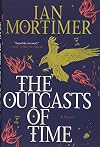
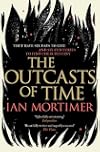
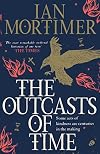
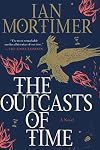
The Outcasts of Time
by Ian Mortimer
On This Page
Description
December 1348. What if you had just six days to save your soul? With the country in the grip of the Black Death, brothers John and William fear that they will shortly die and suffer in the afterlife. But as the end draws near, they are given an unexpected choice: either to go home and spend their last six days in their familiar world, or to search for salvation across the forthcoming centuries, living each one of their remaining days ninety-nine years after the last. John and William choose show more the future and find themselves in 1447, ignorant of almost everything going on around them. The year 1546 brings no more comfort, and 1645 challenges them in further unexpected ways. It is not just that technology is changing; things they have taken for granted all their lives prove to be short-lived. As they find themselves in stranger and stranger times, the reader travels with them, seeing the world through their eyes as it shifts through disease, progress, enlightenment, and war. But their time is running out-can they do something to redeem themselves before the six days are up? show lessTags
Recommendations
















Member Recommendations
Member Reviews
Devon, 1348. Two brothers, John and William, walk through a plague-ridden country, past rotting corpses and scenes of destruction that presage the Apocalypse. When the sickness overtakes them too, they realize that their lives are forfeit, and they fear that their souls may not be ready for death. However, as they sense their strength wane, a disembodied voice tells them they have six days to live and offers them a choice.
They may struggle home with their remaining strength to see what has happened to their town and loved ones. Or they may spend the six days in time travel, as each day will advance another ninety-nine years, during which brief moment they may redeem themselves. After arguing whether they have listened to the Devil and show more are being led astray, John and William accept the offer. It’s a twist on Faust, without a contract or sale of a soul.
I seldom review historical fantasy and rarely read any, but The Outcasts of Time caught my fancy. As a literary conceit, time travel has grown a long, white beard by now, but I like it that Mortimer has cast his century-spanning mechanism as a matter of conscience rather than a gizmo. Also, no abracadabra changes the scenery or chases away evil people, of whom there are plenty, for our travelers often land hard as the centuries pass.
The year 1447 seems miserable; 1546 brings the brothers to Henry VIII’s time; 1645 places them smack in the English Civil War. Consequently, they must choose a face to present without knowing what’s prudent, because so much has changed. What was counted sinful in 1348 may now be virtuous, and what passed for virtue may now be treason. They have a lot of explaining to do.
That’s partly the point, for The Outcasts of Time has much to say about good, evil, and how material wealth or the progress of learning affect them or are used or misused. The novel also explores the human desire for permanence, proof of our passage on this planet that someone else will find after our deaths. John, a stonemason who worked on the Exeter Cathedral and created sculptures he’s proud of, is conscious of this desire in himself and of how futile it is. As he observes more than halfway through his time journey, he realizes that everything he created or saw during his lifetime has faded or vanished completely.
John’s quest to perform a good deed to redeem himself before death takes various turns. That poses several questions, not least whether goodness can be conscious, or whether such acts can serve a redemptive purpose.
Among other pleasures, The Outcasts of Time offers historical detail in a light but authoritative hand. You see through John’s eyes what has changed, what would strike him most strongly, and why, which makes you think. For obvious reasons, Mortimer has updated the brothers’ language, or nobody in later centuries would have understood them. Yet he’s hewed to simplicity of tongue, for the most part, and seldom does the language jump out and stop the reader.
I do wonder, though, how John, who is excellent at ciphering but illiterate, and his brother, who can read, a little — how that happens, I don’t know — dispute the way they do. Free of superstition, seemingly also of common prejudices, they sound sophisticated. They lack any notion that the world is, and has always been, what they know, and appear ready to step outside it enough to judge the future centuries shown them. They sound like relativists ahead of their time, perhaps too tolerant of what they find.
William, the sensualist of the two, comes across less clearly or deeply than John, and though he’s supposed to represent a person who chooses pleasures over an examined life, I still want to see his dreams and desires beyond the next cup of ale or the next woman. Further, though the brothers remark bitterly on the priests’ flight from their plague-ridden land of 1348, they don’t seem perturbed at the likelihood that they’ll die unshriven, their sins unconfessed. I would have expected terror at the prospect.
However, the narrative and the philosophy within it demand a stretch from the characters, and if plausibility suffers to a mild degree, remember that we’re talking about a story with Faustian overtones, a legend to begin with. The Outcast of Time’s an engrossing novel, worth stretching for. show less
They may struggle home with their remaining strength to see what has happened to their town and loved ones. Or they may spend the six days in time travel, as each day will advance another ninety-nine years, during which brief moment they may redeem themselves. After arguing whether they have listened to the Devil and show more are being led astray, John and William accept the offer. It’s a twist on Faust, without a contract or sale of a soul.
I seldom review historical fantasy and rarely read any, but The Outcasts of Time caught my fancy. As a literary conceit, time travel has grown a long, white beard by now, but I like it that Mortimer has cast his century-spanning mechanism as a matter of conscience rather than a gizmo. Also, no abracadabra changes the scenery or chases away evil people, of whom there are plenty, for our travelers often land hard as the centuries pass.
The year 1447 seems miserable; 1546 brings the brothers to Henry VIII’s time; 1645 places them smack in the English Civil War. Consequently, they must choose a face to present without knowing what’s prudent, because so much has changed. What was counted sinful in 1348 may now be virtuous, and what passed for virtue may now be treason. They have a lot of explaining to do.
That’s partly the point, for The Outcasts of Time has much to say about good, evil, and how material wealth or the progress of learning affect them or are used or misused. The novel also explores the human desire for permanence, proof of our passage on this planet that someone else will find after our deaths. John, a stonemason who worked on the Exeter Cathedral and created sculptures he’s proud of, is conscious of this desire in himself and of how futile it is. As he observes more than halfway through his time journey, he realizes that everything he created or saw during his lifetime has faded or vanished completely.
John’s quest to perform a good deed to redeem himself before death takes various turns. That poses several questions, not least whether goodness can be conscious, or whether such acts can serve a redemptive purpose.
Among other pleasures, The Outcasts of Time offers historical detail in a light but authoritative hand. You see through John’s eyes what has changed, what would strike him most strongly, and why, which makes you think. For obvious reasons, Mortimer has updated the brothers’ language, or nobody in later centuries would have understood them. Yet he’s hewed to simplicity of tongue, for the most part, and seldom does the language jump out and stop the reader.
I do wonder, though, how John, who is excellent at ciphering but illiterate, and his brother, who can read, a little — how that happens, I don’t know — dispute the way they do. Free of superstition, seemingly also of common prejudices, they sound sophisticated. They lack any notion that the world is, and has always been, what they know, and appear ready to step outside it enough to judge the future centuries shown them. They sound like relativists ahead of their time, perhaps too tolerant of what they find.
William, the sensualist of the two, comes across less clearly or deeply than John, and though he’s supposed to represent a person who chooses pleasures over an examined life, I still want to see his dreams and desires beyond the next cup of ale or the next woman. Further, though the brothers remark bitterly on the priests’ flight from their plague-ridden land of 1348, they don’t seem perturbed at the likelihood that they’ll die unshriven, their sins unconfessed. I would have expected terror at the prospect.
However, the narrative and the philosophy within it demand a stretch from the characters, and if plausibility suffers to a mild degree, remember that we’re talking about a story with Faustian overtones, a legend to begin with. The Outcast of Time’s an engrossing novel, worth stretching for. show less
Historical fiction, with the emphasis clearly on the former. Just enough plot to justify the "day in a life" vignettes in 6 different centuries, from the Black Death of 1348 to WWII. Throughout, the main character tries desperately to make sense of his life and his place in the world, striving to do a good deed in order to make it all worthwhile. There is hope and despair, cruelty and redemption. Never bogging down in details, while providing sufficient richness to fully experience each distinct era.
All in all, perfectly balanced, with characters that felt real, and a deeper appreciation for which values are universal and which are merely fads.
The book is set in an around Exeter, England, and now I really want to visit.
All in all, perfectly balanced, with characters that felt real, and a deeper appreciation for which values are universal and which are merely fads.
The book is set in an around Exeter, England, and now I really want to visit.
Such an original novel. Two brothers amidst the 14th Century plague are given the choice of spending their remaining few days at home, or travelling into the future by nearly a century each day.
A time-travel book that, because of its unusual direction, really brings social history alive as John tries to make sense of the changes.
Reflection that will stick in my head - home is a time not a place.
John becomes increasingly confused as he tries to do good & fails, but comes across a few kind, caring people amongst the horrors of each age. And a moving, satisfying last chapter where it is revealed to him the importance of his actions.
A time-travel book that, because of its unusual direction, really brings social history alive as John tries to make sense of the changes.
Reflection that will stick in my head - home is a time not a place.
John becomes increasingly confused as he tries to do good & fails, but comes across a few kind, caring people amongst the horrors of each age. And a moving, satisfying last chapter where it is revealed to him the importance of his actions.
In which a thirteenth-century stonemason who is afflicted with the Black Death is offered, and accepts, a supernatural opportunity to spend his six remaining days in being resurrected, one day at a time, in each of the succeeding six centuries. This premise is bold and intriguing and is often carried through inventively. Overall, though, I wished that the author had done a little more with it. Our hero is a typical man of his time, illiterate, pious, albeit with some rather tetched attitudes toward the divine and the afterlife, and with something of an aptitude toward poor decision-making. In his time travels, he is sometimes accompanied by his even more hapless brother, and, less often, by his wife, who doesn't recognize him. The show more protagonist does get into a few scrapes as he moves through the centuries, but for the most part he isn't very inquisitive, contenting himself with observations on the everyday items which he finds himself among. Sometimes this works pretty well, e.g., with foods and technology; sometimes it takes the book disastrously off the rails, as when he recounts in minute detail sixteenth-century tin-smelting techniques, which may be the single worst chapter of fiction I've ever read in my life. The book takes a good while to read and makes considerable vocabulary demands. show less
There are certainly people out there who will like this book. Alas, I was not one of them.
Audiobook qua audiobook: the narrator is okay. He does a poor job at differentiating the voices of different characters, so dialogue is confusing. He does a laughably terrible job at female voices - to the point where it is, frankly, insulting. And he does the worst American accent I've ever heard a British person attempt. But it's fine.
The book itself has a really interesting premise but a really poor execution. If you care about the minutiae of what people wore in each century from 1300-1800, this book is for you. If you care about any other ramifications of someone from the 1300s time-traveling through later centuries, then you will be show more disappointed - it's rarely discussed. This book would have been more interesting if it had a sci-fi angle, focusing on the future instead of the past. As it is, the main characters jump from century to century and learn surprisingly little about what life is like in their future, instead just wandering around refusing to adapt and making a real big deal out of their own ignorance.
This book was written by a white man for other white men. If you're a woman, be prepared for a LOT of misogyny. There are basically no female characters in this book, and the ones that are there are only there so that the main male character can talk about their breasts. Oh, and then there's the part where the main character actively lusts after a 14-year-old.
This book could have further benefited from some good editing - I was surprised to learn that this is an S&S book because the editing was so poor I just assumed it was self-published. Plot holes (the main character doesn't know what bricks are but then magically starts calling them bricks?), inaccurate historical references (every mention of the calendar made me grit my teeth), and a weird spiritual/ethical thread that runs through the whole work only to culminate in a lesson at the end that falls flat and doesn't make a lot of sense.
Like I said, there's an audience for this sort of thing. But it wasn't for me. Reader, exercise caution. show less
Audiobook qua audiobook: the narrator is okay. He does a poor job at differentiating the voices of different characters, so dialogue is confusing. He does a laughably terrible job at female voices - to the point where it is, frankly, insulting. And he does the worst American accent I've ever heard a British person attempt. But it's fine.
The book itself has a really interesting premise but a really poor execution. If you care about the minutiae of what people wore in each century from 1300-1800, this book is for you. If you care about any other ramifications of someone from the 1300s time-traveling through later centuries, then you will be show more disappointed - it's rarely discussed. This book would have been more interesting if it had a sci-fi angle, focusing on the future instead of the past. As it is, the main characters jump from century to century and learn surprisingly little about what life is like in their future, instead just wandering around refusing to adapt and making a real big deal out of their own ignorance.
This book was written by a white man for other white men. If you're a woman, be prepared for a LOT of misogyny. There are basically no female characters in this book, and the ones that are there are only there so that the main male character can talk about their breasts. Oh, and then there's the part where the main character actively lusts after a 14-year-old.
This book could have further benefited from some good editing - I was surprised to learn that this is an S&S book because the editing was so poor I just assumed it was self-published. Plot holes (the main character doesn't know what bricks are but then magically starts calling them bricks?), inaccurate historical references (every mention of the calendar made me grit my teeth), and a weird spiritual/ethical thread that runs through the whole work only to culminate in a lesson at the end that falls flat and doesn't make a lot of sense.
Like I said, there's an audience for this sort of thing. But it wasn't for me. Reader, exercise caution. show less
 This review was written for LibraryThing Early Reviewers.
Ian Mortimer tries to do too much in this book. Using two fictional brothers to skip through time, touching down once a century, is a clever idea to highlight the changes that England undergoes as time goes by – political, social, physical and intellectual. But his microscopic attention to living conditions, theology, architecture, and technology get in the way of any sort of cohesive plot. The characters observe what's physical and discuss what's not, and in a fashion that is rather far-fetched considering their education. This was a slog for me, neither fiction nor non-.
This review was written for LibraryThing Early Reviewers.The premise of this book was really different. Stone mason John and his brother William, a cloth merchant, catch the plague in 1348 while on their way home in England. A good deed John attempts goes awry, and they are given a choice by a mysterious voice (their consciences? the devil?). They can either go home to spend their last six days before dying and going to hell, or to attempt to find salvation by living each one of their remaining six days 99 years after the last. And so they wake up each morning in the same place on earth where they went to sleep the night before - just 99 years later, in 1447, 1546, 1645, 1744, 1843, and 1942. John, not wanting to chance infecting his wife and children back home, chooses the latter, show more and his single brother decides to go along with him.
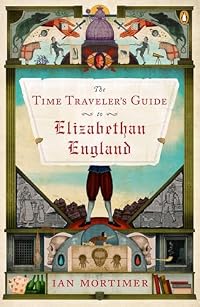
Interestingly (to me), Ian Mortimer has written three books with titles beginning "The Time Traveller's Guide" - to Medieval England (14th century), Elizabethan England (1558-1603), and Restoration Britain (1660-1700). I haven't read them, but from their descriptions, he concentrates not so much on historical events of the period, but rather what day-to-day life was like in those periods. The same is true of The Outcasts of Time. After listening to this audiobook, I've learned more about everyday life in those years, particularly for the poor. As they move through time, John and William marvel at the changes and improvements, but also observe that some things, alas, don't change - and some even worsen.
There's a religious and philosophical aspect of this book that I could have done without, but all in all, I enjoyed this book. John and William are very likeable characters. I particularly like the way Mortimer worked in the Exeter Cathedral - as a stone mason, John worked on it, and he is able to see it at various times, both good and bad. I knew very little about this and other places mentioned in the book, but (like good historical fiction) it made me want to learn more.
James Cameron Stewart was fine as a reader. I had lots of problems with the MP3 discs on which the audiobook arrived. They wouldn't play consistently on my car's CD player, so I transferred the files to a thumb drive and used an MP3 player. They didn't play very well there either, perhaps because the player was rather inexpensive. I wish the publishers (and LibraryThing) would specify the exact format in which their review copies are available. I knew this would be an audiobook, but I was expecting regular CDs. Had I known it would be MP3, I might not have requested a review copy.
© Amanda Pape - 2018
[This MP3 audiobook was obtained from the LibraryThing Early Reviewers program. It will be donated to my local public library.] show less
Interestingly (to me), Ian Mortimer has written three books with titles beginning "The Time Traveller's Guide" - to Medieval England (14th century), Elizabethan England (1558-1603), and Restoration Britain (1660-1700). I haven't read them, but from their descriptions, he concentrates not so much on historical events of the period, but rather what day-to-day life was like in those periods. The same is true of The Outcasts of Time. After listening to this audiobook, I've learned more about everyday life in those years, particularly for the poor. As they move through time, John and William marvel at the changes and improvements, but also observe that some things, alas, don't change - and some even worsen.
There's a religious and philosophical aspect of this book that I could have done without, but all in all, I enjoyed this book. John and William are very likeable characters. I particularly like the way Mortimer worked in the Exeter Cathedral - as a stone mason, John worked on it, and he is able to see it at various times, both good and bad. I knew very little about this and other places mentioned in the book, but (like good historical fiction) it made me want to learn more.
James Cameron Stewart was fine as a reader. I had lots of problems with the MP3 discs on which the audiobook arrived. They wouldn't play consistently on my car's CD player, so I transferred the files to a thumb drive and used an MP3 player. They didn't play very well there either, perhaps because the player was rather inexpensive. I wish the publishers (and LibraryThing) would specify the exact format in which their review copies are available. I knew this would be an audiobook, but I was expecting regular CDs. Had I known it would be MP3, I might not have requested a review copy.
© Amanda Pape - 2018
[This MP3 audiobook was obtained from the LibraryThing Early Reviewers program. It will be donated to my local public library.] show less
This review was written for LibraryThing Early Reviewers.Members
- Recently Added By
Author Information

30+ Works 8,091 Members
Dr. Ian Mortimer is best known as the author of The Time Traveler's Guide to Medieval England and The Time Traveler's Guide to Elizabethan England, which were both national bestsellers. He was awarded the Alexander Prize by the Royal Historical Society and is a Fellow of the Royal Historical Society and a Fellow of the Society of Antiquaries. He show more latest novel is the acclaimed The Outcasts of Time Please visit his website at www.ianmortimer.com. show less
Awards and Honors
Distinctions
Common Knowledge
- Original publication date
- 2017-06-15
Classifications
Statistics
- Members
- 351
- Popularity
- 89,417
- Reviews
- 21
- Rating
- (3.46)
- Languages
- English
- Media
- Paper, Audiobook, Ebook
- ISBNs
- 12
- ASINs
- 5