
On This Page
Description
Twenty Years After is the second of the d'Artagnan Romances, following The Three Musketeers. It is set during the early reign of King Louis XIV in France and the English Civil War in England, leading to Cromwell's victory over King Charles I. The musketeers fight valiantly to protect their monarch, and many previous characters or their children are reprieved from the first novel..
Tags
Recommendations
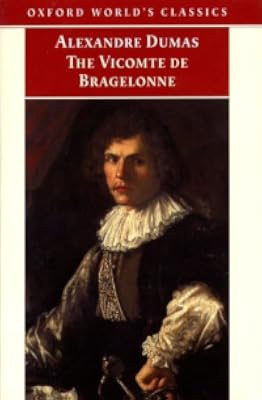
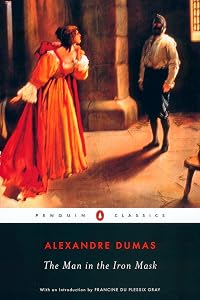


























Member Reviews
Although not nearly as well-known as the first in the d’Artagnan Romances (The Three Musketeers) I think it might be better. Just. It depends on how you look at the books; as individual tales or as parts of a much longer story, which they are, but are also sold as stand-alones to some degree. At least the first one is. And as a stand alone it often takes the pot off the boil for the reader and goes to a lot of trouble describing the home life of our heroes. Much needed for us to get to know them, but not so great for a nail-biter of a plot. Twenty Years After doesn’t give as much characterization to each participant and thus the story moves on relentlessly with no stops for admiring the whiteness of ones' hands.
A lot has happened in show more the twenty years since we last met d’Artagnan, Porthos, Athos and Aramis. D’Artagnan is still only a lieutenant in the Musketeers, he longs to be promoted to Captain since the post is now open. Porthos has married his mistress and inherited vast estates and has more money than he knows what to do with. Athos has adopted a local orphan named Raoul and made him his heir. Aramis has become an abbe, but longs to be a Musketeer again. Cardinal Richelieu has died, replaced by Mazarin, universally loathed by the people, but not by Anne of Austria. Anne is now a widow and regent to her son Louis the XIV who is only 10. Mazarin holds the real power though.
With promises of a captaincy and a baronetcy for d’Artagnan and Porthos respectively, they agree to serve Mazarin. Unfortunately, Athos and Aramis cannot be convinced to join them and instead come out of retirement on the side of the people clamoring for other aristocrats to get their due. One of which is the Duc de Beaufort, imprisoned in Vincennes. Later they both end up with Charles I against Cromwell when Porthos and d’Artagnan end up entangled on the pro-Cromwell side. At first they can’t see their way through their difficulties, but their friendship is too strong for modern politics and they promise to always put it first. The lackeys, too, are present and get involved in most of the plots in one way or another. Grimaud especially has a lot to do with the Duc de Beaufort and springing him from prison. Oh and Planchet, too, even though he’s not serving d’Artagnan anymore.
The plot itself is pretty convoluted, full of underhanded people doing dastardly things. The king of the villains is Mordaunt though; son of Milady and bent on revenge for her death. This, of course, puts him at odds with our four friends and he’s a persistent thorn in their sides for most of the book. I think because there isn’t really much done to round him out as a character, he comes off as more evil and single-minded than his villainous mother. His scenes are great stuff, his malice fairly oozes through the words.
From what I understand the next two books continue in the political vein started in this book and focus on Raoul, the Monarchy Restoration effort in England and the first years of Louis XIV’s reign. I’m looking forward to them - I think I’m a Dumas addict now. show less
A lot has happened in show more the twenty years since we last met d’Artagnan, Porthos, Athos and Aramis. D’Artagnan is still only a lieutenant in the Musketeers, he longs to be promoted to Captain since the post is now open. Porthos has married his mistress and inherited vast estates and has more money than he knows what to do with. Athos has adopted a local orphan named Raoul and made him his heir. Aramis has become an abbe, but longs to be a Musketeer again. Cardinal Richelieu has died, replaced by Mazarin, universally loathed by the people, but not by Anne of Austria. Anne is now a widow and regent to her son Louis the XIV who is only 10. Mazarin holds the real power though.
With promises of a captaincy and a baronetcy for d’Artagnan and Porthos respectively, they agree to serve Mazarin. Unfortunately, Athos and Aramis cannot be convinced to join them and instead come out of retirement on the side of the people clamoring for other aristocrats to get their due. One of which is the Duc de Beaufort, imprisoned in Vincennes. Later they both end up with Charles I against Cromwell when Porthos and d’Artagnan end up entangled on the pro-Cromwell side. At first they can’t see their way through their difficulties, but their friendship is too strong for modern politics and they promise to always put it first. The lackeys, too, are present and get involved in most of the plots in one way or another. Grimaud especially has a lot to do with the Duc de Beaufort and springing him from prison. Oh and Planchet, too, even though he’s not serving d’Artagnan anymore.
The plot itself is pretty convoluted, full of underhanded people doing dastardly things. The king of the villains is Mordaunt though; son of Milady and bent on revenge for her death. This, of course, puts him at odds with our four friends and he’s a persistent thorn in their sides for most of the book. I think because there isn’t really much done to round him out as a character, he comes off as more evil and single-minded than his villainous mother. His scenes are great stuff, his malice fairly oozes through the words.
From what I understand the next two books continue in the political vein started in this book and focus on Raoul, the Monarchy Restoration effort in England and the first years of Louis XIV’s reign. I’m looking forward to them - I think I’m a Dumas addict now. show less
This is the banally-named sequel to Dumas's much more famous The Three Musketeers, once again bringing together D'Artagnan and his former comrades from the various paths in life that the events of the earlier novel left them in. There are the usual swashbuckling scenes, daring escapes and dramatic confrontations, but the villain here, Mordaunt, the son of the villainess in the earlier novel, is nowhere near as striking and memorable. Part of the novel takes place in England at the time of the trial and execution of King Charles I (and which gives rise to a memorable comment from Aramis showing his contempt for England and the English - "We shall be murdered there....I hate the English - they are coarse, like every nation that swills show more beer"). The politics of the Fronde are rather confusing (and I remember them as such from my History A level 33 years ago!) and overall this novel is not as strong as its predecessor. show less
This book is often a forgotten entry in the Dumas oeuvre and that is really unfortunate. It is more than just a typical sequel, it takes place long after the original 3 Musketeers and then brilliantly back fills and recaps many events of the first novel without dragging down the new story. The plot promotes the same theories of a benevolent monarchy but subtly so and is enjoyable without considering the political ramifications of the characters motivations. All the humor and energy from the first book are there as Dumas once again shows that he belongs in the pantheon of great writers. For me, it is the occasional and casual line that the author throws in that stop you in mid-paragraph and cause you to recognize a great turn of phrase show more or an excellently developed scene that make this such a pleasurable read. In particular the first scene between Athos and the mother of his child.
The side benefit to all of Dumas writing is the historical recap and accuracy with which he details the period of the book. You can easily get lost in time and place while learning a good deal about European History. I suppose also that as a male, the romantic idea friendship that goes beyond political boundaries and differences carries a lot of weight as well as the ideas that truth and honor are something more than pet phrases but actually provide rules to live by, has an attraction. This is not The Count of Monte Cristo but still one of the better historical adventure books to be read.
Recommended to anyone who enjoyed The Count or The Three Musketeers. While a somewhat long book, don't be put off by it. It is one of those books that should be taken and drunk in slowly to appreciate the excellent writing and turn of phrase. This is a book I have come back to several times and enjoyed with each reading. show less
The side benefit to all of Dumas writing is the historical recap and accuracy with which he details the period of the book. You can easily get lost in time and place while learning a good deal about European History. I suppose also that as a male, the romantic idea friendship that goes beyond political boundaries and differences carries a lot of weight as well as the ideas that truth and honor are something more than pet phrases but actually provide rules to live by, has an attraction. This is not The Count of Monte Cristo but still one of the better historical adventure books to be read.
Recommended to anyone who enjoyed The Count or The Three Musketeers. While a somewhat long book, don't be put off by it. It is one of those books that should be taken and drunk in slowly to appreciate the excellent writing and turn of phrase. This is a book I have come back to several times and enjoyed with each reading. show less
Sure, some of the plot happenstances are awfully convenient and the big villain is one-note, but this remains a well-read classic for a reason. Twenty Years After is a highly-enjoyable read that goes along at a fast clip, even with my copy near 700 pages in length. As I am age 40, I appreciated seeing how d'Artagnan had matured to that age (which was also the age at which Dumas wrote the book, soon after doing the first). The action is great and I loved seeing how the musketeers remained true to each other, even as they were snared in some complicated politics.
While Twenty Years After is great fun, it seems that the rule of weaker sequels operated even in Dumas's day. First things first: I thought the Oxford Worlds Classics translation worked a lot better than the Penguin Red Classics translation of the Three Musketeers. However, the plot straggles a little. Dumas can't really decide what story he wants to tell - the uprising of the Frondeurs in Paris, or the musketeers' sortie to England to try to save Charles I. (Am I the only one who found that whole section unconvincing, or is it just because I'm English and already know the story of Charles I?) It seemed a little too easy to have as the enemy Milady's son, whom we are meant to believe is as depraved and evil as his mother was. I found it show more difficult to credit Dumas's initial concept: that these supposedly bosom friends have barely met in twenty years. Nor did I think it likely that if their service to Anne of Austria was as important as the Three Musketeers makes out, she would behave to them as she does here. Nevertheless, there are many, many wonderful passages, and I did enjoy the book as a whole. And the good news is, I've just started The Vicomte de Bragelonne, and Dumas is back on form. show less
Not quite as good as The Three Musketeers but still a worthy read. Age and experience has tempered some of D'Artagnan's youthful exuberance and zeal, but not any of his passion to see a mission through. His friends - Athos, Porthos and Aramis - are best described by D'Artagnan:
Overall, another delightful adventure with the four friends and I am looking forward to reading book three in the D'Artagnan Romances series, The Vicomte de Bragelonne, or Ten Years Later. show less
"Athos, for generosity, is a hero of romance; Porthos has an excellent disposition, but is easily influenced; Aramis has a hieroglyphic countenance, always illegible."While Dumas attempts to re-create the evil incarnate that was Milady in Mordaunt, I felt that Mordaunt lacks the cunning, sharp intellect and beguile that made Milady such a formidable foe. Still, he was a great evil character for the Musketeers to have against them. The same can be said for show more Cardinal Richelieu's replacement, Cardinal Mazarin. While the story could be considered a bit lackluster compared with The Three Musketeers, I liked how Dumas created a situation of divided loyalties for the four friends to give the already interesting historical setting of Paris in revolt and an England in conflict under Cromwell's authority added umph. Dumas has tempered some of the cavalier attitudes of our four friends - they are getting up there in age, you know! - while still retaining some of the verbal banting for more light-hearted moments, such as when D'Artagnan asks Porthos if a reconciliation has brought tears to his eyes and Porthos replies,
"Yes," said Porthos; "but I do not know if it is feeling or the wind that makes me weep; I think it is the wind.";-)
Overall, another delightful adventure with the four friends and I am looking forward to reading book three in the D'Artagnan Romances series, The Vicomte de Bragelonne, or Ten Years Later. show less
A charming story of friendship, adventure, intrigue and war. The book resumes the plot of the first novel twenty years after its completion. Despite his heroic deeds in the name of the queen and his solemn secrecy concerning matters of state, D'Artagnan is still a poor soldier and all but forgotten. His three friends have retired in their own ways, although more comfortably. There is a new cardinal now who neither knows nor honors them.
But political developments will soon change this fact. Once again destiny and duty call the four friends to great action. However, this time they find themselves on opposite sides. Can the four be reconciled or will they be driven to draw steel on each other?
I thoroughly enjoyed this sequel!
But political developments will soon change this fact. Once again destiny and duty call the four friends to great action. However, this time they find themselves on opposite sides. Can the four be reconciled or will they be driven to draw steel on each other?
I thoroughly enjoyed this sequel!
Members
- Recently Added By
Published Reviews
ThingScore 100
If you only know “The Three Musketeers” you owe yourself the pleasure of spending some happy evenings with “Twenty Years After.” Athos, Porthos, Aramis and D’Artagnan may be older and their hair starting to gray, but they’ve lost none of their romance and grandeur.
added by danielx
Lists

Best Historical Fiction
620 works; 261 members

Favorite Long Books
330 works; 42 members

Historical Fiction
889 works; 90 members

Books I've Read More Than Once
602 works; 49 members

Best Adventure Stories
66 works; 15 members
Folio Society
831 works; 52 members

Fiction Set During a Revolution
55 works; 23 members

Fifty Representative Historical Novels
50 works; 2 members

Books With Numbers in the Title
308 works; 13 members

Swashbucklers
29 works; 6 members

CCE 1000 Good Books List
1,033 works; 12 members

French Fiction of the 18th and 19th Centuries in English Translation
169 works; 3 members

Physical TBR List
68 works; 1 member
Author Information

1,609+ Works 98,567 Members
Some Editions
Awards and Honors
Series

Belongs to Publisher Series
Amstelboeken (32-33)
Project Gutenberg EBook (1259, 13952, 47946)
Work Relationships
Is contained in
Contains
Has the adaptation
Inspired
Common Knowledge
- Canonical title
- Twenty Years After
- Original title
- Vingt ans après
- Alternate titles*
- Myladyn poika
- Original publication date
- 1845 (original French) (original French); 1845
- People/Characters
- D'Artagnan; Athos; Porthos; Aramis; Cardinal Mazarin (Jules Mazarin); Anne of Austria (show all 10); Marie de Rohan, duchesse de Chevreuse; Louis XIV; Charles I, King of England, Scotland, and Ireland; Mordaunt (John Francis de Winter)
- First words
- In a room of the Palais-Cardinal which we already know, near a table with silver gilt corners, loaded with papers and books, a man was sitting, his head resting in his hands.
- Last words
- (Click to show. Warning: May contain spoilers.)'But always keep my room on the fifth floor; one never knows what may happen.'
- Original language*
- ranska
*Some information comes from Common Knowledge in other languages. Click "Edit" for more information.
Classifications
- Genres
- Fiction and Literature, General Fiction, Historical Fiction
- DDC/MDS
- 843.7 — Literature & rhetoric French Literature French fiction Constitutional monarchy 1815–48
- LCC
- PQ2229 .V6 .E5 — Language and Literature French, Italian, Spanish and Portuguese literatures French literature Modern literature 19th century
- BISAC
Statistics
- Members
- 3,275
- Popularity
- 5,207
- Reviews
- 44
- Rating
- (3.92)
- Languages
- 16 — Danish, Dutch, English, Estonian, Finnish, French, German, Hungarian, Italian, Lithuanian, Norwegian, Polish, Russian, Spanish, Swedish, Portuguese (Portugal)
- Media
- Paper, Audiobook, Ebook
- ISBNs
- 180
- UPCs
- 2
- ASINs
- 155