On This Page
Description
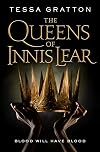
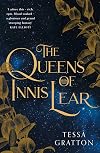
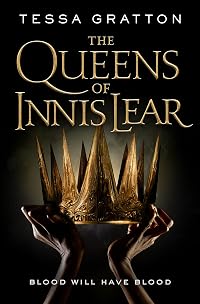
Dynasties battle for the crown in Tessa Gratton's debut adult epic fantasy,The Queens of Innis Lear--based on William Shakespeare'sKing Lear. Three Queens. One crown. All out war. Gaela. Ruthless Commander. I am the rightful heir of Innis Lear. No more will I wait in the shadows and watch my mother's murderer bleed my island dry. The King's hold on the crown must end--willingly or at the edge of my sword. Regan. Master Manipulator. To secure my place on the throne, I must produce an heir. show more Countless times I have fed the island's forests my blood. Yet, my ambition is cursed. No matter what or whom I must destroy, I will wield the magic of Innis Lear. Elia. Star-blessed Priest. My sisters hide in the shadows like serpents, waiting to strike our ailing king. I must protect my father, even if it means marrying a stranger. We all have to make sacrifices. Love and freedom will be mine. "Amazing. Just Amazing."--Robin McKinley show lessTags
Recommendations


Member Reviews
I'm at a bit of a loss to what I even want to say about this book. There was so much I absolutely adored about this book, and yet there was also so much that did not work for me. There were parts where I was swept up in the story, characters, and setting, while there were also other parts that felt like a slog.
Let's back this review up just a bit while I try and untangle my very complex feelings about this book.
The Queens of Innis Lear is a fantasy retelling of Shakespeare's King Lear. If you are a fan of King Lear, you will already be familiar with the basic premise. An old king tries to decide which of his three daughters will succeed him on the throne, and political chaos and tragedy ensues. The same basis principle is at work here show more in this book. However, if you have no knowledge of the original King Lear, don't worry. The story works perfectly well without the little Shakespearian easter eggs that Gratton litters throughout the novel.
There were a lot of really high highs in this book. Probably nothing was better than Gratton's lush and beautiful prose. Her descriptions of the island nation of Innis Lear were breathtakingly transportive. Gratton's prose strikes a clear balance between the usages of modern language while evoking a timeless aura of these characters and this plot happening in some kind of "before time". If you are someone who likes to get swept up in wonderful writing, this book will probably really work for you.
Gratton also uses her prose to construct a well-developed cast of nuanced and complex characters. As the reader I really got a sense of each of the character's depth of emotions; I understood the intentions of their actions and ultimately why they were making the decisions they did. The three sisters and Ban (the bastard son of an earl from Innis Lear) are all painted as three-dimensional people with histories and emotional scars that dictate their actions. Gratton's novel explodes with emotion as the characters navigate each other's tangled political webs. At times the pathos overflows a bit and the characters/plot become a bit melodramatic (in the style of the Shakespearian tragedy), but in the context of the tone Gratton sets it all really works.
Gratton also gets quite a bit of mileage out of the major changes she makes to the King Lear story. Mainly, that the three sisters in this novel are dark-skinned living in a very light-skinned world. Racial politics never becomes a direct or explicit part of the story, but Gratton does a nice job of subtly showing how the main three sisters (and their dark-skinned mother) had to navigate the politics of a world in which their skin color was not the norm. This is not a book about race, and racial injustice is not at its core, but Gratton never ignores the multi-faceted elements of her character's identity and the world she put them in.
Gratton also imbues her world with magic, wonder, and awe. The Queens of Innis Lear has two primary magic systems - one that is star-based/astrological and an earth based magic system. The magic remains relatively vague and esoteric, but still plays a powerful and important role in the narrative. This is not just King Lear with some fantasy window-dressings; the role of magic, the people's attitudes towards magic, and the overall cosmological construction of Innis Lear and the wider world are carefully constructed and built throughout the novel.
Speaking of the world-building, I really enjoyed that Gratton kept the story relatively small in its scope. This was a story about a single family, and how they carried on with their baggage and trauma. There are, of course, other important players, but even they are not too numerous (although, as I explain below, the number of POVs became a bit tiresome). Most of the plot takes place on the single island of Innis Lear in just a few locales (with some taking place in a nearby rival nation). Gratton nicely gives the reader the sense of the bigger world beyond Innis Lear. She often names other countries, allies, enemies, etc., but doesn't feel the need to info-dump about them because they would only detract from the story. I really liked being with this one single family and telling a political story that felt personal and emotional, rather than simply tactical coldness. In this way Gratton exemplifies all of the best emotional beats of something like the succession crisis in House of the Dragon without characters feeling like simply pieces on a chessboard.
The main issue with the book is that while it takes this very narrow focus, it is absolutely hindered by its length. The paperback copy I was reading was nearly 600 pages with relatively small print. There was just not enough story to justify that large page count. A version of this book that was 150 pages shorter would have been a more successful novel. Throughout the book almost every character gets at least one POV chapter, even when those POVs don't really contribute anything (I felt that the character of Aefa in particular contributed little to the story for how much page time she got, and I'm not sure why Rory really warranted a POV chapter). This issue probably becomes worst in the flashback chapters. Flashback chapters can be used to great effect (I recently wrote about this in my review for Empire of Exiles), but here they just feel like extraneous padding. In almost all cases the scenes that play out in the flashback chapters just repeat things that characters have already told us. And they are played straight; these flashbacks chapters don't subvert or challenge what the reader has already been told from other perspectives. I found myself skimming large sections of the novel just to move on.
The bloat of the writing was disappointing because there was a great story here about family and politics. However, so much of the impact of the tense climax was muted by my sheer exhaustion as the reader. Rather than tensely waiting for the next thing to happen, I was waiting for the book to just end. The plot wasn't able to build any real momentum because there was an unnecessary flashback or extraneous POV chapter every time the plot started getting somewhere. Not all books have to be accelerating page turners (there are plenty of wonderful fantasy books out there that aren't!), but for what Gratton was trying to achieve here both narratively and thematically, we really needed that race up to the end as the politics and family drama reached its peak. In the end, I was disappointed because this ending should have been engaged me so emotionally, and yet it just left me cold.
By no means should you take this review as a recommendation not to read the book, but I rather just wanted to explain that you have to be the right kind of reader in the right kind of mood for this book to work for you. You have to be someone who likes to get swept up in beautiful prose and tense emotions, and be willing to wade in it for a really long time with little plot progression.
Concluding Thoughts: The Queens of Innis Lear is a beautifully written and emotional political tragedy that is hampered by its bloated length and poor pacing. Fans of lush prose and complex characters will find a lot to cherish here, but this book is not for anyone looking for a tense political read. show less
Let's back this review up just a bit while I try and untangle my very complex feelings about this book.
The Queens of Innis Lear is a fantasy retelling of Shakespeare's King Lear. If you are a fan of King Lear, you will already be familiar with the basic premise. An old king tries to decide which of his three daughters will succeed him on the throne, and political chaos and tragedy ensues. The same basis principle is at work here show more in this book. However, if you have no knowledge of the original King Lear, don't worry. The story works perfectly well without the little Shakespearian easter eggs that Gratton litters throughout the novel.
There were a lot of really high highs in this book. Probably nothing was better than Gratton's lush and beautiful prose. Her descriptions of the island nation of Innis Lear were breathtakingly transportive. Gratton's prose strikes a clear balance between the usages of modern language while evoking a timeless aura of these characters and this plot happening in some kind of "before time". If you are someone who likes to get swept up in wonderful writing, this book will probably really work for you.
Gratton also uses her prose to construct a well-developed cast of nuanced and complex characters. As the reader I really got a sense of each of the character's depth of emotions; I understood the intentions of their actions and ultimately why they were making the decisions they did. The three sisters and Ban (the bastard son of an earl from Innis Lear) are all painted as three-dimensional people with histories and emotional scars that dictate their actions. Gratton's novel explodes with emotion as the characters navigate each other's tangled political webs. At times the pathos overflows a bit and the characters/plot become a bit melodramatic (in the style of the Shakespearian tragedy), but in the context of the tone Gratton sets it all really works.
Gratton also gets quite a bit of mileage out of the major changes she makes to the King Lear story. Mainly, that the three sisters in this novel are dark-skinned living in a very light-skinned world. Racial politics never becomes a direct or explicit part of the story, but Gratton does a nice job of subtly showing how the main three sisters (and their dark-skinned mother) had to navigate the politics of a world in which their skin color was not the norm. This is not a book about race, and racial injustice is not at its core, but Gratton never ignores the multi-faceted elements of her character's identity and the world she put them in.
Gratton also imbues her world with magic, wonder, and awe. The Queens of Innis Lear has two primary magic systems - one that is star-based/astrological and an earth based magic system. The magic remains relatively vague and esoteric, but still plays a powerful and important role in the narrative. This is not just King Lear with some fantasy window-dressings; the role of magic, the people's attitudes towards magic, and the overall cosmological construction of Innis Lear and the wider world are carefully constructed and built throughout the novel.
Speaking of the world-building, I really enjoyed that Gratton kept the story relatively small in its scope. This was a story about a single family, and how they carried on with their baggage and trauma. There are, of course, other important players, but even they are not too numerous (although, as I explain below, the number of POVs became a bit tiresome). Most of the plot takes place on the single island of Innis Lear in just a few locales (with some taking place in a nearby rival nation). Gratton nicely gives the reader the sense of the bigger world beyond Innis Lear. She often names other countries, allies, enemies, etc., but doesn't feel the need to info-dump about them because they would only detract from the story. I really liked being with this one single family and telling a political story that felt personal and emotional, rather than simply tactical coldness. In this way Gratton exemplifies all of the best emotional beats of something like the succession crisis in House of the Dragon without characters feeling like simply pieces on a chessboard.
The main issue with the book is that while it takes this very narrow focus, it is absolutely hindered by its length. The paperback copy I was reading was nearly 600 pages with relatively small print. There was just not enough story to justify that large page count. A version of this book that was 150 pages shorter would have been a more successful novel. Throughout the book almost every character gets at least one POV chapter, even when those POVs don't really contribute anything (I felt that the character of Aefa in particular contributed little to the story for how much page time she got, and I'm not sure why Rory really warranted a POV chapter). This issue probably becomes worst in the flashback chapters. Flashback chapters can be used to great effect (I recently wrote about this in my review for Empire of Exiles), but here they just feel like extraneous padding. In almost all cases the scenes that play out in the flashback chapters just repeat things that characters have already told us. And they are played straight; these flashbacks chapters don't subvert or challenge what the reader has already been told from other perspectives. I found myself skimming large sections of the novel just to move on.
The bloat of the writing was disappointing because there was a great story here about family and politics. However, so much of the impact of the tense climax was muted by my sheer exhaustion as the reader. Rather than tensely waiting for the next thing to happen, I was waiting for the book to just end. The plot wasn't able to build any real momentum because there was an unnecessary flashback or extraneous POV chapter every time the plot started getting somewhere. Not all books have to be accelerating page turners (there are plenty of wonderful fantasy books out there that aren't!), but for what Gratton was trying to achieve here both narratively and thematically, we really needed that race up to the end as the politics and family drama reached its peak. In the end, I was disappointed because this ending should have been engaged me so emotionally, and yet it just left me cold.
By no means should you take this review as a recommendation not to read the book, but I rather just wanted to explain that you have to be the right kind of reader in the right kind of mood for this book to work for you. You have to be someone who likes to get swept up in beautiful prose and tense emotions, and be willing to wade in it for a really long time with little plot progression.
Concluding Thoughts: The Queens of Innis Lear is a beautifully written and emotional political tragedy that is hampered by its bloated length and poor pacing. Fans of lush prose and complex characters will find a lot to cherish here, but this book is not for anyone looking for a tense political read. show less
Approximate re-telling of Shakespeare’s King Lear in the form of an adult fantasy with women in many of the central and supporting roles. The writing was elegant, with lush descriptions creating an atmospheric setting for this fantasy world. I could picture the jagged cliffs of this island country, the ships from faraway lands docking at port, and the majestic castles. It seemed like a story set in medieval times, with no invented creatures, where the island, trees, and wind are sentient. The magical elements were complex and fascinating. The characters were well-developed. The world and the plot were built very slowly, with most of the action saved until late in the book.
Many back stories were interspersed throughout, flashing back show more various numbers of years into the past. These flashbacks, I felt, were unnecessary, as most of these topics had already been explained in the narrative. It was also a bit repetitive. For example, I didn’t need to be reminded many times over that one of the characters is a bastard or one of the sisters envisions herself a man. These inclusions made the book a bit lengthy, at just under 600 pages. The ending appears to setup a sequel, which may or may not appeal to you depending on whether you like series. I tend to enjoy stand-alone stories more.
Themes include the value of balance in life, the dangers of obsession, the desire to be accepted for oneself, and the many facets of love. Key components of the plot involve madness, treachery, romance, political intrigue, power, control, and forgiveness. Overall, I enjoyed it, and I don’t think it is essential to know Shakespeare’s King Lear story to appreciate it. I would definitely read another book by this author. Recommended to readers of fantasy that don’t mind a non-linear timeline and a gradual build-up without a great deal of action. Contains language, not-overly-graphic sex, and violence.
I received a complete version of this book from the publisher via NetGalley in return for a candid review. I hope the final version includes a map.
Memorable quotes:
"Ban had learned not to put off unpleasant tasks, for they tended to only become more unpleasant with the stall."
"She was ready, if not to forgive, then to understand. And that was ever the first step."
"For what was kindness, but offering comfort where none was owed?"
"If it makes your world smaller, it isn't love." show less
Many back stories were interspersed throughout, flashing back show more various numbers of years into the past. These flashbacks, I felt, were unnecessary, as most of these topics had already been explained in the narrative. It was also a bit repetitive. For example, I didn’t need to be reminded many times over that one of the characters is a bastard or one of the sisters envisions herself a man. These inclusions made the book a bit lengthy, at just under 600 pages. The ending appears to setup a sequel, which may or may not appeal to you depending on whether you like series. I tend to enjoy stand-alone stories more.
Themes include the value of balance in life, the dangers of obsession, the desire to be accepted for oneself, and the many facets of love. Key components of the plot involve madness, treachery, romance, political intrigue, power, control, and forgiveness. Overall, I enjoyed it, and I don’t think it is essential to know Shakespeare’s King Lear story to appreciate it. I would definitely read another book by this author. Recommended to readers of fantasy that don’t mind a non-linear timeline and a gradual build-up without a great deal of action. Contains language, not-overly-graphic sex, and violence.
I received a complete version of this book from the publisher via NetGalley in return for a candid review. I hope the final version includes a map.
Memorable quotes:
"Ban had learned not to put off unpleasant tasks, for they tended to only become more unpleasant with the stall."
"She was ready, if not to forgive, then to understand. And that was ever the first step."
"For what was kindness, but offering comfort where none was owed?"
"If it makes your world smaller, it isn't love." show less
This book had me very conflicted. On the one hand I truly enjoyed parts of it, while on the other hand I was really frustrated by it. Let's start with the positives.
The storyline was great: this is basically a retelling of King Lear with magic. I really enjoyed finding parallels with the original and seeing how the book differed. There were enough original elements to keep the plot interesting, and I liked the magical elements especially because of their uniqueness and darkness. The prose was also spectacular! From the first sentence, I was hooked: Tessa Gratton has a way of making everything come alive when describing it in one of the best lyrical proses I have had the pleasure of reading in a really long time.
The worldbuilding was show more also amazing! It took me a while to get the hang of it, but once I did, I really appreciated the whole setting. The island felt like a character in itself, with a life, will, and desires of its own. I also truly felt like I understood the way society was organised and the people's mindset. It was interesting to note just how much those tensions influenced characters' behaviours. The relations between Innis Lear and neighbouring countries were also extremely well developed and thoroughly explored, providing a much-needed explanation for certain characters' choices.
Which brings me to the characters, one of the best features in this book for me. The multiple POVs proved fairly challenging and confusing at the beginning, but when I finally settled in them, I appreciated the enhanced understanding of each character's motivations and reasoning that these provide. I found all characters to be incredibly well-rounded and developed throughout the book, and while some were definitely more appealing than others, I appreciated all of them. A special mention goes, of course, to the titular queens: the three sisters were exceptional and had such unique voices that I really felt like I was gradually getting to know them personally.
At the same time, however, I had some significant issues with this book, which prevented me from fully enjoying it. As I mentioned above, there are several POVs, and while I appreciated them, I sometimes felt there were just a few too many for me to keep track of the plot and the characters themselves as I wanted to. The geography of the place also got confusing at one point, and I ended up confusing different realms and had to go back and read whole passages again. I think this is mostly due to it all being introduced at the same time right at the beginning, which made me feel like I was unable to keep track of all the new information I was receiving.
The most significant problem for me, however, was with the pacing of this book. For the most part, it felt terribly slow and I struggled to feel like I was making any progress at all. It was only because of how much I enjoyed the prose and my curiosity in wanting to see where the story would lead us that I decided to stick it out and finish it. It was definitely worth the effort, but I still feel like it could have been less painful to get through.
Overall, this is a really solid read but one that unfortunately had some issues which prevented me from fully enjoying it. I look forward to what else Tessa Gratton has in store for us!
I received an e-arc of this book from the publisher via NetGalley in exchange for my honest review. This did not affect my opinion of the book in any way. show less
The storyline was great: this is basically a retelling of King Lear with magic. I really enjoyed finding parallels with the original and seeing how the book differed. There were enough original elements to keep the plot interesting, and I liked the magical elements especially because of their uniqueness and darkness. The prose was also spectacular! From the first sentence, I was hooked: Tessa Gratton has a way of making everything come alive when describing it in one of the best lyrical proses I have had the pleasure of reading in a really long time.
The worldbuilding was show more also amazing! It took me a while to get the hang of it, but once I did, I really appreciated the whole setting. The island felt like a character in itself, with a life, will, and desires of its own. I also truly felt like I understood the way society was organised and the people's mindset. It was interesting to note just how much those tensions influenced characters' behaviours. The relations between Innis Lear and neighbouring countries were also extremely well developed and thoroughly explored, providing a much-needed explanation for certain characters' choices.
Which brings me to the characters, one of the best features in this book for me. The multiple POVs proved fairly challenging and confusing at the beginning, but when I finally settled in them, I appreciated the enhanced understanding of each character's motivations and reasoning that these provide. I found all characters to be incredibly well-rounded and developed throughout the book, and while some were definitely more appealing than others, I appreciated all of them. A special mention goes, of course, to the titular queens: the three sisters were exceptional and had such unique voices that I really felt like I was gradually getting to know them personally.
At the same time, however, I had some significant issues with this book, which prevented me from fully enjoying it. As I mentioned above, there are several POVs, and while I appreciated them, I sometimes felt there were just a few too many for me to keep track of the plot and the characters themselves as I wanted to. The geography of the place also got confusing at one point, and I ended up confusing different realms and had to go back and read whole passages again. I think this is mostly due to it all being introduced at the same time right at the beginning, which made me feel like I was unable to keep track of all the new information I was receiving.
The most significant problem for me, however, was with the pacing of this book. For the most part, it felt terribly slow and I struggled to feel like I was making any progress at all. It was only because of how much I enjoyed the prose and my curiosity in wanting to see where the story would lead us that I decided to stick it out and finish it. It was definitely worth the effort, but I still feel like it could have been less painful to get through.
Overall, this is a really solid read but one that unfortunately had some issues which prevented me from fully enjoying it. I look forward to what else Tessa Gratton has in store for us!
I received an e-arc of this book from the publisher via NetGalley in exchange for my honest review. This did not affect my opinion of the book in any way. show less
Taking some inspiration from the Shakespearian play King Lear this is a fantasy reimagining of the story. This is a big fat fantasy novel that isn't for the faint of heart nor, is it a light read. i have some vague knowledge of the play but it's not necessary for the story.
The king is a reluctant ruler and there are two strands of magic on his island. He's neglected the root-magic in favour of star magic or astrology; a practice that he sometimes follows with fanatical precision. His wife died at a predicted time, his eldest two daughters are at odds and his youngest is trying to be perfect for him.
Root magic can be ignored but it comes back and causes problems that can't be ignored. WIth Lear losing his mind things start to come to a show more head. The magic will make demands and the family will have to pay.
It's quite dense and it needed concentration,, but I found it a compelling read. show less
The king is a reluctant ruler and there are two strands of magic on his island. He's neglected the root-magic in favour of star magic or astrology; a practice that he sometimes follows with fanatical precision. His wife died at a predicted time, his eldest two daughters are at odds and his youngest is trying to be perfect for him.
Root magic can be ignored but it comes back and causes problems that can't be ignored. WIth Lear losing his mind things start to come to a show more head. The magic will make demands and the family will have to pay.
It's quite dense and it needed concentration,, but I found it a compelling read. show less
Recently, I read an advance copy of Tessa Gratton's The Queens of Innis Lear in exchange for an honest review. Read my full review here.
Within pages I was struck by the raw, mysterious energy that seeps out of Gratton's world of plotting princesses and nourishing rootwater, heartless stars and whispering winds—madness and magic both. That being said, the plot was a bit confusing to follow during the earlier character switches. While it quickly becomes clear that The Queens of Innis Lear follows the general arc of Shakespeare's King Lear, it was difficult to anticipate what changes were included to accommodate the dream-like nature magic and literally star-crossed romance.
This novel's high points were the abundantly filled in show more backstories of all the major characters and the richly chronicled descriptions of magic. In particular, Gratton handles the antagonists very well. Gaela and Regan (Goneril and Regan) garner sympathy and admiration through their belief in the necessity of their actions and ceaseless love for each other. The Fox (the bastard) completely 180s in his role. His actions may be the same as Shakespeare penned, but his motivations are reworked in a captivating new light. Meanwhile, Elia (Cordelia) is just as pure, Lear is perhaps even slightly more troubled, and the Fool is a touch less nonsensical. This being said though, sometimes the lavishly detailed settings overshadow the characters and plot.
Another aspect I really appreciated was how Gratton showed that many of the princesses' formative experiences involved a sense of ostracization due to their darker skin color. This occurs despite the fact that the princesses are socially in the upper class. I do have some reservations on how the issues of race and class were glanced over rather rapidly, as well as mental illness for that matter. But this is a YA novel after all, I wasn't expecting a thorough discourse on social rights.
I love the idea behind this Shakespearean rewrite and even most of the execution, but I am peeved that it's heavily marketed as "King Lear meets Game of Thrones". There's not really anything that screamed Games of Thrones to me (the importance of magic and prophecy in this novel really stand out, things that aren't a major focus of GoT; if anything, even Harry Potter would be a closer comparison), and honestly, Shakespeare had enough twisted plot-lines without modern help. Another thing that bothered me was that Gratton wasn't consistent in retention of character names, which ended up making me question whether I had remembered the original characters and plot incorrectly. show less
Within pages I was struck by the raw, mysterious energy that seeps out of Gratton's world of plotting princesses and nourishing rootwater, heartless stars and whispering winds—madness and magic both. That being said, the plot was a bit confusing to follow during the earlier character switches. While it quickly becomes clear that The Queens of Innis Lear follows the general arc of Shakespeare's King Lear, it was difficult to anticipate what changes were included to accommodate the dream-like nature magic and literally star-crossed romance.
This novel's high points were the abundantly filled in show more backstories of all the major characters and the richly chronicled descriptions of magic. In particular, Gratton handles the antagonists very well. Gaela and Regan (Goneril and Regan) garner sympathy and admiration through their belief in the necessity of their actions and ceaseless love for each other. The Fox (the bastard) completely 180s in his role. His actions may be the same as Shakespeare penned, but his motivations are reworked in a captivating new light. Meanwhile, Elia (Cordelia) is just as pure, Lear is perhaps even slightly more troubled, and the Fool is a touch less nonsensical. This being said though, sometimes the lavishly detailed settings overshadow the characters and plot.
Another aspect I really appreciated was how Gratton showed that many of the princesses' formative experiences involved a sense of ostracization due to their darker skin color. This occurs despite the fact that the princesses are socially in the upper class. I do have some reservations on how the issues of race and class were glanced over rather rapidly, as well as mental illness for that matter. But this is a YA novel after all, I wasn't expecting a thorough discourse on social rights.
I love the idea behind this Shakespearean rewrite and even most of the execution, but I am peeved that it's heavily marketed as "King Lear meets Game of Thrones". There's not really anything that screamed Games of Thrones to me (the importance of magic and prophecy in this novel really stand out, things that aren't a major focus of GoT; if anything, even Harry Potter would be a closer comparison), and honestly, Shakespeare had enough twisted plot-lines without modern help. Another thing that bothered me was that Gratton wasn't consistent in retention of character names, which ended up making me question whether I had remembered the original characters and plot incorrectly. show less
Listening to the audiobook for The Queens of Innis Lear was like running a high endurance marathon when what I really needed was a quick sprint. At nearly 30 hours long, this book is… honestly, it’s a chore. And for myself, I don’t think there was a lot of payoff.
Quick aside, though. I’m not saying The Queens of Innis Lear was a bad book. The writing style was okay and the unfurling story was okay. But there were no rewards. I knew the ending of the book within my first hour of listening – the author more or less tell you. And while much of epic fantasy is meant to be enjoyed as part of a journey… this one? The world and characters were not compelling enough to make me care to take the journey. And yet, it was not quite bad show more enough that I wanted to DNF it. Especially because I’d already listened to about 16 hours when I started to think about DNF-ing. Might as well finish it, once you’ve committed that much time, right?
The Queens of Innis Lear has eight different POVs, some used more than others. The main ones are the sisters: Gaela, Regan, and Elia. Beside them, you have the king, the witch, the fox, the foreign king, and Elia’s maidservant. While I am often all about multiple POVs, this was one of those times when it felt like there were too many, and they weren’t providing interesting information, and they were slowing the book down. Gaela – even as one of the queens – offered very little. I suppose the same can be said for Regan, because really, this story was supposed to be all about Elia in the end… but I liked Regan. I disliked most of the POVs – I was annoyed or bored by them. But I love Regan’s passion. Unfortunately, even I have to admit… she didn’t really move along the story. Too much is too much.
While I have read a lot of Shakespeare and have read many of his plays multiple times, somehow I have managed to miss King Lear…. and I’ve never been particularly driven to read it on my own accord. I will, someday, but I haven’t yet. So if this is a marvellous retelling and if there are delightful references, I’m afraid I missed all except what is evident in the book title, and the madness of the king.
The magic system, while talked about often enough, never really felt explained to me. We know it’s there, and there seems to be some rules, but there isn’t a lot of discussion around it and how, say, people learn the language of trees. Ban’s and Regan’s spellcasting feel completely different. I just wasn’t enthralled by this magic system, as much as I wanted to be. It had a lot of earthy potential, but again, the book was so slow and there were so many POVs and so much repetition… very little time was spent on the actual world building outside the handful of facts we heard over and over and over again.
Just… generally… I found myself exhausted listening to this one. Even as far as epic fantasy goes, it is very, very slow. If you want to give it a try, but don’t connect with any of the characters in the early chapters, the chance is very good that you won’t love this one, either.
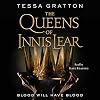
Audiobook aside: This is read by Kate Reading, who is hugely popular in the audiobook world and reads a lot of big name titles. I also can’t stand her reading style… she bores me! So with a different narrator, it’s possible this may have felt like less of a chore. show less
Quick aside, though. I’m not saying The Queens of Innis Lear was a bad book. The writing style was okay and the unfurling story was okay. But there were no rewards. I knew the ending of the book within my first hour of listening – the author more or less tell you. And while much of epic fantasy is meant to be enjoyed as part of a journey… this one? The world and characters were not compelling enough to make me care to take the journey. And yet, it was not quite bad show more enough that I wanted to DNF it. Especially because I’d already listened to about 16 hours when I started to think about DNF-ing. Might as well finish it, once you’ve committed that much time, right?
The Queens of Innis Lear has eight different POVs, some used more than others. The main ones are the sisters: Gaela, Regan, and Elia. Beside them, you have the king, the witch, the fox, the foreign king, and Elia’s maidservant. While I am often all about multiple POVs, this was one of those times when it felt like there were too many, and they weren’t providing interesting information, and they were slowing the book down. Gaela – even as one of the queens – offered very little. I suppose the same can be said for Regan, because really, this story was supposed to be all about Elia in the end… but I liked Regan. I disliked most of the POVs – I was annoyed or bored by them. But I love Regan’s passion. Unfortunately, even I have to admit… she didn’t really move along the story. Too much is too much.
While I have read a lot of Shakespeare and have read many of his plays multiple times, somehow I have managed to miss King Lear…. and I’ve never been particularly driven to read it on my own accord. I will, someday, but I haven’t yet. So if this is a marvellous retelling and if there are delightful references, I’m afraid I missed all except what is evident in the book title, and the madness of the king.
The magic system, while talked about often enough, never really felt explained to me. We know it’s there, and there seems to be some rules, but there isn’t a lot of discussion around it and how, say, people learn the language of trees. Ban’s and Regan’s spellcasting feel completely different. I just wasn’t enthralled by this magic system, as much as I wanted to be. It had a lot of earthy potential, but again, the book was so slow and there were so many POVs and so much repetition… very little time was spent on the actual world building outside the handful of facts we heard over and over and over again.
Just… generally… I found myself exhausted listening to this one. Even as far as epic fantasy goes, it is very, very slow. If you want to give it a try, but don’t connect with any of the characters in the early chapters, the chance is very good that you won’t love this one, either.
Audiobook aside: This is read by Kate Reading, who is hugely popular in the audiobook world and reads a lot of big name titles. I also can’t stand her reading style… she bores me! So with a different narrator, it’s possible this may have felt like less of a chore. show less
Fascinating loose retelling of Shakespeare's King Lear set in the world of a fantasy medieval Britain and France. The island of Innis Lear is almost a character itself, with its own emotion and feelings. There is also a religion: a type of astrology and worship of the stars, which drives much of the motivation. Trees or the wind can communicate with people. The mad King Lear wishes to divide his land among his three daughters: Gaia/Goneril, Regan, and [Cord]elia. Who loves him best? The older two speak extravagantly of their love and the youngest, Elia, is honest in her expression of love and is exiled by her father for not playing the same game as her sisters. Who will become queen? Lear is deposed. There is another plot: that of a show more nobleman's illegitimate son, Ban the Fox [Shakespeare's Edmund], who spies for King Marimaros [Earl of Gloster in the play] of Aremoria [a part of France?]. Ban and Elia are romantically involved here; they have loved each other since they were children. Marimoros hopes to marry her but the novel follows the tradition of Shakespearean tragedies with magic introduced.
I thought it interesting and gave me a taste of King Lear, which I've never understood; I enjoyed comparing the two versions: the original and this one. I regret the lack of a map or diagram of the author's fantasy world. I tried to concoct one in my head. Several place names or descriptions which I tried to correlate in my head with real places and georgraphy were included. This novel reminded me somewhat of Gavriel Guy Kay's fantasy novels: a thinly disguised real place. I enjoyed the author's writing style; she made her scenes vivid. I like the author's flashbacks of the characters' backstories.
Recommended. show less
I thought it interesting and gave me a taste of King Lear, which I've never understood; I enjoyed comparing the two versions: the original and this one. I regret the lack of a map or diagram of the author's fantasy world. I tried to concoct one in my head. Several place names or descriptions which I tried to correlate in my head with real places and georgraphy were included. This novel reminded me somewhat of Gavriel Guy Kay's fantasy novels: a thinly disguised real place. I enjoyed the author's writing style; she made her scenes vivid. I like the author's flashbacks of the characters' backstories.
Recommended. show less
Members
- Recently Added By
Lists

Amazon best fictional genre picks monthly for 2018
418 works; 9 members
Author Information

49+ Works 3,666 Members
Some Editions
Awards and Honors
Notable Lists
Series

Work Relationships
Is abridged in
Common Knowledge
- Original publication date
- 2018-03-18
- Important places
- Innis Lear
- Publisher's editor
- Weinberg, Miriam
Classifications
Statistics
- Members
- 556
- Popularity
- 53,380
- Reviews
- 13
- Rating
- (3.42)
- Languages
- English, Spanish
- Media
- Paper, Audiobook, Ebook
- ISBNs
- 13
- ASINs
- 3