The Land Beyond the Sea
by Sharon Kay Penman 
On This Page
Description
From the critically acclaimed New York Times bestselling author Sharon Kay Penman comes the story of the reign of King Baldwin IV and the Kingdom of Jerusalem's defense against Saladin's famous army.The Kingdom of Jerusalem, also known as Outremer, is the land far beyond the sea. Baptized in blood when the men of the First Crusade captured Jerusalem from the Saracens in the early twelfth century, the kingdom defined an utterly new world, a land of blazing heat and a medley of cultures, a show more place where enemies were neighbors and neighbors became enemies.
At the helm of this growing kingdom sits young Baldwin IV, an intelligent and courageous boy committed to the welfare and protection of his people. But despite Baldwin's dedication to his land, he is afflicted with leprosy at an early age and the threats against his power and his health nearly outweigh the risk of battle. As political deception scours the halls of the royal court, the Muslim army—led by the first sultan of Egypt and Syria, Saladin—is never far from the kingdom's doorstep, and there are only a handful Baldwin can trust, including the archbishop William of Tyre and Lord Balian d'Ibelin, a charismatic leader who has been one of the few able to maintain the peace.
Filled with drama and battle, tragedy and romance, Sharon Kay Penman's latest novel brings a definitive period of history vividly alive with a tale of power and glory that will resonate with readers today. show less
Tags
Recommendations





















Member Reviews
Taking place in parallel to Penman's sequence of novels about the Angevin rulers of England (Henry II and Eleanor of Aquitaine; and Richard I the Lionheart), this is a novel about the French Crusader state of Outremer, an aspect of the whole time period which will be less familiar to most readers. The main characters are Baldwin, the leper king of Outremer and Balian d'Ibelin on the European side, as well as Saladin and his brother Adil (Saphadin) on the Saracen side (and who were very well portrayed in the author's Lionheart novel). There is a rich array of other characters, the vast majority of whom are real historical figures, with some necessary differences for narrative purposes (which the author as always explains carefully in an show more afterword describing the in depth research she has done on the historical background, trying to navigate her way round the various primary and secondary sources on Middle Eastern history and politics which, for the past as for the present, are more often than usually particularly prone to bias one way or the other). There is the usual blend of political infighting, violence and personal relationships, and some sensitive handling of issues - I learned a fair bit about leprosy from this novel which busts some myths about that disease - and a nuanced portrayal of the good and bad points of each side of the cultural and military divide. An absorbing read, though perhaps slightly too long. show less
[The Land Beyond the Sea] by [[Sharon Kay Penman]]
Sharon Kay Penman's latest historical fiction tome is set in 1100s Middle East, specifically the European-ruled City of Jerusalem. It is, however, the end of their reign as Salah al-Din (known to the English as Saladin) is a smart and just Muslim ruler determined to regain this city. The Franks, as they are known in the region, are rife with in-fighting as a power struggle begins to see who will reign after Baldwin IV, who finds he's a leper as a child, knows he won't leave an heir. This leaves them vulnerable to Saladin's strength and intelligence.
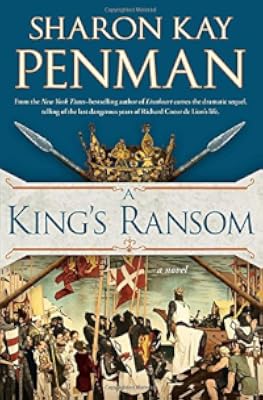
Penman is amazing at crafting characters you care about and at meticulous research. She's presented a balanced account that doesn't favor show more the Crusading English over their Muslim foes. If you've read Penman's other books, this is sort of a prequel to [King's Ransom], where Richard Lionheart leads a Crusade to try to win back Jerusalem.
I really liked this and fans of Penman will also love to read more by her. I will say that it didn't quite sweep me away as well as some of her novels though. I think she wasn't quite as successful at creating multiple storylines with interesting characters. The couple she focused on were great, but in some of her books she manages many more storylines. I loved it though. I'll read anything she writes; I find her books a great escape. show less
Sharon Kay Penman's latest historical fiction tome is set in 1100s Middle East, specifically the European-ruled City of Jerusalem. It is, however, the end of their reign as Salah al-Din (known to the English as Saladin) is a smart and just Muslim ruler determined to regain this city. The Franks, as they are known in the region, are rife with in-fighting as a power struggle begins to see who will reign after Baldwin IV, who finds he's a leper as a child, knows he won't leave an heir. This leaves them vulnerable to Saladin's strength and intelligence.
Penman is amazing at crafting characters you care about and at meticulous research. She's presented a balanced account that doesn't favor show more the Crusading English over their Muslim foes. If you've read Penman's other books, this is sort of a prequel to [King's Ransom], where Richard Lionheart leads a Crusade to try to win back Jerusalem.
I really liked this and fans of Penman will also love to read more by her. I will say that it didn't quite sweep me away as well as some of her novels though. I think she wasn't quite as successful at creating multiple storylines with interesting characters. The couple she focused on were great, but in some of her books she manages many more storylines. I loved it though. I'll read anything she writes; I find her books a great escape. show less
The Land Beyond the Sea covers the approximately twenty-year period before Ms. Penman's previous book Lionheart. Outremer, or the lands held by the Franks during the Crusades, is under siege by Saladin and his armies. The young king is Baldwin IV, stricken with leprosy and struggling to hold his kingdom together. The politics of the various lords native to Outremer and those on Crusade, the struggle between the Roman and Greek churches over the rule of Jerusalem, and the determination of the Muslims to take back the Holy City make for a compelling read.
The story is told from various POVs, but Balian d’Ibelin who marries the former Greek Queen of Jerusalem is the glue that holds the story together. He starts as an unimportant younger show more brother and ends up heroically saving the people of Jerusalem when Saladin finally conquers the city. Ms. Penman is one of the best at writing historical fiction and she's picked a fascinating period to set her story. She uses primary sources from both the Christian and Muslim world and depicts both sides of this holy war fairly. It's a wonderful read (I learned so much about the history of those times) and full of intriguing people. show less
The story is told from various POVs, but Balian d’Ibelin who marries the former Greek Queen of Jerusalem is the glue that holds the story together. He starts as an unimportant younger show more brother and ends up heroically saving the people of Jerusalem when Saladin finally conquers the city. Ms. Penman is one of the best at writing historical fiction and she's picked a fascinating period to set her story. She uses primary sources from both the Christian and Muslim world and depicts both sides of this holy war fairly. It's a wonderful read (I learned so much about the history of those times) and full of intriguing people. show less
4 stars is a bit of a gift. As someone who reads more historical fiction than any other genre and has, for many years, considered Sharon Kay Penman the best of the best -- you can imagine how much I was looking forward to THE LAND BEYOND THE SEA - her first novel in about five years. And it's a tome - nearly 700 pages of very small type. But, alas, I came away disappointed.
The novel begins in 1163, focusing on all the events that culminated in the pivotal Christian vs. Saracen battle over the Holy Land 24 years later. Much of the story explores complex court rivalries - between ambitious lords vying for power and among church prelates who are just as competitive -- all the while featuring girls and women married off as pawns to cement show more alliances.
There are a few wonderful main characters. At the center is Baldwin IV of Jerusalem, the so-called "leper king", his mother Agnes of Courtenay, and William of Tyre- Baldwin's friend, tutor, and father-figure. All three are strong, well-differentiated, and multi-dimensional. All are characters I came to understand and empathize with. Especially the well-intentioned and thoughtful Baldwin, a mere youth who bravely leads his kingdom while battling a disabling and degenerative disease.
I also enjoyed following the story of Balian of d'Ibelin with interest. He was one of the more intelligent and thoughtful nobles in Jerusalem, whose marriage becomes the central romance of the novel. Both Balian and his wife are also well-developed and distinctive.
But then there are all those others. SO MANY of them. And so many that have a very minimal role to play in the story. I have to admit I found it a struggle to keep track of who was who. And the similarity in names certainly didn't help:
• In addition to King Baldwin and Balian -- there is also Baudouin d'Ibelin, Bohemond, and Baldwin (the grandson of IV).
• There's Hugh d'Ibelin, Hugues (son of the Princess of Galilee), and three characters named Humphrey de Toron.
• Among the women, there's is Esquiva, Etienette, and Eschiva.
• Among the Saracens, you have Nur ad-Din Mahmud b. Zangi, al-Salih Ismaeil b. Nur al-Din, al Malik al-Nasir Salah al-Din Abu af Musaffur Yusuf, al-Malik al-'Adil, Taqi al-Din, al-Malik al-Musaffar 'Umar b. Shahanshah b. Ayyub, and Farrukh-Shah, 'Izz al'Din Da'ud b. Shanhanshah b. Ayyub.
• Among the other players are Renaud de Grenier (also referred to as Denys), Reynald de Chatillon, and Raymond de St. Gilles (sometimes referred to as the Count of Tripoli)
• We also have Joscius (Bishop of Acre), Jobert (of the Knights Hospitaller), Jakelin de Mailly (Templar knight), and Joscelin de Courtenay (brother to Agnes - referenced way, way back in this review).
But wait. There are roughly another 30 characters not yet mentioned, including several more Williams and a couple of Marys.
One of the things I generally value with this author is the depth of her research. But in this novel, I felt she got a bit buried in it. At times I felt I was reading more of a scholarly work, rather than a historical novel. You will certainly learn a lot about the the battle for the Holy Land - so important to both Christians and Muslims (and Jews too). And Penman's commitment to accuracy (she only made a few changes according to her Afterword) is admirable -- but I found the number of characters and the level of detail (especially around battles) became downright cumbersome. And about 200 pages before the end, I was ready to be done.
Fortunately, the last few hundred pages turned out to be full of building drama. So I kept reading. And I'm glad I finished it. But this one certainly isn't my favorite historical novel by this author. show less
The novel begins in 1163, focusing on all the events that culminated in the pivotal Christian vs. Saracen battle over the Holy Land 24 years later. Much of the story explores complex court rivalries - between ambitious lords vying for power and among church prelates who are just as competitive -- all the while featuring girls and women married off as pawns to cement show more alliances.
There are a few wonderful main characters. At the center is Baldwin IV of Jerusalem, the so-called "leper king", his mother Agnes of Courtenay, and William of Tyre- Baldwin's friend, tutor, and father-figure. All three are strong, well-differentiated, and multi-dimensional. All are characters I came to understand and empathize with. Especially the well-intentioned and thoughtful Baldwin, a mere youth who bravely leads his kingdom while battling a disabling and degenerative disease.
I also enjoyed following the story of Balian of d'Ibelin with interest. He was one of the more intelligent and thoughtful nobles in Jerusalem, whose marriage becomes the central romance of the novel. Both Balian and his wife are also well-developed and distinctive.
But then there are all those others. SO MANY of them. And so many that have a very minimal role to play in the story. I have to admit I found it a struggle to keep track of who was who. And the similarity in names certainly didn't help:
• In addition to King Baldwin and Balian -- there is also Baudouin d'Ibelin, Bohemond, and Baldwin (the grandson of IV).
• There's Hugh d'Ibelin, Hugues (son of the Princess of Galilee), and three characters named Humphrey de Toron.
• Among the women, there's is Esquiva, Etienette, and Eschiva.
• Among the Saracens, you have Nur ad-Din Mahmud b. Zangi, al-Salih Ismaeil b. Nur al-Din, al Malik al-Nasir Salah al-Din Abu af Musaffur Yusuf, al-Malik al-'Adil, Taqi al-Din, al-Malik al-Musaffar 'Umar b. Shahanshah b. Ayyub, and Farrukh-Shah, 'Izz al'Din Da'ud b. Shanhanshah b. Ayyub.
• Among the other players are Renaud de Grenier (also referred to as Denys), Reynald de Chatillon, and Raymond de St. Gilles (sometimes referred to as the Count of Tripoli)
• We also have Joscius (Bishop of Acre), Jobert (of the Knights Hospitaller), Jakelin de Mailly (Templar knight), and Joscelin de Courtenay (brother to Agnes - referenced way, way back in this review).
But wait. There are roughly another 30 characters not yet mentioned, including several more Williams and a couple of Marys.
One of the things I generally value with this author is the depth of her research. But in this novel, I felt she got a bit buried in it. At times I felt I was reading more of a scholarly work, rather than a historical novel. You will certainly learn a lot about the the battle for the Holy Land - so important to both Christians and Muslims (and Jews too). And Penman's commitment to accuracy (she only made a few changes according to her Afterword) is admirable -- but I found the number of characters and the level of detail (especially around battles) became downright cumbersome. And about 200 pages before the end, I was ready to be done.
Fortunately, the last few hundred pages turned out to be full of building drama. So I kept reading. And I'm glad I finished it. But this one certainly isn't my favorite historical novel by this author. show less
More history than fiction, as always, Penman’s latest novel is impeccably researched, beautifully detailed, and absolutely compelling. She has a gift for bringing historical figures out of obscurity into glorious three dimensional life. The reader knows how the story ends, yet one can’t help but be swept up in the fear, joy, anger, and heartbreak surrounding the fate of Kingdom of Jerusalem and her inhabitants.
4 stars is a bit of a gift. As someone who reads more historical fiction than any other genre and has, for many years, considered Sharon Kay Penman the best of the best -- you can imagine how much I was looking forward to THE LAND BEYOND THE SEA - her first novel in about five years. And it's a tome - nearly 700 pages of very small type. But, alas, I came away disappointed.
The novel begins in 1163, focusing on all the events that culminated in the pivotal Christian vs. Saracen battle over the Holy Land 24 years later. Much of the story explores complex court rivalries - between ambitious lords vying for power and among church prelates who are just as competitive -- all the while featuring girls and women married off as pawns to cement show more alliances.
There are a few wonderful main characters. At the center is Baldwin IV of Jerusalem, the so-called "leper king", his mother Agnes of Courtenay, and William of Tyre- Baldwin's friend, tutor, and father-figure. All three are strong, well-differentiated, and multi-dimensional. All are characters I came to understand and empathize with. Especially the well-intentioned and thoughtful Baldwin, a mere youth who bravely leads his kingdom while battling a disabling and degenerative disease.
I also enjoyed following the story of Balian of d'Ibelin with interest. He was one of the more intelligent and thoughtful nobles in Jerusalem, whose marriage becomes the central romance of the novel. Both Balian and his wife are also well-developed and distinctive.
But then there are all those others. SO MANY of them. And so many that have a very minimal role to play in the story. I have to admit I found it a struggle to keep track of who was who. And the similarity in names certainly didn't help:
• In addition to King Baldwin and Balian -- there is also Baudouin d'Ibelin, Bohemond, and Baldwin (the grandson of IV).
• There's Hugh d'Ibelin, Hugues (son of the Princess of Galilee), and three characters named Humphrey de Toron.
• Among the women, there's is Esquiva, Etienette, and Eschiva.
• Among the Saracens, you have Nur ad-Din Mahmud b. Zangi, al-Salih Ismaeil b. Nur al-Din, al Malik al-Nasir Salah al-Din Abu af Musaffur Yusuf, al-Malik al-'Adil, Taqi al-Din, al-Malik al-Musaffar 'Umar b. Shahanshah b. Ayyub, and Farrukh-Shah, 'Izz al'Din Da'ud b. Shanhanshah b. Ayyub.
• Among the other players are Renaud de Grenier (also referred to as Denys), Reynald de Chatillon, and Raymond de St. Gilles (sometimes referred to as the Count of Tripoli)
• We also have Joscius (Bishop of Acre), Jobert (of the Knights Hospitaller), Jakelin de Mailly (Templar knight), and Joscelin de Courtenay (brother to Agnes - referenced way, way back in this review).
But wait. There are roughly another 30 characters not yet mentioned, including several more Williams and a couple of Marys.
One of the things I generally value with this author is the depth of her research. But in this novel, I felt she got a bit buried in it. At times I felt I was reading more of a scholarly work, rather than a historical novel. You will certainly learn a lot about the the battle for the Holy Land - so important to both Christians and Muslims (and Jews too). And Penman's commitment to accuracy (she only made a few changes according to her Afterword) is admirable -- but I found the number of characters and the level of detail (especially around battles) became downright cumbersome. And about 200 pages before the end, I was ready to be done.
Fortunately, the last few hundred pages turned out to be full of building drama. So I kept reading. And I'm glad I finished it. But this one certainly isn't my favorite historical novel by this author. show less
The novel begins in 1163, focusing on all the events that culminated in the pivotal Christian vs. Saracen battle over the Holy Land 24 years later. Much of the story explores complex court rivalries - between ambitious lords vying for power and among church prelates who are just as competitive -- all the while featuring girls and women married off as pawns to cement show more alliances.
There are a few wonderful main characters. At the center is Baldwin IV of Jerusalem, the so-called "leper king", his mother Agnes of Courtenay, and William of Tyre- Baldwin's friend, tutor, and father-figure. All three are strong, well-differentiated, and multi-dimensional. All are characters I came to understand and empathize with. Especially the well-intentioned and thoughtful Baldwin, a mere youth who bravely leads his kingdom while battling a disabling and degenerative disease.
I also enjoyed following the story of Balian of d'Ibelin with interest. He was one of the more intelligent and thoughtful nobles in Jerusalem, whose marriage becomes the central romance of the novel. Both Balian and his wife are also well-developed and distinctive.
But then there are all those others. SO MANY of them. And so many that have a very minimal role to play in the story. I have to admit I found it a struggle to keep track of who was who. And the similarity in names certainly didn't help:
• In addition to King Baldwin and Balian -- there is also Baudouin d'Ibelin, Bohemond, and Baldwin (the grandson of IV).
• There's Hugh d'Ibelin, Hugues (son of the Princess of Galilee), and three characters named Humphrey de Toron.
• Among the women, there's is Esquiva, Etienette, and Eschiva.
• Among the Saracens, you have Nur ad-Din Mahmud b. Zangi, al-Salih Ismaeil b. Nur al-Din, al Malik al-Nasir Salah al-Din Abu af Musaffur Yusuf, al-Malik al-'Adil, Taqi al-Din, al-Malik al-Musaffar 'Umar b. Shahanshah b. Ayyub, and Farrukh-Shah, 'Izz al'Din Da'ud b. Shanhanshah b. Ayyub.
• Among the other players are Renaud de Grenier (also referred to as Denys), Reynald de Chatillon, and Raymond de St. Gilles (sometimes referred to as the Count of Tripoli)
• We also have Joscius (Bishop of Acre), Jobert (of the Knights Hospitaller), Jakelin de Mailly (Templar knight), and Joscelin de Courtenay (brother to Agnes - referenced way, way back in this review).
But wait. There are roughly another 30 characters not yet mentioned, including several more Williams and a couple of Marys.
One of the things I generally value with this author is the depth of her research. But in this novel, I felt she got a bit buried in it. At times I felt I was reading more of a scholarly work, rather than a historical novel. You will certainly learn a lot about the the battle for the Holy Land - so important to both Christians and Muslims (and Jews too). And Penman's commitment to accuracy (she only made a few changes according to her Afterword) is admirable -- but I found the number of characters and the level of detail (especially around battles) became downright cumbersome. And about 200 pages before the end, I was ready to be done.
Fortunately, the last few hundred pages turned out to be full of building drama. So I kept reading. And I'm glad I finished it. But this one certainly isn't my favorite historical novel by this author. show less
I won't go into too much detail in this review so the short version is - this book focuses mainly on the political games of the court (which is understandable, considering the King of Jerusalem at this point is inflicted by leprosy, an illness thought of as punishment by God) and less on the battles that are, for the most part, an afterthought I feel. I personally liked this approach, because instead of sinking in the "Crusaders bad" monotone of most books (or any media really), this one focuses on showing the humans living in that time and makes it not black and white. The only downside to it is the fact that this eventually introduces MANY characters to the plot. Expect quite a few to suffer for it on personality depth side. The main show more cluster of characters, however, are very well written (tho for the first time in Penman's books, I found some really infuriating ones...looking at you Jocelyn).
As always, I can only admire the dedication Mrs. Penman puts into keeping her books realistic. Not only does she study her resources, but she also travels to the locations she writes about to be as true to events as possible. Whether people agree with her idea that people today and back then aren't all that different or not, fact is, this take helps make her characters understandable to readers. Even the most cruel character has a reason for it and even if you don't agree, you can see where he comes from. In the end, all her characters just play with your feelings one way or the other and it is this writing that makes her books worth a read in my opinion.
Overall, this may be not her best book (the fact so many characters were skimmed over sounds like it was rushed somewhat), but very worthwhile read if you don't mind a LOT of pages full of slow burn plot. show less
As always, I can only admire the dedication Mrs. Penman puts into keeping her books realistic. Not only does she study her resources, but she also travels to the locations she writes about to be as true to events as possible. Whether people agree with her idea that people today and back then aren't all that different or not, fact is, this take helps make her characters understandable to readers. Even the most cruel character has a reason for it and even if you don't agree, you can see where he comes from. In the end, all her characters just play with your feelings one way or the other and it is this writing that makes her books worth a read in my opinion.
Overall, this may be not her best book (the fact so many characters were skimmed over sounds like it was rushed somewhat), but very worthwhile read if you don't mind a LOT of pages full of slow burn plot. show less
Members
- Recently Added By
Lists

Best Historical Fiction
620 works; 261 members

Top Five Books of 2020
982 works; 350 members

ALA Reading List: Historical Fiction 2021-2026
30 works; 4 members

Books Read in 2023
5,638 works; 147 members
Author Information

21+ Works 19,013 Members
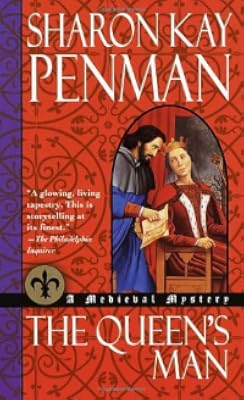
Sharon Kay Penman was born in New York City on August 13, 1945. She received a bachelor's degree in history from the University of Texas at Austin and a Juris Doctor degree from Rutgers University School of Law. She worked as a tax lawyer before becoming a full-time writer. She wrote The Sunne in Splendour, which chronicled the life of Richard show more III, while she was a student and a tax lawyer. After finishing the manuscript, her only copy was stolen from her car. She eventually rewrote the book and it was published in 1982. Her other works include Here Be Dragons, The Reckoning, When Christ and His Saints Slept, The Queen's Man, Cruel as the Grave, Dragon's Lair, Prince of Darkness, Lionheart and A King's Ransom. She won the 2001 Career Achievement Award for Historical Mysteries from Romantic Times. (Bowker Author Biography) show less
Sharon Kay Penman is a LibraryThing Author, an author who lists their personal library on LibraryThing.
Awards and Honors
Awards
Common Knowledge
- Original publication date
- 2020-03-03
- People/Characters
- Baldwin IV, King of Jerusalem; Balian D'Ibelin; Guy de Lusignan, King of Jerusalem; Saladin; Sibylla of Jerusalem; Agnes de Courtenay (show all 16); Maria Comnena of Jerusalem; Joscelin III of Edessa; Beatrice of Saone; Mabilla; Amalric, King of Jerusalem; Isabella I of Jerusalem; William of Tyre; Abu Sulayman Dawud; Michael (chief eunuch); Hubert (Baldwin's friend)
- Important places
- Jerusalem
- First words
- Agnes de Courtenay knew that most people would say she'd been blessed, for she was both beautiful and highborn, the daughter of the Count of Edessa, cousin to the rulers of Antioch and Jerusalem.
- Last words
- (Click to show. Warning: May contain spoilers.)The kingdom still survived longer than Antioch, which was taken by Sultan Baibars in 1268, and Tripoli, which fell in 1289.
- Blurbers
- Royal, Priscilla
Classifications
Statistics
- Members
- 265
- Popularity
- 122,601
- Reviews
- 13
- Rating
- (4.11)
- Languages
- English
- Media
- Paper, Audiobook, Ebook
- ISBNs
- 12
- ASINs
- 4