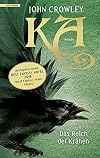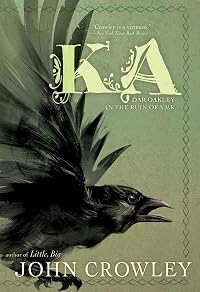
Ka: Dar Oakley in the Ruin of Ymr
by John Crowley
On This Page
Description
"Dar Oakley -- the first Crow in all of Crow history with a name of his own -- was born two thousand years ago. He tells the story of his impossible lives and deaths to a man who has learned his language in this exquisite novel which unravels like a fireside fable, by award-winning author John Crowley. In Ka we see how young Dar Oakley went down into the human underworld long before Julius Caesar came into the Celtic lands, and there got hold of the immortality meant for humans; how he show more sailed West to America with the Irish monks searching for the Paradise of the Saints; how again and again he went down into the lands of the dead and returned. All these beings inhabit Ka, the realm of Crows, and dwell also in Ymr, the realm where -- as Dar Oakley learns -- what humans think is so, really is so, even though we could have so much more"-- show lessTags
Recommendations






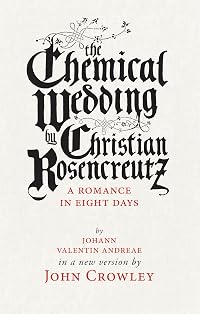

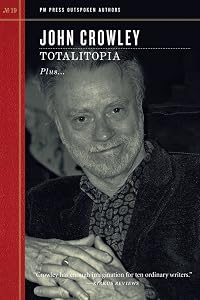
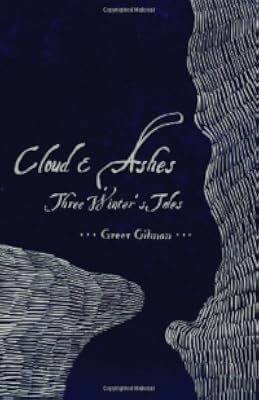
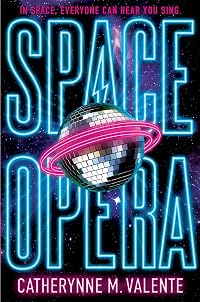



Member Recommendations
Member Reviews
I have a tendency, in my reading, to put off tackling the really great, difficult stories. No time now, life is busy, I wait for the opportunity. Obviously, this habit needs to be broken. And so, John Crowley's most recent novel, from 2017.
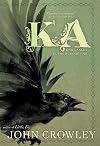
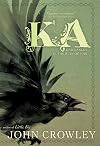
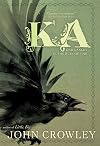
To start, this is a beautiful hardcover physically: a black illustration by jacket designer Sonia Chaghatzbanian, plus white lettering, on a lovely green background, with the "KA" in gold. There are some fine interior illustrations by Melody Newcomb.
Crowley's stories are fractal, in some sense, each part echoing every other part and the whole. His great theme is, not Story itself, but our human tendency to structure our lives as stories, pulling narrative out of the buzz of events. His novels are show more difficult to read, at least for me, requiring much paging back and forth to see the parts referenced by the passage I'm on now. Ka is less resistant in this sense, though, and perhaps a good first Crowley for anyone new to him.
The novel's unnamed narrator is an elderly man somewhere in the USA, ill and recently widowed, living in a decaying society and a wounded climate, not too far in our future. The narrator's own tale is briefly and vividly limned. The bulk of the book's story is that of Dar Oakley, who is a crow, Corvus brachyrhynchos, an American crow, although he has been other sorts of crow in the distant past - for Dar does not age, and is reincarnated after each time he dies. The narrator nurses Dar back to health from an injury, and Dar tells the man his story after the two have learned to converse, as he has told it to other humans in eras past - or is our narrator simply imagining the relationship?
In earliest memory, Dar was an ordinary crow, without a name yet, maturing, eating, nesting, and reproducing. The arrival of stone-age humans was very good for his region's crows, because human wars produced lots of carrion for them. Dar befriended a human child, the girl called Fox Cap, who learned his speech and gave him his name. Fox Cap grew to be her tribe's shaman, and took Dar along on a trip to the land of Death. There, he stole that which made him immortal in his peculiar way. Through the centuries, Dar watched humans grow to dominate the planet. The crow's journey has the episodic nature of many a fairy tale. Dar lives with medieval monks, travels to the new world with the help of Brendan the Navigator, and befriends a US Civil War widow whom Crowley models on Emily Dickinson. Crowley's gorgeous language has a fairy tale character at times, too:
Dar Oakley didn't have that name then, or any name. It would be eons before Crows had each a name, as they do now; then, no, they had no need of them, they called those around them Father, Brother, Older Sister, Other Older Sister; those they didn't know as relations, or forgot in what degree, were spoken of as Those Ones, or Others, or All of Them There, and so on.
Many of the stations along Dar's path involve death. Humans associate crows with death; the birds feed on dead creatures. During his sojourn with the war widow, he communicates with the shades of some of the men killed in the Civil War. He travels to that part of the land of Death that belongs to humans, and that part that belongs to crows. He is present at the first contact of the Old World with North America, and witnesses the Great Dying as the Native Americans are killed by European diseases. As I write in late March 2020, with COVID-19 looming, this last part is uncomfortably resonant. The novel's narrator must eventually come to his own accommodation with death. Crows, imagines Crowley, have a bluntly materialistic view of the world. A dead thing is "dead as dead," and Dar and his fellows struggle to understand the human idea that something alive still attaches to the bits of fat and muscle crows eat. What do these stories mean for the narrator, here at the end of his life?
One content warning: one of Crowley's Civil War characters uses the N-word in a short passage. That's expected from someone of the era, but still jarring.
To describe a book by John Crowley in terms of its parts, or its plot, is like describing a quilt by naming the fabric patches that went into it, while leaving out the quality of the whole. There's no way to summarize Crowley; he must be read. show less
To start, this is a beautiful hardcover physically: a black illustration by jacket designer Sonia Chaghatzbanian, plus white lettering, on a lovely green background, with the "KA" in gold. There are some fine interior illustrations by Melody Newcomb.
Crowley's stories are fractal, in some sense, each part echoing every other part and the whole. His great theme is, not Story itself, but our human tendency to structure our lives as stories, pulling narrative out of the buzz of events. His novels are show more difficult to read, at least for me, requiring much paging back and forth to see the parts referenced by the passage I'm on now. Ka is less resistant in this sense, though, and perhaps a good first Crowley for anyone new to him.
The novel's unnamed narrator is an elderly man somewhere in the USA, ill and recently widowed, living in a decaying society and a wounded climate, not too far in our future. The narrator's own tale is briefly and vividly limned. The bulk of the book's story is that of Dar Oakley, who is a crow, Corvus brachyrhynchos, an American crow, although he has been other sorts of crow in the distant past - for Dar does not age, and is reincarnated after each time he dies. The narrator nurses Dar back to health from an injury, and Dar tells the man his story after the two have learned to converse, as he has told it to other humans in eras past - or is our narrator simply imagining the relationship?
In earliest memory, Dar was an ordinary crow, without a name yet, maturing, eating, nesting, and reproducing. The arrival of stone-age humans was very good for his region's crows, because human wars produced lots of carrion for them. Dar befriended a human child, the girl called Fox Cap, who learned his speech and gave him his name. Fox Cap grew to be her tribe's shaman, and took Dar along on a trip to the land of Death. There, he stole that which made him immortal in his peculiar way. Through the centuries, Dar watched humans grow to dominate the planet. The crow's journey has the episodic nature of many a fairy tale. Dar lives with medieval monks, travels to the new world with the help of Brendan the Navigator, and befriends a US Civil War widow whom Crowley models on Emily Dickinson. Crowley's gorgeous language has a fairy tale character at times, too:
Dar Oakley didn't have that name then, or any name. It would be eons before Crows had each a name, as they do now; then, no, they had no need of them, they called those around them Father, Brother, Older Sister, Other Older Sister; those they didn't know as relations, or forgot in what degree, were spoken of as Those Ones, or Others, or All of Them There, and so on.
Many of the stations along Dar's path involve death. Humans associate crows with death; the birds feed on dead creatures. During his sojourn with the war widow, he communicates with the shades of some of the men killed in the Civil War. He travels to that part of the land of Death that belongs to humans, and that part that belongs to crows. He is present at the first contact of the Old World with North America, and witnesses the Great Dying as the Native Americans are killed by European diseases. As I write in late March 2020, with COVID-19 looming, this last part is uncomfortably resonant. The novel's narrator must eventually come to his own accommodation with death. Crows, imagines Crowley, have a bluntly materialistic view of the world. A dead thing is "dead as dead," and Dar and his fellows struggle to understand the human idea that something alive still attaches to the bits of fat and muscle crows eat. What do these stories mean for the narrator, here at the end of his life?
One content warning: one of Crowley's Civil War characters uses the N-word in a short passage. That's expected from someone of the era, but still jarring.
To describe a book by John Crowley in terms of its parts, or its plot, is like describing a quilt by naming the fabric patches that went into it, while leaving out the quality of the whole. There's no way to summarize Crowley; he must be read. show less
A book so good that even explaining why it is so good is a little beyond me. It is a beautiful fantasy, with compelling characters. It is fragile and sad. It is convincing and matter of fact in the nature of crows and humans, Ymr and Ka. It also offers a glimpse of the terrible future that is to come, that we could have avoided a hundred times over but were prevented from doing so by politicians and their friends in high places. A fantastic book, one that I will reread, need to reread. There is more there than I understood the first time round!
This is a strange book, and I had the sneaking suspicion all the way through that Crowley is doing something really complex and profound and completely over my head, because that's how a lot of his other books are. It tells the story of humanity's relationship with crows, and humanity's legends about crows, but it is told from the filtered viewpoint of one crow who has lived for all eternity and has been the object of these legends. I say "filtered" because the story is narrated by a man to whom the crow told his life story: the crow doesn't always remember the details, so the human fills some of them in, so there's some unreliable narrator stuff happening.
The crow's life explores many themes. One is story and storytelling, and the need show more to tell stories to make sense of the world. Another is death - Dar Oakley frequently travels to the realm of the dead, and human legends about crows often involve crows' ability to travel between the worlds of the living and the dead. The book explores the theme of human history (starting in prehistory and ending in the present day), and humanity's changing relationship to nature, death, and the divine.
I enjoyed reading this, even if it did go quite long. show less
The crow's life explores many themes. One is story and storytelling, and the need show more to tell stories to make sense of the world. Another is death - Dar Oakley frequently travels to the realm of the dead, and human legends about crows often involve crows' ability to travel between the worlds of the living and the dead. The book explores the theme of human history (starting in prehistory and ending in the present day), and humanity's changing relationship to nature, death, and the divine.
I enjoyed reading this, even if it did go quite long. show less
The year is not yet a week old, but I have already found a contender for "personal favourite of 2019"!
Ka: Dar Oakley in the Ruin of Ymr by John Crowley might be - besides the book with the worst title - the most original fantasy book I have read in a long time.
Dar Oakley is a crow. But not any crow. Not only has he brought names to the realm of crows, but he has also stolen the most important thing. As a result he cannot die, not really.
The book takes place in the near future, where a recently widowed man finds a wounded crow. This crow is Dar Oakley, who proceeds to tell the man of three of his past lives.
The book starts relatively simple with the differences in 'world view' between humans (the realm of Ymr) and crows (the realm of show more Ka). Crows don't have names for example, they don't them. Knowing who your mate is and which ones are your children is good enough. Crows also don't think about the future except for where their next meal will come from.
This all changes when Dar Oakley travels from the realm of the crows to the realms of humans and brings some human knowledge back with him.
The book then quickly changes and becomes more... spiritual is probably the best word I can think of. It deals with subjects like what happens after death; your body remains but your spirit can live on, either in the after-life or in name spoken by your progeny. Even though the subject is quite different from most fantasy books, it doesn't feel too heavy or too new agey. It feels a bit like how Neil Gaiman handles religion in American gods (in subject, not in prose).
The book might not be for everyone, but if you're looking for an orignal read (or a book about crows) this book is really worth considering. show less
Ka: Dar Oakley in the Ruin of Ymr by John Crowley might be - besides the book with the worst title - the most original fantasy book I have read in a long time.
Dar Oakley is a crow. But not any crow. Not only has he brought names to the realm of crows, but he has also stolen the most important thing. As a result he cannot die, not really.
The book takes place in the near future, where a recently widowed man finds a wounded crow. This crow is Dar Oakley, who proceeds to tell the man of three of his past lives.
The book starts relatively simple with the differences in 'world view' between humans (the realm of Ymr) and crows (the realm of show more Ka). Crows don't have names for example, they don't them. Knowing who your mate is and which ones are your children is good enough. Crows also don't think about the future except for where their next meal will come from.
This all changes when Dar Oakley travels from the realm of the crows to the realms of humans and brings some human knowledge back with him.
The book then quickly changes and becomes more... spiritual is probably the best word I can think of. It deals with subjects like what happens after death; your body remains but your spirit can live on, either in the after-life or in name spoken by your progeny. Even though the subject is quite different from most fantasy books, it doesn't feel too heavy or too new agey. It feels a bit like how Neil Gaiman handles religion in American gods (in subject, not in prose).
The book might not be for everyone, but if you're looking for an orignal read (or a book about crows) this book is really worth considering. show less
This is a novel about a crow’s view on human civilization. Maybe I should start with deciphering the title: Ka: Dar Oakley in the Ruin of Ymr. Ymr is the real of humans, both living and dead from Norse (?) myths; Ka is its equivalent in the crows’ world; Dar Oakley is the name of the crow, who narrates most of the book.
The book starts with the author, who recently lost his wife, found a wounded crow and takes it home. In time the crow and the author develop a common tongue and the crow tells his story.
The crow story has four parts, starting from [1] iron age Albion, with Celtic/Norse populations, following with [2] early medieval monks, [3] north American Indians up to the US civil war and [4] the present day/alt or near future. show more Crows are materialists, “dead is dead” is their common refrain, but humans made them in their stories as death birds and crows have to take part.
The story mixes the wealth of information about real biology/behavior of crows, their supposed difference in views from humans (like ‘in every human language we talk about ways and paths and bringing and bearing things along them. We come to a fork in the road, a parting of the ways, we take a wrong turn. Crows never talk in that way. But if I couldn’t, I’m not sure I could tell a story, or recount a life. We are beings on the path, always wondering what’s beyond the next turning. Crows live in a wide, trackless space of three dimensions.’). And last but not least, their appearance in our stories.
Great prose, vivid story, clever ideas. show less
The book starts with the author, who recently lost his wife, found a wounded crow and takes it home. In time the crow and the author develop a common tongue and the crow tells his story.
The crow story has four parts, starting from [1] iron age Albion, with Celtic/Norse populations, following with [2] early medieval monks, [3] north American Indians up to the US civil war and [4] the present day/alt or near future. show more Crows are materialists, “dead is dead” is their common refrain, but humans made them in their stories as death birds and crows have to take part.
The story mixes the wealth of information about real biology/behavior of crows, their supposed difference in views from humans (like ‘in every human language we talk about ways and paths and bringing and bearing things along them. We come to a fork in the road, a parting of the ways, we take a wrong turn. Crows never talk in that way. But if I couldn’t, I’m not sure I could tell a story, or recount a life. We are beings on the path, always wondering what’s beyond the next turning. Crows live in a wide, trackless space of three dimensions.’). And last but not least, their appearance in our stories.
Great prose, vivid story, clever ideas. show less
The protagonist of Ka is the corvid Dar Oakley, and the narrator is a nameless man to whom the bird has told his stories, a string of recollected Crow lives over the entirety of human history. The first part is set in prehistoric Europe and the second in the Middle Ages. Part three has two major arcs: one among Native Americans prior to colonization, and another during and after the US Civil War. The final part of the novel returns to the context of the narrator in "the Ruins of Ymr," a near-future setting of social and ecological decay.
The pace throughout is slow and thoughtful, caught between the divergent perceptions and expressions of Person and Crow. There are multiple visionary episodes. As a whole, the book contemplates the show more incomprehension of memory and mortality, along with the value of story itself. show less
The pace throughout is slow and thoughtful, caught between the divergent perceptions and expressions of Person and Crow. There are multiple visionary episodes. As a whole, the book contemplates the show more incomprehension of memory and mortality, along with the value of story itself. show less
At least on the audible version (read by Crowley) this is an absolutely delightful book. It's not always clear what the point is, and it's never clear where the story is going, but that said, every minute of it was delightful. Crowley's characterization of Dar Oakley, the crow in it who is reborn several times throughout history, is deft and engaging. His portrayal of crow "culture" is fascinating and at least to one who only knows crows from the ones he sees on his block, seems real. I've read many of his books, and after Little, Big, this seems to be his masterwork.
Members
- Recently Added By
Lists

Favorite Animal Fiction
359 works; 156 members

Read-alike - Hollow Kingdom by Kira Buxton
16 works; 1 member

2018 Hugo Eligible Novels
170 works; 16 members

Top Five Books of 2023
767 works; 317 members

Top Five Books of 2024
795 works; 264 members

Put a Bird On It
75 works; 12 members
Author Information

46+ Works 12,780 Members
John Crowley was a recipient of the American Academy & Institute of Arts & Letters Award for Literature. He lives in the hills above the Connecticut River in northern Massachusetts with his wife & twin daughters. (Bowker Author Biography)
Some Editions
Awards and Honors
Series
Belongs to Publisher Series
Work Relationships
Is contained in
Has as a study
Common Knowledge
- Canonical title*
- KA: Das Reich der Krähen
- Original title
- Ka: Dar Oakley in the Ruin of Ymr
- Original publication date
- 2017
- People/Characters
- Dar Oakley; Fox Cap; The Brother; Kits; One Ear; Anna Kuhn (show all 10); Dr Hergesheimer; Na Cherry; Digs Moss For Snails; Barbara
- Epigraph
- The crows assert that a single crow could destroy heaven.
Certainly this is so─but it proves nothing against heaven: for
the definition of heaven is simply the absence of crows.
─Franz Kafka - Dedication
- For H. B.,
with gratitude for many things - First words
- There has come to be a great mountain at the end of the world.
- Last words
- (Click to show. Warning: May contain spoilers.)We are still here.
- Original language
- English
*Some information comes from Common Knowledge in other languages. Click "Edit" for more information.
Classifications
Statistics
- Members
- 412
- Popularity
- 75,293
- Reviews
- 12
- Rating
- (3.83)
- Languages
- English, German
- Media
- Paper, Audiobook, Ebook
- ISBNs
- 6
- ASINs
- 5