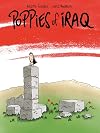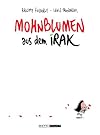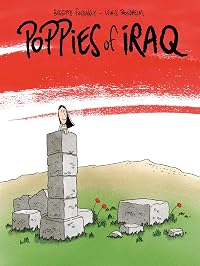
Poppies of Iraq
by Brigitte Findakly, Lewis Trondheim (Illustrator)
On This Page
Description
"Poppies of Iraq is Brigitte Findakly's nuanced tender chronicle of her relationship with her homeland Iraq, co-written and drawn by her husband, the acclaimed cartoonist Lewis Trondheim. In spare and elegant detail, they share memories of her middle class childhood touching on cultural practices, the education system, Saddam Hussein's state control, and her family's history as Orthodox Christians in the arab world. Poppies of Iraq is intimate and wide-ranging; the story of how one can show more become separated from one's homeland and still feel intimately connected yet ultimately estranged. Signs of an oppressive regime permeate a seemingly normal life: magazines arrive edited by customs; the color red is banned after the execution of General Kassim; Baathist militiamen are publicly hanged and school kids are bussed past them to bear witness. As conditions in Mosul worsen over her childhood, Brigitte's father is always hopeful that life in Iraq will return to being secular and prosperous. The family eventually feels compelled to move to Paris, however, where Brigitte finds herself not quite belonging to either culture. Trondheim brings to life Findakly's memories to create a poignant family portrait that covers loss, tragedy, love, and the loneliness of exile."-- show lessTags
Recommendations





















Member Reviews
Despite many good vignettes and anecdotes, this autobiography is too random and unstructured for me, skipping around through the upbringing of the co-author in Iraq and France. The intermittent inclusion of real family photos drove home the impression I had of sitting on the sofa in a stranger's house as she flips through pages of a family scrapbook telling occasionally humorous stories about a bunch of people I don't really know. While it isn't painful, I'm mostly going to nod politely until I can find an opportunity to leave.
This book is author Brigitte Findakly's memories of her family and her homeland Iraq, illustrated by her talented husband, the acclaimed cartoonist Lewis Trondheim. Sadly, the book is disappointing: the narrative is very disjointed, jumping around between actual historical events in Iraq, her family's struggles with its social, military, and economic standing, and a myriad of cultural and religious issues, especially challenging for Christians in an Islamic state. I would have liked a little more attention paid to Findakly's family photographs, which could have been clearer and would have benefited from some labels.
This 2017 book written by Brigitte Findakly and illustrated by her husband Lewis Trondheim is a memoir of Findakly's life growing up in Iraq. Findakly had a better than average life in Iraq as her father was a dentist and they could afford private schools and vacations in France where her mother emigrated to Iraq from. The family was unique because they were Orthodox Christians in a Muslim country.
With her father being asked to pay excessive taxes that he could not afford to pay, he decided to leave Iraq for France. His cover story for the government whom he worked for was that he needed training on how to do dental implants. The training was approved and the family left with no intention of returning until things improved in Iraq. I show more believe the author was about 18 years old at this time. However, this was 1979. The Iran-Iraq War followed from 1980-1989, the Gulf War in 1990 and the second Gulf War in 2003. Her father never expected his exile to be that long.
The family was not political unless they had to be and when her father could no longer support Saddam Hussein's government, he willingly gave up his government pension and all hope of ever returning to Iraq. The author, however, made several trips back over the years to visit relatives and saw their homes and possessions and dreams becoming more and more shattered. Eventually they all left by 2016, their homeland no longer recognizable.
While the family did not suffer much religious prejudice while the author lived there, as Saddam Hussein's government took hold her cousins suffered persecution and developed Islamapobia. It seems to me that the author's mother kept her indoors at certain times so perhaps there was some prejudice happening to them that the mother shielded her from.
Poppies in Iraq is an informative graphic memoir on life in Iraq from 1950 to the present time. The title of the book comes from an archeological site in Nimrod where the author used to play as a child. Poppies were prevalent there. show less
With her father being asked to pay excessive taxes that he could not afford to pay, he decided to leave Iraq for France. His cover story for the government whom he worked for was that he needed training on how to do dental implants. The training was approved and the family left with no intention of returning until things improved in Iraq. I show more believe the author was about 18 years old at this time. However, this was 1979. The Iran-Iraq War followed from 1980-1989, the Gulf War in 1990 and the second Gulf War in 2003. Her father never expected his exile to be that long.
The family was not political unless they had to be and when her father could no longer support Saddam Hussein's government, he willingly gave up his government pension and all hope of ever returning to Iraq. The author, however, made several trips back over the years to visit relatives and saw their homes and possessions and dreams becoming more and more shattered. Eventually they all left by 2016, their homeland no longer recognizable.
While the family did not suffer much religious prejudice while the author lived there, as Saddam Hussein's government took hold her cousins suffered persecution and developed Islamapobia. It seems to me that the author's mother kept her indoors at certain times so perhaps there was some prejudice happening to them that the mother shielded her from.
Poppies in Iraq is an informative graphic memoir on life in Iraq from 1950 to the present time. The title of the book comes from an archeological site in Nimrod where the author used to play as a child. Poppies were prevalent there. show less
I found this book a little confusing at first because it jumps around a lot, but you also have to remember that this is how we have memories. If you read a memoir that is in chronological order, it's because the author took a bunch of messed up memories and constructed them that way. Taken together, the vignettes do add up to a fascinating portrait of life in Iraq.
This is an interesting, sometimes funny and sometimes sad, look at life in Iraq from a unique perspective. The author, Brigitte Findakly, is the daughter of an Iraqi, Orthodox Christian father and a French, Catholic mother. The family lived in Iraq in the 60s and 70s while Findakly was a child. Eventually, with worsening conditions in Iraq, the family moved to France. It was definitely worth the read!
I like this in theory, but in the classic creative writing idiom of "show, don't tell," it mostly felt like a lot of telling and little showing. Each episode seemed like it could contain a book in itself. I would revisit Findakly if other work offered more in depth insights.
A graphic novel memoir of growing up in Iraq during the last twenty years. Nothing amazing, but very informational. The drawings though, are superb. Simple but detailed enough for easy understanding.
Members
- Recently Added By
Lists

Graphic Novels
94 works; 6 members

Graphic Memoirs by Women
175 works; 6 members

Asiatic Settings
21 works; 1 member

Biographies or Memoirs
36 works; 1 member

Books Read in 2017
4,249 works; 130 members

War and Weapons and the Aftereffects
29 works; 1 member

Childhood: Books for or about children in different cultures around the wor
345 works; 17 members
Author Information

3+ Works 177 Members

Some Editions
Awards and Honors
Distinctions
Work Relationships
Is abridged in
Common Knowledge
- Original title
- Coquelicots d'Irak
- Original publication date
- 2016
- People/Characters
- Brigitte Findakly; Saddam Hussein
- Important places
- Iraq; Mosul, Iraq; France
- First words*
- Tous les vendredis on partait en pique-nique autour de Mossoul.
- Original language
- French
- Disambiguation notice
- Originally serialized by chapter in Le Monde, edited into a book.
*Some information comes from Common Knowledge in other languages. Click "Edit" for more information.
Classifications
- Genres
- Graphic Novels & Comics, Teen
- DDC/MDS
- 741.5 — Arts & recreation Drawing & decorative arts Drawing Comic books, graphic novels, fotonovelas, cartoons, caricatures, comic strips
- LCC
- PN6747 .F554 .Z46 — Language and Literature Literature (General) Literature (General) Collections of general literature Comic books, strips, etc.
- BISAC
Statistics
- Members
- 168
- Popularity
- 195,068
- Reviews
- 10
- Rating
- (3.55)
- Languages
- English, French, German, Spanish
- Media
- Paper, Ebook
- ISBNs
- 8