On This Page
Description
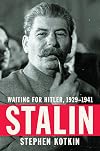
“Monumental.” —The New York Times Book ReviewPulitzer Prize-finalist Stephen Kotkin has written the definitive biography of Joseph Stalin, from collectivization and the Great Terror to the conflict with Hitler's Germany that is the signal event of modern world history
In 1929, Joseph Stalin, having already achieved dictatorial power over the vast Soviet Empire, formally ordered the systematic conversion of the world’s largest peasant economy into “socialist modernity,” show more otherwise known as collectivization, regardless of the cost.
What it cost, and what Stalin ruthlessly enacted, transformed the country and its ruler in profound and enduring ways. Building and running a dictatorship, with life and death power over hundreds of millions, made Stalin into the uncanny figure he became. Stephen Kotkin’s Stalin: Waiting for Hitler, 1929–1941 is the story of how a political system forged an unparalleled personality and vice versa.
The wholesale collectivization of some 120 million peasants necessitated levels of coercion that were extreme even for Russia, and the resulting mass starvation elicited criticism inside the party even from those Communists committed to the eradication of capitalism. But Stalin did not flinch. By 1934, when the Soviet Union had stabilized and socialism had been implanted in the countryside, praise for his stunning anti-capitalist success came from all quarters. Stalin, however, never forgave and never forgot, with shocking consequences as he strove to consolidate the state with a brand new elite of young strivers like himself. Stalin’s obsessions drove him to execute nearly a million people, including the military leadership, diplomatic and intelligence officials, and innumerable leading lights in culture.
While Stalin revived a great power, building a formidable industrialized military, the Soviet Union was effectively alone and surrounded by perceived enemies. The quest for security would bring Soviet Communism to a shocking and improbable pact with Nazi Germany. But that bargain would not unfold as envisioned. The lives of Stalin and Hitler, and the fates of their respective dictatorships, drew ever closer to collision, as the world hung in the balance.
Stalin: Waiting for Hitler, 1929–1941 is a history of the world during the build-up to its most fateful hour, from the vantage point of Stalin’s seat of power. It is a landmark achievement in the annals of historical scholarship, and in the art of biography. show less
Tags
Recommendations










Member Reviews
Magisterial. I found the section on The Great Terror to be in particular as scary AF (and the exposition on the intricate Spanish Civil War particularly eye-opening), but whatever you've read about Stalin and his epoch you'll learn vastly more. An eminently readable, packed with detail, thick slab of history. & the greatest subtitle ever, bar none.
A massive book that is well worth reading if you want to know more about Stalin, the 1930s, the origins of WWII, or even dictatorship. One gets a strong sense of what Stalin was like, what it would be like to be around him, and his physical presence. He made a habit of breaking and humiliating people around him, including his family -- Stalin drove his second wife to suicide. His ideology blinded him and he could be incredibly wrong in his assumptions and predictions, which is why the Soviet Union was so exposed to the Nazi invasion in June 1941.
The reader gains an understanding of how Stalin built his regime. The only time he could’ve been removed was during the great famine when millions died because of his policies of forced show more collectivization and de-kulakization. He cemented his power by controlling information, constructing a multi-media cult of personality, and through the brute violence of terror and purges. His dictatorship spun around ideology, acceptance of authoritarian rule in the name of the masses, cult personality, party discipline, and the necessity of violence. show less
The reader gains an understanding of how Stalin built his regime. The only time he could’ve been removed was during the great famine when millions died because of his policies of forced show more collectivization and de-kulakization. He cemented his power by controlling information, constructing a multi-media cult of personality, and through the brute violence of terror and purges. His dictatorship spun around ideology, acceptance of authoritarian rule in the name of the masses, cult personality, party discipline, and the necessity of violence. show less
I believe this is the longest book I have read, certainly in years, possibly in my life. Stephen Kotkin's 'Stalin: Waiting for Hitler' is the second volume in an anticipated three-part biography of Joseph Stalin, one of the key figures of the 20th century.
Kotkin follows up on his masterful and incredibly thorough first volume - which followed Stalin from birth to the first years of his rule post-Lenin - and uses this book to illustrate Stalin's gradual but incessant consolidation of power. Kotkin does a particularly skillful job at contrasting the collectivization/dekulakization catastrophe in the Soviet Union with its ascendancy to global superpower prior to, and in the early portion of, World War II.
As with the first volume, this show more second book casts an almost unfathomably wide net so that it's not just Stalin who is covered: it's Khrushchev as he begins his own climb up the ladder; it's Kirov, a person who Stalin genuinely had as a friend; it's the incredibly-difficult-to-spell Orjonikidze, someone rarely mentioned in top-level USSR overviews but clearly a central piece to the apparatus throughout; and more. We're given looks at not only Stalin's relations with other global leaders but also context and impressive tangents on geopolitics as a whole. An unexpected takeaway for me was the ineptitude of Europe on the eve of WWII - both internally and with regard to the USSR - something that appears to be a multi-decadal trend as I'm currently reading Adam Tooze's "Crashed".
In terms of examining Stalin as a person, as a leader, as a father, as a dictator, and as a human being, Kotkin once again delivers a masterpiece. In terms of examining those close to Stalin, their individual lives and impacts on the Soviet Union, and in terms of carefully navigating the geopolitical waters that accosted the Soviet Union, Kotkin similarly delivers. This is an unparalleled work, and I'm eagerly awaiting the third volume of this series. Five stars. show less
Kotkin follows up on his masterful and incredibly thorough first volume - which followed Stalin from birth to the first years of his rule post-Lenin - and uses this book to illustrate Stalin's gradual but incessant consolidation of power. Kotkin does a particularly skillful job at contrasting the collectivization/dekulakization catastrophe in the Soviet Union with its ascendancy to global superpower prior to, and in the early portion of, World War II.
As with the first volume, this show more second book casts an almost unfathomably wide net so that it's not just Stalin who is covered: it's Khrushchev as he begins his own climb up the ladder; it's Kirov, a person who Stalin genuinely had as a friend; it's the incredibly-difficult-to-spell Orjonikidze, someone rarely mentioned in top-level USSR overviews but clearly a central piece to the apparatus throughout; and more. We're given looks at not only Stalin's relations with other global leaders but also context and impressive tangents on geopolitics as a whole. An unexpected takeaway for me was the ineptitude of Europe on the eve of WWII - both internally and with regard to the USSR - something that appears to be a multi-decadal trend as I'm currently reading Adam Tooze's "Crashed".
In terms of examining Stalin as a person, as a leader, as a father, as a dictator, and as a human being, Kotkin once again delivers a masterpiece. In terms of examining those close to Stalin, their individual lives and impacts on the Soviet Union, and in terms of carefully navigating the geopolitical waters that accosted the Soviet Union, Kotkin similarly delivers. This is an unparalleled work, and I'm eagerly awaiting the third volume of this series. Five stars. show less
Una excelente biografía sobre uno de los personajes más complejos del sigo XX (probablemente el personaje central de ese sigo, o al menos del "Siglo corto" de Hobsbawm) Este tomo cubre el periodo de sus crímenes más notorios: El Holodomor, el Gran Terror, su colaboración con Hitler etc... y dedica buena atención a sus motivaciones para realizarlos. Pese a ello, no deja de ser un personaje enormemente complejo, su psicología nos es difícil tan penetrar en su psicología como lo fue a sus contemporáneos (Con la diferencia de que a muchos de ellos les costó la vida) Para el lector español tiene especial interés la atención que se dedica a las entretelas de la intervención soviética en la Guerra Civil Española (No es un tema show more principal del libro pero, dada su extensión, queda ampliamente cubierta) show less
When I purchased this biography of Stalin, I was unaware that it was the second of a three volume work. Titled “Waiting for Hitler”, it covers the time from Stalin’s ascendancy to power after the death of Lenin, up to the launch of the German offensive against the USSR, code named Barbarossa.
I have to say, this is not an easy, or enjoyable read. It very meticulously sets out the seemingly endless diplomatic and bureaucratic machinations carried out between 1929 and 1941. The first part details Stalin’s solidification of absolute power following the death of Lenin. It covers the dekulakization and collectivization of agriculture and the attendant famines that resulted. It then devolves into the terror that followed, in which show more Stalin murdered or exiled virtually every competent Soviet government official and military officer, in an orgy of paranoia fed violence. Page after page of Russian names soon blend together, making it impossible for me to follow. This middle part of the book is very slow going.
Finally, with the arrival of Hitler on the international scene, my interest level rose. While I was certainly well versed in the basics of pre-World War II diplomacy, this book certainly covers all of the bases. The never ending diplomatic dances involving the British, French, Russians, Germans, Italians, Polish, Chinese (Nationalist and Communist) and Japanese (not to mention the various Balkan and Baltic states) frequently resulted in temporary non-aggression agreements and trade pacts between very strange bedfellows. That the Germans and Soviets could climb into bed together after a decade of demonization from both sides tells you the complexity of the diplomatic landscape. The Soviets were shipping raw materials to Germany and the Germans were shipping finished military hardware to the Soviet Union right up to the eve of Barbarossa.
This is an extremely comprehensive and well researched piece of work. That, in itself, makes it somewhat difficult to wade through. I can usually read a book of this length (1,000 pages of text) in two weeks, three at most. It took me six weeks to finish this beast, albeit with two different four day breaks. I would recommend this work only to those with a pre-existing background or interest in the subject, looking for in-depth historical background and analysis. This is not pleasure reading.
One thing that I appreciated was the author’s tendency to break each long chapter into numerous two or three page topics, each with their own descriptive heading, making it easy to find a stopping point each evening. show less
I have to say, this is not an easy, or enjoyable read. It very meticulously sets out the seemingly endless diplomatic and bureaucratic machinations carried out between 1929 and 1941. The first part details Stalin’s solidification of absolute power following the death of Lenin. It covers the dekulakization and collectivization of agriculture and the attendant famines that resulted. It then devolves into the terror that followed, in which show more Stalin murdered or exiled virtually every competent Soviet government official and military officer, in an orgy of paranoia fed violence. Page after page of Russian names soon blend together, making it impossible for me to follow. This middle part of the book is very slow going.
Finally, with the arrival of Hitler on the international scene, my interest level rose. While I was certainly well versed in the basics of pre-World War II diplomacy, this book certainly covers all of the bases. The never ending diplomatic dances involving the British, French, Russians, Germans, Italians, Polish, Chinese (Nationalist and Communist) and Japanese (not to mention the various Balkan and Baltic states) frequently resulted in temporary non-aggression agreements and trade pacts between very strange bedfellows. That the Germans and Soviets could climb into bed together after a decade of demonization from both sides tells you the complexity of the diplomatic landscape. The Soviets were shipping raw materials to Germany and the Germans were shipping finished military hardware to the Soviet Union right up to the eve of Barbarossa.
This is an extremely comprehensive and well researched piece of work. That, in itself, makes it somewhat difficult to wade through. I can usually read a book of this length (1,000 pages of text) in two weeks, three at most. It took me six weeks to finish this beast, albeit with two different four day breaks. I would recommend this work only to those with a pre-existing background or interest in the subject, looking for in-depth historical background and analysis. This is not pleasure reading.
One thing that I appreciated was the author’s tendency to break each long chapter into numerous two or three page topics, each with their own descriptive heading, making it easy to find a stopping point each evening. show less
Kotkin has created a masterpiece of a biography, one that is very, very thorough but also eminently readable. Like most biographies of world leaders this is a lengthy book, even more so that it only covers twelve years of Stalin’s life, but the information is not concealed within a mass of text, all of the chapters are broken down into smaller sub-chapters to make for an engaging read.
Free review copy.
Free review copy.
Ratings
Members
- Recently Added By
Lists

Recommend the 20 best books you've read in the last five years
2,168 works; 606 members

2018 Best Foreign Affairs Books
24 works; 1 member
Author Information

18+ Works 1,991 Members
Stephen Mark Kotkin was born on February 17, 1959. He is a historian, academic and author. Kotkin graduated from the University of Rochester in 1981 with a B.A. in English. He studied Russian and Soviet history under Reginald E. Zelnik and Martin Malia at the University of California, Berkeley, where he earned his M.A. in 1983 and his Ph.D. in show more 1988, both in history. Starting in 1986, Kotkin traveled to the former Soviet Union several times for academic research and fellowships. He was a visiting scholar at the Russian Academy of Sciences (1993, 1995, 1998, 1999, 2012). He joined the faculty at Princeton University in 1989, and was the director of in Russian and Eurasian Studies Program for 13 years (1995-2008). He is currently the John P. Birkelund '52 Professor in History and International Affairs at Princeton. He is also a W. Glenn Campbell and Rita Ricardo-Campbell National Fellow at Stanford University's Hoover Institution. He was a finalist for the 2015 Pulitzer Prize in Biography with his title Stalin - Vol. 1 : Paradoxes of Power, 1878-1928. (Bowker Author Biography) show less
Awards and Honors
Awards
Distinctions
The Guardian Book of the Day (2017-11-13)
Series

Common Knowledge
- Canonical title
- Stalin, Volume II: Waiting for Hitler, 1929-1941
- People/Characters
- Joseph Stalin; Adolf Hitler
- Important places
- Soviet Union; Nazi Germany
- Important events
- World War II
Classifications
- Genres
- History, Biography & Memoir, Nonfiction, General Nonfiction
- DDC/MDS
- 947.084 — History & geography History of Europe Eastern European Counties and Russia Russian & Slavic History by Period 1855- 1917-1953 ; Communist period
- LCC
- DK268 .S8 — History of Europe, Asia, Africa and Oceania Russia. Soviet Union. Former Soviet Republics – Poland History of Russia. Soviet Union. Former Soviet Republics History Soviet regime, 1918-1991
- BISAC
Statistics
- Members
- 515
- Popularity
- 58,180
- Reviews
- 8
- Rating
- (4.63)
- Languages
- English
- Media
- Paper, Audiobook, Ebook
- ISBNs
- 7
- ASINs
- 3