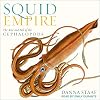
Squid Empire: The Rise and Fall of the Cephalopods
by Danna Staaf
On This Page
Description
Before there were mammals on land, there were dinosaurs. And before there were fish in the sea, there were cephalopods-the ancestors of modern squid and Earth's first truly substantial animals. Cephalopods became the first creatures to rise from the seafloor, essentially inventing the act of swimming. With dozens of tentacles and formidable shells, they presided over an undersea empire for millions of years. But when fish evolved jaws, the ocean's former top predator became its most show more delicious snack. Cephalopods had to step up their game. Many species streamlined their shells and added defensive spines, but these enhancements only provided a brief advantage. Some cephalopods then abandoned the shell entirely, which opened the gates to a flood of evolutionary innovations: masterful camouflage, fin-supplemented jet propulsion, perhaps even dolphin-like intelligence. Squid Empire is an epic adventure spanning hundreds of millions of years, from the marine life of the primordial ocean to the calamari on tonight's menu. Anyone who enjoys the undersea world-along with all those obsessed with things prehistoric-will be interested in the sometimes enormous, often bizarre creatures that ruled the seas long before the first dinosaurs. Contains mature themes. show lessTags
Recommendations
















Member Reviews
Disclaimer: I won a copy via Librarything.
Unlike Staaf, it took me quite a while to warm up to squid, octopuses and the like. It wasn’t until I read “The Vampie Squid from Hell” by Richard Ellis that I took an interest. Staaf’s book isn’t about one specific squid, octopus, or whatnot; instead it is about the history of cephalopods as a whole, in particular the evolution.
Which you think would make it a rather dull science book, but it is not.
In part, this is because of all the cool and interesting facts that Staaf shares. For instance, did you know that a sperm whale eats 700-800 squid every day and that isn’t that unusual because apparently everything eats squid, including squid. And then there is the squid’s brain and show more that is really strange. Not to mention the whole thing about gas. So, all that is pretty awesome.
Then there are all the Clue references. Quite honestly, I mean that should have to be all I need to say.
But if that is not enough for you, there is this. Staaf’s love for her subject comes through with every single word. She’s not trying to talk down to the reader, to be smart, to be funny, to be cool. She is simply, lovingly, wonderfully writing about a family of animals she loves. This is a love poem. She will make you love cephalopods and give you reasons why you should - like the whole thing about shells. show less
Unlike Staaf, it took me quite a while to warm up to squid, octopuses and the like. It wasn’t until I read “The Vampie Squid from Hell” by Richard Ellis that I took an interest. Staaf’s book isn’t about one specific squid, octopus, or whatnot; instead it is about the history of cephalopods as a whole, in particular the evolution.
Which you think would make it a rather dull science book, but it is not.
In part, this is because of all the cool and interesting facts that Staaf shares. For instance, did you know that a sperm whale eats 700-800 squid every day and that isn’t that unusual because apparently everything eats squid, including squid. And then there is the squid’s brain and show more that is really strange. Not to mention the whole thing about gas. So, all that is pretty awesome.
Then there are all the Clue references. Quite honestly, I mean that should have to be all I need to say.
But if that is not enough for you, there is this. Staaf’s love for her subject comes through with every single word. She’s not trying to talk down to the reader, to be smart, to be funny, to be cool. She is simply, lovingly, wonderfully writing about a family of animals she loves. This is a love poem. She will make you love cephalopods and give you reasons why you should - like the whole thing about shells. show less
 This review was written for LibraryThing Early Reviewers.
Though Danna Staaf’s book, “Squid Empire: The Rise and Fall of the Cephalopods,” is essentially a paleontology book, Ms. Staaf isn’t a paleontologist by training. In fact, she’s a marine biologist with a doctorate in squid biology. But you’d never guess it from her book as her discussion of prehistoric cephalopods is presented with both infectious excitement and apparent expertise. In fact, I felt like the fact that she is a marine biologist rather than a paleontologist helped her bring her subject alive, showing readers how discoveries made about prehistoric cephalopods help us better understand living cephalopods as well, a linkage all too often missing from paleontology books.
If I have a criticism of her book it’s that show more Ms. Staaf seems to know her subject too well. She seemed at times to take it for granted that her readers would grasp her points without the need for diagrams. Which was a shame. While her explanations were usually clear, it would nevertheless have been helpful to have been given a diagram of specific cephalopods being discussed as pivotal in the evolution of the species. And it would have been especially helpful to have been given a diagram of body parts that Ms. Staaf noted as having caused long debate in academic circles concerning their placement and use. As it was, the internet had the necessary diagrams, but they should have been in the book.
Another criticism is that Ms. Staaf didn’t always remain consistent in her discussions, one minute noting, for example, that vampire squid are actually octopuses and not squid, and the next lumping them back in with squid rather than with octopuses. The name of the things makes for inherent confusion, but it seems wrong to correct some misunderstanding only to then further that misunderstanding.
But those are minor complaints. Overall, I found Ms. Staaf’s book written in an engaging style, containing interesting facts and discussions, and very much something I’d recommend to others who enjoy popular science books. Well done (though I hope any future editions will include more photos and diagrams). show less
If I have a criticism of her book it’s that show more Ms. Staaf seems to know her subject too well. She seemed at times to take it for granted that her readers would grasp her points without the need for diagrams. Which was a shame. While her explanations were usually clear, it would nevertheless have been helpful to have been given a diagram of specific cephalopods being discussed as pivotal in the evolution of the species. And it would have been especially helpful to have been given a diagram of body parts that Ms. Staaf noted as having caused long debate in academic circles concerning their placement and use. As it was, the internet had the necessary diagrams, but they should have been in the book.
Another criticism is that Ms. Staaf didn’t always remain consistent in her discussions, one minute noting, for example, that vampire squid are actually octopuses and not squid, and the next lumping them back in with squid rather than with octopuses. The name of the things makes for inherent confusion, but it seems wrong to correct some misunderstanding only to then further that misunderstanding.
But those are minor complaints. Overall, I found Ms. Staaf’s book written in an engaging style, containing interesting facts and discussions, and very much something I’d recommend to others who enjoy popular science books. Well done (though I hope any future editions will include more photos and diagrams). show less
This review was written for LibraryThing Early Reviewers.Why don't cephalopods get more recognition? Is it due to their lack of backbone that we underappreciate this curious class of marine animals, or their distinct uncuddliness? From their origins in the Cambrian and subsequent evolutionary paths, to extinctions and proliferation in the present-day, cephalopods and their curious history are the focus of Danna Staaf's new book. You need not be a marine biologist or paleontologist to enjoy all of the excellent information presented within, merely have an interest in the past and a sense of wonder. Other than a cringe-worthy reference to pterosaurs as "flying dinosaurs" (not dinosaurs at all), this was a satisfying microhistory of nautilus, squid, octopus and their ancient brethren.
I received show more this ARC via LibraryThing's Early Reviewers program. show less
I received show more this ARC via LibraryThing's Early Reviewers program. show less
This review was written for LibraryThing Early Reviewers.To believe in the octopus, as Victor Hugo said, one must have seen it. Octopuses and squid, with their shapeless bodies, their writhing arms, have always felt like alien beings. Their eyes – and their intelligence – have evolved independently of our own eyes, our own intelligence. They seem entirely other.
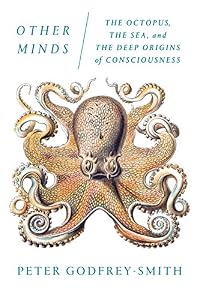
This is a charming and fascinating book about exactly how the cephalopods did evolve. It's basically like the first third of Peter Godfrey-Smith's Other Minds (which is the bit I was most interested in) expanded to book size. Since I am someone who always loved palaeontology but was not so obsessed with dinosaurs, this is a very welcome dinosaur-free exploration of prehistoric fauna.
Cephalopods (literally ‘head-footed’ show more creatures) emerged five hundred million years ago, give or take, and there were three main branches of them. The ammonoids were the ones whose shells you can buy in every museum gift shop – these pretty spirals originally held squiddy little animals, probably with facefuls of tentacles (strictly, ‘arms’). They did astonishingly well, surviving many major die-offs through the eons, until finally buying the farm at the end of the Cretaceous, apparently in the same extinction event that wiped out the non-avian dinosaurs.
Alongside the ammonoids were the nautiloids, a few species of which have survived to the present day almost unchanged – they're one of those animals that often get referred to as living fossils. And the third branch of the cephalopods is the coleoids, which includes octopuses, squid and cuttlefish. Reading about their evolution brings a lot of their similarities into focus in ways that I found fascinating. All cephalopods originally had shells, for instance, but squid and octopuses have internalised theirs. In squid, it survives in the bony interior shaft called a pen, or gladius, while in octopuses it has almost entirely disappeared (although you can still see it during embryonic development).
Danna Staaf writes with a kind of geeky exuberance that is very endearing – she seems very excited to tell others about the awesomeness of her specialist subject and I, for one, was completely won over. My only regret is that she was so hesitant about introducing all the new vocabulary – lots of weird and wonderful terms like phragmocone, aptychus and statolith – and did her best to avoid them where possible, while I was like ‘Noooo, give me more!’ But in general, this is an excellent book for anyone wanting to get a head start on welcoming our new squid overlords. show less
This is a charming and fascinating book about exactly how the cephalopods did evolve. It's basically like the first third of Peter Godfrey-Smith's Other Minds (which is the bit I was most interested in) expanded to book size. Since I am someone who always loved palaeontology but was not so obsessed with dinosaurs, this is a very welcome dinosaur-free exploration of prehistoric fauna.
Cephalopods (literally ‘head-footed’ show more creatures) emerged five hundred million years ago, give or take, and there were three main branches of them. The ammonoids were the ones whose shells you can buy in every museum gift shop – these pretty spirals originally held squiddy little animals, probably with facefuls of tentacles (strictly, ‘arms’). They did astonishingly well, surviving many major die-offs through the eons, until finally buying the farm at the end of the Cretaceous, apparently in the same extinction event that wiped out the non-avian dinosaurs.
Alongside the ammonoids were the nautiloids, a few species of which have survived to the present day almost unchanged – they're one of those animals that often get referred to as living fossils. And the third branch of the cephalopods is the coleoids, which includes octopuses, squid and cuttlefish. Reading about their evolution brings a lot of their similarities into focus in ways that I found fascinating. All cephalopods originally had shells, for instance, but squid and octopuses have internalised theirs. In squid, it survives in the bony interior shaft called a pen, or gladius, while in octopuses it has almost entirely disappeared (although you can still see it during embryonic development).
Danna Staaf writes with a kind of geeky exuberance that is very endearing – she seems very excited to tell others about the awesomeness of her specialist subject and I, for one, was completely won over. My only regret is that she was so hesitant about introducing all the new vocabulary – lots of weird and wonderful terms like phragmocone, aptychus and statolith – and did her best to avoid them where possible, while I was like ‘Noooo, give me more!’ But in general, this is an excellent book for anyone wanting to get a head start on welcoming our new squid overlords. show less
I've been fascinated by our tentacular brethren ever since we did an under-the-sea play in the 2nd grade where I was a lobster and was envious of those playing squid because they got to sing a wonderful cephalopod song. It is evident that the author would understand my feelings on this matter. Staaf is quite passionate about her subject and eager to share her knowledge and expertise with the reader. I learned quite a bit.
The style took some getting used to. It is very casual, and it read to me like blog essays do, which initially was turning me off. After reflection, I realized that had I actually been reading a series of essays and articles on the web, with a fun and engaging voice such as hers, I would enjoy them, and it was simply show more that I was expecting a book in my hand to read more formally, so I forced myself to get over it. Like I said, I did learn a lot, especially about paleontology, and am filled with the desire to pursue further reading on several topics, which is the best compliment I can give to a pop-sci book. show less
The style took some getting used to. It is very casual, and it read to me like blog essays do, which initially was turning me off. After reflection, I realized that had I actually been reading a series of essays and articles on the web, with a fun and engaging voice such as hers, I would enjoy them, and it was simply show more that I was expecting a book in my hand to read more formally, so I forced myself to get over it. Like I said, I did learn a lot, especially about paleontology, and am filled with the desire to pursue further reading on several topics, which is the best compliment I can give to a pop-sci book. show less
This review was written for LibraryThing Early Reviewers.I received Danna Staaf’s book, “Squid Empire: The Rise and Fall of the Cephalopods,” as part of the early reviewers here on LibraryThing. Staaf does a wonderful job giving a detailed evolutionary history of cephalopods. Her style was very relaxed, more like an essay, which I found quite enjoyable.
This review was written for LibraryThing Early Reviewers.Some children ask their parents for a puppy or a kitten. When Danna Staaf was ten years old, she asked her parents for a pet octopus after seeing a giant Pacific octopus at the Monterey Bay Aquarium. Thus began her lifework with squids and octopuses.
Squid Empire is a history of the head-footed creatures that once ruled the seas. The majority of the book is about the evolution of nautiloids, coleoids, and ammonoids which are all part of the mollusk family. There is a lot of information about various shell shapes as well as the advent of jet propulsion and the fossil record. Some facts are frightening: not all squid have suckers—some, like the colossal squid, have hooks which can be rotated 180 degrees. Other facts are surprising: some show more squid are social and may even hunt cooperatively. The pygmy squid is less than an inch long in adulthood. Octopuses are intelligent, curious and playful. Staaf's first octopus, Serendipity, liked to play a game of tug-of-war when being fed. There's also the well-known story of Inky, the New Zealand octopus, who one night managed to escape his aquarium and crawl across the floor to a drain. He then slid down the pipe and out to sea. That shows a degree of intelligence and planning. While the evolutionary history of cephalopods was interesting, I would have liked more information about the present day members of the family.
Black and white photographs and illustrations add to the text although the labels on the evolutionary history of cephalopods in Chapter 2 are a bit difficult to read due to the small font. There are a few typos and some awkward, even ungrammatical constructions, e.g.: "In 2011, motived in part by" and "its relatives disappear before they hardly got started". Although Staaf uses biological nomenclature, for the most part the writing is non-academic and easily accessible to the lay reader. Notes and an index are included. show less
Squid Empire is a history of the head-footed creatures that once ruled the seas. The majority of the book is about the evolution of nautiloids, coleoids, and ammonoids which are all part of the mollusk family. There is a lot of information about various shell shapes as well as the advent of jet propulsion and the fossil record. Some facts are frightening: not all squid have suckers—some, like the colossal squid, have hooks which can be rotated 180 degrees. Other facts are surprising: some show more squid are social and may even hunt cooperatively. The pygmy squid is less than an inch long in adulthood. Octopuses are intelligent, curious and playful. Staaf's first octopus, Serendipity, liked to play a game of tug-of-war when being fed. There's also the well-known story of Inky, the New Zealand octopus, who one night managed to escape his aquarium and crawl across the floor to a drain. He then slid down the pipe and out to sea. That shows a degree of intelligence and planning. While the evolutionary history of cephalopods was interesting, I would have liked more information about the present day members of the family.
Black and white photographs and illustrations add to the text although the labels on the evolutionary history of cephalopods in Chapter 2 are a bit difficult to read due to the small font. There are a few typos and some awkward, even ungrammatical constructions, e.g.: "In 2011, motived in part by" and "its relatives disappear before they hardly got started". Although Staaf uses biological nomenclature, for the most part the writing is non-academic and easily accessible to the lay reader. Notes and an index are included. show less
This review was written for LibraryThing Early Reviewers.Members
- Recently Added By
Lists

Books Read in 2018
4,360 works; 110 members

In Our Time books
4,934 works; 2 members
Author Information

Some Editions
Common Knowledge
- Original publication date
- 2017-10-03
- Important events
- Cambrian Explosion
- Dedication
- For Anton,
the microconch
to my macroconch - First words
- Introduction
Why Squid?
Long before humanity was even a twinkle in the eye of the first mammal, our planet was ruled by strange and fearsome creatures. Some grew to monstrous size, the largest animals the ear... (show all)th had ever seen. During their 400 million years of glory they diversified to fill every niche, from voracious predator to placid grazer—and then a global cataclysm almost completely wiped them out. Only a humble few of their descendants survive to keep us company today.
I
The World of the Head-Footed
Jet-propelled and flight-capable, iridescent and elastic, squid are a true marvel of nature. They're fast: they can swim twice as fast as an Olympic champion, shoot their tentacles... (show all) out in less time than it takes you to blink, and alter their appearance at literally the speed of thought. They're flashy: some grow luminous lures at the ends of their arms, others squirt self-portraits in ink, and their skin creates any color from vivid red to iridescent blue. - Last words
- (Click to show. Warning: May contain spoilers.)"If nautiluses are gone," Barord says, "no one is happy."21
(Click to show. Warning: May contain spoilers.)Epilogue
I can't think of a better fate for thid book than to amuse my grandchildren, as one of the earliest dinosaur books might elicit chuckles today. After all, those were the books that inspired the next generation of scientists, the next generation of storytellers. - Publisher's editor
- Hull, Stephen
- Blurbers
- Montgomery, Sy; Safina, Carl; Ouellette, Jennifer
- Original language
- English US
Classifications
Statistics
- Members
- 155
- Popularity
- 210,624
- Reviews
- 17
- Rating
- (3.98)
- Languages
- English
- Media
- Paper, Audiobook, Ebook
- ISBNs
- 3
- ASINs
- 3