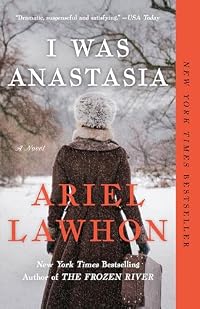
I Was Anastasia
by Ariel Lawhon
On This Page
Description
"Ariel Lawhon, a rising star in historical suspense, has set her sights on one of history's most beguiling mysteries: Did Anastasia Romanov survive the Russian Revolution, or was Anna Anderson, the woman who notoriously claimed her identity, an impostor? Russia, July 17, 1918: Under direct orders from Vladimir Lenin, Bolshevik secret police force Anastasia Romanov, along with the entire imperial family, into a damp basement in Siberia where they face a merciless firing squad. None survive. show more At least that is what the executioners have always claimed. Germany, February 17, 1920: A young woman bearing an uncanny resemblance to Anastasia Romanov is pulled shivering and senseless from a canal. Refusing to explain her presence in the freezing water or even acknowledge her rescuers, she is taken to the hospital where an examination reveals that her body is riddled with countless, horrific scars. When she finally does speak, this frightened, mysterious young woman claims to be the Russian Grand Duchess. As rumors begin to circulate through European society that the youngest Romanov daughter has survived the massacre at Ekaterinburg, old enemies and new threats are awakened. The question of who this woman is and what actually happened to Anastasia creates a saga that spans fifty years and three continents. This thrilling page-turner is every bit as moving and momentous as it is harrowing and twisted"-- "A dual narrative exploring the mystery surrounding the death of Anastasia Romanov and the claims of Anna Anderson, the woman long-believed to be the young Grand Duchess' most famous imposter"-- show lessTags
Recommendations







Member Reviews
WOW! Just, a 5+ stars WOW!
A big Thank you goes out to Netgalley/Doubleday Publishing and the author Ariel Lawhon for an advanced ebook copy.
“Am I truly Anastasia Romanov? A beloved daughter. A revered icon. A Russian grand duchess.”
This book was just exquisite! When I was around 12 years old I became interested in the Grand Duchess Anastasia Nikolaevna of Russia/Anna Anderson story. And just young enough and romantic enough to believe Anna was truly the Grand Duchess and survived the Revolution. But, like most young dreams and fantasies it was not to be.
I’m honestly having a hard time with this review because there are no words that would adequately describe this book. The Anna Anderson timeline itself starts in the present and show more works backwards with parts of Anastasia's life woven in which is going forward. And this was absolutely brilliant! I loved how the author gave us descriptions of the Romanov’s days as captives, I don’t ever remember reading details quite like this before. I knew how the ending was going to be, but I was still tense and anxious like this was my first reading of the Tsar family story. Then Ariel gifts us with this awesome last chapter followed by an internal dialogue of Anna Anderson, which was very astute. And then follows that with the best Author’s note ever.
I am sure most if not all know the ending to this story, I say, Read. It. Anyway. This book has become my favorite historical read of 2017! And that book cover is my absolute favorite, ever! Gorgeous! Ariel Lawhon you have found a forever fan. show less
A big Thank you goes out to Netgalley/Doubleday Publishing and the author Ariel Lawhon for an advanced ebook copy.
“Am I truly Anastasia Romanov? A beloved daughter. A revered icon. A Russian grand duchess.”
This book was just exquisite! When I was around 12 years old I became interested in the Grand Duchess Anastasia Nikolaevna of Russia/Anna Anderson story. And just young enough and romantic enough to believe Anna was truly the Grand Duchess and survived the Revolution. But, like most young dreams and fantasies it was not to be.
I’m honestly having a hard time with this review because there are no words that would adequately describe this book. The Anna Anderson timeline itself starts in the present and show more works backwards with parts of Anastasia's life woven in which is going forward. And this was absolutely brilliant! I loved how the author gave us descriptions of the Romanov’s days as captives, I don’t ever remember reading details quite like this before. I knew how the ending was going to be, but I was still tense and anxious like this was my first reading of the Tsar family story. Then Ariel gifts us with this awesome last chapter followed by an internal dialogue of Anna Anderson, which was very astute. And then follows that with the best Author’s note ever.
I am sure most if not all know the ending to this story, I say, Read. It. Anyway. This book has become my favorite historical read of 2017! And that book cover is my absolute favorite, ever! Gorgeous! Ariel Lawhon you have found a forever fan. show less
I've always been captivated by the legend of Anastasia - was she truly killed by a firing squad along with her family, or did she somehow miraculously survive? After reading the blurb of this novel and then a review from a friend, I knew I had to read this book.
Based on real events, the author took a unique approach to the narrative of "I Was Anastasia" by using dual timelines - one that moves forward in time and one that moves backward - culminating in a finale that left me both surprised and in awe of the author's skillful writing. Lawhon caught my attention on the first page and held it until the final one.
"I Was Anastasia" begins in 1970, where Anna Anderson, is still fighting to prove her identity and be recognised as Tsarina show more Anastasia Romanov. With a striking resemblance to the Grand Duchess and a body horrifically scarred, Anna’s tale then moves backward, revealing her long and painful struggle to claim her true identity in courtrooms across the globe. Anna is a complex character -stubborn, defensive, suspicious, and not always likeable. Still, I couldn’t help but feel sympathy for her many struggles, both physical and emotional.
The other timeline follows Anastasia and her family, starting with their house arrest and leading up to their brutal executions in 1918. Anastasia is young, naïve, sheltered, and privileged. She narrates the last eighteen months of her family’s life as they move from a life of luxury and grandeur to imprisonment and forced labour. My heart broke as her world shrank and life became almost unbearable.
Lawhon did an exceptional job of bringing both narratives to life. Her thorough research is evident, and she's crafted a book that’s moving, heartbreaking, and utterly fascinating. An unforgettable read. show less
Based on real events, the author took a unique approach to the narrative of "I Was Anastasia" by using dual timelines - one that moves forward in time and one that moves backward - culminating in a finale that left me both surprised and in awe of the author's skillful writing. Lawhon caught my attention on the first page and held it until the final one.
"I Was Anastasia" begins in 1970, where Anna Anderson, is still fighting to prove her identity and be recognised as Tsarina show more Anastasia Romanov. With a striking resemblance to the Grand Duchess and a body horrifically scarred, Anna’s tale then moves backward, revealing her long and painful struggle to claim her true identity in courtrooms across the globe. Anna is a complex character -stubborn, defensive, suspicious, and not always likeable. Still, I couldn’t help but feel sympathy for her many struggles, both physical and emotional.
The other timeline follows Anastasia and her family, starting with their house arrest and leading up to their brutal executions in 1918. Anastasia is young, naïve, sheltered, and privileged. She narrates the last eighteen months of her family’s life as they move from a life of luxury and grandeur to imprisonment and forced labour. My heart broke as her world shrank and life became almost unbearable.
Lawhon did an exceptional job of bringing both narratives to life. Her thorough research is evident, and she's crafted a book that’s moving, heartbreaking, and utterly fascinating. An unforgettable read. show less
In I Was Anastasia, Ariel Lawhon explores the life of Anastasia Romanov in the months prior to her death and the life of Anna Anderson decades afterwards as she tries to convince her social peers and grandmother that she is indeed the remaining Romanov heir and only survivor. Told from two different vantage points and in two different linear sequences, it should be a complicated story that requires careful attention to understand the large cast of characters in Anastasia’s life and the intricacies of Russian nobility. Instead, it is a compelling story, one that makes you forget the truth as you wrestle with the question of whether Anna Anderson is indeed Anastasia Romanov.
In many ways, Anastasia’s story is separate and distinct from show more Anna’s story. Anastasia’s is told in the traditionally linear structure, starting with the beginnings of the Bolshevik uprising and ending in the fatal basement thousands of miles and eons away from her previous life. Anna’s story is backwards, starting with her marriage to Jack Manahan and moving back in time towards her attempted suicide in 1920. The two stories dance around each other, drawing you into Anastasia’s royal life as well as Anna’s attempts to prove her claim. The details are spectacular not only in their precision but in their abundance, making you a part of both ladies’ stories while also bringing the ladies back to life.
The strength of the novel lies in Ms. Lawhon’s ability to make you ignore DNA evidence. The fervor with which you wish Anna is Anastasia is astonishing in its vehemence. The idiosyncrasies that others put down as proof that Anna was lying become nothing more than the misfiring of a mind damaged by years of itinerant living and trauma. At the same time, Ms. Lawhon builds sympathy for the princess by showing the shrinking of her life at the hands of the Communists, the freedoms removed, and the virtual prison in which she lived the last few years of her life. She provides plausible reasons for her survival. That combined with the almost physical need for someone to have survived makes it easy to ignore facts as we now know them.
All of this combines into a novel that is not only difficult to set aside for real life but one that brings history alive. You sweat through Anna’s continuous setbacks and cheer her wins. You indulge in a little wishful thinking at how different the world would be had something changed in Anastasia’s life, if someone had stood up to the Communists on their behalf. I Was Anastasia is a historical novel that makes you forget history and science, a fact which speaks volumes about Ms. Lawhon’s ability as a writer to tell a story. show less
In many ways, Anastasia’s story is separate and distinct from show more Anna’s story. Anastasia’s is told in the traditionally linear structure, starting with the beginnings of the Bolshevik uprising and ending in the fatal basement thousands of miles and eons away from her previous life. Anna’s story is backwards, starting with her marriage to Jack Manahan and moving back in time towards her attempted suicide in 1920. The two stories dance around each other, drawing you into Anastasia’s royal life as well as Anna’s attempts to prove her claim. The details are spectacular not only in their precision but in their abundance, making you a part of both ladies’ stories while also bringing the ladies back to life.
The strength of the novel lies in Ms. Lawhon’s ability to make you ignore DNA evidence. The fervor with which you wish Anna is Anastasia is astonishing in its vehemence. The idiosyncrasies that others put down as proof that Anna was lying become nothing more than the misfiring of a mind damaged by years of itinerant living and trauma. At the same time, Ms. Lawhon builds sympathy for the princess by showing the shrinking of her life at the hands of the Communists, the freedoms removed, and the virtual prison in which she lived the last few years of her life. She provides plausible reasons for her survival. That combined with the almost physical need for someone to have survived makes it easy to ignore facts as we now know them.
All of this combines into a novel that is not only difficult to set aside for real life but one that brings history alive. You sweat through Anna’s continuous setbacks and cheer her wins. You indulge in a little wishful thinking at how different the world would be had something changed in Anastasia’s life, if someone had stood up to the Communists on their behalf. I Was Anastasia is a historical novel that makes you forget history and science, a fact which speaks volumes about Ms. Lawhon’s ability as a writer to tell a story. show less
“Am I truly Anastasia Romanov? A beloved daughter. A revered icon. A Russian grand duchess. Or am I an imposter? A fraud. A liar. The thief of another woman’s legacy. That is for you to decide, of course. Countless others have rendered their verdict. Now it is your turn. But if you want the truth, you must pay attention.” And so begins Ariel Lawhon’s book, I Was Anastasia. For years, we have been fascinated with the story of the Romanovs, the Russian Imperial Family who were killed when the revolution happened. The executioners said that the whole family, including Anastasia Romanov, was killed. But still, two years later, a young woman bearing a striking resemblance to Anastasia Romanov is pulled from a river in Berlin. When show more she is taken to the hospital, the doctors find horrific scars. When she speaks, she claims to be Anastasia Romanov.
I Was Anastasia follows the events of Anastasia Romanov’s and Anna Anderson’s lives (or life, depending on who you ask). Beginning from both the beginning and the end, Ariel Lawson does a masterful job of telling the story of Anastasia and her family, her sisters and her sickly brother, as well as Anna Anderson. The story begins in Charlottesville, VA, in 1970, where Anna is an old woman, awaiting a verdict from the German Court in Hamburg. From there it moves to the time of the revolution in Anastasia’s life. As Anastasia’s life marches every forward towards imprisonment and eventually that fateful day in the basement in Siberia, Anna’s life is laid out in a backwards fashion. As we move closer to Anastasia’s fate, we move further back in time with Anna and discover the difficulties she has faced trying to prove to everyone that she is, in fact, Anastasia. The reader feels her frustration when many believer her, except for those who have the power to reinstate her. As she faces challenge after challenge, we find Anastasia growing into herself as she faces the challenges of imprisonment and being surrounded by soldiers. There are those who are kind and those who are out for blood. There are those who long to witness the end of the royal family and those who are sympathetic to them. But in the end, there are two women: Anna and Anastasia. And it is up to the reader to decide if they are one and the same.
As I Was Anastasia grows into a climax that comes crashing down, you will find yourself rooting for Anna and for Anastasia. You will find yourself upset with the world in which they live, and longing for justice for both. And in the end, perhaps, you will understand them both a bit better and the reasons behind the choices they have made. I Was Anastasia is a page turner that will have you guessing until the end. Ariel Lawhon has taken a piece of history and turned it into a puzzle that will leave the reader feeling satisfied. I highly recommend it! show less
I Was Anastasia follows the events of Anastasia Romanov’s and Anna Anderson’s lives (or life, depending on who you ask). Beginning from both the beginning and the end, Ariel Lawson does a masterful job of telling the story of Anastasia and her family, her sisters and her sickly brother, as well as Anna Anderson. The story begins in Charlottesville, VA, in 1970, where Anna is an old woman, awaiting a verdict from the German Court in Hamburg. From there it moves to the time of the revolution in Anastasia’s life. As Anastasia’s life marches every forward towards imprisonment and eventually that fateful day in the basement in Siberia, Anna’s life is laid out in a backwards fashion. As we move closer to Anastasia’s fate, we move further back in time with Anna and discover the difficulties she has faced trying to prove to everyone that she is, in fact, Anastasia. The reader feels her frustration when many believer her, except for those who have the power to reinstate her. As she faces challenge after challenge, we find Anastasia growing into herself as she faces the challenges of imprisonment and being surrounded by soldiers. There are those who are kind and those who are out for blood. There are those who long to witness the end of the royal family and those who are sympathetic to them. But in the end, there are two women: Anna and Anastasia. And it is up to the reader to decide if they are one and the same.
As I Was Anastasia grows into a climax that comes crashing down, you will find yourself rooting for Anna and for Anastasia. You will find yourself upset with the world in which they live, and longing for justice for both. And in the end, perhaps, you will understand them both a bit better and the reasons behind the choices they have made. I Was Anastasia is a page turner that will have you guessing until the end. Ariel Lawhon has taken a piece of history and turned it into a puzzle that will leave the reader feeling satisfied. I highly recommend it! show less
Reading I Was Anastasia by Ariel Lawhon is a bit like putting a jigsaw puzzle together. You start with the edges and work your way back towards the middle. Lawhon tells the first-person narrative of Grand Duchess Anastasia Romanov, but mixes it in with a third-person narrative of Anna Anderson. Both are real people, with well-documented stories, despite having occurred during the twentieth century.
Anastasia was the fourth daughter of the last Russian Tsar, Nicholas II. She and her siblings lived a privileged life with tutors, jewels, and Imperial palaces. That is, until the Russian Revolution happened in 1918. Lawhon follows the dramatic change in status, while also revealing Anastasia’s impish and spirited personality.
It’s show more impossible not to anticipate the heart wrenching end of the Romanov family. But Lawhon blends the before and after stories together by concurrently telling Anna Anderson’s story. Anderson was pulled from a Berlin river in 1920. Her uncanny resemblance to Anastasia was just the beginning of many decades of mystery about her true identity.
Author Lawhon put her readers in the front seat of a roller coaster that doesn’t know which way to turn. One chapter is about Anna, the next is Anna but one year earlier. Then a chapter or two focus on Anastasia. This isn’t a book to be skimmed and read with haphazard attention.
My conclusions:
The intriguing part of the story is Anna Anderson, and whether she’s truly Anastasia. Don’t peek on Wiki for the details! (I confess to doing so when I’m reading historical fiction.)
I admit to finding both characters hard to relate to. Anastasia’s life has no parallels in my own existence, which I suppose is a good thing. I found her to be a mostly charming teen.
On the other hand, Anderson’s imperious nature quickly grew tiresome. She was quirky, but not in a good way. It can’t have been easy to constantly fight for your identity, and Lawhon doesn’t romanticize the reality.
Lawhon is a nimble storyteller. Her narrative structure made the book both interesting and frustrating. But ultimately the pieces fit together and the picture is clear. The patience it takes to get there is rewarded with a satisfying conclusion. Now I want to read The Romanov Sisters, which is sitting in my shelves!
Acknowledgements:
Thanks to NetGalley, Doubleday Books, and the author for a digital ARC of this book in exchange for my honest review. show less
Anastasia was the fourth daughter of the last Russian Tsar, Nicholas II. She and her siblings lived a privileged life with tutors, jewels, and Imperial palaces. That is, until the Russian Revolution happened in 1918. Lawhon follows the dramatic change in status, while also revealing Anastasia’s impish and spirited personality.
It’s show more impossible not to anticipate the heart wrenching end of the Romanov family. But Lawhon blends the before and after stories together by concurrently telling Anna Anderson’s story. Anderson was pulled from a Berlin river in 1920. Her uncanny resemblance to Anastasia was just the beginning of many decades of mystery about her true identity.
Author Lawhon put her readers in the front seat of a roller coaster that doesn’t know which way to turn. One chapter is about Anna, the next is Anna but one year earlier. Then a chapter or two focus on Anastasia. This isn’t a book to be skimmed and read with haphazard attention.
My conclusions:
The intriguing part of the story is Anna Anderson, and whether she’s truly Anastasia. Don’t peek on Wiki for the details! (I confess to doing so when I’m reading historical fiction.)
I admit to finding both characters hard to relate to. Anastasia’s life has no parallels in my own existence, which I suppose is a good thing. I found her to be a mostly charming teen.
On the other hand, Anderson’s imperious nature quickly grew tiresome. She was quirky, but not in a good way. It can’t have been easy to constantly fight for your identity, and Lawhon doesn’t romanticize the reality.
Lawhon is a nimble storyteller. Her narrative structure made the book both interesting and frustrating. But ultimately the pieces fit together and the picture is clear. The patience it takes to get there is rewarded with a satisfying conclusion. Now I want to read The Romanov Sisters, which is sitting in my shelves!
Acknowledgements:
Thanks to NetGalley, Doubleday Books, and the author for a digital ARC of this book in exchange for my honest review. show less
At the end of her life Anna Anderson tells the story of her battle to be recognized as Grand Duchess Anastasia. Told backwards in time, each chapter unravels and illuminates her story a little more. Told forward in time, is Anastasia's imprisonment and the events leading up to her alleged death.
I've always found Anna Anderson's story to be fascinating, and this book was no exception. It was well written and engaging and kept me at the edge of my seat. I didn't particularly enjoy the backwards in time element, but I understand why the author did it. Overall, highly recommended.
I've always found Anna Anderson's story to be fascinating, and this book was no exception. It was well written and engaging and kept me at the edge of my seat. I didn't particularly enjoy the backwards in time element, but I understand why the author did it. Overall, highly recommended.
I really enjoyed this book telling the tale of Anna Anderson going back in time from 1970 - 1918 and Grand Duchess Anastasia forward in time from 1917 to the executions in July 1918. It was well written and makes you think. The final chapter and authors afterward clarify the story. I was happy how it was concluded 4.5*
Members
- Recently Added By
Published Reviews
Memorable, poignant, and a dazzling tour-de-force of structure and storytelling, this novel starts in both the last days of Tsarist Russia and in 1980s Virginia. For once there was a young woman named the Grand Duchess Anastasia, who died in July of 1918. Once there was a woman who calling herself Anna Anderson, who died in February of 1984.... Anastasia’s story rolls inexorably forward as show more Anna’s unravels backward until the stories collide with the inevitability of tragedy. And even though I knew how the novel must end, I still found myself hoping that somehow the author had managed to pull off the miracle that would change Anastasia’s history—or at least change Anna’s. show less
added by Lemeritus
Lawhon brilliantly employs an inventive and non-linear dual narrative to tell the tale of how Anastasia would become Anna Anderson, or, perhaps, how Anna became Anastasia.
added by Lemeritus
The tragic story of Anastasia is an enduring one, and the woman who laid claim to her birthright is a testament to the world’s desire to believe in Anastasia’s survival. This sprawling, immersive tale travels from revolutionary Russia to interwar France and Germany, bringing its characters to sparkling life.
added by Lemeritus
Lists

Litsy Awards 2018
248 works; 9 members

Books Read in 2017
4,249 works; 129 members

Books Read in 2018
4,360 works; 110 members

Library Historical Fiction
151 works; 1 member
Author Information

11+ Works 6,595 Members
Some Editions
Awards and Honors
Awards
Distinctions
Common Knowledge
- Canonical title
- I Was Anastasia
- Original publication date
- 2018-03-27
- People/Characters
- Anna Anderson; Anastasia Nikolayevna, Grand Duchess of Russia; Tsar Nicholas II of Russia; Empress Alexandra, consort of Nicholas II, Emperor of Russia; Olga Nikolayevna, Grand Duchess of Russia; Tatiana Nikolayevna, Grand Duchess of Russia (show all 10); Maria Nikolayevna Grand Duchess of Russia; Alexei Nikolayevich, Tsarevich of Russia; Jack Manahan; Gleb Botkin
- Important places
- Siberia, Russia; Ekaterinburg, Russia; Charlottesville, Virginia, USA
- Important events
- October Revolution (1917-11-07); Execution of the Romanov family (1918-07-17)
- Epigraph
- If history were taught in the form of stories, it would never be forgotten. -Rudyard Kipling, The Collected Works
- Dedication
- As always, for my husband, Ashley, because I would be lost without him.
Also, for Marybeth because she gave me the title.
And for Melissa: editor, champion, and friend, - First words
- Fifty years ago tonight Anna threw herself off a bridge in Berlin. It wasn’t her first brush with death, or even the most violent, but it was the only one that came at her hands.
- Last words
- (Click to show. Warning: May contain spoilers.)Franziska Annalie Schanzkowska is blown backward into the wall, jagged bits of metal ripping into her temple, torso, and thighs,
(Click to show. Warning: May contain spoilers.)I Told You So: Don't you see? You are angry with me - not because I was desperate and broken and wanted more from my life, but because it was just so easy leading you to water. You wanted to believe that I was Anastasia. - Blurbers
- Wingate, Lisa; Simonson, Helen; Henry, Patti Callahan; Mitchard, Jacquelyn; Abbott, Karen
- Canonical DDC/MDS
- 813.6
- Canonical LCC
- PS3601.L447
Classifications
Statistics
- Members
- 1,039
- Popularity
- 24,731
- Reviews
- 50
- Rating
- (3.53)
- Languages
- English, Italian
- Media
- Paper, Audiobook, Ebook
- ISBNs
- 17
- ASINs
- 2